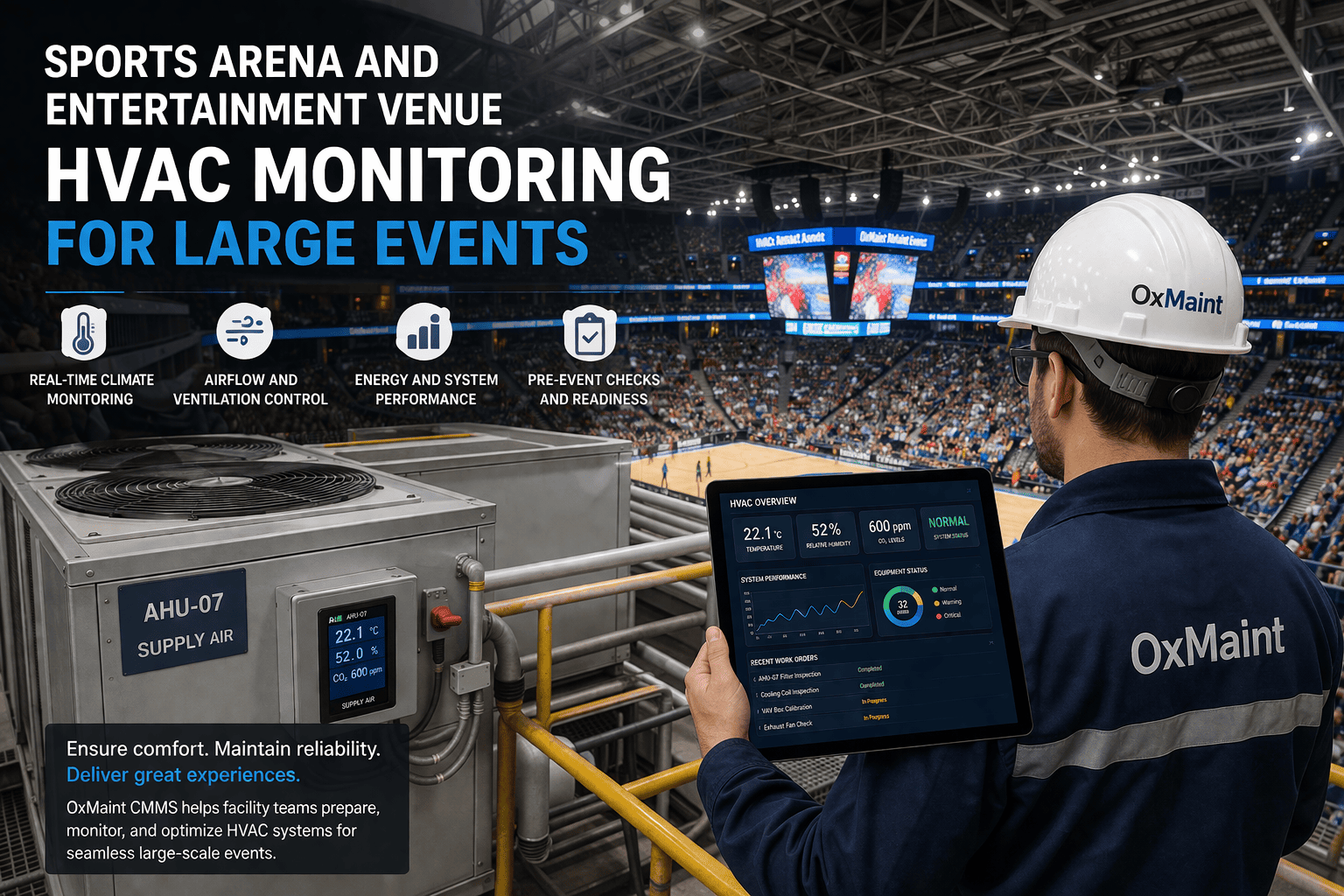
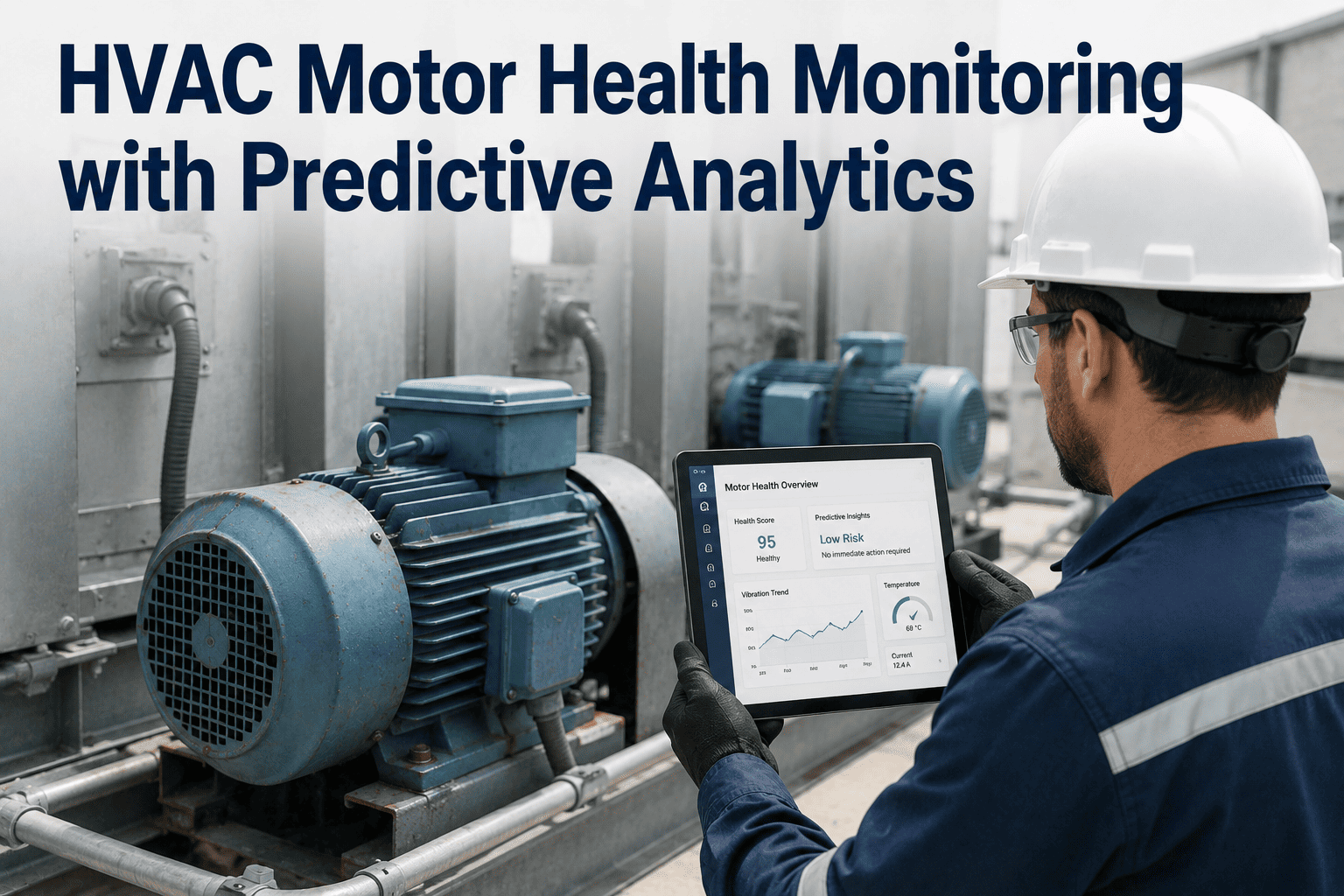
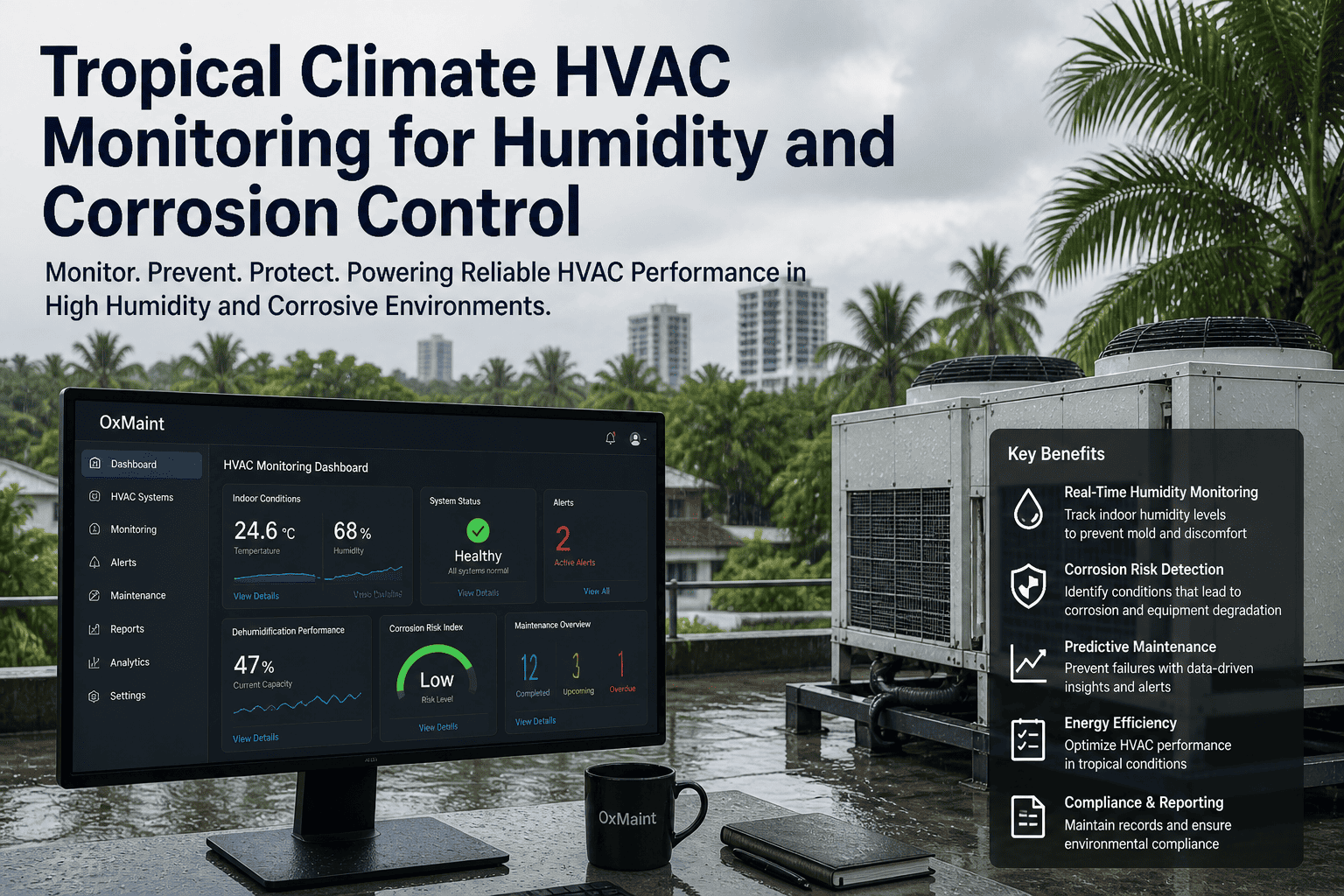
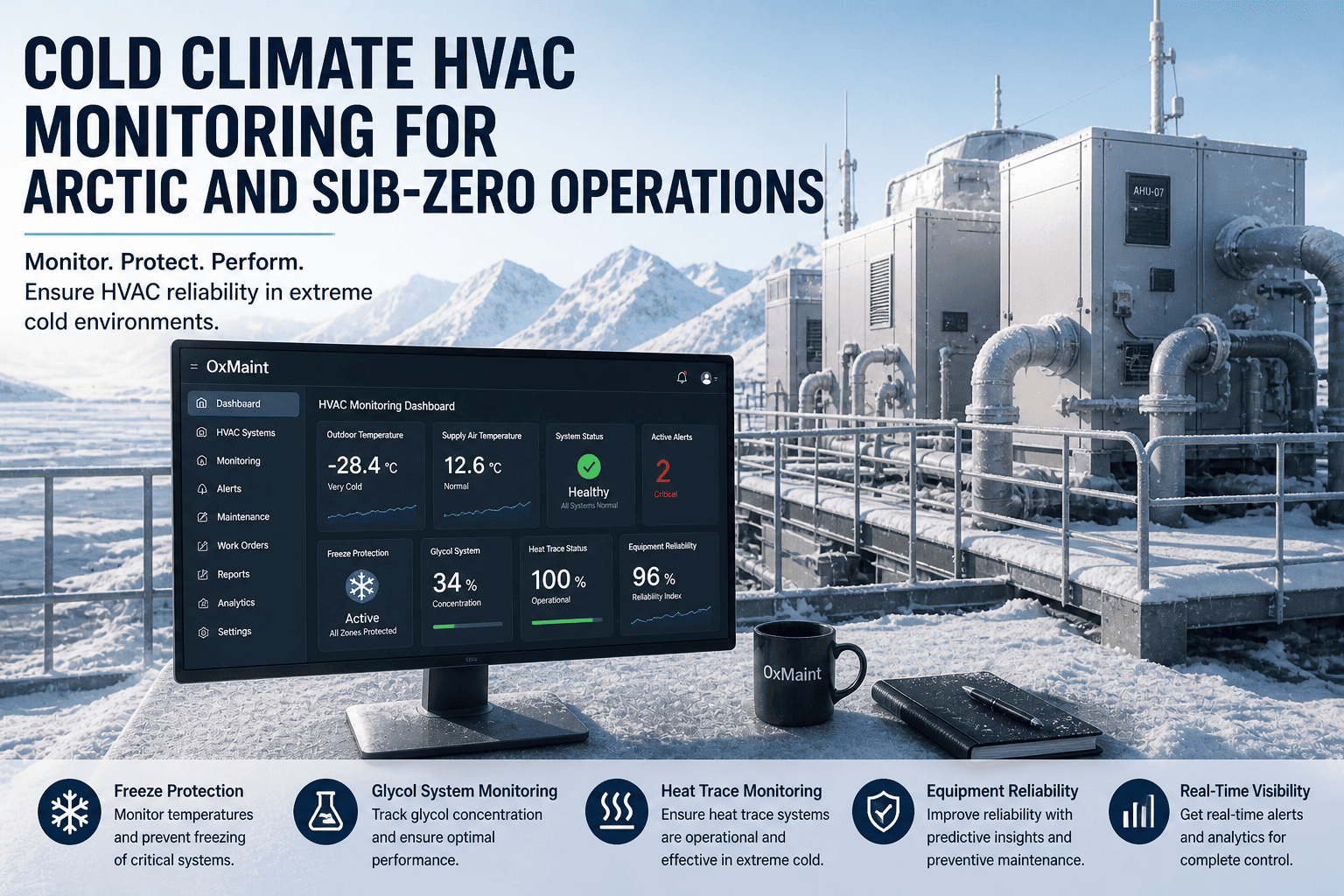
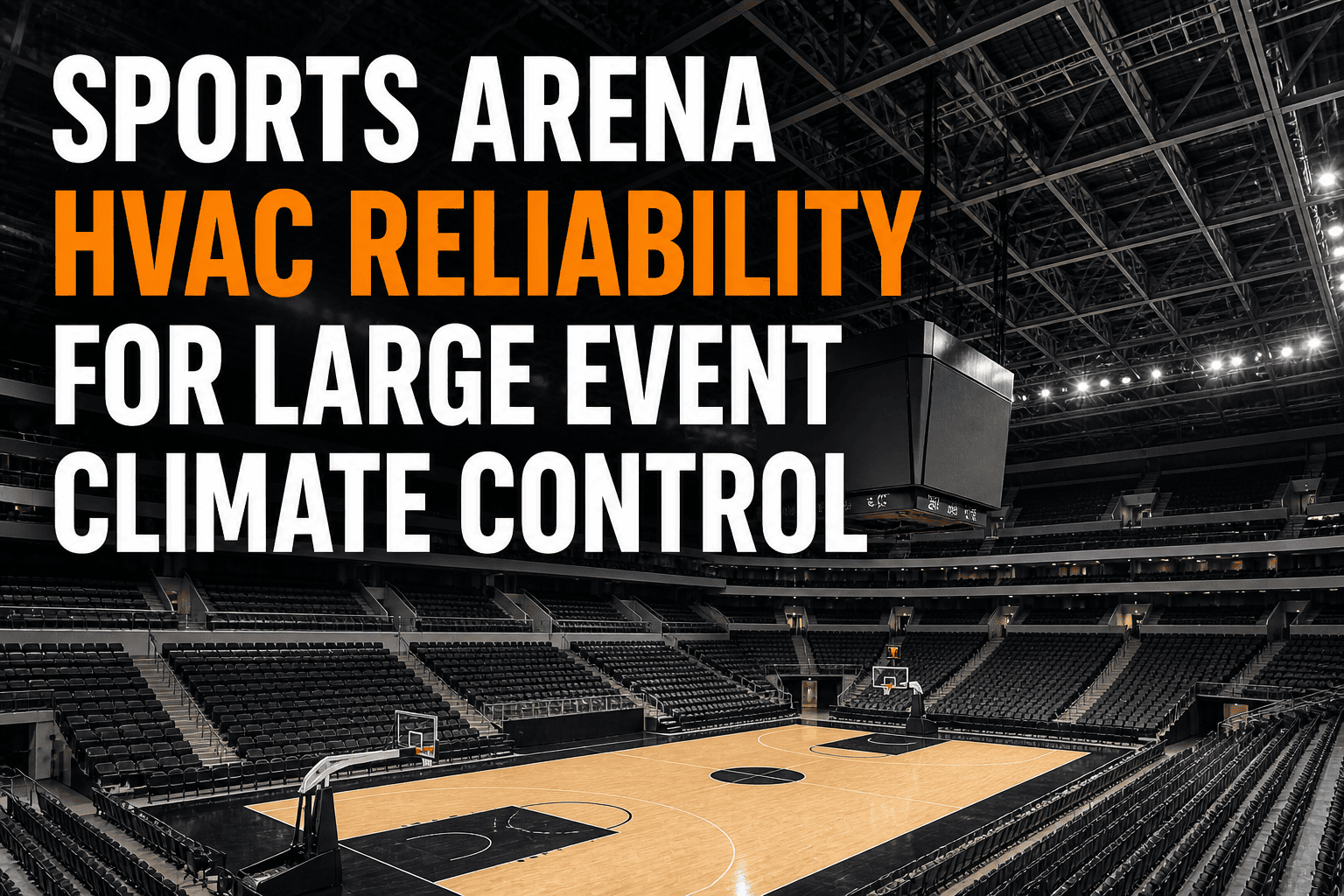
A sold-out arena with 20,000 attendees and a malfunctioning HVAC system is not just an operational problem — it is a health and safety incident, a broadcast risk, and a reputational event that plays out in real time across social media. Sports arenas, concert halls, and multi-purpose entertainment venues operate HVAC systems under conditions that no commercial office building ever experiences: rapid occupancy swings from 0 to capacity in under 90 minutes, extreme heat load from lighting rigs, performer equipment and crowd density, and zero tolerance for visible comfort failures during broadcast events. Oxmaint's work order management platform gives venue engineering teams the event-linked scheduling, real-time escalation, and performance documentation needed to guarantee HVAC reliability on every event day.
LARGE VENUE HVAC
Sports Arena and Entertainment Venue HVAC Monitoring for Large Events
Event-day HVAC failure is not an option. Oxmaint structures pre-event verification, real-time escalation, and post-event reporting so your systems perform when it counts most.
The Unique HVAC Challenge of Large-Capacity Venues
Arena and stadium HVAC systems face a combination of engineering demands that no standard commercial building encounters. The occupancy thermal load from 15,000 to 80,000 people generates heat equivalent to a mid-size industrial process. Ice rink chillers must maintain precise ice temperatures while the arena above fills with a crowd generating significant radiant heat. Concert configurations require rapid air change rates to manage smoke effects, pyrotechnics, and performer health during sustained high-energy performances.
01
Rapid Occupancy Loads
Arenas reach full occupancy within 60–90 minutes of gates opening. HVAC systems must respond to a thermal load swing that in office buildings takes an entire working day — with no margin for lag or equipment response delay.
02
Variable Event Configurations
The same venue may host ice hockey, basketball, a concert, and a corporate conference in the same week. Each configuration has different airflow, temperature, and humidity requirements that must be set up and verified before each event.
03
Broadcast and Performer Standards
Broadcast events require stable temperature conditions on the event floor to prevent camera lens condensation and equipment issues. Performer contracts increasingly specify HVAC conditions backstage and on stage as a rider requirement.
04
Zero Downtime Tolerance
Unlike office buildings where a chiller failure means occupant discomfort, arena HVAC failure during a sold-out event triggers health and safety protocol, potential evacuation, and contractual liability to event promoters worth hundreds of thousands.
HVAC Performance Standards for Major Event Types
| Event Type |
Temperature Target |
Humidity Range |
Air Changes/Hour |
Critical HVAC System |
| Ice Hockey / Figure Skating |
12–15°C (arena) |
40–55% RH |
6–8 ACH |
Ice plant chillers, dehumidifiers |
| Basketball / Indoor Sports |
18–21°C |
45–55% RH |
8–12 ACH |
Main AHUs, zonal VAV control |
| Rock / Pop Concert |
19–22°C |
50–60% RH |
10–15 ACH |
High-capacity exhaust, makeup air |
| Corporate / Gala Events |
20–22°C |
45–55% RH |
6–8 ACH |
Precision fan coils, zonal control |
| Boxing / MMA Events |
18–20°C |
45–55% RH |
8–10 ACH |
Ringside air supply, crowd zone control |
| Esports / Gaming Events |
19–21°C |
40–50% RH |
6–8 ACH |
Precision cooling, equipment zone AHUs |
How Oxmaint Structures Event-Day HVAC Workflows
Event-day HVAC management in a large venue requires a different workflow to routine maintenance. Equipment must be verified before gates open, monitored during the event, and assessed post-event for the next configuration. Oxmaint's work order management system structures this three-stage workflow with automated scheduling, mobile execution, and real-time escalation built around the event calendar.
Full HVAC system operational check — all AHUs, chillers, cooling towers, and humidifiers verified running
Event configuration loaded — temperature setpoints, airflow zones, and humidity targets set per event type
Filter pressure drop verified — overloaded filters flagged before crowd load is applied
Ice plant pre-cool cycle verified for ice events — surface temperature logged before Zamboni preparation
Emergency backup systems tested — generator-linked HVAC circuits and critical spares confirmed
Scheduled checks every 60 minutes on critical plant — technician mobile sign-off recorded in Oxmaint
Deviation alerts escalate to venue engineering duty manager and event operations within 5 minutes
Emergency work orders triggered automatically if temperature exceeds event-specific thresholds
All corrective actions documented in real time — creating liability protection and insurer records
Post-event condition assessment logged — any defects identified during event created as work orders
Filter condition re-assessed — high-smoke-load events require immediate filter check before next event
Next event configuration pre-staged in Oxmaint — PM tasks assigned to relevant technicians
Event HVAC performance report generated — available for event promoter and facility management review
VENUE ENGINEERING PLATFORM
Every Event Starts With a Verified HVAC System
Oxmaint schedules pre-event checks, escalates issues in real time, and generates post-event reports automatically — so your engineering team is always ahead of the event calendar, not reacting to it.
Venue HVAC Failure: What It Actually Costs
$180K–$500K
Promoter penalty clauses for HVAC failure causing event cancellation or significant attendee experience failure in major arena agreements
47 min
Average time to visible attendee discomfort complaints when arena HVAC fails during peak occupancy — well within the first period or opening act
3.8x
Higher emergency repair cost for HVAC failures during live events versus planned maintenance during dark days, due to contractor call-out premiums
Expert Review
James Kowalski, CFM
Director of Venue Operations, Multi-Purpose Arena Group — 16 Years in Live Entertainment Facilities
The fundamental problem with venue HVAC management is that most teams treat it like an office building — service it on a schedule and respond when something breaks. In a venue doing 150 events a year, that approach guarantees failures. The event calendar is the maintenance schedule. Every event is a performance test for your HVAC systems, and the consequences of failure are immediate and public. What changed our operation was building pre-event HVAC verification into the work order system as a non-negotiable checklist before every event, not just a conversation between the duty engineer and the BMS. When Oxmaint creates those work orders automatically from the event calendar and flags anything incomplete 4 hours before gates open, you stop surprises.
I'd encourage any venue team to see how it's structured — the difference between reactive and event-led maintenance is the difference between a smooth night and a crisis.
Frequently Asked Questions
How does Oxmaint integrate with venue event calendars for HVAC scheduling?
Oxmaint's work order management system allows event dates to be used as triggers for automated PM and inspection work orders. Pre-event HVAC verification checklists, during-event monitoring schedules, and post-event reset tasks are all generated from the event calendar, with assigned technicians notified automatically. This eliminates the reliance on duty engineer memory or manual scheduling boards that cause pre-event checks to be missed during busy multi-event weeks.
Start a free trial to configure your event-linked HVAC workflow.
What documentation does Oxmaint generate for promoter and insurer requirements?
Oxmaint generates event-specific HVAC performance reports covering pre-event system verification sign-offs, during-event readings logged by technicians, any deviation events and their resolution, and post-event condition assessment. These reports provide the documented evidence that promoters increasingly require under force majeure and HVAC failure clauses, and that venue insurers request when processing claims related to equipment failure during events. All records are permanently stored and retrievable by event date or asset, with no manual compilation required.
How does Oxmaint handle HVAC monitoring for ice venues with multiple event configurations?
Ice venues present one of the most demanding HVAC challenges in the live events sector — maintaining ice surface temperature while managing the heat load of a full crowd in the bowl above. Oxmaint allows separate asset groups and PM checklists to be configured for ice plant systems versus bowl HVAC systems, with event type used to trigger the appropriate pre-event verification sequence. Ice plant dehumidifier performance, glycol temperatures, and compressor run-time checks are all structured as separate PM work orders from the main arena HVAC verification, ensuring both systems are independently confirmed before each ice event.
Can Oxmaint support multi-venue or multi-arena portfolio management from a single platform?
Yes. Oxmaint's platform supports multi-site portfolio management with individual asset registries, event calendars, and PM programmes for each venue operating from a single group-level dashboard. Regional or group engineering managers can view HVAC maintenance compliance and outstanding work orders across all venues simultaneously, identifying sites that require additional resource before upcoming major events. This is particularly valuable for venue groups managing a mix of arena sizes, each with different HVAC configurations and event density levels.
Book a demo to see the multi-site portfolio view.
OXMAINT FOR SPORTS AND ENTERTAINMENT VENUES
Your Events Sell Out. Your HVAC Should Too.
Oxmaint structures event-led HVAC verification, automated work order escalation, and performance reporting into a single platform — so every event starts with systems confirmed, not fingers crossed.