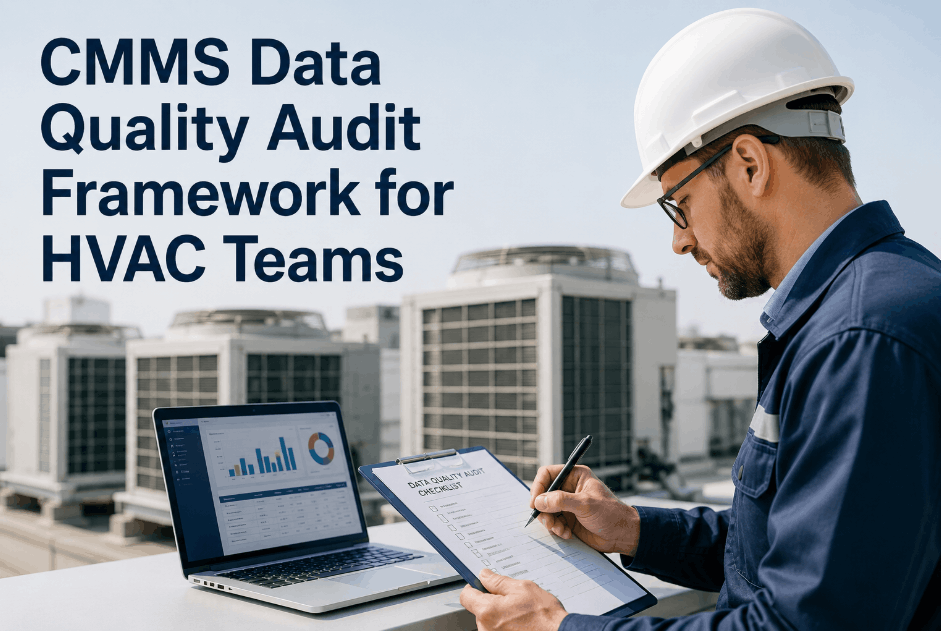
CMMS data quality is the foundation that determines whether HVAC maintenance teams can trust their reporting, planning, and decision-making. When asset records are incomplete, failure codes are inconsistently applied, or labor history is missing key entries, every downstream output — from parts forecasting to compliance audits — carries the contamination of bad data. HVAC teams using Sign Up Free on OxMaint can systematically audit asset records, standardize failure codes, reconcile labor entries, and establish data governance practices that make CMMS reporting reliable and planning accurate from the ground up.
Why CMMS Data Quality Determines HVAC Planning Accuracy
Poor CMMS data quality does not announce itself — it erodes gradually as records accumulate errors, omissions, and inconsistencies that compound across reporting cycles. HVAC teams that Book a Demo with OxMaint discover that most data quality failures originate in four areas: asset master records, failure and cause codes, labor history entries, and parts transaction data. A structured audit framework addresses each category in sequence, restoring the information integrity that accurate preventive maintenance scheduling, failure trend analysis, and capital planning require.
Six Phases of a CMMS Data Quality Audit for HVAC Teams
A complete CMMS data quality audit progresses from asset master verification through failure code governance, labor history reconciliation, and parts data cleanup — each phase generating corrective actions that restore the information integrity HVAC planning depends on. Sign Up Free to configure OxMaint audit workflows and data governance schedules around your HVAC asset portfolio.
Asset Master Record Verification
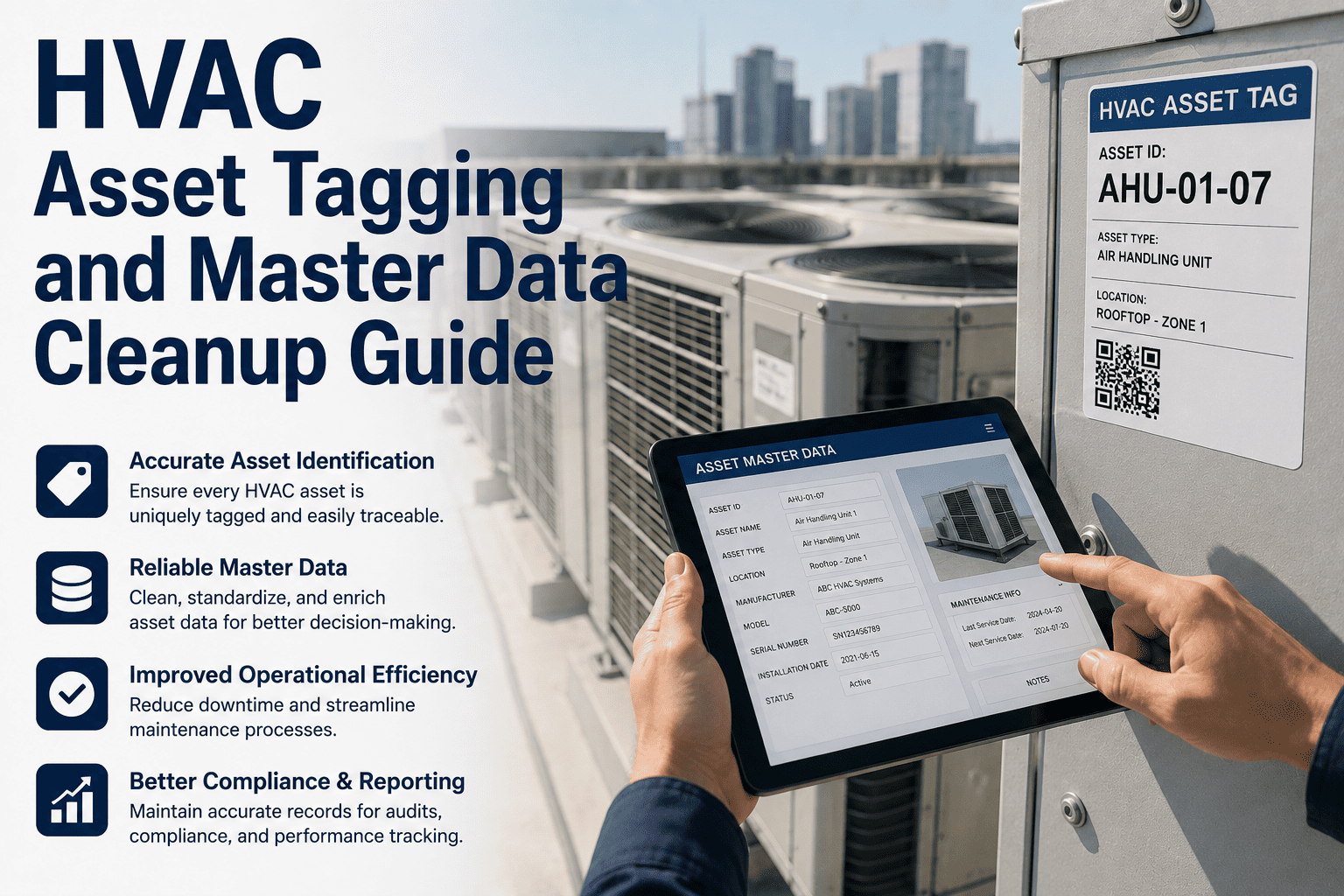
Every HVAC asset in the CMMS must carry verified nameplate data — manufacturer, model, serial number, installation date, and location hierarchy. OxMaint's asset registration workflows enforce completeness requirements at the point of entry, eliminating the gaps that make failure trend analysis and warranty tracking unreliable.
Failure Code and Cause Code Standardization
Inconsistent failure coding is the single largest source of HVAC CMMS reporting errors. When technicians select different codes for identical failure modes, trend analysis produces meaningless noise rather than actionable failure patterns. A code library audit identifies duplicates, gaps, and misclassifications — and OxMaint's controlled code lists prevent recurrence at work order closure.
Labor History Entry Reconciliation
Labor history gaps — work completed without time entries, entries assigned to wrong assets, or tasks recorded without technician identification — corrupt the maintenance cost baseline that HVAC teams rely on for staffing and contract decisions. OxMaint's work order completion requirements enforce labor entry discipline before work orders can be closed.
Parts and Materials Transaction Audit
Parts consumed on HVAC work orders that are not recorded in the CMMS break the asset-level maintenance cost record and make parts forecasting inaccurate. Reconciling parts transactions against work order history identifies consumption gaps and establishes the storeroom linkage that transforms parts data from an afterthought into a planning input.
PM Schedule Completeness Review
Preventive maintenance schedules that are missing tasks, carry incorrect frequencies, or are not assigned to verified assets generate phantom compliance metrics. OxMaint's PM schedule audit tools compare scheduled tasks against asset records and manufacturer recommendations — flagging gaps before they produce compliance reporting failures.
Ongoing Data Governance and Entry Discipline
A one-time audit without ongoing governance reverts to the same data quality problems within months. OxMaint's required field enforcement, controlled dropdown selections, and work order completion validations build data discipline into daily technician workflows — making high-quality CMMS data the default outcome rather than an exceptional effort.
CMMS Data Quality Impact by HVAC Asset Category
Data quality problems affect different HVAC asset categories in distinct ways. Understanding which record types carry the highest error rates guides audit prioritization and resource allocation. Book a Demo to see how OxMaint tracks data completeness scores and corrective audit actions across your HVAC asset portfolio.
| HVAC Asset Category | Common Data Quality Gap | Planning Impact | Audit Priority | OxMaint Corrective Action |
|---|---|---|---|---|
| Air Handling Units | Missing filter and belt specs | PM task inaccuracy | High | Asset spec completion work orders |
| Chillers and Cooling Towers | Inconsistent failure code use | Trend analysis failure | Very High | Failure code library standardization |
| Rooftop Units (RTUs) | Incomplete installation date records | Age-based replacement errors | High | Asset master verification tasks |
| Variable Air Volume Boxes | Labor entries missing or misassigned | Asset cost baseline corruption | Medium | Labor reconciliation audit work orders |
| Controls and BAS Points | No parts consumption records | Parts forecast inaccuracy | Medium–High | Parts transaction linkage cleanup |
Four Data Quality Failures That Break HVAC CMMS Reporting
CMMS reporting failures in HVAC teams almost always trace back to four recurring data quality patterns. Each is preventable through structured entry governance — and all four are addressed through OxMaint's workflow enforcement and audit tools. Sign Up Free to begin correcting these patterns before your next planning or compliance cycle depends on data you cannot trust.
Running a CMMS Data Quality Audit with OxMaint
Export and Score Current Asset Record Completeness
Generate a completeness scorecard for all HVAC assets in OxMaint — identifying which records are missing nameplate data, location assignments, or manufacturer specifications. This baseline completeness score drives audit prioritization and tracks improvement over correction cycles.
Standardize and Rationalize the Failure Code Library
Review all failure codes used on HVAC work orders in the past 24 months. Merge duplicates, retire unused codes, and fill category gaps. Publish the standardized code library in OxMaint and configure work order forms to enforce selection from the approved list only.
Reconcile Labor and Parts History Against Work Order Records
Cross-reference labor time entries and parts transactions against closed work orders for the audit period. Flag work orders with zero labor entries, missing technician assignments, or no parts records on tasks known to require materials — and create correction tasks in OxMaint to backfill verified data.
Validate PM Schedules Against Verified Asset Records
Compare active PM schedules in OxMaint against the verified asset master. Identify PMs assigned to decommissioned assets, missing from active assets, or carrying outdated task frequencies. Correct schedule-to-asset linkages before the next PM cycle generates false compliance metrics.
Implement Ongoing Governance and Re-Audit Schedule
Configure OxMaint's required field rules and completion validations to enforce data entry standards from the day of go-live forward. Schedule quarterly data quality reviews using OxMaint's reporting dashboards to catch new gaps before they compound into another full-scale audit requirement.
Frequently Asked Questions: CMMS Data Quality Audit for HVAC Teams
What is a CMMS data quality audit?
A CMMS data quality audit reviews asset records, failure codes, labor history, and parts data to identify errors, omissions, and inconsistencies that undermine reporting accuracy and maintenance planning reliability.
How often should HVAC teams run a CMMS data quality audit?
A full audit annually, with quarterly completeness reviews using dashboard-based scoring, keeps CMMS data reliable without requiring a full-scale reconciliation effort every cycle.
Which CMMS data quality problem has the biggest impact on HVAC planning?
Inconsistent failure code application produces the widest downstream damage — corrupting failure trend reports, reliability metrics, and root cause analysis that drive HVAC PM program decisions.
How does OxMaint prevent CMMS data quality problems from recurring?
OxMaint enforces required fields, controlled code selections, and work order completion validations — making high-quality data entry the default outcome of technician workflow rather than an exception.
Can OxMaint support CMMS data quality audits for large HVAC portfolios?
Yes. OxMaint scales across multi-site HVAC portfolios with location hierarchy management, bulk asset import tools, and portfolio-level reporting dashboards that track data completeness scores by site, building, or asset category.