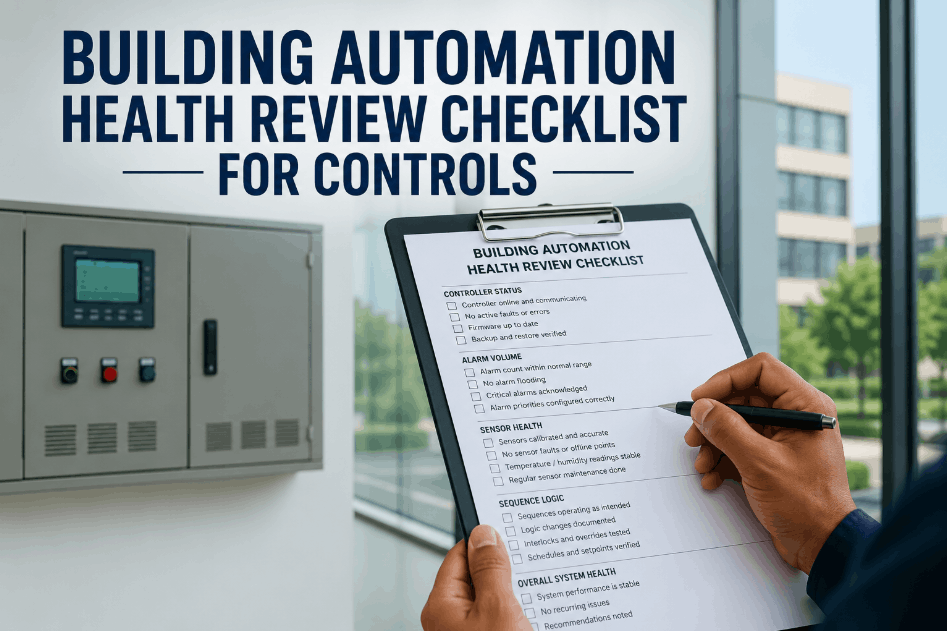
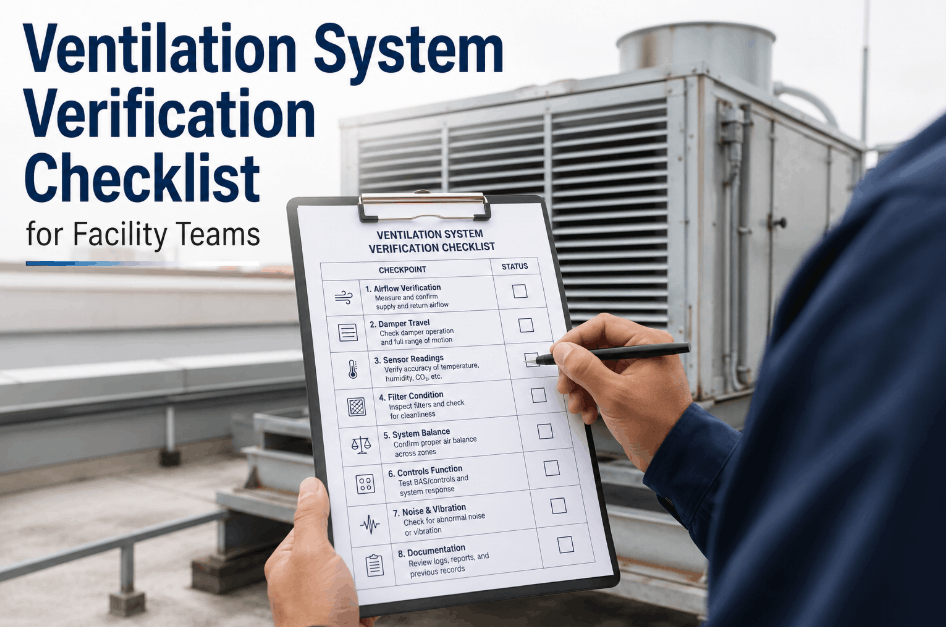
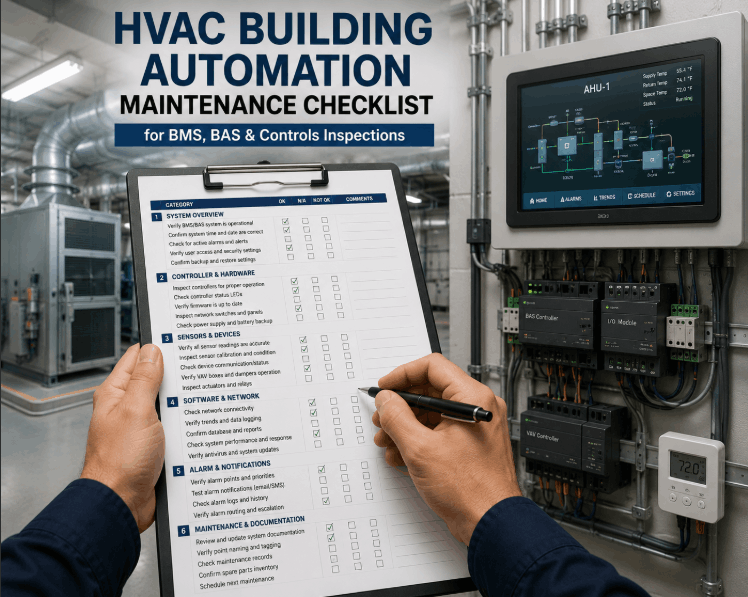
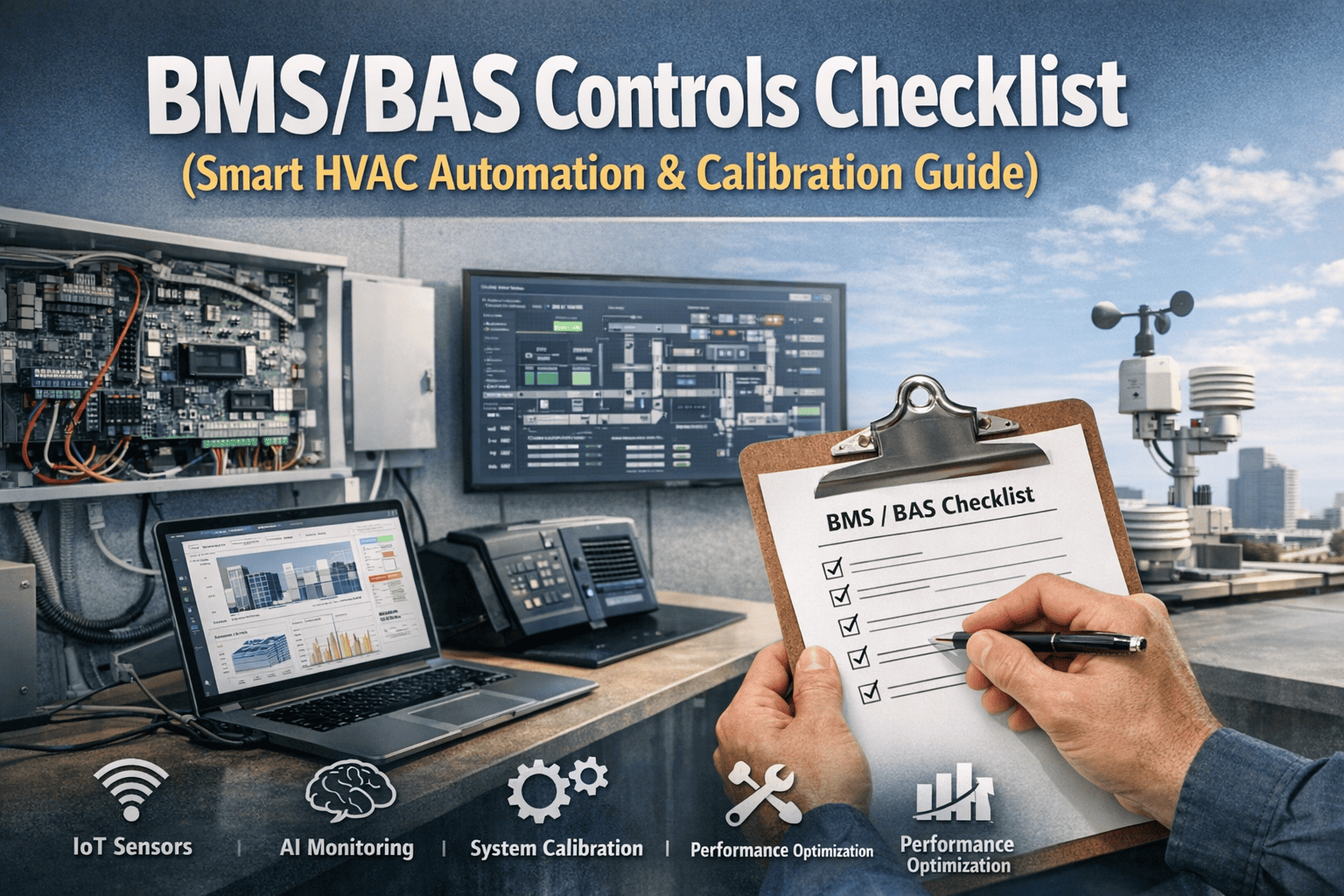
An economizer sensor placement audit checklist confirms that mixed-air, outdoor-air, and return-air sensors are mounted where they can actually capture representative readings before the unit starts relying on free cooling. A sensor mounted too close to a damper blade, a duct seam, or a sun-exposed wall reports a temperature that doesn't match the airstream it's supposed to represent, and the economizer ends up making free-cooling decisions on bad data. Sign Up Free on Oxmaint to log sensor location, last calibration date, and inspection history against each air-handling asset before the audit begins. Book a Demo to see how Oxmaint links sensor and PLC data to individual AHU records, so placement issues show up as a flagged asset instead of an unexplained spike in mixed-air readings.
Confirm Every Economizer Sensor Before Free-Cooling Season
Log sensor location, calibration history, and inspection status against each air handler before the audit walk-through begins.
1. Sensor Inventory & Placement Verification
Walk each air handler and confirm outdoor-air, return-air, and mixed-air sensors sit where the design intended, not wherever was convenient during a past install.
2. Calibration & Accuracy Checks
Placement only matters if the sensor itself is accurate. Confirm calibration before trusting any reading the economizer is acting on.
3. Control Logic & Damper Sequencing Validation
Accurate sensors only help if the control sequence and damper response are still tuned to match them.
4. Data Logging & Predictive Monitoring Setup
A one-time audit catches today's problems. Continuous logging catches the next one before it costs you a comfort complaint or an energy spike.
5. Documentation & Seasonal Readiness Sign-off
Close the loop on what was found, what was fixed, and what's still pending before free-cooling season starts in earnest.
Stop Guessing Which Sensors Are Out of Place
Oxmaint logs sensor location, calibration, and trend data against every air handler, and turns drift into a tracked work order.
Frequently Asked Questions — Economizer Sensor Placement Audit
1. What is an economizer sensor placement audit checklist?
It's a structured review confirming outdoor-air, return-air, and mixed-air sensors are mounted, wired, and calibrated correctly so the economizer's free-cooling decisions are based on accurate airstream data.
2. Why does sensor placement affect economizer performance?
A sensor placed near a damper leak, duct seam, or sun-exposed surface reads a temperature that doesn't represent the actual airstream, causing the economizer to switch between free cooling and mechanical cooling at the wrong times.
3. How often should economizer sensors be audited?
Most facilities audit placement and calibration once a year ahead of the free-cooling season, with additional checks after any duct, damper, or control work near the sensors.
4. What's the difference between a placement issue and a calibration issue?
Placement issues come from where the sensor is mounted relative to airflow and leakage; calibration issues come from sensor drift over time — both produce inaccurate readings but need separate checks.
5. How does Oxmaint support economizer sensor audits?
Oxmaint logs sensor location, calibration history, and trend data against each air handler, flags drift automatically, and turns audit findings into trackable work orders across the full HVAC portfolio.
Ready to Audit Every Economizer Sensor on Your Portfolio?
Oxmaint connects sensor location, calibration, and trend data into one system your team already uses for daily work.