BAS sensor drift in aging controls networks is one of the most overlooked sources of HVAC inefficiency and compliance risk in commercial facilities. When sensors shift from calibrated baselines — even by small margins — the control logic acting on those readings produces setpoint errors, overcooling, ghost alarms, and inflated energy consumption. Facility teams that rely on BAS dashboards without structured drift audits are effectively managing their building from corrupted data. OxMaint gives operations teams the preventive maintenance scheduling and work order infrastructure to Sign Up Free and build sensor drift audits as recurring, documented tasks. If your controls network has no formal drift detection program, Book a Demo to see how OxMaint supports signal accuracy and calibration verification at scale.
OxMaint connects sensor audit scheduling, calibration verification, and PM workflows so your team detects BAS drift systematically — not after comfort complaints or energy spikes.
Why Aging Controls Networks Drift Silently
Sensor drift does not trigger alarms. It accumulates gradually — offset errors of 1–3°F or 2–5% RH that compound into systemic control failures over months. Four failure modes drive BAS sensor inaccuracy in older networks.
RTD and thermistor elements drift with thermal cycling and age — producing readings that lag or lead actual conditions and skew PID control response.
Legacy BAS controllers store calibration offsets that were set for original equipment. Replacement sensors installed without recalibration inherit incorrect offsets silently.
Aging analog wiring, corroded terminations, and grounding faults introduce noise that averages into false readings — especially in high-EMI mechanical rooms.
Without periodic comparison between BAS-reported values and independent reference readings, drift goes undetected until occupant complaints or billing anomalies surface.
Sensor Drift Audit Components
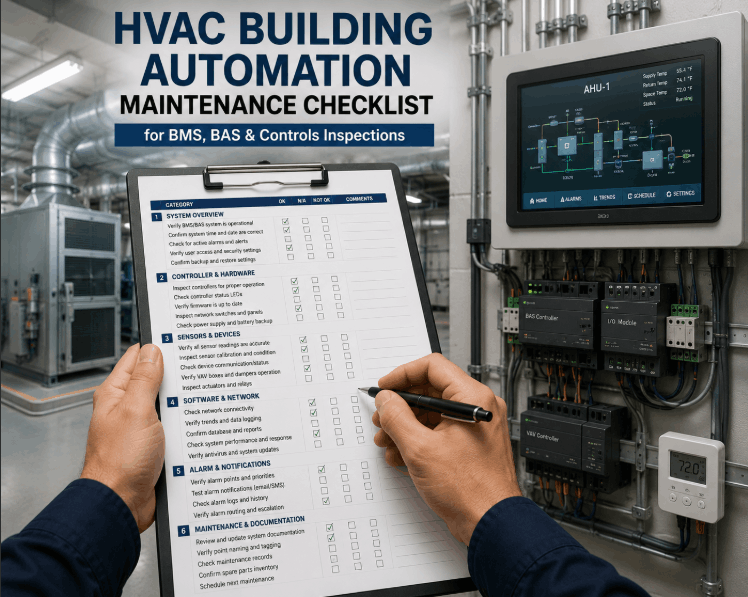
A structured BAS sensor drift audit compares live readings against calibrated references, reviews historical offset trends, and validates response behavior under known conditions. Sign Up Free to manage each audit step as a documented PM task in OxMaint. These four components define a complete drift detection program.
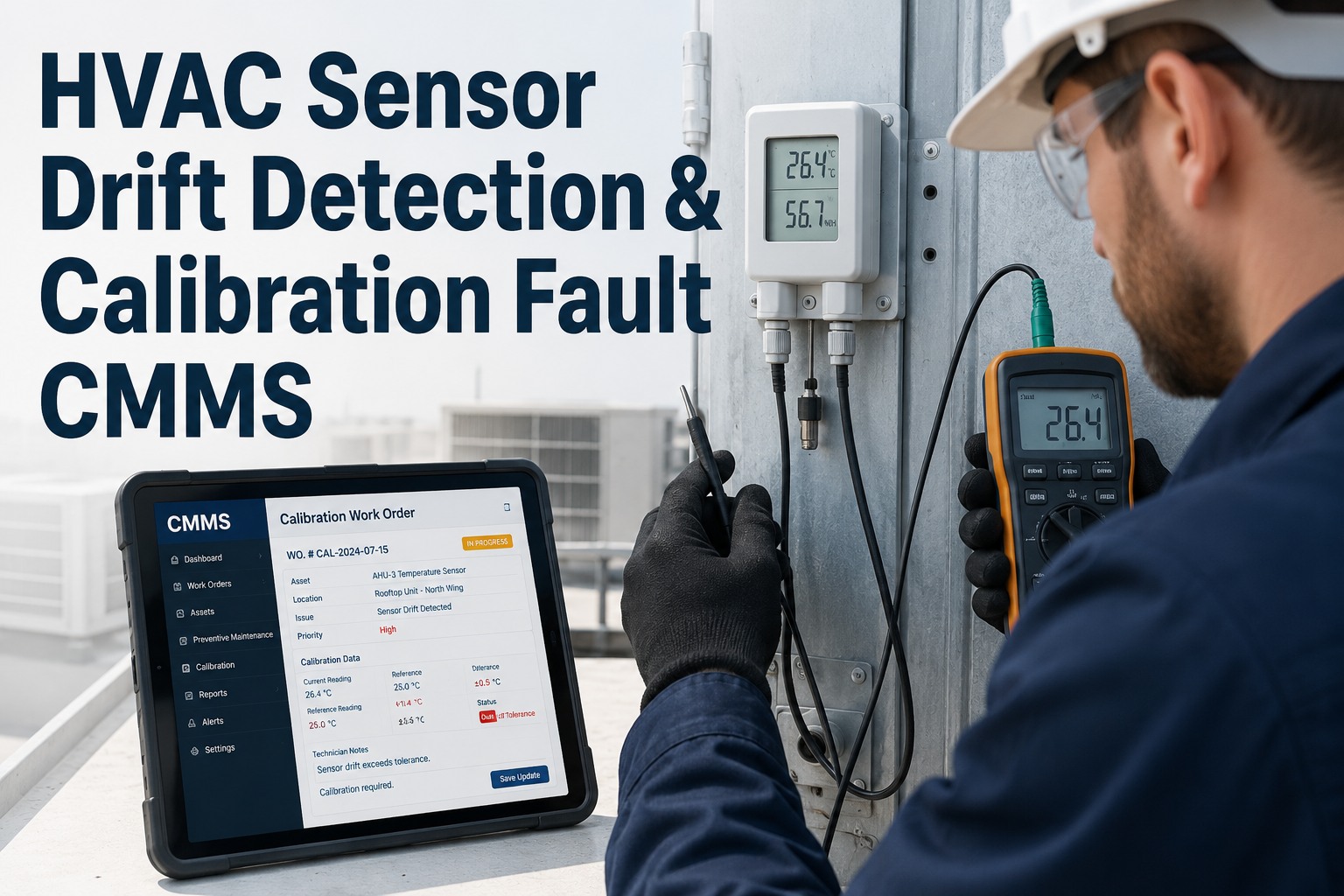
Technicians use calibrated handheld instruments to measure conditions at each sensor location and compare against BAS-reported values. Deviations exceeding tolerance thresholds trigger calibration or replacement work orders.
Audit stored calibration offsets in the BAS controller against documented baseline values. Unexplained offset changes indicate controller-side issues or undocumented field adjustments that need investigation.
Verify that sensors respond correctly to known stimulus — temperature step change, humidity introduction, or CO2 injection. Sluggish or non-linear response indicates element degradation beyond offset correction.
Review BAS trend logs for gradual baseline shifts, clipping behavior, or improbable flat-line readings. OxMaint work order history correlates audit findings with previous calibration and replacement records.
Sensor Audit Priority Framework
How OxMaint Supports BAS Sensor Drift Programs
Drift audits documented only in spreadsheets create no accountability and no escalation path. Book a Demo to see how OxMaint operationalizes sensor calibration programs through scheduled maintenance tasks, reading capture workflows, and asset-level calibration history.
Schedule drift audits by sensor type, zone, or criticality tier as recurring PM tasks in OxMaint — triggered by calendar interval or seasonal commissioning cycle.
Technicians log reference readings, BAS-reported values, and offset deltas directly in OxMaint mobile checklists — creating a timestamped deviation record at the sensor level.
Document each BAS sensor as an asset in OxMaint with calibration dates, offset history, and replacement records — so drift trends are visible across the sensor lifecycle. Sign Up Free to build your sensor register today.
When audit readings exceed drift thresholds, OxMaint work order escalation routes calibration or replacement tasks to the responsible technician — eliminating manual follow-up.
Track sensor audit completion rates and deviation trends across your controls network. Book a Demo to see how OxMaint identifies chronic drift points before they impact controls performance.
OxMaint PM completion records and work order history produce a documented audit trail for calibration compliance — supporting commissioning agents, energy programs, and internal accountability.
OxMaint connects BAS sensor audit scheduling, field reading capture, and calibration history into a single maintenance workflow — so controls data integrity is managed systematically, not by exception. Sign Up Free or Book a Demo to build your sensor drift program.
Frequently Asked Questions
OxMaint gives facility teams the scheduling, field capture, and reporting infrastructure to keep BAS sensor accuracy verified and documented across every billing cycle.