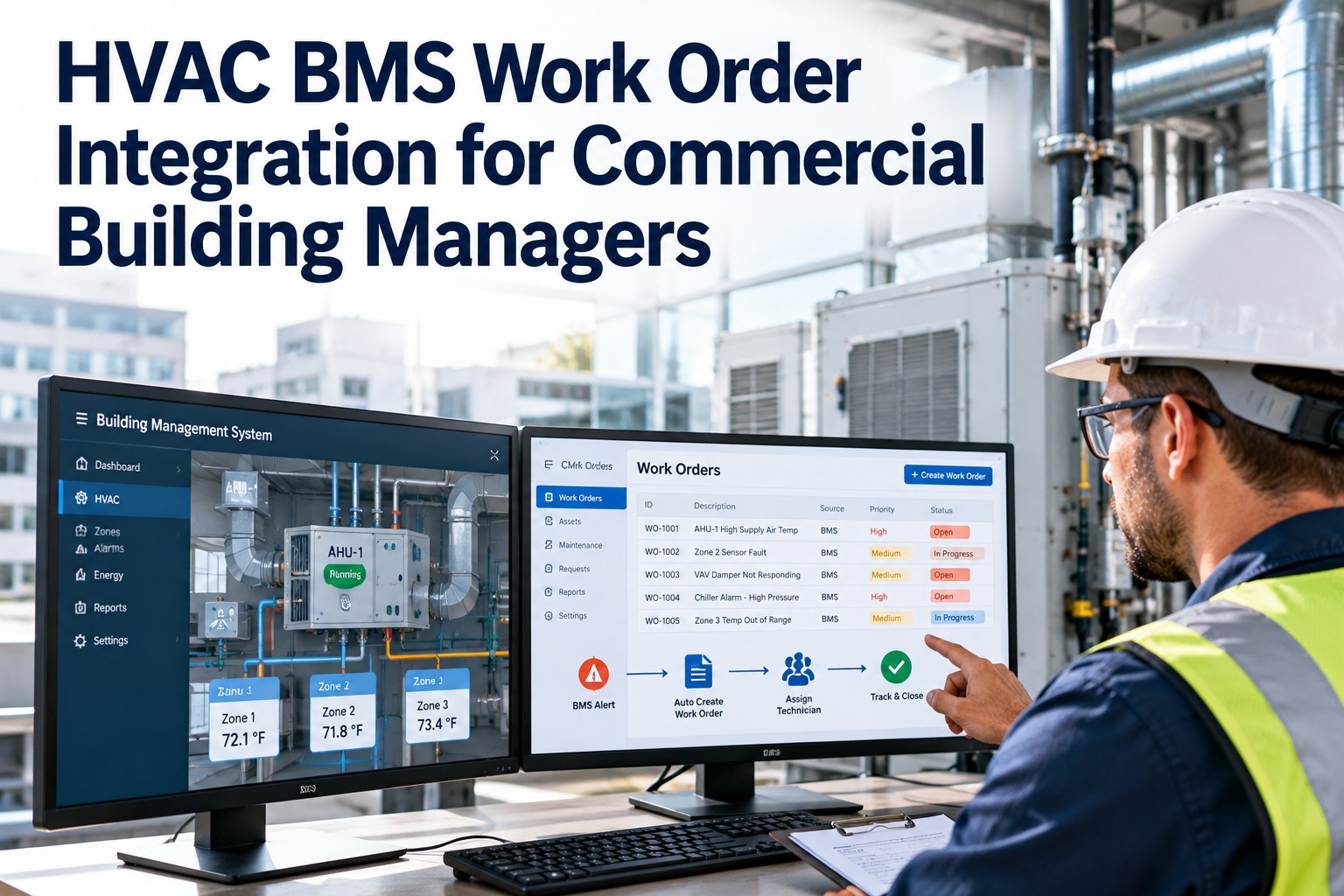
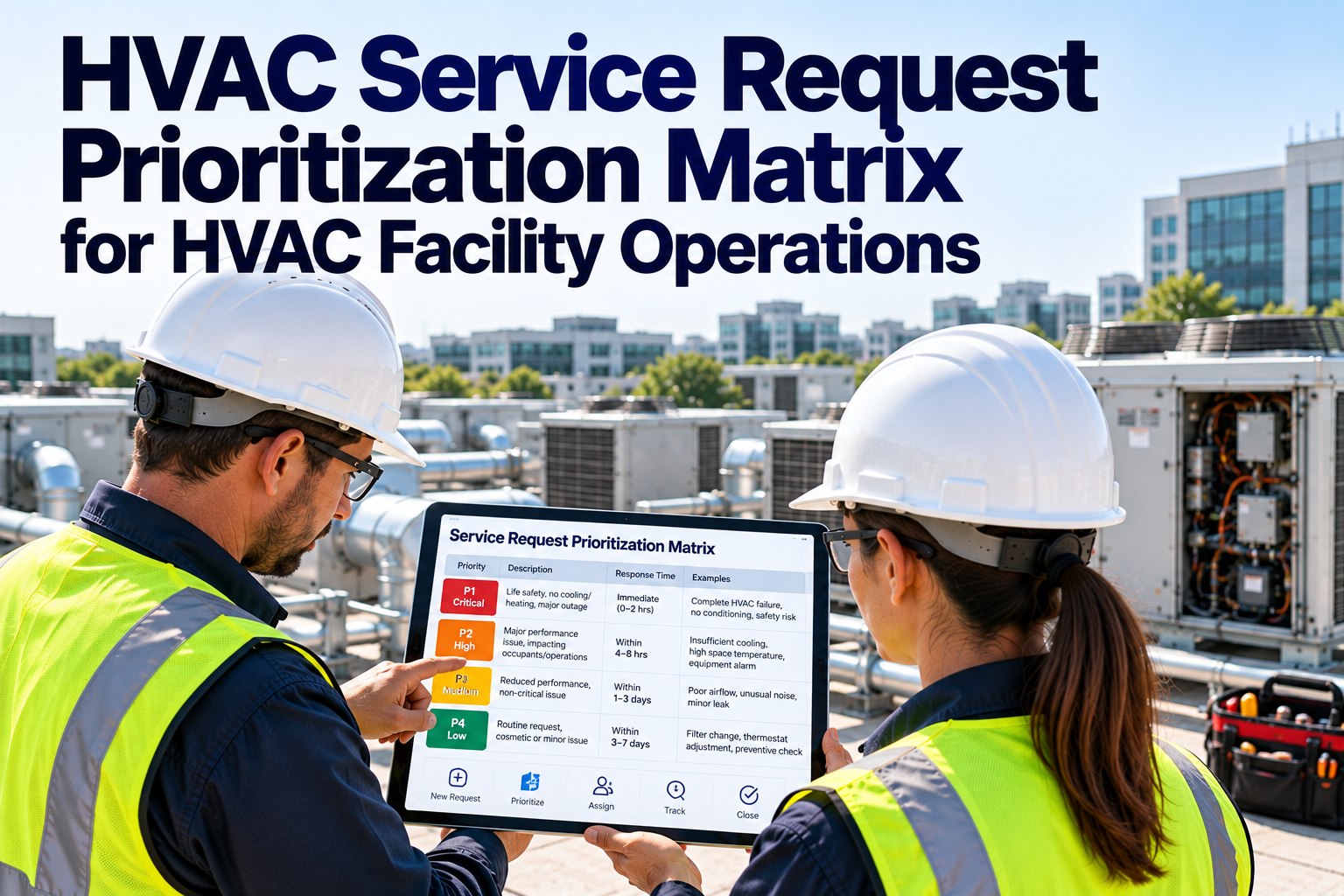
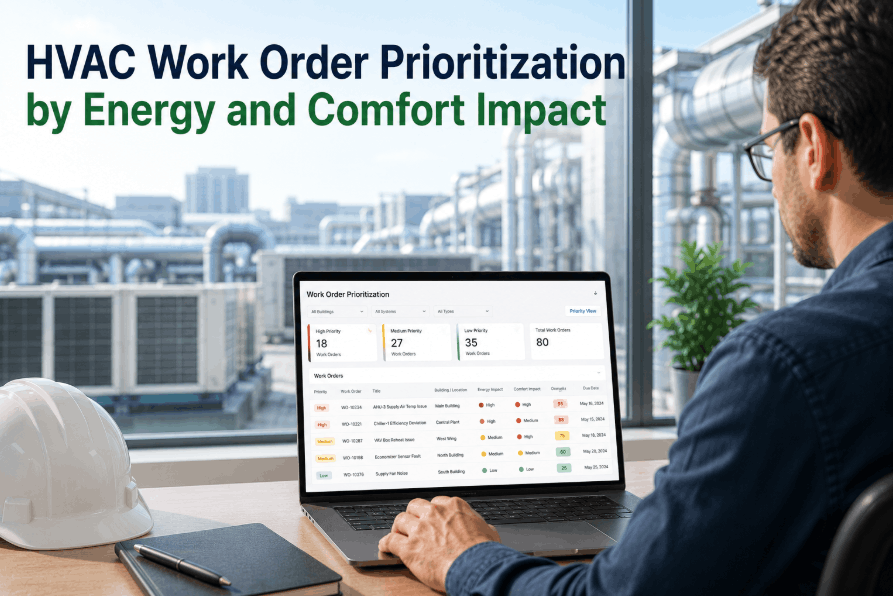
Maintenance backlog risk scoring gives HVAC operations leaders a structured method for converting an undifferentiated list of open work orders into a prioritized action plan — separating the items that will drive asset failure or regulatory exposure within days from those that can safely age another month. Without a scoring model, backlog prioritization defaults to arrival order, technician preference, or complaint volume — none of which reflect asset criticality, failure consequence, or operational exposure accurately. Sign Up Free to configure OxMaint's work order management and backlog prioritization workflows before delayed items accumulate into a compliance or equipment failure event. OxMaint structures open work order visibility, asset criticality tagging, and urgency-weighted scheduling across HVAC maintenance teams — giving operations leaders a risk-ranked backlog view rather than an undifferentiated queue. Book a Demo to see how OxMaint supports HVAC backlog management and maintenance risk scoring for operations programs.
HVAC Operations · Maintenance Planning · 2026
Maintenance Backlog Risk Scoring for HVAC Operations Leaders
Score open HVAC work by urgency, asset exposure, and failure impact so operations leaders can prioritize the right backlog items before delays stack up.
68%Of HVAC failures in facilities with large backlogs traceable to delayed low-priority work orders
−31%Unplanned failure rate reduction in programs with structured backlog risk scoring
4×Emergency repair cost premium vs. planned maintenance cost for the same HVAC task
90 dayAverage backlog age at which deferred HVAC work begins generating compounding failure risk
5 Dimensions of HVAC Backlog Risk Scoring
Effective backlog risk scoring requires more than tagging work orders as high, medium, or low — it requires scoring across the dimensions that actually predict failure consequence, operational disruption, and compliance exposure. The five scoring dimensions below represent the most reliable predictors of which open HVAC work orders should advance in the queue — and where OxMaint's work order management and asset criticality workflows give operations leaders a structured view of backlog exposure. Sign Up Free to configure OxMaint's backlog management and risk scoring workflows for your HVAC operations program.
01
Asset Criticality — Failure Consequence
Risk Dimension: Operational Impact
Highest Weight
Open work on HVAC assets that serve critical zones — data centers, surgical suites, server rooms, primary air handlers — carries a higher consequence score than equivalent work on secondary or redundant equipment. Criticality scoring must be embedded at the asset level, not assigned during backlog review.
02
Work Order Age and Delay Accumulation
Risk Dimension: Temporal Exposure
Escalation Signal
HVAC work orders that age past 30, 60, and 90 days without completion accumulate risk in predictable patterns — deferred filter changes become coil fouling; deferred belt inspections become mid-season motor failures. Age-weighted scoring surfaces these escalation risks before the deferred item becomes an emergency.
03
Failure Mode and Known Failure Pathway
Risk Dimension: Failure Predictability
Scoring Multiplier
Work items with documented failure pathways — refrigerant leak monitoring, bearing wear, belt tension — score higher than cosmetic or administrative items because the downstream failure consequence is known and time-bounded. OxMaint root cause history surfaces which asset types have the shortest window between deferred maintenance and failure.
04
Compliance and Regulatory Deadline
Risk Dimension: Regulatory Exposure
Non-Negotiable
Open work tied to code-required inspection intervals, refrigerant compliance, or air quality regulation carries a non-negotiable risk score regardless of asset criticality. Compliance deadlines in OxMaint flag these items automatically — preventing regulatory exposure from being absorbed into routine backlog sequencing.
05
Repeat Fault Pattern on Same Asset
Risk Dimension: Recurrence Signal
Escalation Flag
Open work orders on assets with prior closed work orders for the same fault type score higher — repeat faults indicate that the root cause was not addressed on the prior closure. OxMaint's work order history surfaces repeat-fault assets automatically, preventing backlog management from treating a recurring problem as a routine new item.
HVAC Backlog Management — Without vs. With OxMaint
The structural difference between queue-order backlog management and risk-scored prioritization is most visible when a deferred low-priority item drives a mid-season equipment failure that disrupts operations and forces emergency expenditure. The comparison below shows what changes when OxMaint structures backlog visibility, asset criticality tagging, and urgency-weighted scheduling for HVAC operations programs. Book a Demo to assess your current backlog management approach and identify the risk exposure OxMaint can close.
HVAC Backlog Management Maturity — Where Does Your Program Score?
HVAC backlog management capability ranges from first-in-first-out queue processing to fully structured risk-scored prioritization with asset criticality weighting, compliance flagging, and repeat-fault escalation. The maturity framework below identifies where each operations program currently operates — and the specific backlog management gap generating the most unplanned failure risk today. Book a Demo to assess your HVAC backlog management maturity with an OxMaint solutions engineer.
HVAC Backlog Risk Management Maturity
Score 5 = risk-scored CMMS-integrated backlog · Score 1 = no backlog structure
5
Risk-Scored Backlog · Asset Criticality · Compliance Flagging
All open work orders scored by asset criticality, work order age, failure pathway, compliance deadline, and repeat-fault status. Operations leaders have live structured visibility without status requests.
Profile: Deferred maintenance escalations detected before failure. Backlog prioritization is evidence-based, not queue-order or technician-preference driven.
4
Structured Work Orders · Partial Prioritization
Work orders logged with priority tags. Asset criticality documented but not systematically applied to backlog sequencing. Compliance items tracked but not elevated automatically.
Action: Apply asset criticality weighting to open backlog views. Compliance deadline flagging is the highest-impact next configuration step.
3
Work Order Logging · FIFO Processing
Open work orders logged in CMMS. Processing order based on submission date without risk weighting. Asset criticality not applied to backlog sequencing.
Gap: FIFO processing treats critical and non-critical assets identically. Asset criticality tagging is the highest-impact next step.
2
Informal Queue · Technician-Priority Sequencing
Backlog managed informally through whiteboard, spreadsheet, or verbal priority assignment. Work sequence driven by technician availability and preference rather than asset risk.
Risk: High-consequence deferred items invisible to operations leaders until failure event or complaint escalation forces attention.
1
No Backlog Structure
Open maintenance items not tracked systematically. No CMMS backlog record. Work completed on complaint-driven priority only.
Risk: Deferred maintenance invisible until equipment failure. Every unplanned failure is a backlog management consequence, not a random event.
Score Your HVAC Backlog Before Delayed Items Become Emergency Repairs.
OxMaint structures open work order visibility, asset criticality scoring, and compliance flagging for HVAC operations programs — in one CMMS platform.
How OxMaint Structures HVAC Backlog Risk Management
OxMaint connects open work order management, asset criticality tagging, compliance deadline tracking, and repeat-fault identification into a single backlog visibility structure for HVAC operations leaders. Every open item is visible against asset criticality, age, and escalation signals — giving operations leaders a risk-ranked backlog view rather than an undifferentiated queue. Sign Up Free to configure OxMaint's backlog management workflows for your HVAC operations program. Book a Demo to see how OxMaint adapts to your team structure, asset portfolio, and operations leader reporting requirements.
Asset Criticality Tagging
Per Asset Configuration
Criticality embedded at the asset level
OxMaint asset records include criticality classification — applied automatically to all work orders on that asset, eliminating manual priority assessment at each backlog review cycle.
Work Order Age Visibility
Live Backlog View
Age-weighted escalation in backlog queue
Open work order age visible in backlog views — age thresholds configurable per asset class to surface deferred high-risk items before they cross into failure probability range.
Compliance Deadline Flagging
Non-Negotiable Priority
Regulatory items elevated automatically
Work orders tied to compliance inspection intervals or regulatory deadlines flagged in backlog view — preventing compliance items from being absorbed into routine operational queue sequencing.
Repeat-Fault Detection
Every Work Order Submission
Prior history surfaced at submission
OxMaint surfaces prior work order history on the same asset and fault type at new submission — flagging repeat faults for escalated scoring and root cause review before closure.
"
We had a backlog of 140 open work orders across three buildings going into the cooling season. No structured priority — just submission date order and whatever the technicians tackled first. After configuring OxMaint's asset criticality tags and setting age escalation thresholds, we found 12 items on critical-zone AHUs that were 60+ days old and had clear failure pathways from prior root cause records. We cleared those 12 first and avoided what would have been three confirmed mid-season failures based on the fault patterns. The backlog didn't shrink immediately, but the risk profile changed completely. We entered the cooling season with visibility instead of guesswork.
HVAC Operations Manager — Municipal School District, 3 buildings, 80+ HVAC assets, Ohio, USA
Frequently Asked Questions
What factors should be included in HVAC maintenance backlog risk scoring?
Asset criticality, work order age, known failure pathway, compliance deadline, and repeat-fault history are the five primary dimensions that produce an accurate risk score for open HVAC backlog items.
How does OxMaint help prioritize HVAC maintenance backlogs?
OxMaint structures open work order visibility with asset criticality tagging, age escalation flags, compliance deadline surfacing, and repeat-fault identification — giving operations leaders a risk-ranked backlog view without manual scoring overhead.
At what backlog age does deferred HVAC maintenance become high risk?
For critical-zone HVAC assets, deferred work orders begin generating elevated failure risk after 30–45 days. For secondary assets, the risk escalation threshold is typically 60–90 days, depending on failure pathway and seasonal load factors.
Can OxMaint surface repeat-fault assets in the backlog automatically?
Yes. OxMaint's work order history surfaces prior closed work orders on the same asset and fault type at new submission — flagging repeat faults for escalated priority and root cause review before another closure without cause documentation.
Does OxMaint support multi-building backlog visibility for operations leaders?
Yes. OxMaint structures backlog views across multiple buildings and asset portfolios — giving operations leaders a consolidated risk-ranked view without requiring status requests from individual technicians or site teams.
Turn Your HVAC Backlog Into a Prioritized Risk Register — Not an Undifferentiated Queue.
OxMaint structures asset criticality scoring, work order age escalation, and compliance deadline flagging for HVAC operations programs — converting open maintenance items into risk-ranked decisions.