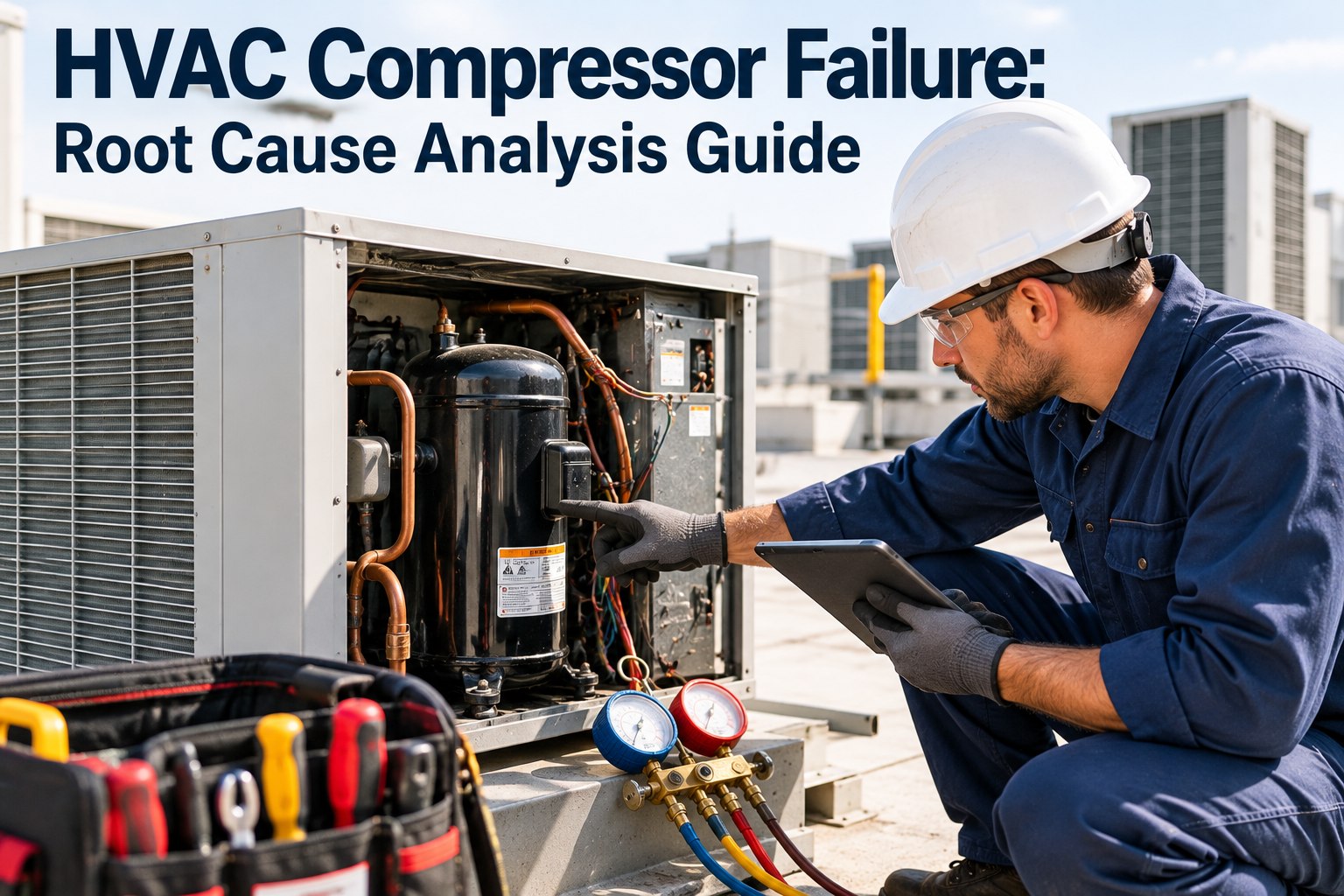
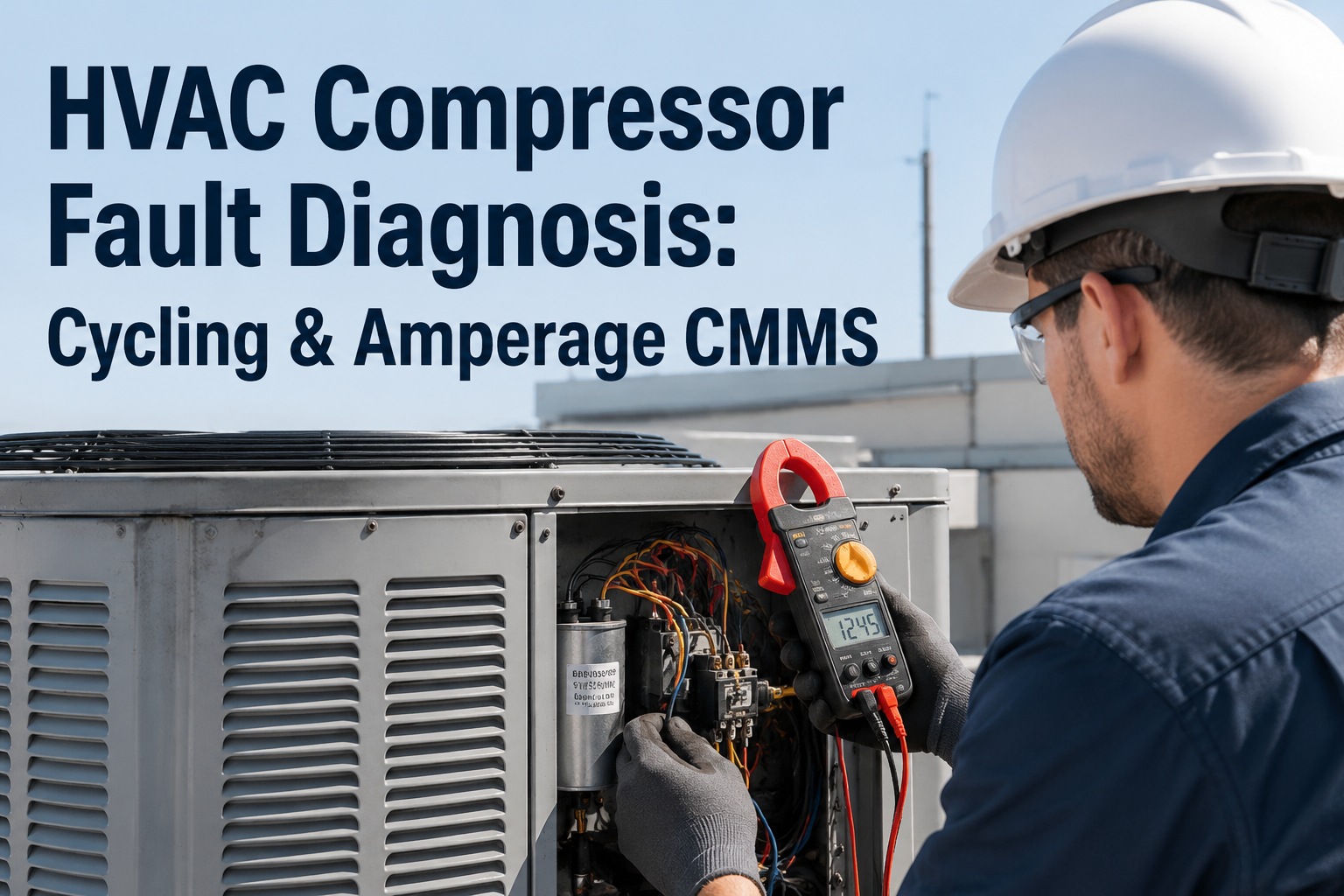
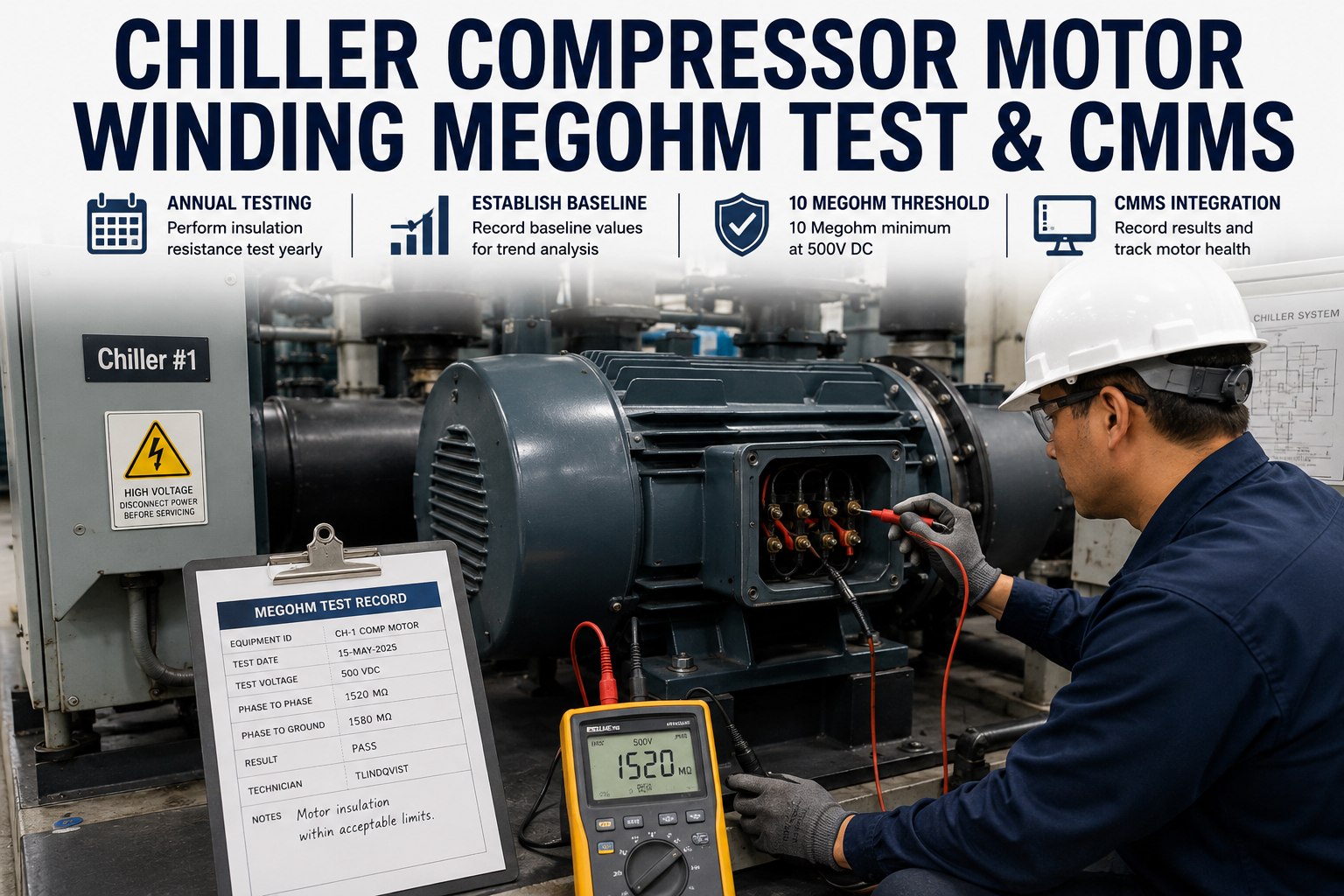
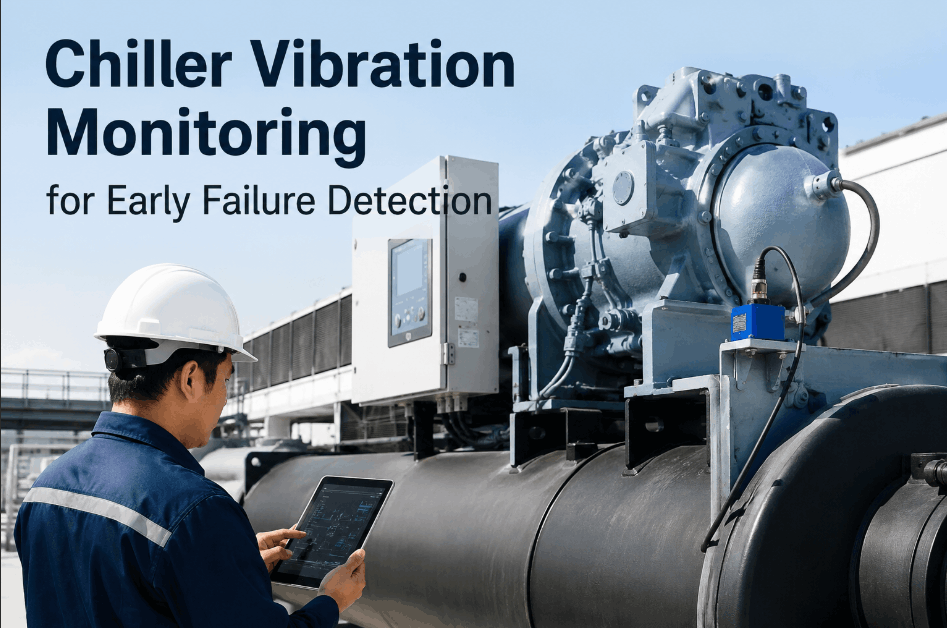
Every commercial HVAC compressor that fails catastrophically this year was sending measurable warning signals for weeks before it stopped — vibration trending upward at bearing frequencies, motor current creeping 12–18% above rated draw, discharge temperature widening past baseline, refrigerant pressure drifting from its normal curve. None of those signals triggered an action because nobody was reading them. OxMaint's Predictive Maintenance AI reads all four simultaneously, correlates them against a rolling asset baseline, and creates a work order the moment the pattern confirms a developing fault — giving your team 3 to 8 weeks of lead time instead of a 2 AM emergency call.
Why Compressors Give the Most Costly Failures
The compressor is the heart of every refrigeration circuit — chiller, rooftop unit, split system, or VRF. When it fails, the entire system goes down. Unlike a clogged filter or a failed sensor, a compressor failure is rarely a quick fix: replacement parts lead times run 3–21 days, labor costs are significant, and every hour of downtime has a direct tenant comfort, food safety, or operational impact. The financial asymmetry between early detection and late-stage failure is among the highest of any building system.
The 4 Sensor Signals That Predict Compressor Failure
No single sensor tells the full story. A compressor anomaly is confirmed when vibration, current, temperature, and pressure all deviate from baseline together — OxMaint's multi-sensor correlation engine filters single-sensor drift as noise and only escalates when the pattern matches a known failure signature.
See AI Fault Detection Running on Your Compressors
OxMaint's Predictive Maintenance AI reads vibration, current, pressure, and temperature simultaneously — correlating signals against a rolling 90-day asset baseline to confirm fault patterns 3 to 8 weeks before breakdown. Work orders generate automatically the moment a pattern is confirmed.
Compressor Failure Modes: Detection Lead Times and Costs
| Failure Mode | Primary Sensor Signal | Detection Lead Time | Cost if Undetected | Cost if Caught Early |
|---|---|---|---|---|
| Bearing wear / fatigue | Vibration (BPFO/BPFI) + Ultrasonic | 14–28 days | $18,000–$65,000 seizure | $400–$800 bearing replacement |
| Refrigerant undercharge | Pressure trend + Current draw | 7–14 days | $2,400–$8,000 damage + recharge | $600–$900 service call |
| Condenser fouling | Approach temperature + Current | 2–6 weeks | 15–25% energy waste + compressor stress | $300–$600 coil cleaning |
| Discharge valve failure | Pressure ratio deviation | 7–14 days | $4,000–$18,000 repair | $800–$1,500 planned valve service |
| Motor winding degradation | MCSA harmonic + Temperature | 4–8 weeks | $6,000–$22,000 motor burnout | $1,200–$3,000 rewind or replace |
| Oil system failure | Vibration + Discharge temp | 1–3 weeks | $25,000–$65,000 full seizure | $500–$1,200 oil change + seal check |
How OxMaint AI Monitors Compressors: From Sensor to Work Order
The gap between sensor data and maintenance action is where most predictive maintenance programs fail. Sensor dashboards that require a human to spot the trend only catch faults when someone is looking. OxMaint closes the gap with an automated pipeline that runs continuously — no dashboard monitoring required.
Expert Review
The compressor failures that cost facilities the most are never surprises in hindsight — the data was there. The problem is that traditional alarm systems are threshold-based and single-sensor: vibration above X triggers an alarm, but vibration at X minus 5% alongside rising current and widening approach temperature is a more dangerous condition that no fixed threshold catches. Multi-sensor correlation is what separates a monitoring dashboard from genuine predictive maintenance. When OxMaint confirms a fault pattern across vibration, current, and temperature simultaneously, the false positive rate drops to near zero and the detection lead time extends to 3–8 weeks. That window is the difference between a $600 service call and a $40,000 compressor replacement.
By Compressor Type: What to Monitor
Start Monitoring Your Compressors This Week
OxMaint integrates with existing BAS systems, SCADA feeds, and wireless IIoT sensors — connecting compressor data to automatic work order creation from day one. Most HVAC fleets are fully connected within 2–4 weeks of deployment.
Frequently Asked Questions
How early can predictive maintenance detect a compressor bearing failure?
Vibration-based predictive maintenance detects compressor bearing faults 14 to 28 days before functional failure in most commercial HVAC compressors. The detection mechanism is frequency spectrum analysis — as a bearing begins to develop a fatigue crack, it generates vibration energy at mathematically predictable frequencies (bearing pass frequencies) that appear in the vibration spectrum weeks before the fault becomes audible or produces measurable temperature rise. OxMaint's Predictive Maintenance AI monitors these frequencies continuously and confirms a bearing fault only when vibration, current draw, and temperature all deviate simultaneously in the known bearing failure pattern — eliminating the false positives that cause maintenance teams to ignore alerts. A healthcare system managing 187 compressors using AI monitoring detected 14 developing failures in a single year, including two centrifugal bearing degradation cases that would have caused catastrophic failures had they run to breakdown.
What sensors are required to monitor an HVAC compressor predictively?
A minimum viable compressor monitoring setup requires three sensor types: vibration (triaxial accelerometer mounted on the compressor bearing housings and motor), current (CT clamps on the compressor motor supply), and temperature (thermocouple or RTD on discharge line and motor housing). Pressure transducers on suction and discharge lines add significant fault detection capability — particularly for refrigerant system faults — and are strongly recommended for chillers and larger rooftop units. For facilities with existing building automation systems, many of these signals are already available via BACnet, Modbus, or OPC-UA and can be connected to OxMaint without additional hardware. For assets without existing instrumentation, wireless IIoT sensors can be retrofit-mounted on any compressor in under two hours. The combination of all four signal types — vibration, current, pressure, temperature — provides the multi-sensor correlation that separates genuine fault detection from single-sensor false alarms.
How does OxMaint avoid false alarms in compressor monitoring?
The most common failure mode of compressor monitoring programs is alert fatigue — systems that generate so many false alarms that maintenance teams begin ignoring them. OxMaint addresses this through two mechanisms. First, the AI builds a dynamic 90-day baseline per sensor per asset that accounts for seasonal load variation, ambient temperature changes, and occupancy patterns — so an alarm on a hot summer afternoon isn't triggered by a compressor simply running harder than it does in February. Second, fault confirmation requires multi-sensor correlation: OxMaint only escalates a compressor anomaly to a work order when vibration, current, and temperature deviate simultaneously in a pattern matching a known failure signature. A single sensor reading above threshold is logged and monitored but does not create a work order. This two-layer approach consistently reduces false positive rates to near zero while maintaining detection sensitivity in the 14–28 day early warning window.
Can OxMaint monitor compressors alongside other HVAC assets in the same dashboard?
Yes. OxMaint provides a unified asset health dashboard that covers every HVAC asset type — chillers, rooftop units, AHUs, cooling towers, fans, pumps, and VRF systems — alongside compressors. Each asset displays its current health status, active anomalies, sensor trend charts, and maintenance history in a single view. For multi-site operations, OxMaint's portfolio dashboard aggregates health status across all buildings on a single screen — facility managers can identify which sites have red-flagged compressors, which assets are approaching maintenance thresholds, and where reactive repair spend is climbing, all without switching between systems. The Analytics and Reporting module generates automatic monthly equipment health reports that can be sent to building owners, property managers, or engineering directors — translating sensor data into the financial and operational evidence that justifies PM program investment.