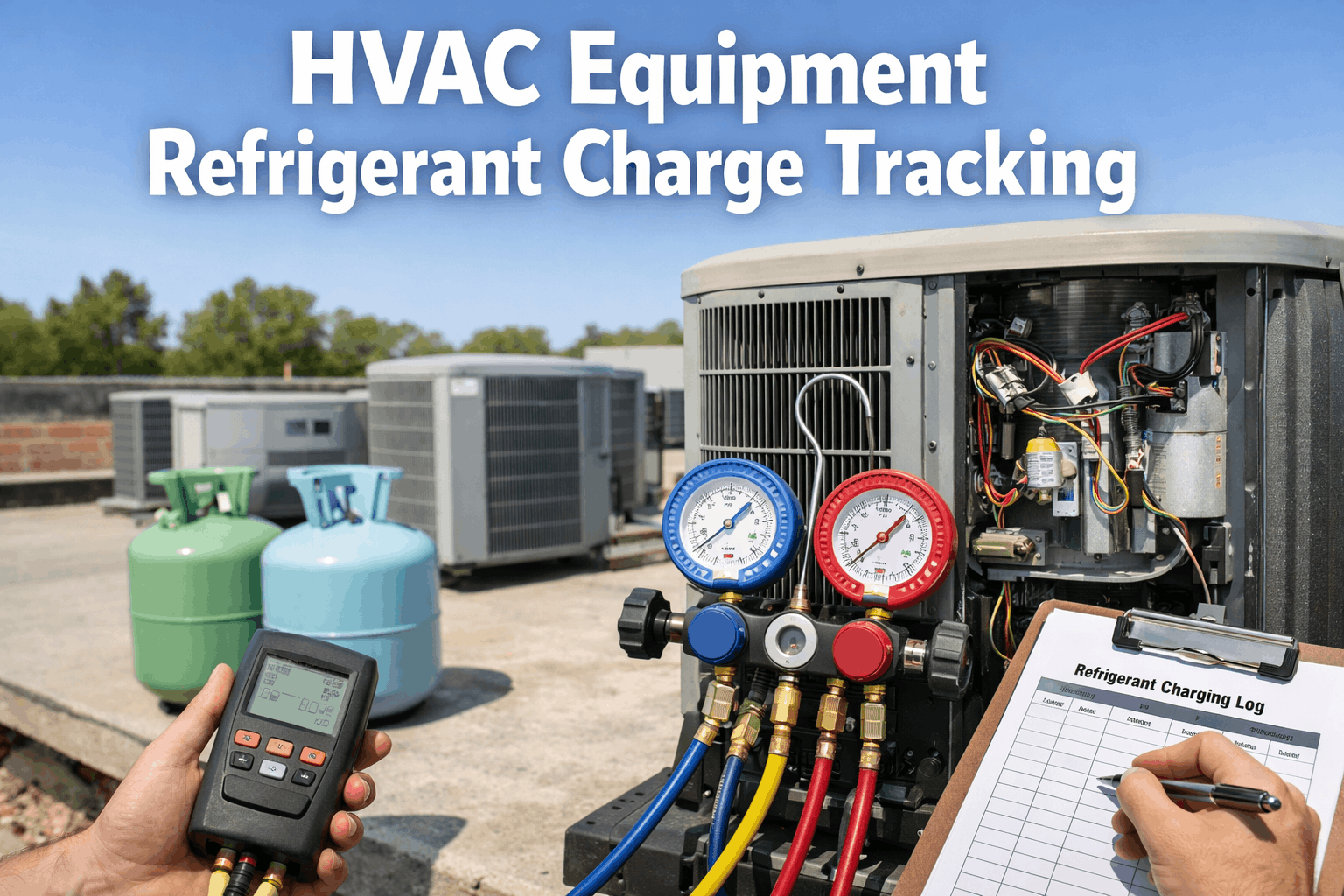
Refrigerant charge errors are among the most common causes of HVAC underperformance in commercial buildings — and among the most avoidable when service technicians follow repeatable charge verification methods tied to actual system conditions rather than rule-of-thumb field estimates. Sign Up Free on Oxmaint to log refrigerant charge data, track system performance across service visits, and build the verification history that confirms charge accuracy over the equipment lifecycle.
Why Refrigerant Charge Verification Methods Matter for Commercial HVAC Service
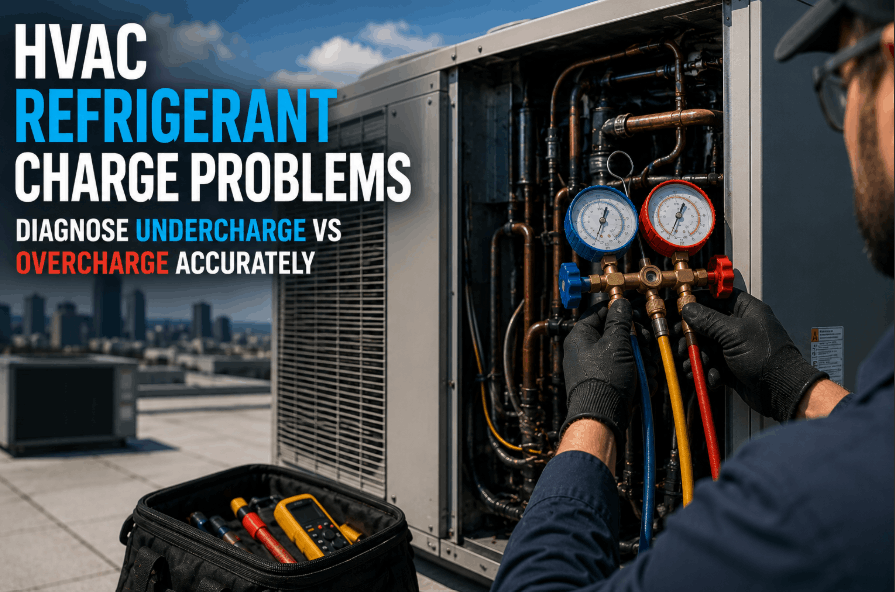
An overcharged or undercharged system operates continuously at reduced efficiency — driving up energy costs, accelerating compressor wear, and degrading cooling output in ways that appear as comfort complaints before they appear as equipment failure codes. Repeatable verification methods applied consistently across service visits are what separate accurate charge confirmation from technician guesswork. Book a Demo to see how Oxmaint structures refrigerant service records to support accurate charge trending across your commercial building portfolio.
Four Primary Refrigerant Charge Verification Methods for Service Techs
Sign Up Free on Oxmaint to configure refrigerant charge verification checklists, log service measurement data per method, and build asset-level charge history that tracks system health across every technician visit.
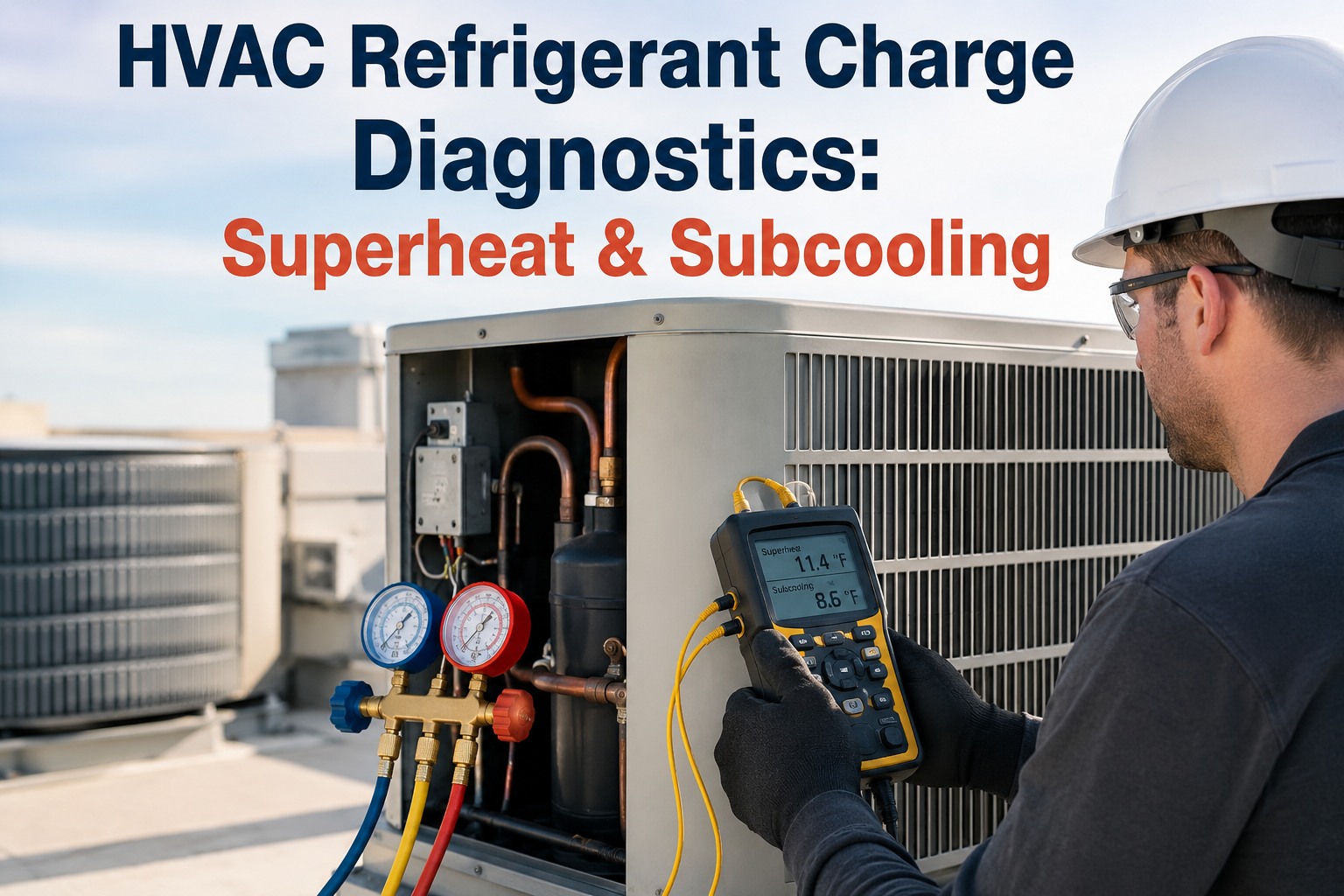
Measures suction line temperature above saturation temperature at evaporator outlet. Target superheat values depend on indoor wet-bulb and outdoor dry-bulb conditions. This method is most reliable on fixed orifice metering device systems and requires accurate psychrometric conditions to produce valid charge confirmation.
Measures liquid line temperature below saturation temperature at condenser outlet. Most accurate for TXV-equipped systems operating at rated conditions. Manufacturer-specified subcooling targets (typically 10–20°F) provide the reference range — deviations indicate overcharge or undercharge requiring correction before load calculations are valid.
Charging to manufacturer-specified refrigerant weight using calibrated scales provides the most repeatable baseline on new or recently serviced systems. Weight-based charging eliminates ambient condition variables — making it the most defensible verification method for warranty compliance and EPA documentation purposes.
Comparing measured suction and discharge pressures against refrigerant-specific PT charts at actual operating conditions detects major charge deviations and system performance anomalies. Used as a diagnostic screening method before committing to superheat or subcooling measurements when system conditions are abnormal.
Charge Verification Method Selection by System Type
No single verification method applies to every commercial HVAC system. Book a Demo to see how Oxmaint's work order system prompts technicians with the correct charge verification method based on asset type — eliminating method selection errors that invalidate charge confirmation results.
| System Type | Metering Device | Primary Method | Supporting Method | Oxmaint Logging Action |
|---|---|---|---|---|
| Split System AC / Heat Pump | Fixed orifice / piston | Superheat method | PT chart screening | Log indoor WB, outdoor DB, suction superheat per visit |
| Split System AC / Heat Pump | TXV / EEV | Subcooling method | Weight-based reference | Log liquid line temp, subcooling delta, refrigerant type |
| Packaged Rooftop Unit | TXV (most commercial) | Subcooling method | Weight-based at commissioning | Log subcooling vs nameplate target per unit per visit |
| VRF / VRV System | EEV (electronic) | Manufacturer diagnostic mode | Subcooling and weight reference | Log diagnostic output and charge adjustment quantities |
| Chiller Plant | Variable — expansion valve | Approach temperature method | Refrigerant sight glass and PT | Log approach temps, condenser leaving water, refrigerant level |
Building a Refrigerant Charge Management Program with Oxmaint
Register HVAC Assets with Refrigerant Type and Factory Charge Specifications
Create Oxmaint asset records for every refrigerant-containing unit — including refrigerant type, factory charge weight, metering device type, and manufacturer subcooling or superheat targets. Asset-level specifications eliminate the need for technicians to source nameplate data in the field before performing charge verification.
Configure Charge Verification Checklists Matched to Asset Type
Oxmaint work order checklists prompt technicians with the correct verification method for each asset — capturing suction superheat, subcooling delta, refrigerant weight added, PT readings, and ambient conditions as structured data rather than free-text notes that can't be trended over time.
Track Charge Data Across Service Visits to Detect Slow Leak Trends
Recurring charge additions at each visit reveal slow refrigerant leaks that don't trigger pressure alarms but steadily degrade system performance. Oxmaint trends refrigerant addition history per asset — enabling early leak identification that prevents EPA violation thresholds and compressor damage from slow-developing charge loss.
Maintain EPA 608 Refrigerant Handling Records Automatically
Oxmaint work order completion captures technician certification, refrigerant type, quantity recovered, and quantity added — generating the service record documentation required for EPA 608 compliance without additional data entry after the service visit is complete.
Report Charge Health Across the Portfolio for Procurement and Compliance
Oxmaint aggregates refrigerant service data across every asset in the portfolio — flagging units with recurring charge additions, tracking refrigerant consumption trends for procurement planning, and producing compliance-ready reports for EPA record-keeping audits.
Refrigerant Charge Health KPIs for Commercial HVAC Service Programs
Measures the percentage of HVAC PM visits where structured charge verification data was recorded in the work order. Low completion rates indicate technicians are skipping verification — leaving charge accuracy unconfirmed across the portfolio.
Tracks the percentage of units requiring refrigerant addition at each PM visit. Rates above 10% indicate systemic leak problems or poor prior charge accuracy — both requiring investigation before the next service cycle.
Identifies assets with slow refrigerant leaks by flagging units that required charge addition at two or more consecutive service visits. Repeat additions trigger leak investigation work orders before EPA reporting thresholds are reached.
Direct measure of charge accuracy at time of service. Deviations exceeding ±5°F confirm a charge condition requiring correction — and should trigger immediate recheck before the work order is closed to confirm the adjustment achieved target values.
Confirms all refrigerant recovery, addition, and disposal events are captured in work order records with required fields — technician certification, refrigerant type, quantity, and system identifier. Incomplete records create compliance exposure during EPA audits.
Annual refrigerant addition quantity per asset reveals chronic leak conditions, helps forecast refrigerant procurement needs, and identifies candidates for leak repair versus equipment replacement when consumption costs exceed service economics.