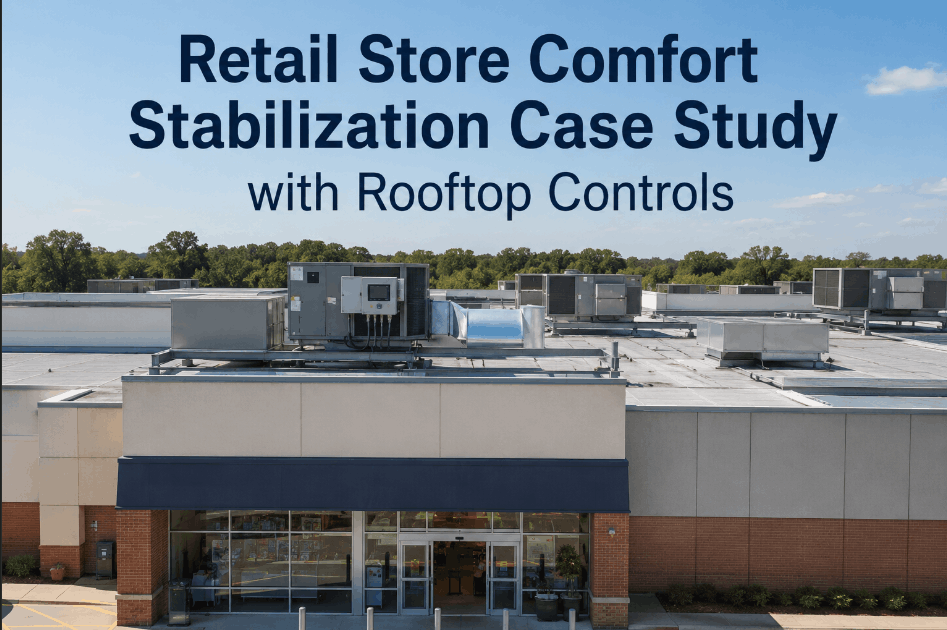
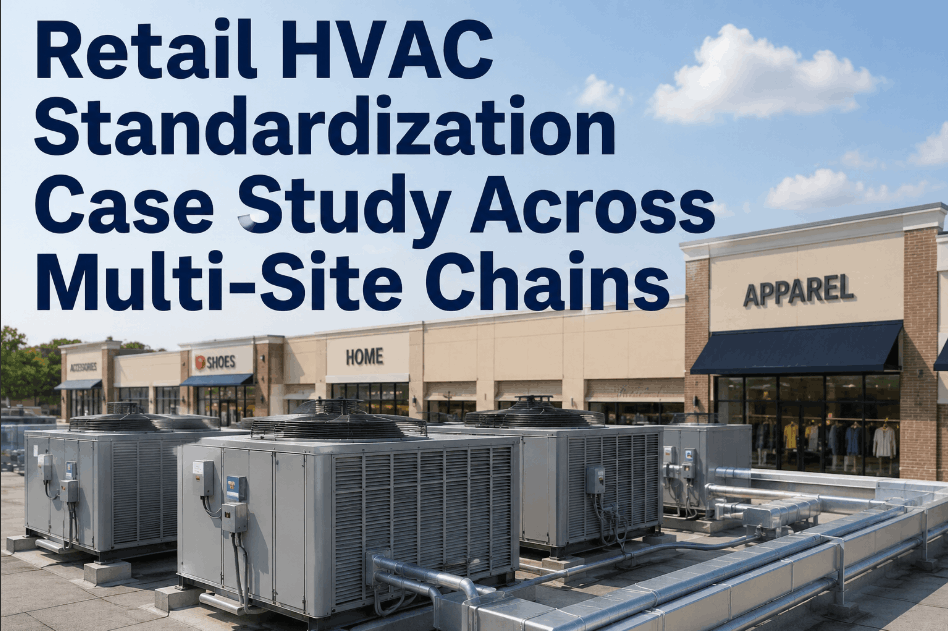
Building automation alarm management in retail environments is one of the most neglected dimensions of store operations — not because facility teams don't care about comfort, but because alarm volumes have grown to the point where operators can no longer distinguish urgent faults from chronic nuisance alerts. A multi-location retail chain found itself managing hundreds of daily HVAC and BAS alarms across its store portfolio, with operators so conditioned to dismiss notifications that genuine comfort failures were going unaddressed for hours. Customer-facing temperature inconsistency, staff comfort complaints, and after-hours equipment faults were all buried under the same alarm noise. If your retail facilities team is managing store comfort through a building automation system that generates more nuisance alerts than actionable intelligence, Sign Up Free to see how Oxmaint structures alarm rationalization and HVAC work order management for retail facility operations — or Book a Demo with a retail facilities management specialist.
Alarm Rationalization · Nuisance Alerts · Operator Focus · Store Comfort
Stop Letting Nuisance Alarm Volume Bury Real Equipment Faults and Start Managing Store Comfort With Prioritized, Actionable Maintenance Workflows
Alarm-linked work order creation, fault triage workflows, asset-level HVAC history, operator escalation paths, and store comfort trend tracking — Oxmaint helps retail facility teams reduce alert noise, recover operator focus, and keep customer-facing temperatures predictable across every location.
Facility Profile
The Operation: Multi-Location Retail Chain With High Alarm Volume, Operator Fatigue, and Inconsistent Store Comfort Across the Portfolio
Facility Overview
IndustryRetail — multi-location specialty chain with BAS-connected rooftop HVAC units across urban and suburban store formats
Scope23 store locations, 4–8 RTU units per store, centralized facilities team monitoring BAS alarms across all locations
Team5 facilities coordinators, 3 field technicians, 1 regional facilities manager, vendor HVAC service contracts at each location
Prior SystemBAS alarm email notifications, paper service tickets from store managers, no structured triage or prioritization workflow
Oxmaint FeaturesAlarm-Linked Work Order Creation · Fault Triage Workflows · Asset-Level RTU History · Operator Escalation Paths · Comfort Trend Logging · PM Scheduling · Vendor Work Order Management · Inspection Checklists · Maintenance History
Baseline Alarm and Comfort Gaps
340+
Average daily BAS alarm notifications across the 23-store portfolio — volume had conditioned operators to dismiss alerts rather than evaluate them
67%
Of alarms classified as nuisance or duplicate notifications — generated by alarm thresholds set too tightly for normal operational variance in retail environments
4.2hr
Average response time to genuine equipment fault alarms during operating hours — real faults buried under nuisance alert volume went undetected for hours
Root Cause Analysis
Why Nuisance Alarm Volume Persisted — and Why Store Comfort Remained Unpredictable Despite Active BAS Monitoring
A systematic review of alarm logs, service records, and store comfort complaints across all 23 locations identified four structural problems that converted a capable BAS infrastructure into a noise generator that obscured genuine equipment faults. The facilities team had the tools and the intent — the failure was in how alarms were configured, prioritized, and converted into structured maintenance action. Sign Up Free to bring structured alarm rationalization and work order triage to your retail facilities team — or Book a Demo to see how Oxmaint manages fault-to-work-order workflows across multi-location retail portfolios.
44%
Alarm Thresholds Set at Commissioning and Never Reviewed — Normal Variance Generating Constant Alerts
BAS alarm thresholds were configured at system installation and had never been reviewed against actual operating conditions. Retail environments with variable occupancy, frequent door opening, and changing seasonal loads produced temperature and pressure swings that constantly triggered thresholds set for steady-state operation — generating hundreds of alerts that were technically accurate but operationally meaningless.
29%
No Structured Triage Path — All Alarms Delivered Equally Regardless of Urgency or Impact
Every BAS alarm generated the same email notification to the same facilities coordinator distribution list. There was no prioritization layer, no urgency classification, and no escalation path. Operators developed informal rules to ignore low-priority notifications — rules that were never documented and occasionally caused genuine faults to be missed by the wrong person at the wrong time.
18%
Alarms Not Linked to Work Orders — Response Activity Not Captured or Tracked
When operators identified a genuine fault alarm, the response was tracked informally through email threads and phone calls with service vendors. There was no structured work order created from the alarm, no technician assignment logged, and no resolution record tied to the specific RTU asset — making repeat fault analysis and vendor accountability impossible.
9%
Store Comfort Complaints Not Connected to Equipment Records — Root Cause Invisible
When store managers reported comfort complaints, they submitted them through a separate channel from the BAS alarm system. There was no structured link between a comfort complaint at a specific store and the alarm history or maintenance record for the RTU units serving that space — making root cause identification and repeat fault prevention impossible.
The Solution
How Oxmaint Helped the Retail Chain Reduce Nuisance Alarms, Recover Operator Focus, and Improve Store Comfort Consistency
The retail chain deployed Oxmaint to replace the unstructured alarm email workflow with a systematic fault triage and work order management system linked to asset records. Each RTU unit across all 23 stores was configured in Oxmaint as a distinct asset with equipment type, location, and service history recorded. Incoming fault notifications were routed through an Oxmaint triage workflow that classified alarms by urgency and converted genuine faults into work orders assigned to the relevant field technician or service vendor. Alarm threshold parameters were reviewed and rationalized to reduce nuisance notification volume at the BAS level. Store comfort complaints were entered as work orders in Oxmaint and linked to the RTU assets serving the affected store area. Book a Demo to see how alarm rationalization and work order management works across multi-location retail portfolios.
01
Alarm Threshold Rationalization to Eliminate Nuisance Notification Volume at the Source
Alarm threshold parameters across the BAS portfolio were reviewed against 12 months of actual operating data per store format. Thresholds were adjusted to reflect real retail operating conditions — accounting for occupancy variation, seasonal load swings, and door-opening patterns — reducing the daily alarm volume by eliminating alerts generated by normal operational variance rather than genuine equipment faults.
02
Structured Fault Triage Workflow With Urgency Classification and Escalation Paths
A tiered alarm triage workflow was built in Oxmaint classifying incoming fault notifications by urgency — equipment failure, performance degradation, or informational — with defined escalation paths for each tier. High-urgency faults triggered immediate work order creation and field technician notification. Informational alerts were batched for scheduled review rather than generating individual notifications — eliminating the volume that had produced operator fatigue.
03
Alarm-to-Work-Order Conversion With Asset-Level RTU History Per Store
Genuine fault alarms were converted directly into Oxmaint work orders linked to the specific RTU asset generating the fault. Technician assignments, vendor dispatches, and resolution records were all captured against the asset — creating a searchable fault history per unit per store. For the first time, the facilities team could identify which specific RTU units were generating repeat faults and adjust PM frequency or initiate replacement planning accordingly.
04
Comfort Complaint-to-Work-Order Linking for Root Cause Visibility by Store and Asset
Store manager comfort complaints were entered as work orders in Oxmaint and linked to the RTU assets serving the affected floor area. The facilities team could now compare complaint frequency against fault history and PM records for each unit — identifying chronic problem assets, adjusting monitoring frequency, and demonstrating response to store operations through closed work order records with resolution timestamps.
Results at 90 Days
Alarm Volume, Operator Response, and Store Comfort Metrics Three Months After Deployment
-63%
Reduction in daily BAS alarm notifications across the portfolio — threshold rationalization eliminated nuisance volume at the source
-78%
Reduction in average genuine fault response time — from 4.2 hours to under 55 minutes during operating hours
100%
Of genuine fault alarms now converted to tracked work orders with asset linkage, technician assignment, and resolution records
47%
Reduction in store comfort complaints linked to HVAC equipment faults — faster fault response prevented comfort degradation from reaching customers
3.2×
Increase in operator-identified repeat fault assets — structured work order history made chronic problem units visible for the first time
2.9×
ROI on Oxmaint platform cost within 90 days from recovered operator time and reduced comfort-driven store escalations to regional management
| Metric |
Before Oxmaint |
90 Days After |
Change |
| Daily BAS alarm volume |
340+ notifications across portfolio |
63% reduction after rationalization |
-63% |
| Genuine fault response time |
4.2 hours average during hours |
Under 55 minutes average |
-78% |
| Faults converted to work orders |
Informal — email threads, no records |
100% structured in Oxmaint |
+100% |
| Store comfort complaints |
Unlinked to equipment records |
47% reduction in HVAC-related complaints |
-47% |
| Repeat fault asset identification |
No per-asset fault history |
3.2× more assets identified for review |
+3.2× |
| Operator triage structure |
All alarms equal — no prioritization |
Tiered urgency with escalation paths |
Structured |
Key Business Impact
What Structured Alarm Rationalization Means for Retail Facility Operations and Store Comfort
"Retail BAS systems generate alarm volumes that would overwhelm any operations team — and the typical response is alarm fatigue, where operators stop looking because looking has stopped paying off. The fix isn't better operators. It's a structured rationalization process that reduces the noise to what actually matters, and a work order system that converts those signals into trackable actions rather than email threads. When you can see which RTU unit has generated three fault work orders in the last 60 days, you know exactly where to focus your service budget. Oxmaint gives retail facilities teams that visibility without requiring a dedicated BAS analyst — just a clear workflow that turns alarm data into maintenance decisions."
Jerome Whitfield, Retail Facilities Operations and Building Automation Specialist
14 years retail facilities management · Former director of store operations and facilities, national specialty retail chain · Specialist in BAS alarm rationalization, HVAC work order management, and comfort consistency programs for multi-location retail environments
Alarm Triage · Work Order Workflows · Operator Focus · Comfort Consistency
Replace Alarm Email Overload With Structured Fault Triage Before Nuisance Volume Buries the Next Genuine Equipment Failure in Your Stores
Alarm threshold rationalization, fault triage workflows, alarm-to-work-order conversion, asset-level RTU history, comfort complaint linking, and vendor management — Oxmaint gives retail facility teams the operational structure to keep stores comfortable and operators focused across every location.
FAQs
Frequently Asked Questions
How does Oxmaint support alarm rationalization for retail HVAC and BAS systems?
Oxmaint provides a structured triage workflow that classifies incoming fault notifications by urgency, converts genuine equipment faults into tracked work orders, and batches informational alerts for scheduled review — eliminating the flat notification volume that produces operator fatigue.
Can Oxmaint link store comfort complaints to specific RTU equipment records?
Yes. Comfort complaints are entered as work orders in Oxmaint and linked to the RTU assets serving the affected store area, creating a connected maintenance history that allows the facilities team to identify chronic problem units and adjust monitoring or service frequency accordingly.
How does Oxmaint manage HVAC service vendor work orders across multiple retail locations?
Vendor dispatches are tracked in Oxmaint as work orders linked to the specific asset and store location, with assignment, response time, and resolution records captured — enabling vendor performance tracking and asset-level service history across all 23 locations from a single platform.
Is Oxmaint suitable for retail chains managing BAS-connected HVAC across multiple store formats?
Yes. Oxmaint supports multi-site asset management with per-store and per-asset records, allowing different alarm triage configurations and PM schedules for different store formats and RTU types within the same platform.
How quickly can alarm triage workflows and RTU asset tracking be configured in Oxmaint?
Asset setup and triage workflow configuration typically complete within the first week. Most retail facilities teams are routing alarms to structured work orders and capturing asset-level fault history within the first two to three weeks of deployment.
Every Alarm Is a Maintenance Decision Waiting to Happen
Give Your Retail Facilities Team the Alarm Triage Structure It Needs to Keep Operator Focus on Real Faults and Store Comfort Consistent Across Every Location
Oxmaint brings alarm rationalization workflows, fault-to-work-order conversion, asset-level RTU history, comfort complaint linking, and vendor management to retail facility teams — with no additional headcount required.