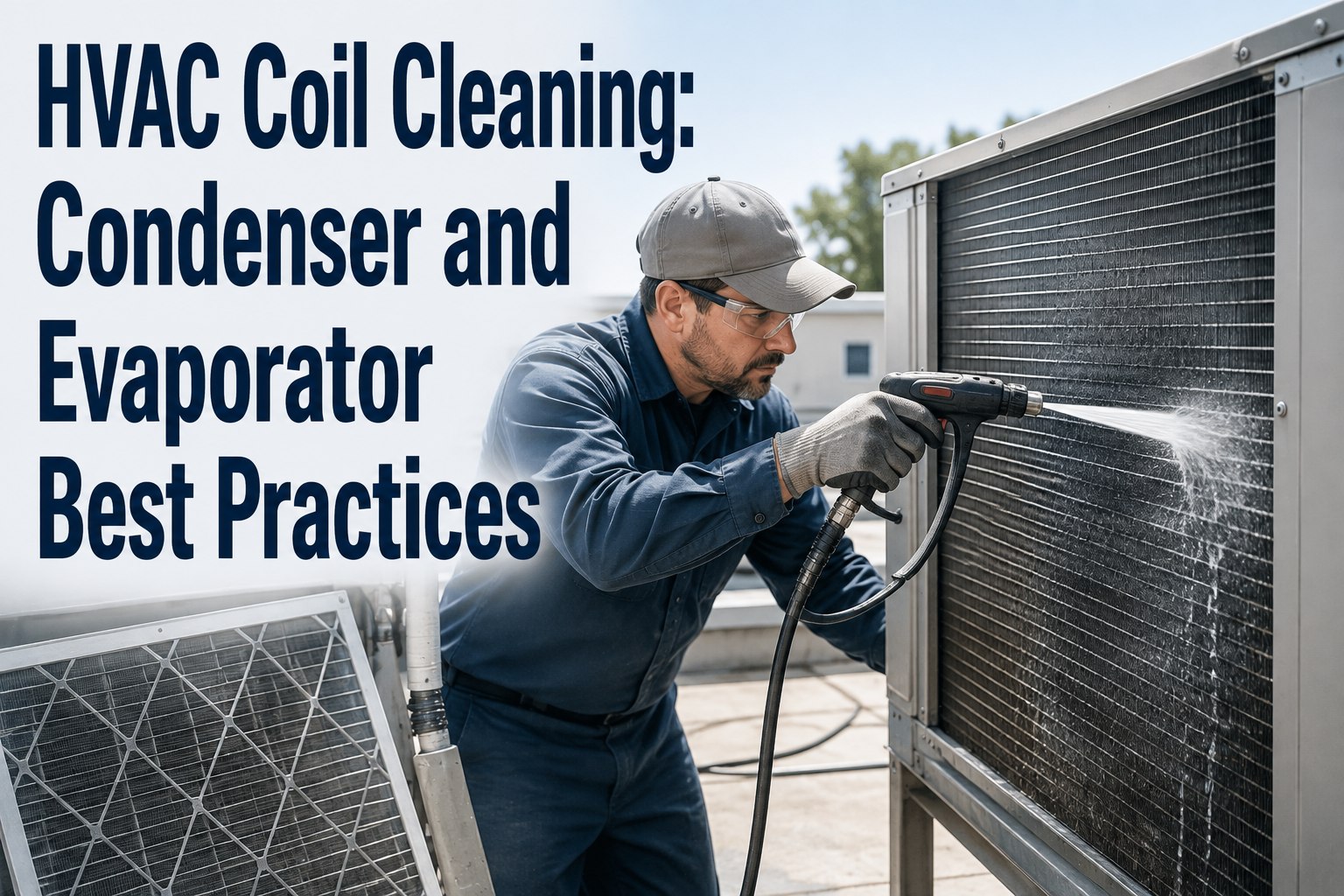
Dirty evaporator and condenser coils are the silent profit killer in HVAC maintenance. A coil with just 0.042 inches of dirt buildup loses 21% of its cooling capacity and increases energy consumption by 37%. Multiply that across a 500-unit commercial portfolio or a residential service territory with thousands of systems, and you're looking at millions of dollars in wasted energy, premature compressor failures, and customer complaints about comfort — all traceable to coils that haven't been properly cleaned. Traditional manual coil cleaning is slow, inconsistent, and often damages delicate fin surfaces. Robotic coil cleaning technology has changed the equation entirely, delivering faster, more thorough, and more consistent results that restore systems to near-original efficiency.
For HVAC service companies managing large maintenance portfolios through platforms like Oxmaint, robotic coil cleaning integrates directly into preventive maintenance workflows — scheduling cleaning cycles based on equipment condition data, tracking before/after performance metrics, and documenting results for customers who increasingly demand proof that their maintenance dollars deliver measurable returns. This guide covers everything HVAC professionals need to know about robotic coil cleaning in 2026: the technology, the ROI, the best practices, and how to integrate it into your service agreement programs for maximum customer value and technician productivity.
How Robotic Coil Cleaning Works
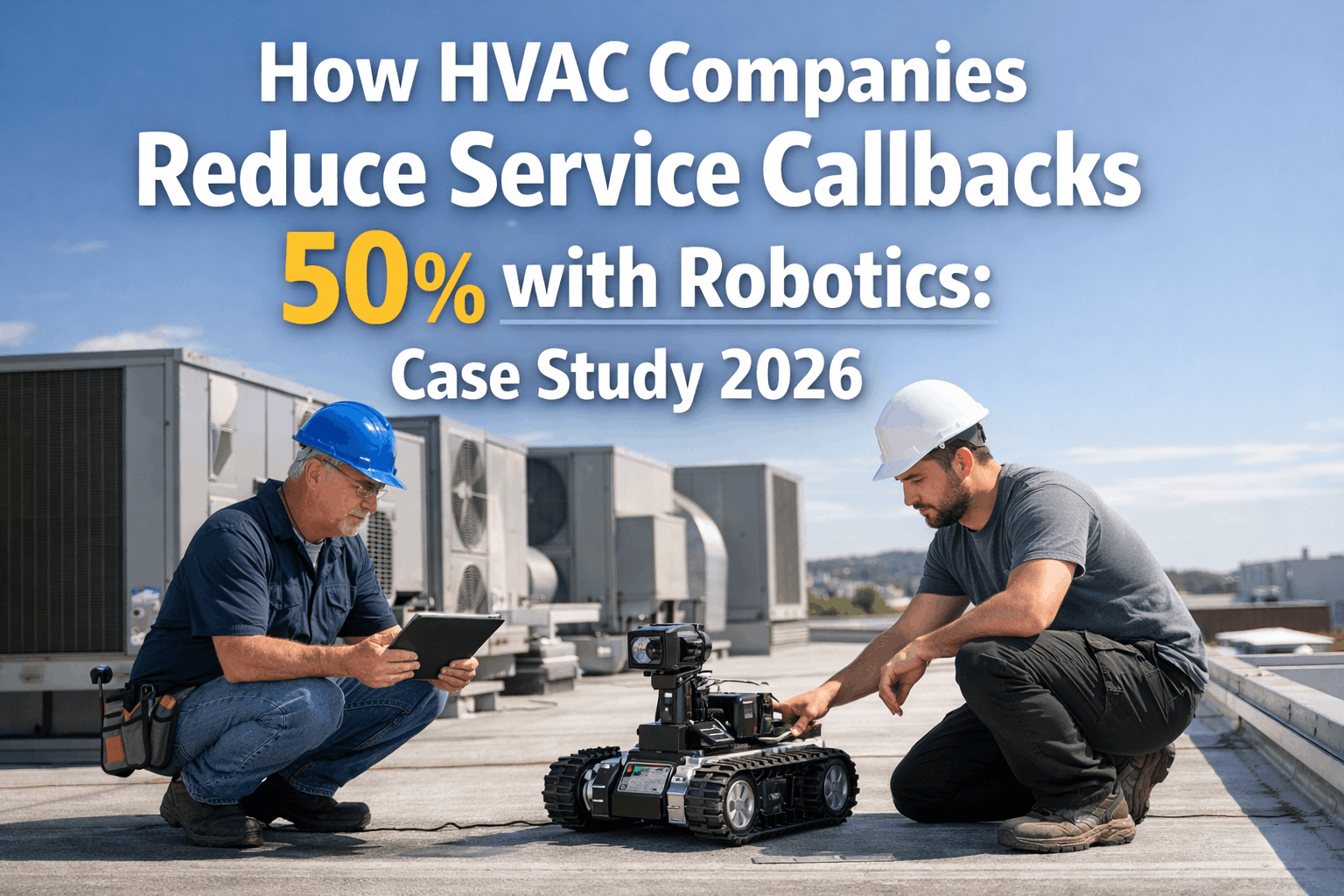
Robotic coil cleaning systems use autonomous or semi-autonomous robots that travel across the coil surface, delivering precisely controlled cleaning media (compressed air, water, or chemical foam) at consistent pressure and angle to every square inch of fin surface. Unlike a technician with a pressure washer who cleans unevenly and risks bending fins, the robot maintains optimal distance, pressure, and travel speed across the entire coil face:
Robot Mounting
The robot attaches to the coil face using magnetic wheels (for steel frames) or suction/track systems (for aluminum). Setup takes 3-8 minutes per coil section. The robot scans the coil dimensions and calculates its cleaning path automatically.
Pre-Clean Assessment
Onboard sensors or a technician-operated camera capture the coil condition before cleaning. Pressure drop across the coil is recorded as the baseline. This data feeds directly into maintenance records when using digital work order systems.
Automated Cleaning Pass
The robot traverses the coil in overlapping passes, delivering cleaning media at a controlled 60-120 PSI (vs. 200-400 PSI from an uncontrolled pressure washer). Chemical foam option for biological growth (mold, bacteria) dissolves contaminants before the rinse pass.
Post-Clean Verification
Post-clean photos and pressure drop measurement confirm results. Typical results: 85-98% restoration of original airflow. Before/after documentation is generated automatically for customer reporting and warranty compliance.
Robotic vs. Manual Cleaning: Head-to-Head Comparison
The business case for robotic cleaning becomes clear when you compare it against traditional manual methods across the metrics that matter to HVAC service companies:
The ROI of Robotic Coil Cleaning
For HVAC service companies, robotic cleaning isn't just a better clean — it's a better business model. Here are the economics for a company adding robotic coil cleaning to their service offerings:
When to Deploy Robotic Coil Cleaning
Not every coil needs robotic cleaning — and knowing when to deploy the technology maximizes both customer value and your profitability:
Ideal Applications
Manual May Suffice
Integrating Robotic Cleaning Into Your PM Program
The highest-value application of robotic coil cleaning is as a premium add-on to preventive maintenance service agreements. Here's how top HVAC companies structure it:
Annual Deep-Clean Add-On
Offer robotic coil cleaning as a premium annual add-on to standard PM agreements. Price: $200-$600 per unit per year on top of the base PM fee. Position it as "the service that pays for itself in energy savings." Customer gets documented before/after airflow data proving the value.
Condition-Based Scheduling
Instead of annual calendar cleaning, use coil pressure drop data from PM inspections to trigger cleaning when efficiency drops below threshold. Oxmaint tracks pressure differential readings per unit per visit and auto-generates a coil cleaning work order when the reading exceeds the defined limit — typically 15-25% above clean baseline.
Energy Savings Guarantee
The most aggressive approach: guarantee measurable energy savings from robotic coil cleaning. Document pre-cleaning energy consumption per unit, clean, then measure post-cleaning consumption. Typical result: 15-30% energy reduction that far exceeds the cleaning cost. This data turns coil cleaning from a maintenance expense into a quantified investment.
Fleet Cleaning Campaigns
For commercial property management clients with 20-200+ units, offer quarterly or semi-annual fleet cleaning campaigns. Route-optimize the cleaning schedule by location for maximum efficiency. A dedicated robotic cleaning crew can clean 12-20 rooftop units per day, completing a 100-unit portfolio in one work week.
Track Every Coil. Schedule Every Cleaning. Prove Every Result.
Oxmaint integrates robotic coil cleaning into your PM workflows — scheduling based on condition data, documenting before/after results, and proving the ROI to your customers automatically.
Frequently Asked Questions
How much does a robotic coil cleaning system cost?
Entry-level systems designed for residential and light commercial use start at $15,000-$20,000. Mid-range systems suitable for most commercial rooftop units and AHUs run $25,000-$35,000. Premium systems with advanced sensors, automated chemical application, and multi-coil capability cost $35,000-$45,000+. Most HVAC companies start with a mid-range system and achieve payback within 2-6 months based on 8-15 cleanings per week at $250-$800 per unit. Some manufacturers offer lease-to-own programs at $500-$1,200/month, making the technology accessible without large upfront capital.
Can any technician operate a robotic coil cleaner?
Yes. Modern robotic coil cleaners are designed for field operation by any HVAC technician after 2-4 hours of training. The robot handles the complex part (consistent pressure, speed, and coverage). The technician's role is: mount the robot, connect water/chemical supply, start the cleaning cycle, monitor progress, and document results. This is a major advantage over manual cleaning, which requires experienced technicians to deliver good results. With robotic cleaning, your newest hire produces the same cleaning quality as your 20-year veteran — freeing your senior techs for higher-value diagnostic and repair work.
How often should commercial coils be robotically cleaned?
Frequency depends on environment: Standard commercial (office, retail): annually, typically spring before cooling season. Restaurant/food service: semi-annually due to grease-laden air accelerating coil fouling. Industrial/manufacturing: quarterly in environments with airborne particulates, oils, or chemical exposure. Healthcare: semi-annually with biological treatment (anti-microbial foam) for indoor air quality compliance. Data centres: semi-annually with documented airflow verification. The ideal approach is condition-based: measure coil pressure drop at each PM visit and trigger cleaning when it exceeds 15-25% above clean baseline, regardless of calendar schedule.
Does robotic cleaning work on all coil types?
Robotic cleaners work on most standard fin-and-tube coils including copper/aluminum, all-aluminum (microchannel), and copper/copper configurations. Coil face must be relatively flat for the robot to traverse — deeply curved coils (some residential condensers) may not be suitable. Coil depth is the biggest advantage: robots clean effectively through 4, 6, 8, and even 10-row coils that manual methods simply cannot penetrate. Microchannel coils, which are increasingly common and extremely delicate, actually benefit most from robotic cleaning because the controlled low pressure (60-80 PSI) cleans without bending the fragile fins that hand washing frequently damages.
How do we sell robotic coil cleaning to customers who think manual is fine?
The most effective sales approach is show, don't tell. Offer one complimentary robotic cleaning on their dirtiest unit with full before/after documentation: coil photos, pressure drop readings, and estimated energy savings. When the customer sees the side-by-side comparison of a robotically cleaned coil vs. their "already cleaned" coil that was done manually, the difference is immediately visible. Pair this with an energy savings estimate: "This unit was consuming approximately $X/month more than necessary due to coil fouling. Our robotic cleaning restored 92% of original airflow, which projects to $Y/year in energy savings against a cleaning cost of $Z." The ROI speaks for itself. Most customers who see one demo convert to annual robotic cleaning service.