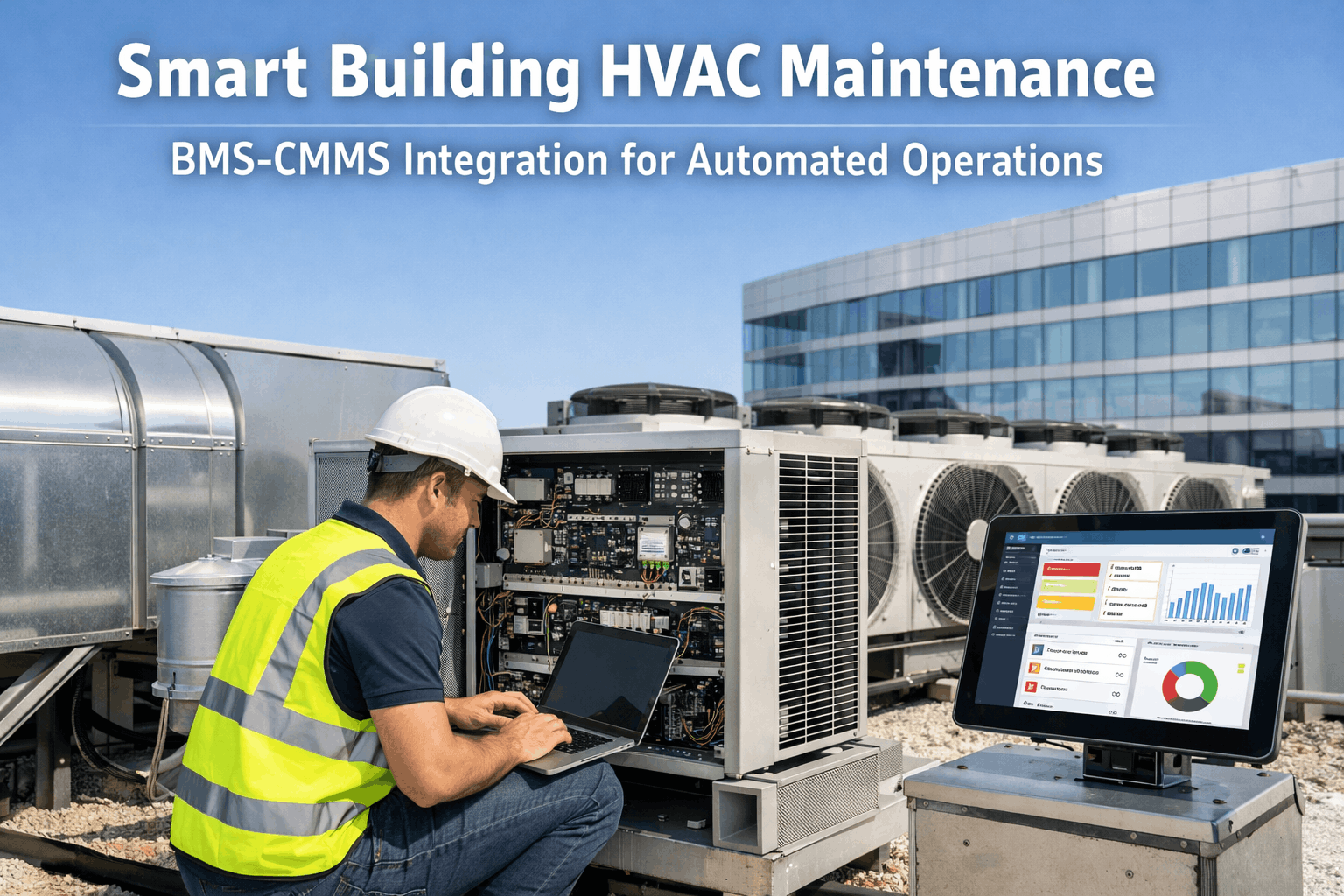
Commercial and industrial HVAC systems consume nearly 40% of a building's total energy — and the vast majority of that waste traces back to outdated thermostat controls running on fixed schedules, blind to occupancy patterns, weather shifts, and equipment degradation happening in real time. In 2026, IoT thermostats equipped with machine learning algorithms are converging with robotic maintenance platforms to create fully autonomous HVAC ecosystems that self-regulate temperature zones, predict component failures, and dispatch inspection robots before human technicians ever see a trouble ticket.
A smart thermostat detecting abnormal compressor cycling can trigger an autonomous robot to inspect the rooftop unit within hours. A vibration anomaly flagged by a robotic patrol can feed back into the thermostat's control logic to reduce load on a degrading compressor — extending its life until parts arrive. This closed-loop integration between IoT sensing and robotic action is eliminating the gap between detection and response that has plagued facility maintenance for decades. Oxmaint AI unifies IoT thermostat telemetry, robotic inspection data, predictive maintenance workflows, and automated work order generation into a single CMMS platform — giving facility teams the command centre they need to run truly autonomous HVAC operations. Start free trial today.
Automation Framework 2026
Top IoT Thermostat + Robotic HVAC Maintenance Automation
The convergence of IoT-connected thermostats and autonomous maintenance robots is redefining how commercial facilities manage heating, cooling, and ventilation. This guide equips facility directors, maintenance managers, and building automation engineers with the platform evaluations, integration strategies, and CMMS workflows needed to deploy closed-loop HVAC automation — where smart sensing triggers robotic action without human intervention.
38%Energy Savings with IoT Thermostats
72 hrsLabor Saved per Quarter via Robotic Inspection
52%Reduction in Unplanned HVAC Downtime
14 moAvg Full ROI for Integrated Systems
The HVAC Automation Maturity Spectrum
Facility HVAC automation programmes typically fall into one of three maturity tiers. Most commercial buildings remain at the "Manual" level — programmable thermostats on fixed schedules, reactive maintenance, and zero integration between sensing and action. The organizations pulling ahead are deploying IoT thermostats that feed real-time data into predictive algorithms while autonomous robots execute inspection routes that catch failures weeks before they escalate.
Manual (Fixed Schedules)
48%
Connected (IoT Sensing)
36%
Autonomous (Closed-Loop)
16%
Critical Capabilities for Closed-Loop HVAC Automation
True HVAC automation requires more than smart thermostats and more than inspection robots — it requires the integration layer that connects IoT telemetry to robotic action through intelligent decision-making. A comprehensive CMMS acts as that integration layer, ensuring every sensor reading, anomaly alert, and robotic inspection finding translates into prioritized, trackable maintenance action.
IoT + Robotic HVAC Automation PillarsIntegration Framework
Sensing
IoT Thermostat Intelligence
ML-driven thermostats that learn occupancy patterns, weather response curves, and equipment efficiency baselines. Real-time zone control with sub-degree precision across multi-zone commercial facilities.
Core Layer
Action
Robotic Inspection Execution
Quadruped robots and autonomous drones executing thermal scans, acoustic monitoring, and visual inspections of HVAC equipment — triggered by thermostat anomaly data or scheduled preventive routes.
Response Layer
Integration
CMMS Command Centre
The central nervous system connecting thermostat telemetry, robotic findings, and maintenance workflows. Auto-generates work orders, schedules technician dispatch, and tracks resolution through completion.
Orchestration
Prediction
Failure Forecasting Engine
Correlate thermostat efficiency data with robotic inspection findings to predict compressor failures, refrigerant leaks, and airflow degradation 2-6 weeks before equipment shutdown.
Predictive Layer
Feedback
Adaptive Control Loop
Robotic findings feed back into thermostat control logic. If a robot detects compressor strain, the thermostat automatically reduces load on that unit and redistributes demand across healthy equipment.
Closed Loop
Analytics
Performance Optimization
Continuous energy, uptime, and maintenance cost analytics derived from combined thermostat and robotic data streams. Identify underperforming zones, aging equipment, and optimization opportunities automatically.
ROI Layer
IoT Thermostat Platform Comparison
Not all IoT thermostats are built for commercial-scale HVAC automation. The platforms below represent the leading options in 2026 for facilities seeking deep integration with robotic inspection systems, predictive maintenance algorithms, and CMMS-driven work order automation. Each is evaluated on sensor depth, API openness, ML capability, and scalability across multi-zone environments.
5
Full Autonomy
ML-driven zone control, open API for CMMS and robotic integration, occupancy sensing, predictive load balancing, and adaptive scheduling across 100+ zones.
4
Predictive Control
Weather-responsive scheduling, occupancy learning, energy analytics dashboards. Limited third-party API access. Supports 20-100 zone deployments.
3
Smart Scheduling
Programmable with remote access, basic occupancy detection, and energy reporting. Cloud-connected but minimal API for external system integration.
2
Connected Basic
Wi-Fi-enabled with app control and simple scheduling. No ML, no occupancy learning, no external API. Suitable for small single-zone applications only.
1
Legacy Programmable
Fixed schedule, no connectivity, no remote access. Manual adjustment only. No data export capability. Requires physical presence for every change.
Connect Your Smart Thermostats to Automated Maintenance
Oxmaint ingests real-time telemetry from IoT thermostats and robotic inspection platforms, automatically generating prioritized work orders when anomalies are detected — so your team fixes problems before occupants ever feel them.
Top IoT Thermostat + Robotic Platforms for 2026
The most effective HVAC automation deployments pair a best-in-class IoT thermostat platform with a capable robotic inspection system — connected through a CMMS that orchestrates data flow and maintenance response. These are the leading platform combinations for commercial and industrial facilities in 2026.
Thermostat
Honeywell T10 Pro Smart
Commercial Multi-Zone
Enterprise-grade IoT thermostat with room-by-room sensors, humidity control, and open API for BMS and CMMS integration. Supports geofencing, occupancy scheduling, and real-time energy analytics across large facilities.
Multi-ZoneOpen APIOccupancy SensingEnergy Analytics
Thermostat
Ecobee Smart Thermostat Premium
Mid-Size Commercial
Built-in air quality monitoring, occupancy detection via SmartSensor, and Eco+ ML optimization. Strong third-party integration ecosystem for connecting to CMMS platforms and building automation systems.
Air QualityML OptimizationSmartSensorAPI Access
Thermostat
Google Nest Pro (Commercial)
Campus-Scale Deployment
AI-powered learning thermostat with deep Google Cloud integration. Predictive pre-conditioning, utility demand response participation, and enterprise fleet management for multi-building deployments.
AI LearningCloud AnalyticsFleet MgmtDemand Response
Robot
Boston Dynamics Spot
Best Overall Inspection Robot
Industry-leading quadruped with modular thermal cameras, acoustic sensors, and lidar. Autonomous mission capability via Orbit software. Proven in data centres, hospitals, and large commercial HVAC environments.
Thermal CamAcousticAutonomous14 kg Payload
Robot
ANYbotics ANYmal
Harsh Environment Specialist
IP67-rated quadruped with integrated thermal and optical cameras, ultrasonic sensors, and self-charging dock. ATEX Zone 1 certified for hazardous environments. Cloud analytics dashboard for trend analysis.
IP67ATEX CertSelf-ChargingCloud Dashboard
Robot
Unitree B2
Best Value Inspection Robot
High-endurance quadruped with 4+ hour battery, 15 kg payload, and open SDK for custom HVAC sensor integration. IP67 rated. Rapidly gaining adoption in facility management for cost-effective autonomous patrols.
4+ hr BatteryOpen SDKIP6715 kg Payload
How the Closed-Loop Automation Cycle Works
The real power of IoT thermostat and robotic HVAC integration lies in the closed-loop cycle: sense, analyse, dispatch, inspect, feedback, adapt. Each stage feeds the next, creating an autonomous maintenance ecosystem that continuously improves equipment performance while reducing human intervention to supervisory oversight and complex repairs only.
Sense & Detect
Thermostat detects abnormal cycling pattern
Energy consumption spikes beyond baseline
Zone temperature drift exceeds threshold
Humidity control loses setpoint accuracy
Occupancy pattern deviates from learned norm
Dispatch & Inspect
CMMS auto-generates inspection work order
Robot dispatched to affected HVAC unit
Thermal scan identifies compressor hot spot
Acoustic analysis confirms bearing degradation
Visual inspection logs coil fouling level
Feedback & Adapt
Robot data uploaded to CMMS automatically
Thermostat reduces load on degraded unit
Demand redistributed to healthy equipment
Technician dispatched for targeted repair
Post-repair efficiency confirmed by thermostat
The Cost of Disconnected HVAC Management
Facilities that operate smart thermostats and maintenance robots as disconnected systems capture only a fraction of the available value. The escalation pyramid below illustrates how disconnected HVAC management inevitably leads to compounding waste — from minor energy inefficiency to catastrophic equipment failure — while integrated closed-loop automation prevents escalation at every stage.
$2k - $8k
Proactive Automation
Thermostat anomaly triggers robotic inspection. Early coil fouling or belt wear detected. Planned maintenance scheduled during off-hours. Zero occupant impact.
Frequency: High
$25k - $150k
Reactive Breakdown
Compressor failure during peak cooling. Emergency HVAC contractor callout. Building zones offline for 24-72 hours. Occupant complaints, productivity loss, and overtime repair costs.
Frequency: Medium
$500k+
Cascading System Failure
Chiller plant failure cascades across building. Full HVAC replacement required. Tenant displacement, lease penalties, regulatory violations, and insurance claims.
Frequency: Low (But Severe)
Unify Your Smart Thermostats and Robotic Inspections
Stop running IoT thermostats and maintenance robots as separate silos. Oxmaint connects thermostat telemetry to robotic inspection data and automated work order generation — creating the closed-loop HVAC automation platform that eliminates reactive maintenance and maximises equipment lifespan.
CMMS Features for IoT + Robotic HVAC Automation
A specialised CMMS is the orchestration layer that transforms disconnected smart thermostats and inspection robots into a unified autonomous maintenance system. It ingests thermostat anomaly data, correlates it with robotic inspection findings, generates prioritized work orders, and tracks resolution — closing the loop between detection and repair without manual coordination.
A
Thermostat Telemetry Ingestion
Real-time data feeds from IoT thermostats — temperature, humidity, energy consumption, cycling patterns, and setpoint deviations — all normalised and stored in the CMMS for trend analysis and anomaly alerting.
B
Robotic Inspection Data Integration
Thermal images, acoustic readings, vibration data, and visual inspection reports from autonomous robots automatically uploaded and linked to the corresponding HVAC asset record in the CMMS.
C
Automated Work Order Generation
When thermostat anomaly data or robotic inspection findings cross configurable severity thresholds, the CMMS auto-generates prioritized work orders with affected equipment, location, diagnostic context, and recommended actions.
D
Predictive Failure Forecasting
Correlate thermostat efficiency trends with robotic inspection history to predict compressor, fan motor, and refrigerant system failures 2-6 weeks in advance — enabling planned replacement instead of emergency repair.
E
Energy Performance Dashboard
Visualise energy consumption per zone, compare actual vs. predicted efficiency, identify underperforming HVAC units, and quantify energy savings from automated optimisation — all derived from combined thermostat and maintenance data.
F
Adaptive Control Feedback Loop
Push robotic inspection findings back to thermostat control logic via API. Automatically reduce load on degraded equipment, redistribute demand across healthy units, and confirm post-repair performance recovery.
Frequently Asked Questions
Q. How do IoT thermostats actually trigger robotic HVAC inspections?
When an IoT thermostat detects an anomaly — such as abnormal compressor cycling, energy consumption spikes, or zone temperature drift beyond thresholds — it sends telemetry data to the CMMS. The CMMS evaluates the anomaly against configurable severity rules and, if warranted, auto-generates an inspection work order that dispatches an autonomous robot to the affected HVAC unit for thermal, acoustic, and visual assessment. The entire sequence happens without human intervention.
Sign up for Oxmaint to see closed-loop thermostat-to-robot automation in action.
Q. Which IoT thermostat is best for large commercial HVAC automation?
For facilities with 100+ zones, Honeywell T10 Pro Smart offers the deepest multi-zone control and most robust API for CMMS integration. Google Nest Pro excels at campus-scale fleet management with AI-powered learning. Ecobee Smart Thermostat Premium is strongest for mid-size commercial deployments where built-in air quality monitoring adds value. The right choice depends on your facility size, existing BMS infrastructure, and integration requirements.
Q. What ROI can we expect from integrated IoT thermostat and robotic maintenance?
Facilities deploying integrated IoT thermostat and robotic inspection systems typically see 25-38% energy savings from optimised thermostat control, 50-75% reduction in manual inspection labour hours, and 40-52% less unplanned HVAC downtime. Full ROI — including avoided equipment failures and energy savings — materialises within 12 to 18 months for most commercial deployments.
Schedule a demo to discuss projected ROI for your facility.
Q. Can robots actually feed data back to thermostats to change HVAC behaviour?
Yes — this is the defining feature of closed-loop automation. When a robot detects compressor strain, refrigerant leak indicators, or coil fouling during an inspection, that finding is uploaded to the CMMS. The CMMS can then push control adjustments to the thermostat via API — reducing load on the degraded unit, redistributing demand to healthy equipment, and preventing cascading failure while a repair is scheduled and completed.
Q. Do we still need human HVAC technicians with this level of automation?
Absolutely. IoT thermostats handle sensing and control. Robots handle inspection and data collection. But skilled HVAC technicians remain essential for diagnostics, complex repairs, refrigerant handling, electrical work, and system commissioning. The automation eliminates routine walkthroughs and reactive firefighting — freeing technicians to focus on high-value corrective and predictive work that requires human expertise and judgment.
Sign up for Oxmaint to see how automated workflows enhance technician productivity.