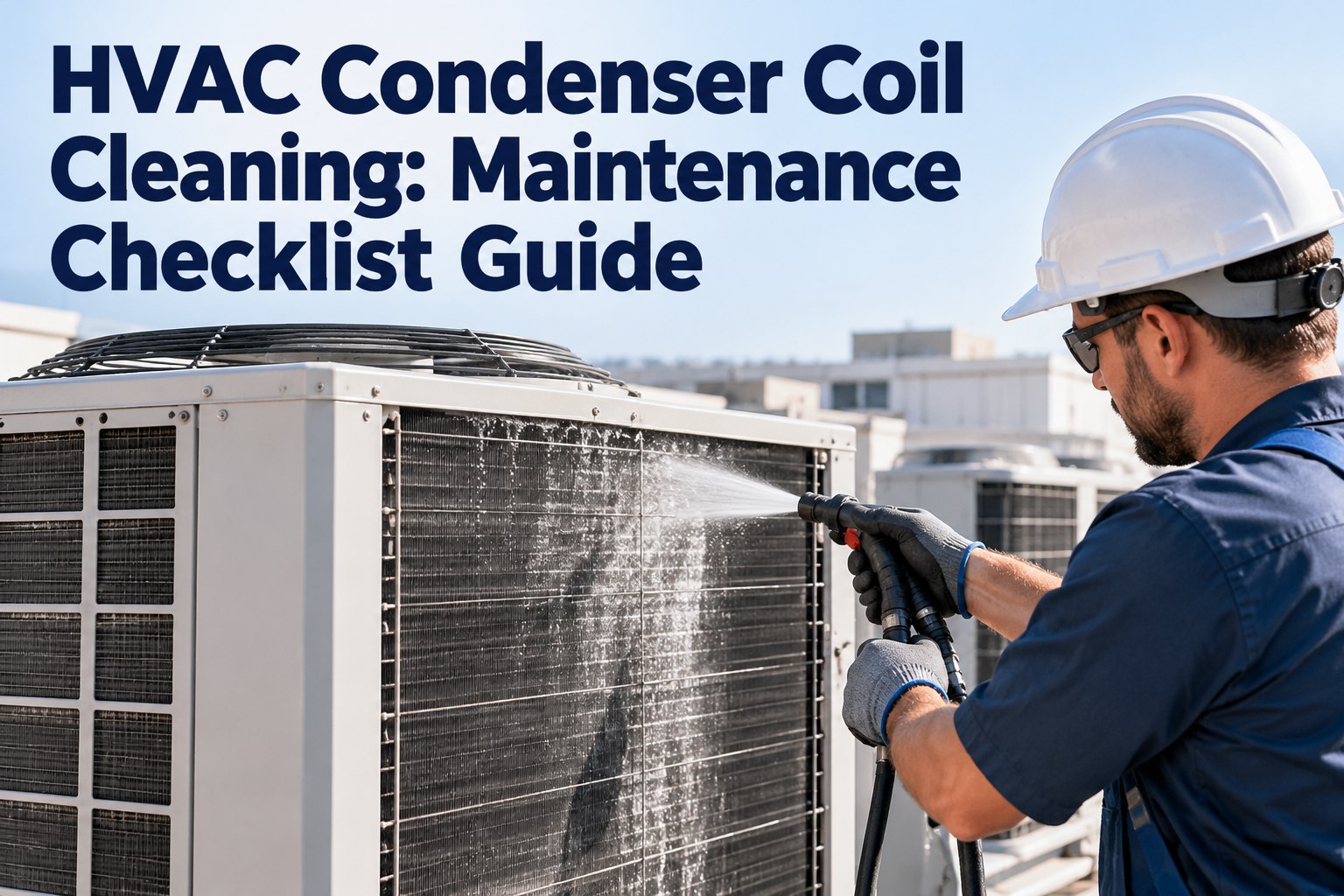
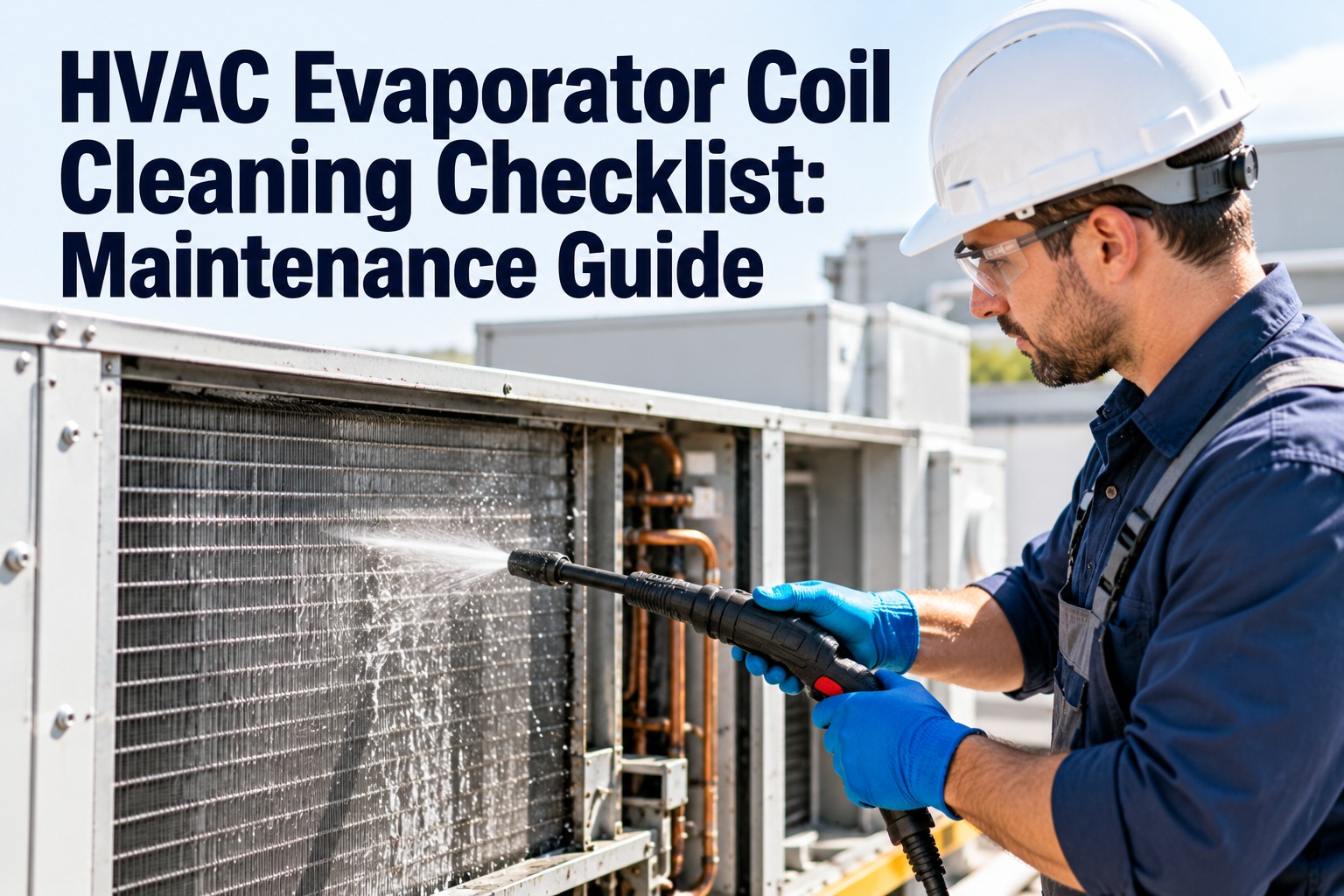
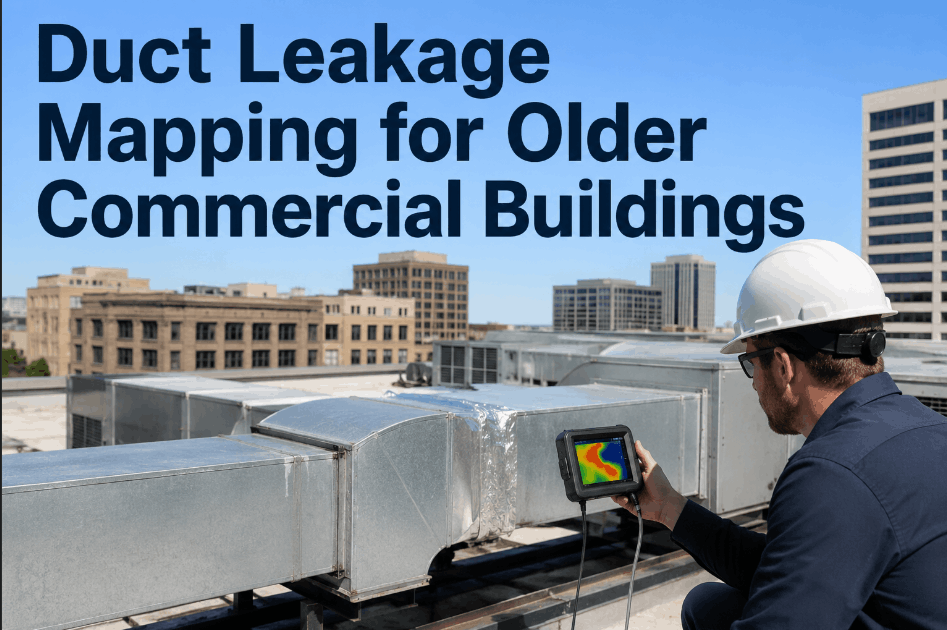
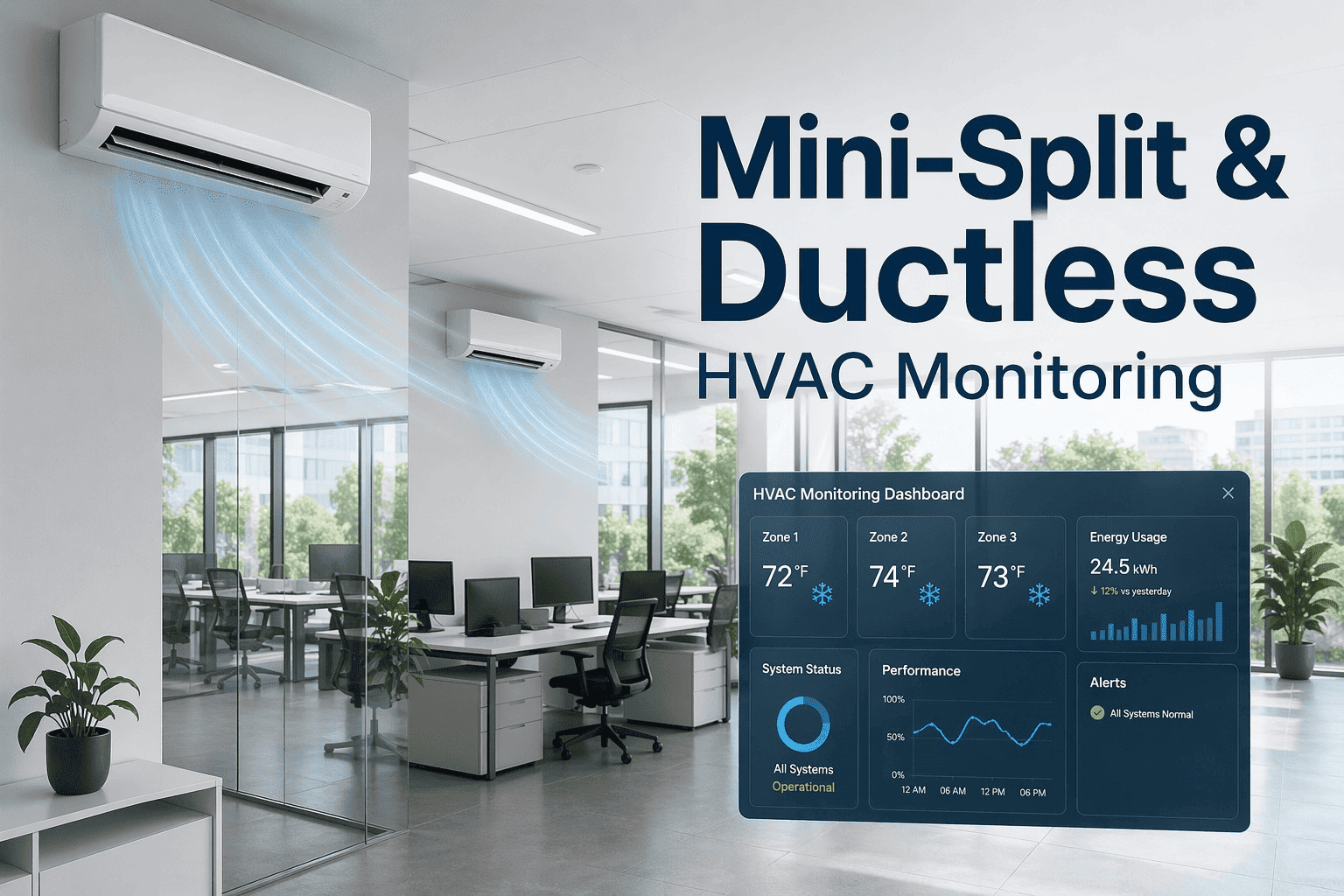
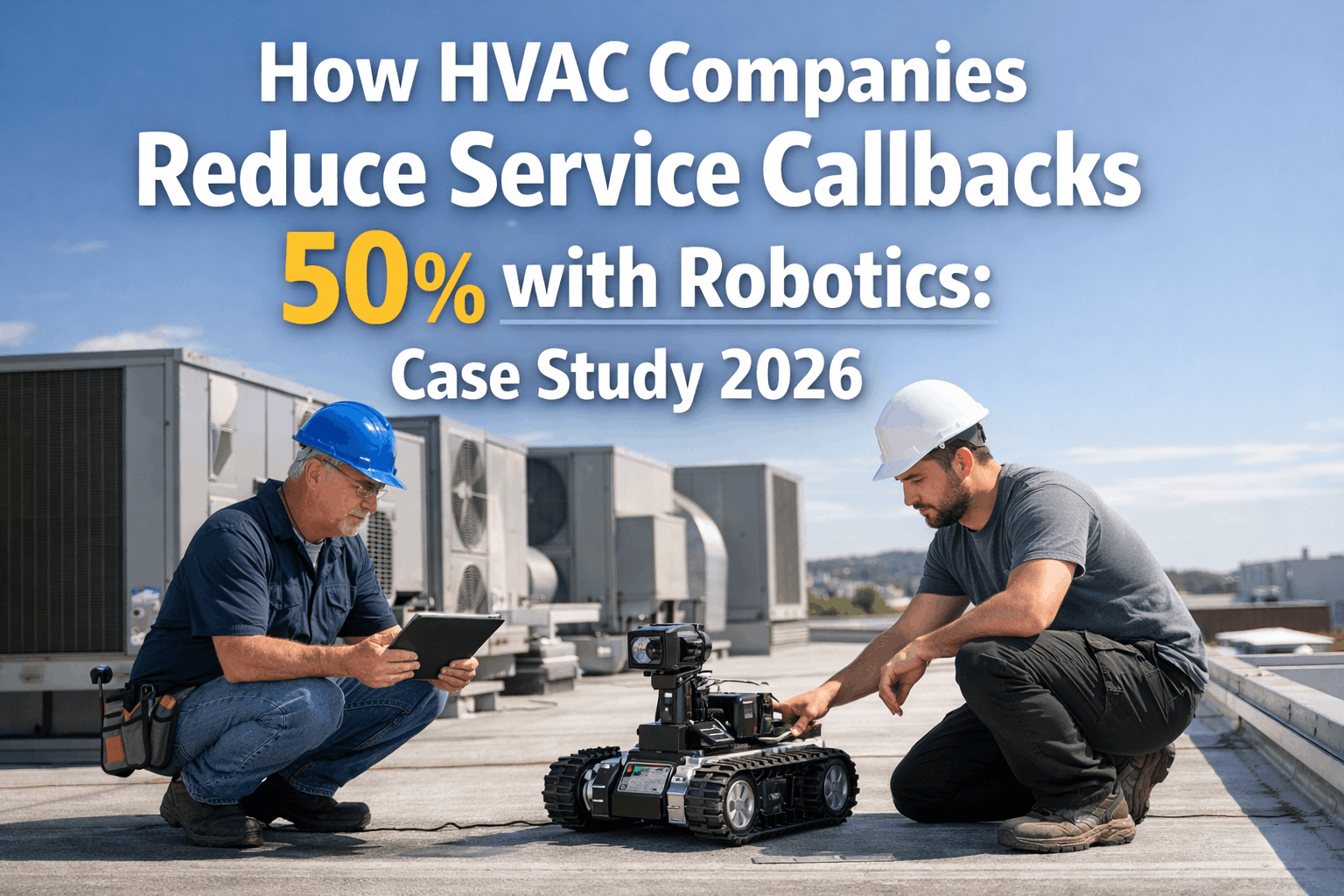
Air handling units and fan coil units are the workhorses of large commercial buildings — the equipment that conditions, moves, and distributes every cubic foot of air tenants breathe. A Class A office tower may operate 50 to 200 AHUs and several thousand fan coil units across its floors, each one accumulating coil fouling, belt wear, bearing degradation, filter loading, drain pan contamination, and damper drift every day it runs. When maintenance falls behind — and in most buildings it does — the compounding effect is staggering: 15–30% excess energy consumption, chronic IAQ complaints, accelerated equipment failure, and emergency repairs that cost 4–7x more than planned service.
In 2026, robotic maintenance systems designed for AHU plenums and fan coil enclosures are transforming how large buildings keep these critical assets performing at design capacity. Autonomous crawlers navigate inside AHU sections to inspect coils, measure filter loading, check belt tension, analyse bearing vibration, and verify damper operation — all without shutting down the unit or sending a technician into a confined space. For fan coils, miniature robots access ceiling-mounted units to clean coils, clear drain pans, and verify airflow without displacing ceiling tiles across entire floors. Oxmaint integrates robotic maintenance outputs with asset registries, PM scheduling, and energy analytics — giving facility teams a single platform to inspect, maintain, and optimise every air-side asset in their portfolio. Start free trial today.
Technology Guide 2026
Top Robotic AHU and Fan Coil Unit Maintenance for Large Buildings 2026
From autonomous AHU plenum crawlers scanning coil condition with thermal imaging to micro-robots cleaning thousands of fan coil units per week, this guide equips facility managers, chief engineers, and HVAC contractors with the specifications, comparison data, and deployment frameworks needed to implement robotic air-side maintenance — and connect every finding to energy savings, IAQ improvements, and equipment lifecycle extension.
27%Avg Energy Penalty from Fouled Coils & Degraded Fans
$5.80Annual Waste Per Sq. Ft. from Deferred AHU Maintenance
3,400+Fan Coil Units in a Typical 40-Storey Tower
4-7xEmergency vs. Planned Repair Cost Ratio
$1.4M
Average annual excess energy and repair cost from deferred AHU maintenance in a 750,000 sq. ft. commercial campus
42%Of commercial AHU coils operating with fouling that exceeds manufacturer cleaning thresholds
3.5 hrsAverage labour time for manual AHU inspection — lockout, access, inspect, reassemble, restart
78%Of fan coil maintenance deferred beyond schedule due to access difficulty and tenant disruption
Did you know?
A 1/16-inch layer of fouling on an AHU cooling coil increases energy consumption by 21% — and most building teams cannot see coil condition without shutting down the unit, removing access panels, and sending a technician into the plenum. Robotic crawlers inspect coils under full operating conditions with thermal imaging, measuring delta-T across every coil section and flagging fouling severity before it reaches the point of compressor trip or comfort failure.
Sign Up Free
Air-Side Maintenance Maturity Spectrum
Large building portfolios approach AHU and fan coil maintenance across three maturity levels. The majority remain calendar-driven — changing filters and belts on schedule regardless of actual condition — while the most advanced programmes use robotic condition data to maintain equipment exactly when and where it needs attention, eliminating both deferred maintenance and unnecessary service interventions.
Calendar-Based (Time-Triggered)
48%
Condition-Monitored (Sensor-Informed)
38%
Robotics-Verified (Physical + Data)
14%
Critical Evaluation Pillars for AHU & FCU Robots
AHU plenums and fan coil enclosures present radically different challenges. AHU robots must navigate inside large air handlers while fans may be running — handling vibration, high velocity airflow, confined sections between coils, and low-light conditions. Fan coil robots must be compact enough to work inside ceiling-mounted units accessed through 2×2 ft. tile openings, service dozens of units per hour, and operate silently in occupied spaces. A single robot platform rarely excels at both.
Robotic Maintenance Evaluation CheckpointsSelection Framework
Coil Analysis
Fouling Detection & Mapping
Thermal imaging and differential pressure measurement that maps fouling severity across every section of the coil face. Must distinguish between surface debris, embedded particulate, and biological growth — each requiring different cleaning methods and urgency levels.
Energy Critical
Mechanical
Fan & Drive Assessment
Vibration analysis of fan bearings, belt tension measurement, sheave alignment verification, and motor current signature analysis. Must detect early-stage bearing wear, belt slippage, and imbalance before catastrophic failure shuts down the AHU.
Failure Prevention
Filtration
Filter Condition Scanning
Optical and pressure-based measurement of filter loading across the entire filter bank. Identifies individual filters that are bypassing, improperly seated, or loaded beyond threshold — problems that static DP sensors at the unit level cannot localise.
IAQ Impact
Drainage
Drain Pan & Condensate Check
Visual and moisture-sensor inspection of drain pans, condensate traps, and drain lines for standing water, biofilm growth, and blockages. Critical for IAQ — a contaminated drain pan is the primary source of microbial amplification in HVAC systems.
Health Risk
Dampers
Mixing & OA Damper Verification
Optical measurement of actual damper blade positions for outside air, return air, and exhaust dampers compared against BAS commands. Stuck or drifted OA dampers are the leading cause of excessive energy use and ventilation non-compliance in AHU systems.
Compliance Risk
Integration
CMMS & BAS Connectivity
Automated export of inspection findings to CMMS as severity-classified work orders with thermal images, vibration spectra, and airflow measurements. BAS correlation to compare robot-measured conditions against trend data and alarm histories.
Workflow Value
Top Fault Categories Robots Detect in AHUs & FCUs
Robotic inspection and maintenance across hundreds of air handling units and thousands of fan coil units reveals that equipment degradation clusters into five dominant fault categories — each with distinct energy, comfort, and reliability impacts. Understanding these profiles is essential for prioritising which units to inspect first and which robotic capabilities deliver the fastest return.
5
Fan/Motor Failure
Bearing seizure, belt snap, or VFD fault. AHU offline. Entire zone loses conditioning. Emergency dispatch at 4-7x planned cost. Tenant escalation immediate.
4
Severe Coil Fouling
Delta-T across coil degraded 40%+. Compressor short-cycling. Supply air temp cannot reach setpoint. 21-30% excess energy consumption. Comfort complaints escalating.
3
Damper Malfunction
OA, RA, or mixing dampers stuck or drifted. Ventilation non-compliant or excessive OA driving energy waste. BAS shows commanded position but actual differs by 20°+.
2
Filter Bypass
Filter not properly seated or gasket failed. Unfiltered air bypassing filter bank, fouling downstream coils and degrading IAQ. Often invisible to DP monitoring alone.
1
Drain Pan Contamination
Standing water, biofilm growth, or blocked condensate drain. Source of odour complaints and potential Legionella amplification. No comfort impact initially but escalating health risk.
Stop Guessing What Is Happening Inside Your AHUs
Oxmaint connects robotic inspection findings to asset registries, PM schedules, and energy analytics — every coil condition score, vibration reading, and damper discrepancy flows into prioritised work orders that tell your team exactly what needs attention, where, and why.
Top Robot Categories for AHU & FCU Maintenance 2026
The most effective robotic air-side maintenance programmes deploy different robot types for AHU plenums versus fan coil enclosures — and increasingly layer in permanent monitoring hardware between robotic inspection cycles. Each category excels in a specific environment, and mismatching robot capability to equipment type is the most common deployment failure.
Core
AHU Plenum Crawlers
Large Unit Inspection
Ruggedised mobile robots that enter AHU plenums through access doors and navigate between coil sections, filter banks, fan assemblies, and mixing boxes. Equipped with thermal cameras, vibration sensors, anemometers, and HD optics. Can operate with fans running at reduced speed for live-condition assessment.
Thermal ImagingVibrationAirflowLive Operation
FCU
Fan Coil Micro-Robots
High-Volume Unit Service
Ultra-compact robots (sub-8 in. profile) designed to enter ceiling-mounted fan coil units through tile openings. Inspect coil condition, clean coil surfaces with micro-spray systems, clear drain pans, verify fan operation, and move to the next unit autonomously at rates of 15-25 units per hour.
Sub-8 in.Coil CleanDrain Clear25 units/hr
Robotic Arm
Articulating Coil Cleaners
Deep Cleaning Operations
Robotic arms mounted on rail systems inside AHU plenums that perform automated coil cleaning with precision water/chemical spray patterns. Map coil fouling with thermal imaging first, then target cleaning at fouled sections — reducing water use 60% versus blanket cleaning while achieving better results.
Targeted Clean60% Less WaterAuto-PatternBefore/After
Vibration
Bearing & Drive Monitoring Bots
Continuous Mechanical Health
Compact robots that dock onto fan assemblies, motor mounts, and bearing housings to collect high-resolution vibration spectra, temperature profiles, and motor current signatures. Detect bearing wear stages L10 through L50, belt degradation, and shaft misalignment months before failure.
Vibration FFTMotor CurrentL10 DetectionTrend History
Aerial
Penthouse & Plenum Drones
Large Mechanical Room Survey
Compact UAVs that fly through large mechanical penthouses and AHU rooms to inspect equipment exteriors, ductwork connections, pipe insulation condition, and damper linkages from angles that ground-level inspection cannot reach. Thermal and HD video capture with GPS-denied navigation.
GPS-DeniedThermal + HDPenthouse Safe8-12 min.
Service
Robotic Maintenance as a Service
Per-Building Engagement
Third-party providers who deploy robotic inspection and cleaning equipment on your building without capital purchase. Deliver complete AHU and FCU condition reports with coil scores, vibration baselines, and prioritised PM lists. Ideal for portfolio-wide assessments before committing to fleet ownership.
No CapExPer VisitFull ReportPM Priority List
Pro Tip
Start with the coils. Across every building in the case study data, coil fouling was the single largest contributor to both energy waste and comfort complaints — responsible for 42% of total air-side inefficiency. A robotic coil condition survey across all AHUs and fan coils takes days, not weeks, and produces the energy savings projections that fund the entire robotic maintenance programme.
Book a Demo
Head-to-Head Specification Matrix
AHU plenum crawlers, fan coil micro-robots, and articulating coil cleaners serve fundamentally different roles in the maintenance programme. This matrix maps specifications across the three primary categories so building teams can match robot capability to their specific equipment mix and facility constraints.
AHU Plenum Crawler
Profile: 8–14 in. height
Throughput: 6–10 AHUs/day
Battery: 6–8 hrs continuous
Sensors: Thermal, vibration, HD, DP, anemometer
Price: $55,000–$140,000
Fan Coil Micro-Robot
Profile: Sub-8 in. height
Throughput: 15–25 FCUs/hour
Battery: 3–4 hrs (hot-swap)
Sensors: HD camera, coil spray, drain probe
Price: $25,000–$65,000
Articulating Coil Cleaner
Reach: 6–10 ft. arm span
Throughput: 2–4 AHU coils/day
Power: Mains (water + chemical supply)
Capability: Targeted spray, thermal map, before/after
Price: $40,000–$95,000
Before & After: What Changes with Robotic Maintenance
The gap between traditional scheduled maintenance and robotics-verified condition-based maintenance is dramatic — not just in inspection quality but in energy recovery, IAQ improvement, equipment lifespan, and the shift from emergency firefighting to planned, productive maintenance hours.
Performance Comparison: Traditional vs. Robotic Air-Side Maintenance
Traditional Maintenance
AHU Inspection Time3.5 hrs / unit
FCU Service Rate4-6 / day
Coil Fouling DetectionVisual Only
Unplanned FailuresFrequent
Energy Waste VisibilityNone
Robotic Maintenance
AHU Inspection Time35 min / unit
FCU Service Rate15-25 / hour
Coil Fouling DetectionThermal Map
Unplanned Failures60% Fewer
Energy Waste VisibilityPer-Unit $/yr
The Cost of Deferred Air-Side Maintenance
Deferred AHU and fan coil maintenance is uniquely insidious because the consequences are slow, invisible, and distributed across hundreds of units. No single fouled coil or worn belt triggers an alarm — but collectively they drive the energy overruns, IAQ failures, and premature equipment replacements that devastate building operating budgets and tenant retention.
$12K - $35K
Annual Robotic Programme
Cost to robotically inspect and condition-score every AHU and fan coil unit in a 300,000 sq. ft. building twice per year. Includes coil thermal mapping, vibration baselines, drain pan checks, and prioritised PM list.
Frequency: Semi-Annual
$175K - $480K
Annual Hidden Energy Waste
Fouled coils, drifted dampers, slipping belts, and failed reheat valves across a typical 300,000 sq. ft. building. Each issue adds 3-8% energy penalty; collectively they compound to 15-30% total air-side excess consumption.
Frequency: Every Month Ignored
$1.2M+
Premature Equipment Replacement
AHUs operated with deferred maintenance lose 30-40% of expected service life. Premature replacement of a single large AHU costs $150K-$400K installed. A campus with 8-12 major AHUs facing accelerated replacement represents a capital crisis.
Frequency: Irreversible
KPIs That Prove Maintenance Programme Value
Counting completed work orders is the most common maintenance metric — and the least useful. The best robotic air-side programmes track KPIs that connect maintenance activity to actual building performance: energy consumption per ton, coil condition scores, unplanned failure rates, and the ratio of planned versus reactive work hours.
<1.1
kW/Ton Ratio
Air-side energy efficiency. Fouled coils drive this above 1.3-1.5 kW/ton. Robotic cleaning and maintenance restore performance to near-design levels.
85+
Coil Condition Score
0-100 scale based on thermal delta-T, DP, and visual analysis. Target: 85+ for all units. Below 60 triggers urgent cleaning work order.
80/20
Planned vs. Reactive
Target: 80% planned, 20% reactive labour hours. Without robotic condition data, most buildings run 50/50 or worse.
60%
Unplanned Failure Reduction
Robotic vibration and thermal monitoring catches bearing, belt, and motor failures months before they happen. Target: 60%+ reduction in year one.
Your 6-Month Deployment Roadmap
You do not need to robotically inspect every AHU and fan coil unit on day one. The most successful programmes begin with a comprehensive condition baseline on the largest or most critical building, prove the energy and reliability ROI, then scale across the portfolio using documented savings — not projected estimates — as the business case for expansion.
From Calendar-Based PM to Robotics-Verified Condition Maintenance
Weeks 1-4
Equipment Audit & Baseline
Inventory all AHUs and fan coil units by building, floor, size, age, and BAS integration statusPull 12-month energy data, comfort complaint records, and emergency repair histories per unitAssess physical access conditions — AHU access door sizes, ceiling types, plenum clearances
Weeks 5-10
Pilot Inspection & Condition Scoring
Deploy AHU plenum crawler on your 3-5 largest/most critical air handlers for full condition assessmentRun fan coil micro-robot across 1-2 floors to establish coil condition scores and drain pan statusConfigure CMMS integration for auto-generated work orders with severity, photos, and energy impact
Weeks 11-16
Remediate & Measure
Execute prioritised repairs and cleaning based on robotic condition findings — worst coils firstMeasure energy consumption and comfort complaint reduction against pre-maintenance baselineDocument per-unit energy savings for the business case to expand across the portfolio
Weeks 17-26+
Scale & Continuous Programme
Roll out robotic inspection to all buildings in the portfolio based on documented pilot resultsEstablish semi-annual robotic inspection cycles with CMMS-automated scheduling and trackingLayer in vibration monitoring bots for continuous fan/motor health between inspection cycles
CMMS Features That Maximise Maintenance ROI
A robotic condition report without a connected maintenance platform is an expensive PDF that sits in someone's inbox. The real return comes when every coil score, vibration baseline, and damper discrepancy flows into a CMMS that creates the right work order for the right technician at the right time — and then tracks whether the repair actually improved performance.
A
Air-Side Asset Registry
Every AHU and fan coil mapped with manufacturer, model, capacity, coil configuration, BAS point name, last inspection date, condition score trend, and complete service history in one searchable registry.
B
Condition-Triggered Work Orders
Robotic findings auto-generate severity-classified work orders: coil cleaning when thermal score drops below threshold, belt replacement when vibration signature degrades, drain pan treatment when contamination detected — not when the calendar says so.
C
Energy Impact Dashboard
Per-unit energy waste calculations based on robotic coil condition scores, fan efficiency measurements, and damper position verification. Aggregates building-wide to show total recoverable energy savings and prioritise maintenance spend.
D
Vibration Trending & Alerts
Stores robotic vibration baselines and trend data for every fan, motor, and bearing. Alerts when vibration signature degrades beyond threshold and auto-generates predictive work orders — months before the bearing seizes or the belt snaps.
E
IAQ Compliance Tracker
Links robotic drain pan, filter, and ventilation damper findings to IAQ compliance requirements. Tracks remediation status and generates audit-ready documentation for ASHRAE 62.1, local health codes, and tenant lease IAQ commitments.
F
Fleet Lifecycle Planner
Uses robotic condition data and repair history to model remaining useful life for every AHU and fan coil unit. Forecasts capital replacement needs 3-5 years out based on actual condition — not just age — enabling proactive budgeting instead of emergency requisitions.
Your AHUs Are Running Harder Than They Need To
42% of commercial AHU coils are operating beyond fouling thresholds right now — silently driving up energy bills, degrading indoor air quality, and shortening equipment life. Oxmaint gives your team the platform to inspect robotically, score condition, automate repairs, and prove energy savings to ownership from one place.
Frequently Asked Questions
Q. How quickly does a robotic AHU maintenance programme pay for itself?
Most buildings recover the full programme cost within 3–5 months through energy savings from coil cleaning alone. A single 50-ton AHU with severely fouled coils wastes $8,000–$15,000 per year in excess energy. Robotic thermal mapping identifies the worst units first, enabling targeted cleaning that produces immediate, measurable utility bill reductions. Layer in avoided emergency repairs and extended equipment life and the ROI compounds rapidly.
Schedule a demo to model projected savings for your building portfolio.
Q. Can robotic crawlers inspect AHUs while the unit is running?
Most AHU plenum crawlers can operate with fans running at reduced speed (typically 30–50% of full load) to capture live operating conditions — coil delta-T under actual load, damper positions during modulation, and airflow measurements with real supply pressure. Some inspection tasks (filter bank evaluation, drain pan inspection) still require the unit to be shut down briefly. Operating under live conditions produces diagnostically superior data compared to inspecting a powered-down unit.
Sign up for Oxmaint to see how live and shutdown inspections are coordinated in one PM schedule.
Q. How many fan coil units can a micro-robot service per day?
Current-generation fan coil micro-robots inspect and clean 15–25 units per hour under ideal conditions, translating to 100–150 units per 8-hour shift with battery swaps and floor transitions. A 40-storey tower with 3,400 fan coils can be fully serviced in approximately 4–5 weeks with a single robot — compared to 4–6 months with a traditional two-person crew. Multi-robot deployments can cut this to under 2 weeks.
Q. What is the difference between robotic inspection and robotic cleaning?
Robotic inspection uses sensors — thermal cameras, vibration sensors, anemometers, HD optics — to assess equipment condition and produce a prioritised finding report. Robotic cleaning uses mechanical action — water spray, chemical application, vacuum, brush — to physically clean coils, drain pans, and surfaces. Some platforms combine both: inspect first to map fouling distribution, then target cleaning at the worst areas for maximum efficiency. The best programmes use inspection robots on every cycle and cleaning robots only where the data says cleaning is needed.
Book a demo to see how Oxmaint schedules inspection and cleaning as coordinated workflows.
Q. How do I prioritise which buildings or units to inspect first?
Rank by three factors: energy intensity (buildings with highest utility cost per square foot have the most savings potential from coil and damper fixes), complaint density (buildings generating the most comfort calls have the most operationally impactful faults), and equipment age (AHUs and fan coils over 12–15 years have significantly higher fault rates). Start with 3–5 of the largest or most problematic AHUs and one high-complaint floor of fan coils — the findings from that pilot will make the case for everything that follows.