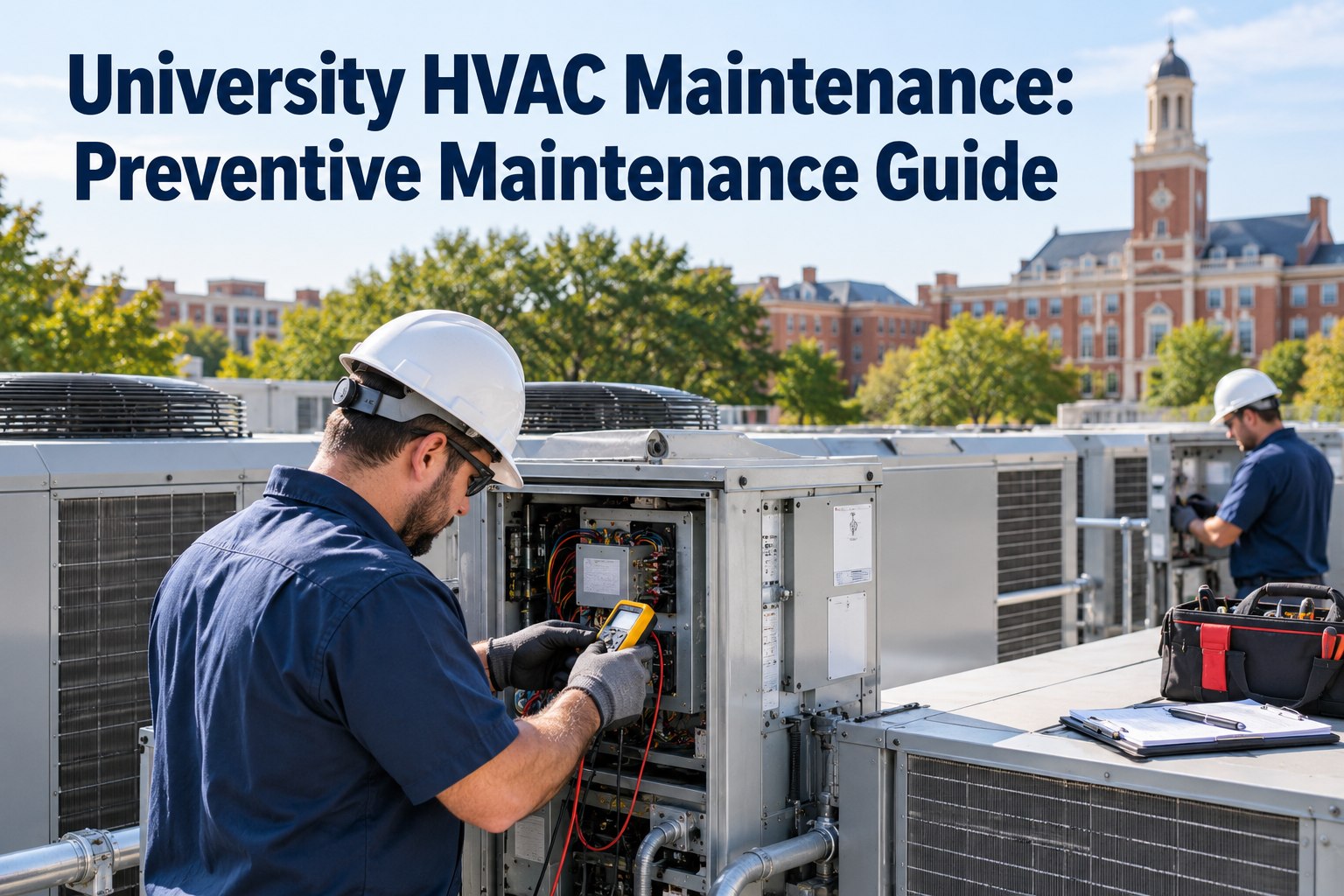
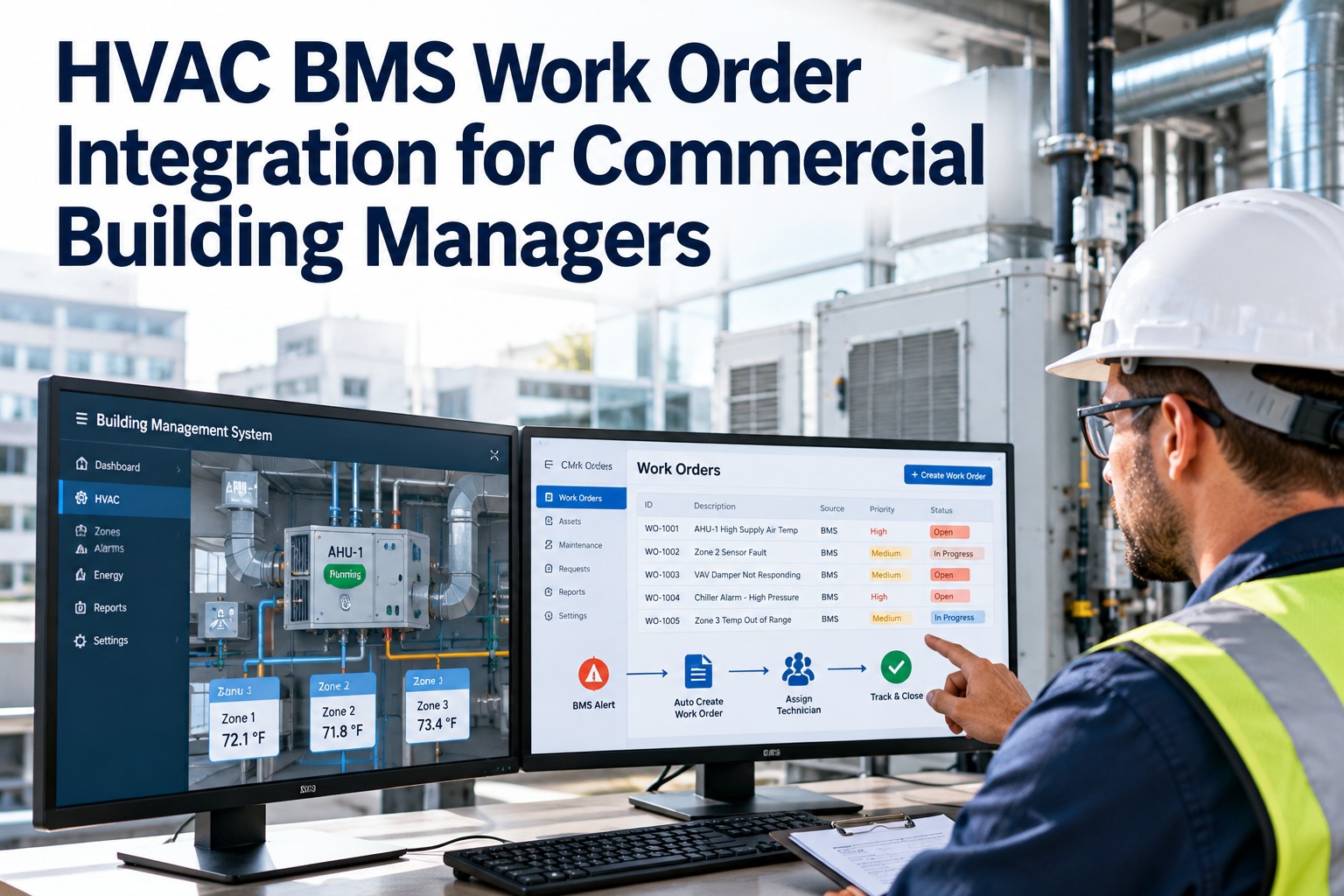
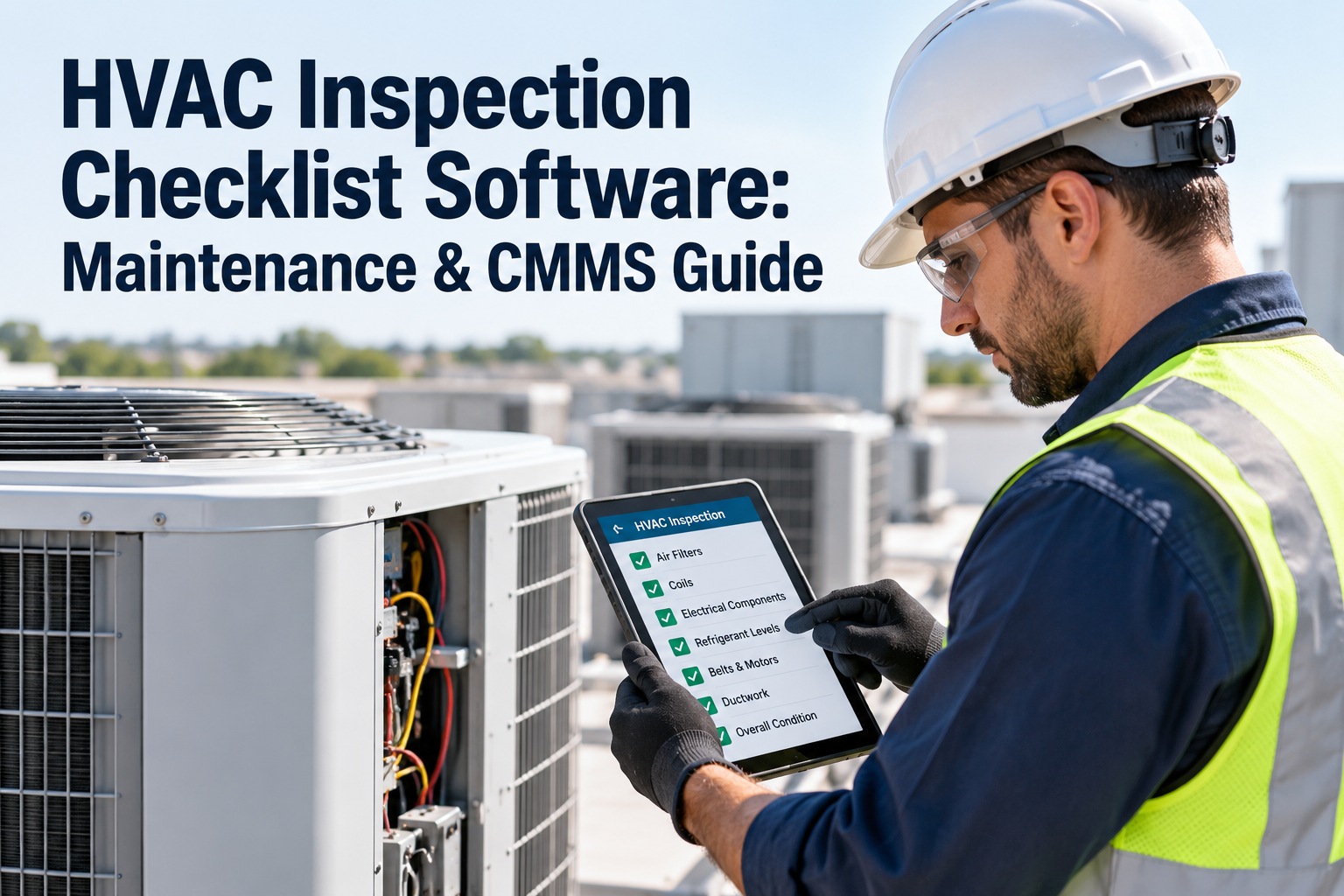
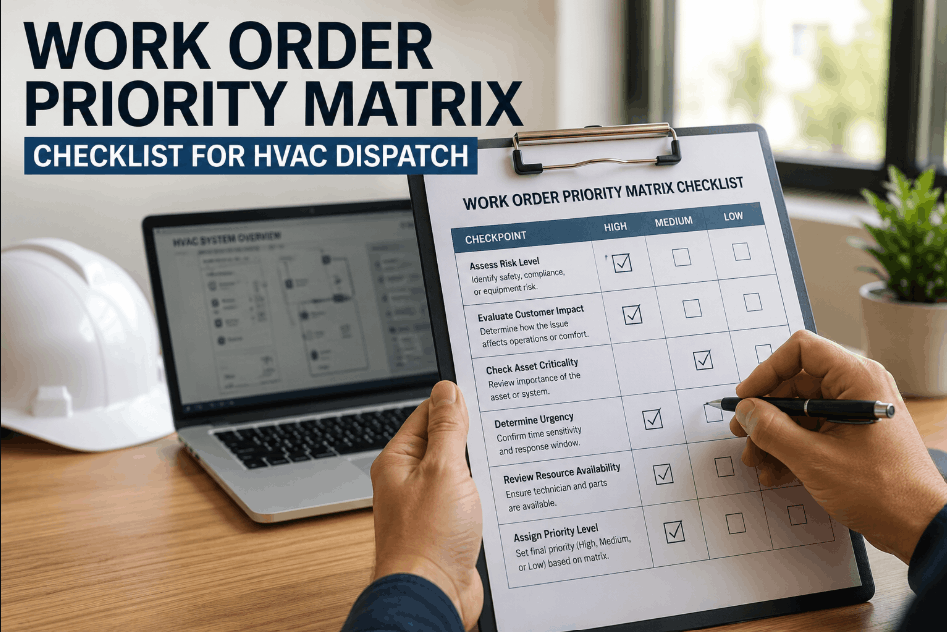
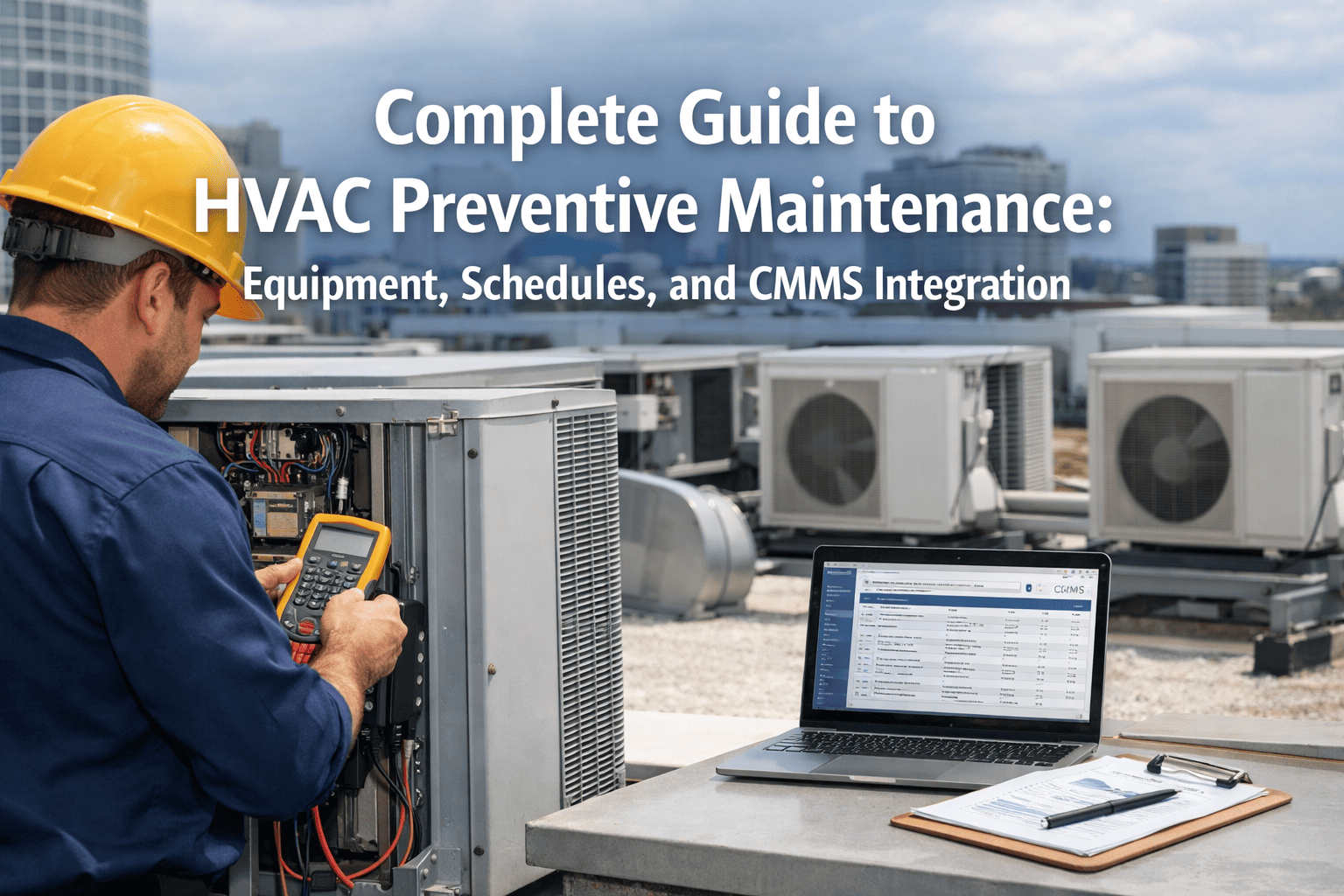
A university campus is not one building with one HVAC system — it is lecture halls, research labs, residence halls, libraries, data rooms and a central plant, each with its own load, its own comfort standard and its own tolerance for failure. And the one window to do the heavy work is the one when nobody is there: the summer break. A campus HVAC program that ignores the academic calendar either disrupts classes or never gets the big jobs done. This guide walks preventive maintenance for a campus of mixed buildings, planned around the calendar, and how to run it in OXMAINT AI, or book a demo of campus HVAC maintenance.
UNIVERSITY HVAC · PREVENTIVE MAINTENANCE GUIDE · 2027
University HVAC Maintenance: Preventive Maintenance Guide
Campus HVAC runs to the academic calendar, not the equipment's. The heavy work lands in summer; term time is for keeping comfort steady and catching faults early. OXMAINT AI schedules PM around the calendar, tracks every unit across every building, and turns a comfort complaint into a work order before it empties a lecture hall.
Fall
Term — keep comfort, catch faults
Winter
Peak heating, break window
Spring
Term — prep for cooling season
Summer
Campus empty — major PM & overhauls
One Campus, Many HVAC Jobs
The hardest part of campus HVAC is that no two buildings ask the same thing of it. A lecture hall needs comfort for a packed room twice a day; a lab needs tight control it cannot lose. One PM plan cannot be flat across all of them — it has to follow the building. Start free and map every building's HVAC in OXMAINT AI.
Lecture Halls & Classrooms
Big swings in occupancy — ventilation and comfort matter most when the room is full and class is in session.
Research Laboratories
Tight temperature, humidity and pressure control, fume hoods and high air change — the least tolerant of a failure.
Residence Halls
Occupied day and night, year-round for some — comfort complaints land fast and personally.
Libraries & Archives
Stable temperature and humidity to protect collections as much as to keep people comfortable.
Data & Server Rooms
Continuous cooling with no tolerance for downtime — a loss here is an IT outage, not a warm room.
Central Plant
Chillers, boilers and cooling towers feeding the campus loop — one plant failure reaches many buildings.
Maintenance Keyed to the Calendar
The academic year sets the rhythm. Routine checks run through term quietly, seasonal changeovers prepare for heating and cooling peaks, and the big intrusive work waits for the breaks — above all the summer, when a building can be taken offline without a single class disrupted.
During Term
Filter changes, belt and coil checks, comfort-complaint response, controls and economizer verification — the quiet, non-disruptive work.
Seasonal Changeover
Heating-to-cooling and back — coil cleaning, refrigerant and combustion checks, cooling-tower start-up and lay-up.
Summer / Breaks
The heavy window — chiller and boiler overhauls, duct and major coil work, replacements and the deferred backlog.
The summer break is the campus maintenance season — a short, fixed window where the year's major HVAC work has to land and finish before students return. OXMAINT AI plans it as a project, not a scramble.
The Campus HVAC PM Program
Underneath the calendar sits a standard preventive program — the recurring tasks every air handler, chiller and rooftop unit needs, scheduled by interval and tracked per asset.
Filters & Air Quality
Filter changes on schedule, ventilation and fresh-air verification — indoor air quality for a crowded campus.
Coils & Heat Transfer
Condenser and evaporator coil cleaning, fin condition — the efficiency a dirty coil quietly bleeds away.
Belts, Motors & Bearings
Belt tension and wear, motor current, bearing lubrication and vibration on fans and pumps.
Refrigerant & Chillers
Charge and leak checks, compressor and tube condition, chiller performance against baseline.
Controls & BAS
Setpoints, sensor calibration, economizer and scheduling through the building automation system.
Boilers & Heating
Combustion, safety controls, heat exchanger and distribution checks before the heating season.
The Campus Trap
Deferred Maintenance Is a Bill That Compounds
University facilities carry some of the largest deferred-maintenance backlogs anywhere — tight budgets and aging buildings push HVAC work to "next year" until a unit fails in week one of term. The way out is not more money alone; it is a record that shows what is deferred, what it risks, and which jobs the next summer window must take. A backlog you can see is a backlog you can fund and plan.
1
Make it visible — every deferred job logged with the asset, the risk and the cost to fix.
2
Rank by risk — a lab or data-room unit outranks a store-room one when the window is short.
3
Load the window — the highest-risk deferred work scheduled into the next summer break.
4
Show the trend — a backlog that is growing or shrinking, in numbers, to make the budget case.
The Numbers a Facilities Team Reports
Campus HVAC performance comes down to a few measures — the ones a facilities director takes to the budget meeting and the ones that show the program is working.
PM Completion
Scheduled HVAC PM done on time — the base measure that the program is actually running.
Comfort Complaints
Hot/cold calls by building, trended — the signal students and staff feel first.
Deferred Backlog
The value and risk of deferred HVAC work, the number that makes the capital case.
Unplanned Downtime
HVAC failures during term — the disruptions the whole plan exists to avoid.
Summer Window Completion
Share of the planned break work finished before students return.
Energy & Runtime
Consumption and equipment runtime, where maintenance and efficiency meet.
Why Campus HVAC Programs Struggle
A campus HVAC program usually slips for reasons any facilities manager will recognise — scale, budget and a calendar that gives one real window a year.
×
Flat PM Across Buildings
The same plan on a lab and a store room, so the critical unit gets no more attention than the trivial one.
×
Summer Window Wasted
The one break for heavy work arrives unplanned, and half the backlog does not get done.
×
Invisible Backlog
Deferred work living in people's heads, so it cannot be ranked, funded or planned.
×
Complaint-Driven Only
Work happening only when someone calls, which means the fault already reached a room full of people.
×
No Asset Register
Units across dozens of buildings uncatalogued, so nothing can be scheduled or tracked reliably.
×
Paper Across Campus
Records scattered by building, so no campus-wide picture forms for planning or budget.
The Calendar Sets the Work. The Record Gets It Done.
A campus HVAC program is won by planning the year — steady comfort through term, the right changeovers, and a summer window loaded with the work that matters most. OXMAINT AI holds every building's assets, schedules the PM around the calendar, and keeps the deferred backlog visible so the budget case makes itself.
1Register every building's HVAC
→
2Schedule PM to the calendar
→
3Load the summer window
→
4Track backlog & comfort
How OXMAINT AI Runs Campus HVAC Maintenance
OXMAINT AI is the AI-powered CMMS that holds every building's HVAC assets, schedules PM around the academic calendar, and keeps the deferred backlog and comfort complaints in one campus-wide view. Start free and bring your campus HVAC onto OXMAINT AI.
Campus Asset Register
Every air handler, chiller, boiler and rooftop unit, by building, with history and documents.
Calendar-Aware PM
Preventive schedules that respect term time and load the heavy work into breaks.
Comfort Work Orders
A hot/cold complaint becomes a tracked work order routed to the right building and tech.
Deferred Backlog
Deferred jobs logged with risk and cost, ranked, and trended for the capital case.
Summer Project Planning
The break window planned as a project — job plans, parts and crews staged ahead.
Campus Dashboard
PM completion, comfort complaints, backlog and downtime across every building in one view.
EXPERT REVIEW
Written for university and college facilities, plant operations and HVAC maintenance teams. The building types, seasonal plan, PM tasks and metrics here are a general framework — your actual intervals, task scope and comfort and ventilation standards come from the equipment manufacturer, your building automation design, and the governing codes (such as ASHRAE ventilation standards and your local building and energy codes). Laboratory, boiler and refrigerant work carries electrical, combustion and regulated-refrigerant requirements governed by your institution's procedures. OXMAINT AI is a maintenance management platform that registers assets, schedules the work and tracks the backlog; it does not replace a licensed HVAC professional, your facilities engineering judgement, or your compliance obligations.
Frequently Asked Questions
Why does university HVAC maintenance need a different approach?
Because a campus is many building types on one facilities team, and it runs to the academic calendar rather than the equipment's. Lecture halls, research labs, residence halls, libraries, data rooms and a central plant each place different demands on HVAC, so a flat PM plan does not fit. And the one window for heavy, disruptive work is the summer break, when buildings can be taken offline without affecting classes. Planning around both the mix of buildings and the calendar is what sets campus HVAC apart.
Start free and plan campus HVAC in OXMAINT AI.
When should major campus HVAC work be scheduled?
In the breaks, and above all the summer break. Routine, non-disruptive tasks like filter changes and comfort checks run quietly through term, seasonal changeovers prepare for the heating and cooling peaks, but chiller and boiler overhauls, duct work, major coil cleaning and equipment replacements belong in the summer window when the campus is largely empty. Treating that window as a planned project rather than a scramble is what gets the year's heavy work done on time.
Book a demo of calendar-aware scheduling in OXMAINT AI.
How should PM differ between campus building types?
By how much a failure costs and how tight the control has to be. A research lab with fume hoods and strict temperature, humidity and pressure control needs far more frequent, careful attention than a store room; a data or server room needs continuous cooling with no tolerance for downtime; residence halls are occupied around the clock. The PM interval and priority should follow the building's criticality, not sit flat across the whole campus.
Book a demo of building-based PM in OXMAINT AI.
How do you manage a deferred HVAC maintenance backlog?
Start by making it visible — every deferred job logged with its asset, the risk of leaving it and the cost to fix. Then rank by risk so a lab or data-room unit outranks a low-consequence one, load the highest-risk work into the next summer window, and trend the backlog so you can show whether it is growing or shrinking. A backlog you can see in numbers is one you can fund and plan, which is the heart of the campus budget case.
Book a demo of deferred-backlog tracking in OXMAINT AI.
Can a CMMS manage HVAC across an entire campus?
Yes — a CMMS registers every HVAC unit across every building, schedules PM around the academic calendar, turns comfort complaints into tracked work orders, and keeps the deferred backlog and performance in one campus-wide view. That shared record is what lets a facilities team plan the summer window, make the capital case with real numbers, and stop a program that would otherwise live in spreadsheets and people's memories.
Start free and run campus HVAC in OXMAINT AI.
Plan the Campus HVAC Year, Building by Building.
Run university HVAC on OXMAINT AI: every building's units registered, PM scheduled around the academic calendar, the summer window planned as a project, and the deferred backlog visible for the budget — so comfort holds through term and the heavy work gets done on the break.