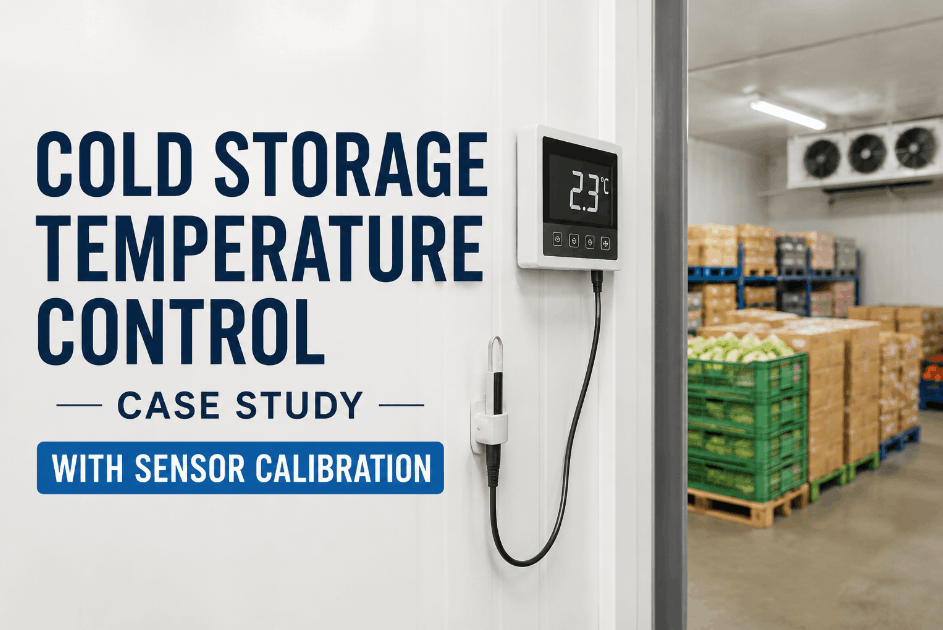
A large-scale distribution warehouse in the midwest United States was struggling to maintain consistent cooling performance during peak shipping seasons. Temperature excursions, overloaded HVAC zones, and reactive maintenance cycles were threatening product integrity and operational SLAs. Manual inspection logs, poorly positioned sensors, and no predictive visibility into cooling load made seasonal preparedness impossible. After deploying Oxmaint's CMMS platform with sensor-linked asset tracking, predictive maintenance scheduling, and structured inspection workflows — Sign Up Free to explore the platform — the facility reduced cooling-related downtime by 61%, eliminated temperature excursion events during peak season, and cut emergency HVAC calls by 54%.
Prevent Cooling Failures Before Peak Season Hits
See how Oxmaint's CMMS delivers real-time sensor monitoring, predictive HVAC maintenance, and digital inspection trails — deployed without IT overhead.
01 / The Facility
Cold Chain Warehousing. Zero Tolerance for Temperature Deviation.
Facility Type
Multi-zone distribution warehouse managing ambient, refrigerated, and frozen storage across 380,000 sq ft. Operates under FDA food storage guidelines and retail partner SLA requirements for temperature-sensitive inventory.
Scale
Four independently cooled storage zones. Over 280 tracked HVAC assets including rooftop units, evaporators, condensers, exhaust fans, and 94 environmental monitoring sensors distributed across staging, storage, and loading dock areas.
Maintenance Team
9-person facilities team — two HVAC technicians, five general maintenance staff, and two operations coordinators managing work orders and vendor dispatch across all zones.
Seasonal Challenge
Peak shipping seasons (Q2 and Q4) introduced 40–60% higher throughput volume — driving cooling load spikes that the existing HVAC configuration and maintenance cadence were not designed to absorb without reactive intervention.
Prior System
Paper inspection checklists, standalone temperature data loggers with no CMMS integration, and reactive work order dispatch via phone and email. No predictive scheduling, no airflow mapping, and no centralized visibility into sensor placement effectiveness.
Annual Cost Exposure
Pre-deployment emergency HVAC repair costs averaged $148,000 annually. Inventory losses tied to temperature excursion events added an estimated $220,000 per year in product write-offs and retail chargeback penalties.
02 / The Challenge
When Cooling Systems Fail Reactively, Peak Season Becomes a Crisis
Warehouse cooling failures are not gradual — they are sudden, expensive, and operationally catastrophic during high-volume periods. This facility's reactive maintenance model meant HVAC issues were discovered after temperature alarms triggered, not before equipment performance degraded. Sensor placement gaps created blind spots across staging and dock areas. Airflow paths were unoptimized for the facility's actual inventory layout, creating warm pockets during peak throughput windows. Without a connected CMMS, there was no mechanism to schedule preseason HVAC inspections, track sensor calibration status, or route work orders before failures escalated. Book a Demo to see how Oxmaint closes these operational gaps across warehousing and distribution facilities.
23
Temperature excursion events/peak season
Each season's high-volume period averaged 23 documented temperature excursion events — each requiring incident reporting, inventory assessment, and retail partner notification that consumed quality and operations staff time.
61%
HVAC failures were reactive
Over half of all HVAC maintenance responses were unplanned emergency dispatches — averaging 6.4 hours of equipment downtime per event and triggering zone temperature variance across adjacent storage areas.
18 hrs
Average preseason prep time per zone
Manual preseason inspections across four cooling zones required 18 hours of technician time per zone — with no standardized checklist, no digital records, and no follow-up work order routing for identified issues.
31%
Sensor placement gaps identified
A post-incident audit revealed that 31% of environmental sensors were either miscalibrated, poorly positioned relative to airflow paths, or monitoring areas not representative of actual product storage temperatures.
"We'd walk into peak season every year knowing the cooling system wasn't ready — and knowing we wouldn't find out exactly where it would fail until it already had."
03 / The Solution
Oxmaint CMMS: Predictive HVAC Scheduling, Sensor Asset Tracking, and Digital Inspection Trails for Warehouse Cooling
After evaluating three CMMS platforms for operational fit, the facility's maintenance and operations leadership selected Oxmaint for its combination of predictive maintenance scheduling, QR-linked asset tracking, structured inspection workflows, and real-time work order visibility — all configurable without dedicated IT resources or extended onboarding timelines. The platform replaced disconnected paper inspection logs and reactive dispatch with a connected digital maintenance system that gave the team advance visibility into cooling asset health before peak season load events occurred. Sign Up Free and configure your HVAC asset registry in under a week.
PREDICT
Predictive maintenance scheduling analyzed HVAC equipment service history, runtime cycles, and seasonal load patterns to generate proactive work orders before peak season — replacing reactive emergency dispatch with planned preseason intervention windows.
INSPECT
Structured digital inspection checklists replaced paper walk-throughs across all four cooling zones. Every inspection generated a timestamped record with technician attribution, identified findings, and auto-routed corrective work orders — creating a defensible audit trail for SLA and compliance purposes.
ASSETS
A complete HVAC asset registry with QR-tagged equipment records gave technicians full service history, sensor calibration status, and manufacturer service intervals at the point of work — eliminating the information gaps that delayed diagnosis during emergency events.
MONITOR
Sensor assets registered and tracked within Oxmaint's platform enabled scheduled recalibration workflows and placement validation as part of the preseason maintenance cycle — systematically closing the sensor blind spots that had allowed temperature excursions to develop undetected.
04 / Implementation
Operationally Ready in 28 Days. First Predictive HVAC Cycle Completed Before Peak Season.
Days 1–6
HVAC Asset Registry and Sensor Catalogue Migration
All 280+ HVAC and environmental monitoring assets catalogued into Oxmaint's asset registry — including rooftop units, evaporators, condensers, exhaust systems, and all 94 sensor units. Existing paper service records digitized and linked to asset profiles. QR tags installed across all tracked equipment. Calibration and service intervals configured per manufacturer specifications and internal maintenance SOPs.
Days 7–14
Predictive Scheduling Configuration and Inspection Workflow Setup
Oxmaint's predictive engine configured using equipment service histories, seasonal runtime data, and zone criticality classifications. Digital inspection checklists built for each of the four cooling zones — including airflow path checks, sensor placement validation, and refrigerant level assessments. First system-generated predictive work orders issued on day 11, flagging seven rooftop units with service history patterns indicating elevated failure risk ahead of the upcoming peak season.
Days 15–23
Team Training and Parallel Operations Period
Nine-day parallel period running digital and paper systems concurrently across all zones. HVAC technicians completed platform training in 2.5 hours; general maintenance staff in 1.5 hours; operations coordinators in 3 hours including work order routing and escalation configuration. By day 23, all 9 team members rated themselves operationally confident on the mobile platform.
Days 24–28
Full Digital Cutover and Preseason Maintenance Campaign Launch
Complete paper elimination across all four cooling zones. Supervisor dashboards activated with real-time asset status, open work order visibility, and sensor calibration tracking. First full digital preseason HVAC inspection campaign launched — completing zone-by-zone assessments in 3.5 hours per zone versus the prior 18-hour manual process. Seven identified at-risk assets serviced before peak season load began.
05 / Results
First Peak Season With Zero Temperature Excursion Events in Three Years
Deploying Oxmaint's CMMS platform ahead of the facility's highest-volume shipping season produced measurable outcomes that exceeded maintenance and operations leadership targets. Predictive maintenance interventions resolved seven at-risk HVAC assets before the peak load period began. Structured digital inspections closed the sensor placement gaps that had generated blind spots in three prior peak seasons. The result was the facility's first excursion-free peak season in three years and a 61% reduction in cooling-related downtime across the full post-deployment measurement period. Book a Demo to map your facility's cooling maintenance outcomes.
| Metric |
Before Oxmaint |
After Oxmaint |
Change |
| Temperature excursion events (peak season) |
23 events/season |
0 events/season |
100% eliminated |
| HVAC emergency dispatches (monthly) |
11.4/month avg |
5.2/month avg |
−54% emergency calls |
| Cooling-related downtime (monthly) |
38 hrs/month |
15 hrs/month |
−61% downtime |
| Preseason inspection time per zone |
18 hrs/zone |
3.5 hrs/zone |
−81% prep time |
| Sensor calibration compliance rate |
69% |
100% |
Fully compliant |
| Reactive vs planned maintenance ratio |
61% reactive |
18% reactive |
−70% reactive ratio |
| Inventory loss from excursion events |
$220K/year |
$0 peak season |
Full protection |
| Predictive work orders issued (preseason) |
0 |
34 preseason WOs |
From zero to 34 |
| Work order record completeness |
52% |
100% |
100% complete records |
| Emergency HVAC repair spend (annual) |
$148,000 |
$67,000 |
−55% repair cost |
−61%
Cooling downtime reduced
0
Excursion events peak season
−81%
Inspection prep time
"For three years we went into peak season hoping the cooling system would hold. This year we went in knowing it would — because we'd already found and fixed everything that could fail."
06 / Key Analysis
Why the Cooling Transformation Delivered at Scale
01
Predictive maintenance converted seasonal risk into planned intervention. The facility's prior model discovered HVAC degradation only when equipment failed — during peak load events when service resources were already stretched. Oxmaint's predictive scheduling identified at-risk assets using service history and runtime patterns, generating preseason work orders that resolved developing failures before throughput volume amplified their impact. Seven targeted interventions eliminated what had historically become mid-season emergency dispatches.
02
Structured digital inspections closed the sensor placement gaps driving excursion blind spots. The 31% sensor misalignment rate identified in the pre-deployment audit was not a one-time problem — it was a recurring condition caused by layout changes and inventory reconfiguration that never triggered a corresponding inspection update. Oxmaint's zone-specific digital checklists embedded sensor placement validation as a standard inspection step, making coverage gaps visible and correctable as part of every preseason cycle rather than discoverable only after a temperature incident.
03
Complete asset records enabled defensible vendor management and capital planning for aging HVAC equipment. With full maintenance cost histories tracked per asset, the engineering team identified four rooftop units whose emergency repair frequency exceeded the threshold for planned replacement — a determination that paper-based records structurally prevented the team from quantifying. Scheduled replacements in the next capital cycle are projected to eliminate an estimated $43,000 in recurring emergency repair expenditure. Sign Up Free to see how Oxmaint builds this asset intelligence for your operation.
04
Digital work order records reduced SLA dispute resolution time from days to hours. When retail distribution partners escalated temperature compliance inquiries, the facility previously spent 2–3 days reconstructing paper records to demonstrate control. Oxmaint's timestamped, asset-attributed digital audit trail made the same documentation retrieval a 20-minute task — strengthening partner confidence and eliminating the chargeback exposure that had accompanied prior excursion events. Book a Demo to explore how Oxmaint protects your compliance documentation posture.
07 / Business Impact
Beyond Cooling Control: What the Transformation Protected at Facility Level
Inventory Protection
Eliminating temperature excursion events during the facility's highest-volume season protected an estimated $220,000 in annual product write-off and retail chargeback exposure — the direct financial consequence of the cooling failures that Oxmaint's predictive scheduling prevented.
SLA Reliability
Meeting temperature SLA requirements throughout peak season for the first time in three years restored full distribution partner confidence — eliminating the corrective action correspondence, chargeback penalties, and account review escalations that had followed prior excursion events.
Technician Efficiency
Shifting from 61% reactive to 18% reactive maintenance freed HVAC technician capacity for planned work — reducing overtime spend during peak season and eliminating the after-hours emergency call patterns that had driven technician fatigue and retention concerns during high-volume periods.
Financial Recovery
Reduced emergency repair spend ($81,000 saved), eliminated inventory losses, and recovered operational SLA performance combined to deliver an estimated $301,000 in annual financial benefit against the facility's pre-deployment cost baseline — within the first full peak season following deployment.
23
Excursion events before
$301K
Annual savings recovered
Ready to Prevent Cooling Failures Before Peak Season?
Oxmaint's CMMS delivers predictive HVAC scheduling, sensor asset tracking, and digital inspection trails — without extended onboarding or IT-heavy deployment. See how it maps to your warehouse cooling requirements.
08 / FAQ
Frequently Asked Questions
How does a CMMS help warehouses prevent cooling failures during peak season?
A warehouse CMMS automates HVAC maintenance scheduling, tracks sensor calibration status, and generates predictive work orders before equipment degrades — replacing reactive emergency dispatch with planned preseason interventions that prevent peak-load cooling failures.
Can Oxmaint track environmental sensors as assets alongside HVAC equipment?
Yes. Oxmaint's asset registry supports all sensor types — including temperature, humidity, and airflow sensors — with calibration scheduling, placement documentation, and QR-linked service histories that make sensor compliance trackable alongside mechanical HVAC assets.
How quickly can Oxmaint be deployed in a multi-zone warehouse facility?
Facilities with existing asset lists and service records typically reach full digital operation in 28–35 days. This facility — with 280+ tracked assets across four zones — was fully deployed in 28 days, with the first predictive maintenance cycle completed before peak season began.
Does Oxmaint support structured inspection checklists for HVAC zone assessments?
Yes. Oxmaint's digital inspection workflows support zone-specific checklists with mandatory field completion, photo attachment, technician attribution, and automatic work order generation for identified findings — replacing paper walk-throughs with defensible digital records.
What is the ROI timeline for a warehouse CMMS investment focused on cooling management?
Facilities with high reactive maintenance ratios and seasonal excursion exposure typically recover platform costs within one to two seasons through reduced emergency repair spend, eliminated inventory losses, and SLA penalty avoidance. This facility recovered an estimated $301,000 in its first post-deployment peak season.
Can Oxmaint help identify aging HVAC equipment due for replacement?
Yes. Oxmaint's complete asset maintenance cost histories enable data-driven repair-versus-replace decisions — surfacing equipment whose cumulative service spend exceeds replacement thresholds and providing the financial documentation needed to defend capital requests to facility leadership.
Does Oxmaint require specialized HVAC or cold chain software configuration?
No. Oxmaint is configurable by existing maintenance and operations teams without specialized software expertise. This facility's 9-person team completed full asset registry setup, inspection checklist configuration, and team training in 28 days without external implementation support.
Zero Excursion Events. 61% Less Downtime. Deployed in 28 Days.
280+ tracked HVAC and sensor assets. Predictive preseason maintenance. Digital inspection trails from day one. See what Oxmaint delivers for your warehouse cooling operation.