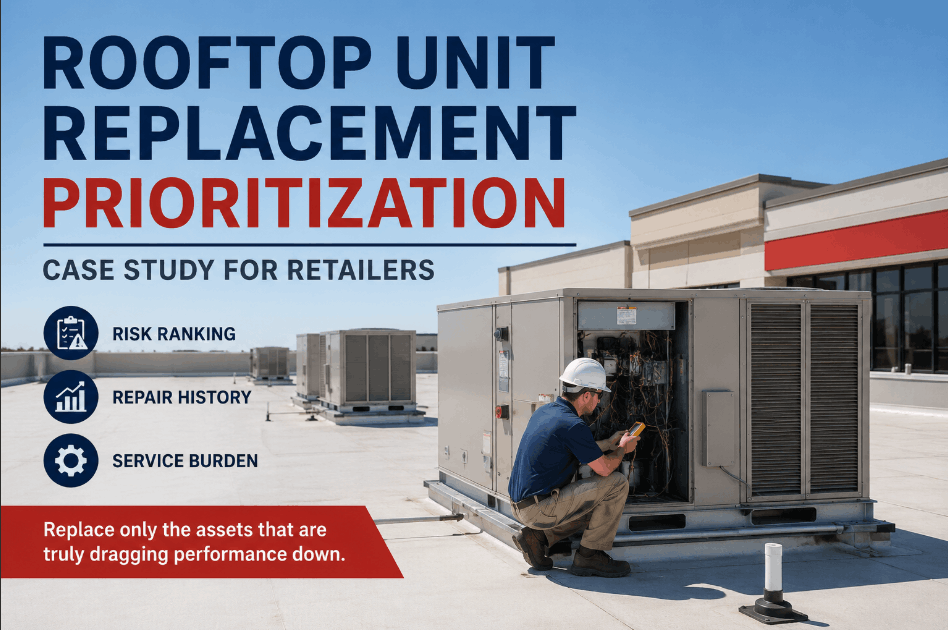
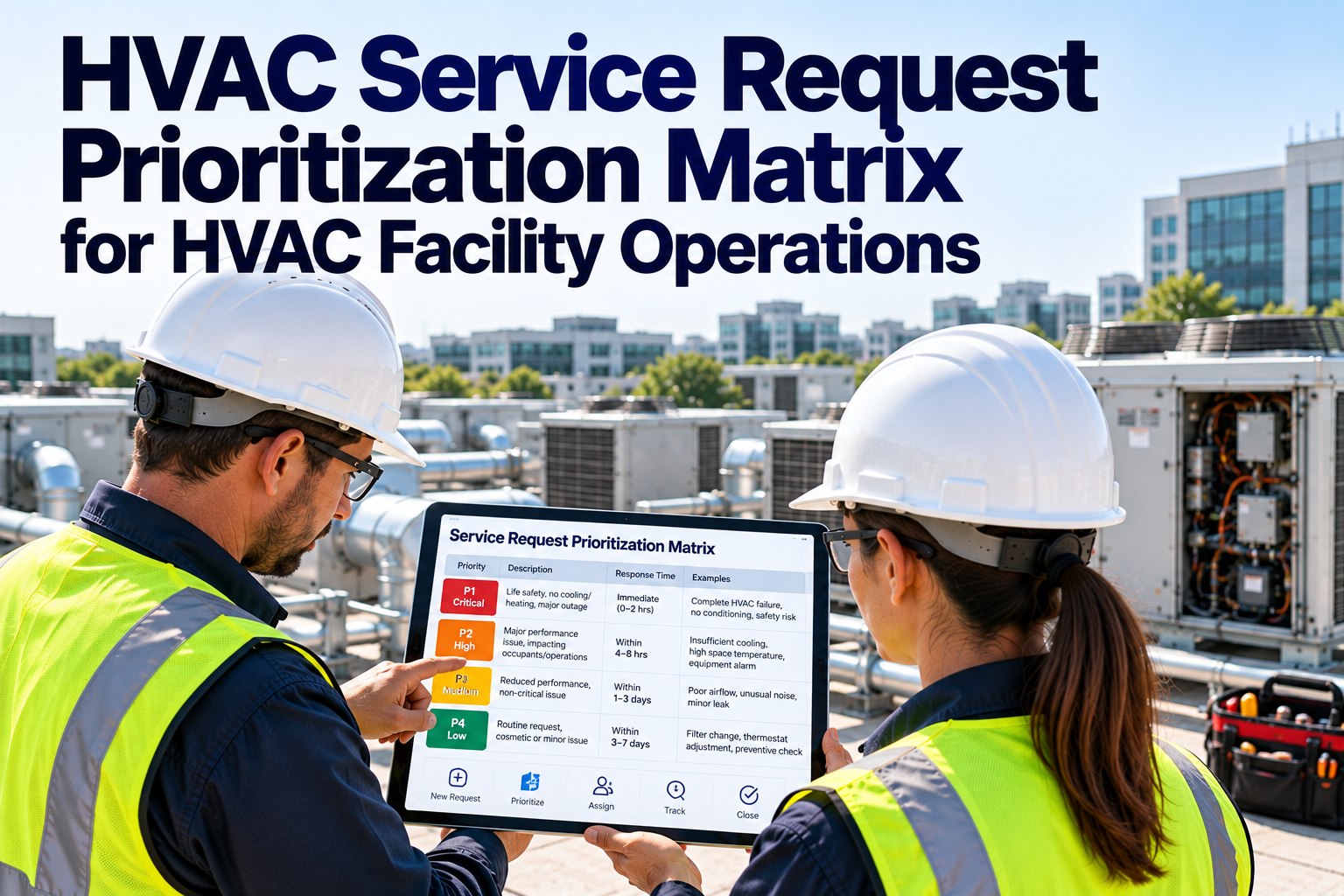
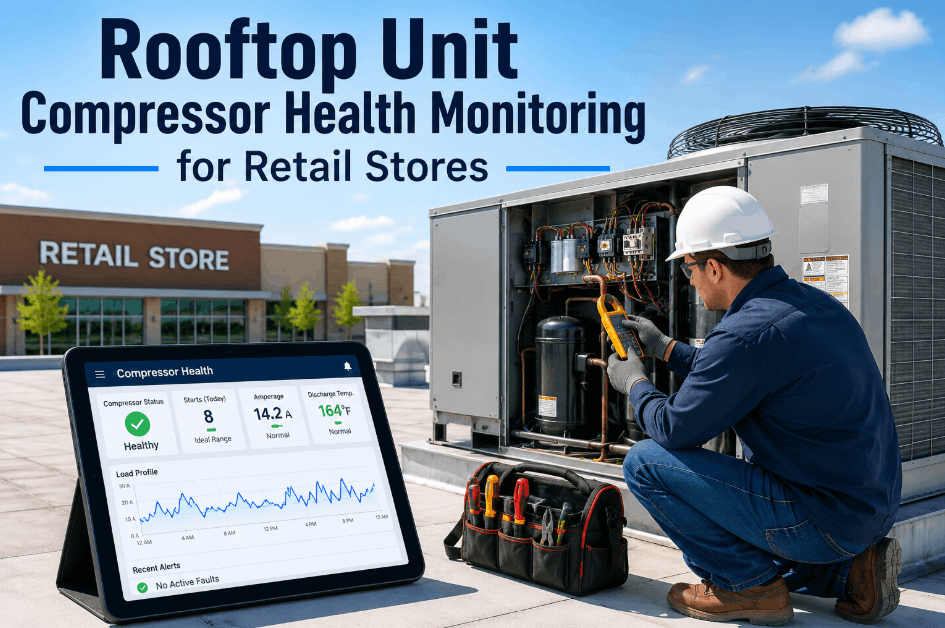
Retail chains managing dozens or hundreds of locations face a persistent dilemma with rooftop HVAC units: replacing too early wastes capital, replacing too late triggers emergency service costs and comfort failures. A mid-size specialty retailer operating 34 stores discovered that its rooftop unit replacement decisions were being made reactively — driven by breakdown events rather than structured risk data. Without a system connecting repair history, service frequency, and asset condition to replacement planning, high-burden units kept consuming maintenance budget while genuinely end-of-life assets went untracked. If your retail operation is replacing rooftop units without ranked risk data behind the decision, Sign Up Free to see how Oxmaint structures asset lifecycle scoring for retail HVAC portfolios — or Book a Demo with a facility operations specialist.
Asset Prioritization · Lifecycle Management · Capital Planning
Replace the Right Rooftop Units — Not Just the Loudest Ones
Risk ranking, repair history scoring, service burden analysis, and replacement scheduling — OxMaint gives retail facility teams the data structure to prioritize RTU capital decisions with confidence.
Plant Profile
The Operation: 34 Retail Locations, Aging RTU Fleet, and No Replacement Ranking System
Operation Overview
IndustrySpecialty retail — 34 store locations, mixed climate regions
Team1 regional facilities manager, 3 district maintenance coordinators, contracted HVAC service vendors
Asset Volume118 rooftop units across portfolio, ages ranging from 3 to 19 years
Prior SystemVendor service tickets, spreadsheet repair logs, no centralized asset scoring
Oxmaint FeaturesAsset Lifecycle Scoring · Repair History Tracking · Service Burden Analysis · Replacement Prioritization · Work Order History · Predictive Maintenance Indicators
Baseline Performance Gaps
63%
Of emergency HVAC service calls originated from units not flagged for replacement in the prior year's capital plan
2.7×
Average repair cost per unit for reactive replacements versus planned capital replacements in the same period
31%
Of rooftop units lacked complete repair history records, making lifecycle scoring impossible without data reconstruction
Root Cause Analysis
Why Replacement Decisions Kept Missing the Right Units — And Why Risk Stayed Invisible
A review of 24 months of service records across all 34 locations identified four structural breakdowns in how replacement decisions were being formed. The facilities team was not passive about maintenance — service calls were being dispatched and vendors were completing work on schedule. The problem was that no system was connecting individual repair events, cumulative service cost, unit age, and failure frequency into a ranked view of asset risk. Decisions were being made unit-by-unit, location-by-location, without portfolio-level context. Sign Up Free to start building asset risk scores across your RTU fleet — or Book a Demo to see how Oxmaint maps repair history to replacement priority for retail portfolios.
34%
No Portfolio-Level Risk Ranking — Decisions Made in Isolation
Each replacement decision was evaluated independently by location, without comparison across the full fleet. High-burden units at quieter locations were consistently deprioritized in favor of louder failures at higher-volume stores.
28%
Repair History Fragmented Across Vendors and Spreadsheets
Service records were split across three HVAC contractors and two internal tracking formats. Cumulative repair cost per unit was never calculated, so no asset had a real total cost of ownership number attached to it.
23%
Age Alone Used as Proxy for Replacement Urgency
Capital planning used unit age as the primary trigger, ignoring actual service burden. Some 14-year-old units had clean histories and low repair costs; some 8-year-old units were consuming disproportionate service spend — but age-first logic reversed the priority order.
15%
No Early Warning Indicators Tied to Maintenance Patterns
Recurring failure modes — compressor cycling issues, refrigerant leaks, controls faults — were logged as individual events rather than pattern signals. Units with three or more related failures in 18 months were not automatically surfaced for lifecycle review.
The Solution
How Oxmaint Built a Risk-Ranked Replacement Plan Across All 118 Rooftop Units
The retail facilities team deployed Oxmaint without restructuring vendor relationships or replacing existing service workflows. The platform consolidated repair history from all service sources into a unified asset record for each of the 118 rooftop units — calculating cumulative repair cost, service call frequency, recurring failure type, and age-adjusted risk score per unit. Each RTU received a prioritization score that reflected actual maintenance burden rather than age alone. Units with high repair frequency and escalating service costs were ranked for replacement independent of age, and units with low service burden were deferred regardless of age-based assumptions. The capital plan was rebuilt around ranked asset data, not vendor-driven replacement suggestions. Book a Demo to see how Oxmaint structures rooftop unit prioritization for your retail portfolio.
01
Unified Asset Records With Complete Repair History Per RTU
Service records from all three HVAC contractors were consolidated into individual asset profiles in Oxmaint. Each rooftop unit received a complete repair timeline, cumulative cost total, and failure category log — giving the facilities team a full lifecycle view for every unit in the portfolio for the first time.
02
Service Burden Scoring Across the Full Portfolio
Oxmaint calculated service burden scores using repair frequency, cost per event, failure category recurrence, and downtime impact. Units were ranked across the entire 118-asset fleet — surfacing which RTUs were consuming disproportionate service resources regardless of location priority or unit age.
03
Recurring Failure Pattern Detection and Lifecycle Alerts
Maintenance patterns — repeated compressor issues, refrigerant top-offs within 12-month windows, sequential controls failures — were flagged automatically as lifecycle risk signals. Units meeting pattern thresholds were queued for replacement review before next failure, not after.
04
Capital Plan Rebuilt Around Ranked Asset Priority
The annual replacement budget was reallocated based on asset risk scores rather than age estimates. High-burden units were scheduled for replacement in the current capital cycle; low-burden units were confirmed for deferral with documented justification — giving the finance team a defensible, data-backed capital plan.
Results at 90 Days
What the RTU Portfolio Looked Like Three Months After Deploying Oxmaint
71%
Reduction in emergency RTU service calls — from reactive dispatch to scheduled replacement before failure
88%
Of replacement decisions in the new capital plan backed by quantified repair history and service burden scores
43%
Reduction in per-unit replacement cost versus reactive emergency replacements in the prior year
100%
Asset record completion — all 118 RTUs with unified repair history, cost totals, and risk scores
+37%
Improvement in capital plan accuracy — fewer mid-cycle emergency replacements disrupting approved budgets
3.8×
ROI on platform cost within 90 days from avoided emergency service, planned replacement savings, and deferred low-risk units
| Metric |
Before Oxmaint |
90 Days After |
Change |
| Emergency RTU service calls |
Avg 11/month |
Avg 3/month |
-71% |
| Replacement decisions with repair history backing |
~22% |
88% |
+66pts |
| Per-unit replacement cost (reactive vs planned) |
2.7× planned cost |
1.0× planned cost |
-43% |
| Asset records with complete repair history |
69% of fleet |
100% of fleet |
Full coverage |
| Mid-cycle emergency replacements |
7 per year avg |
2 per year (projected) |
-71% |
| Capital plan preparation time |
22 hrs avg |
7 hrs avg |
-68% |
Key Business Impact
What Risk-Ranked RTU Replacement Planning Means for Multi-Location Retail Operations
"Retail rooftop unit decisions go wrong in a predictable way: the loudest failure gets the replacement budget, and the asset that's quietly accumulating risk gets deferred another year. The real problem isn't the individual unit — it's that without a portfolio view connecting repair cost, service frequency, and failure patterns across every location, there's no way to know which units are actually dragging performance. Age is a weak proxy. What matters is the cumulative maintenance burden relative to remaining useful life. When you have that data structured and ranked, replacement decisions become straightforward. The capital argument writes itself."
Denise Holbrook, Retail Facility Operations and HVAC Asset Strategy Advisor
16 years multi-site retail facilities management · Former regional FM lead, 60+ location portfolio · Specialist in HVAC capital planning, asset lifecycle scoring, and service vendor performance management
RTU Risk Ranking · Service Burden Analysis · Replacement Scheduling
Build a Replacement Plan Your Capital Team Can Defend
Asset-level repair history, service burden scoring, lifecycle risk ranking, and capital-ready prioritization — OxMaint gives retail facility teams the structured data to replace the right rooftop units at the right time.
FAQs
Frequently Asked Questions
How does Oxmaint help retail teams prioritize rooftop unit replacements?
Oxmaint consolidates repair history and service costs into a per-unit risk score, ranking the full RTU fleet by maintenance burden — so replacement decisions are driven by data, not the most recent breakdown.
Can Oxmaint consolidate repair records from multiple HVAC vendors?
Yes. Service data from multiple contractors and existing spreadsheets can be unified into asset profiles within Oxmaint, giving each unit a complete repair timeline and cumulative cost record.
Does Oxmaint support predictive replacement triggers for HVAC assets?
Yes. Recurring failure patterns — repeated component failures, frequent refrigerant service, escalating repair costs — are flagged as lifecycle signals, queuing units for review before the next failure event.
How does Oxmaint improve retail capital planning for HVAC?
By replacing age-based estimates with ranked asset risk data, Oxmaint gives facilities and finance teams a defensible, evidence-backed replacement schedule — reducing emergency budget disruptions and vendor-driven replacement pressure.
How quickly does RTU replacement prioritization improve after deploying Oxmaint?
Most retail portfolios see a structured replacement ranking within the first planning cycle after asset data consolidation — typically within 30–45 days of deployment.
Every Ranked Unit Is a Reactive Cost Avoided
Give Your RTU Portfolio the Risk Structure It Needs
Oxmaint brings repair history consolidation, service burden scoring, lifecycle risk ranking, and capital-ready prioritization to retail HVAC programs — without restructuring your vendor relationships or service workflows.