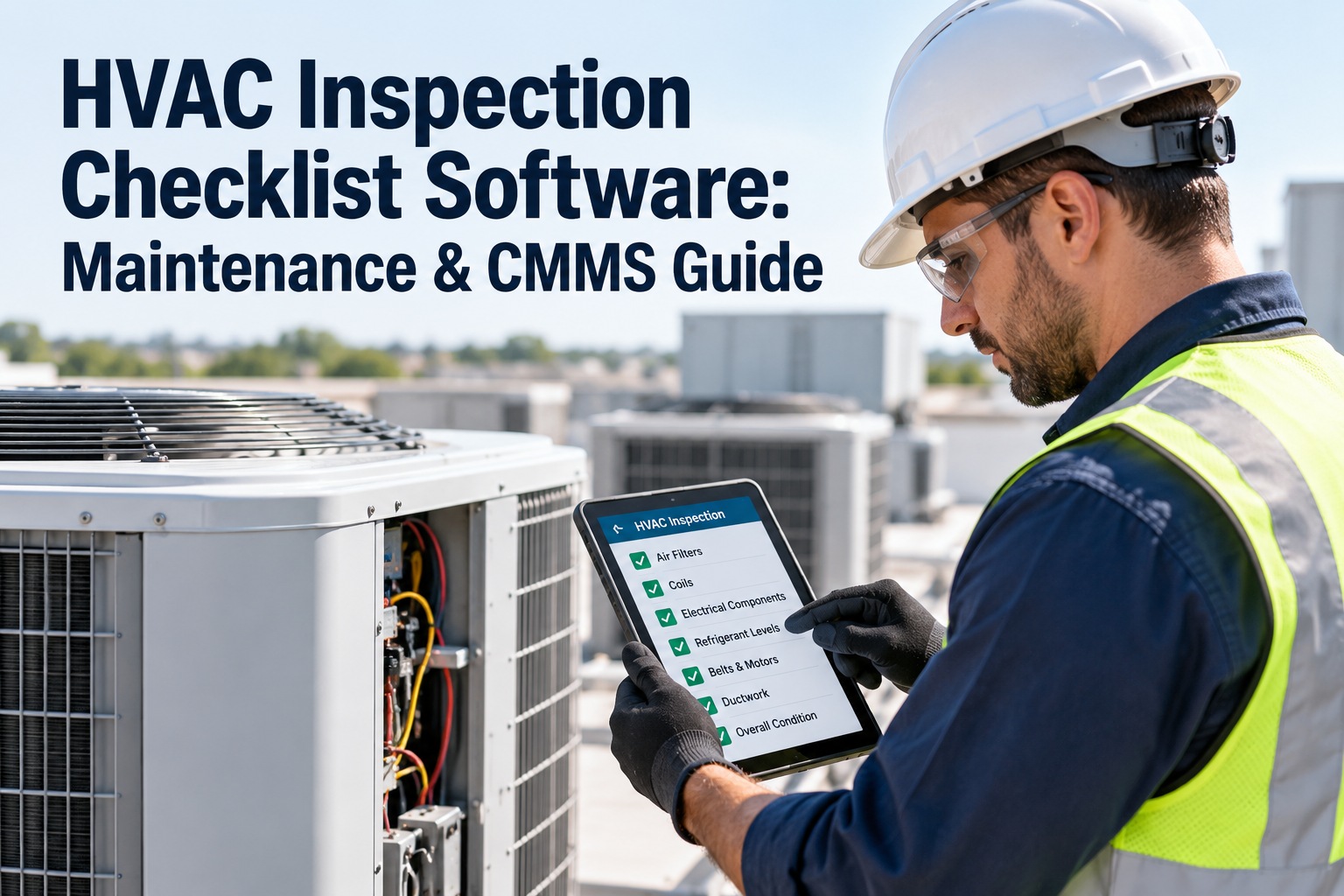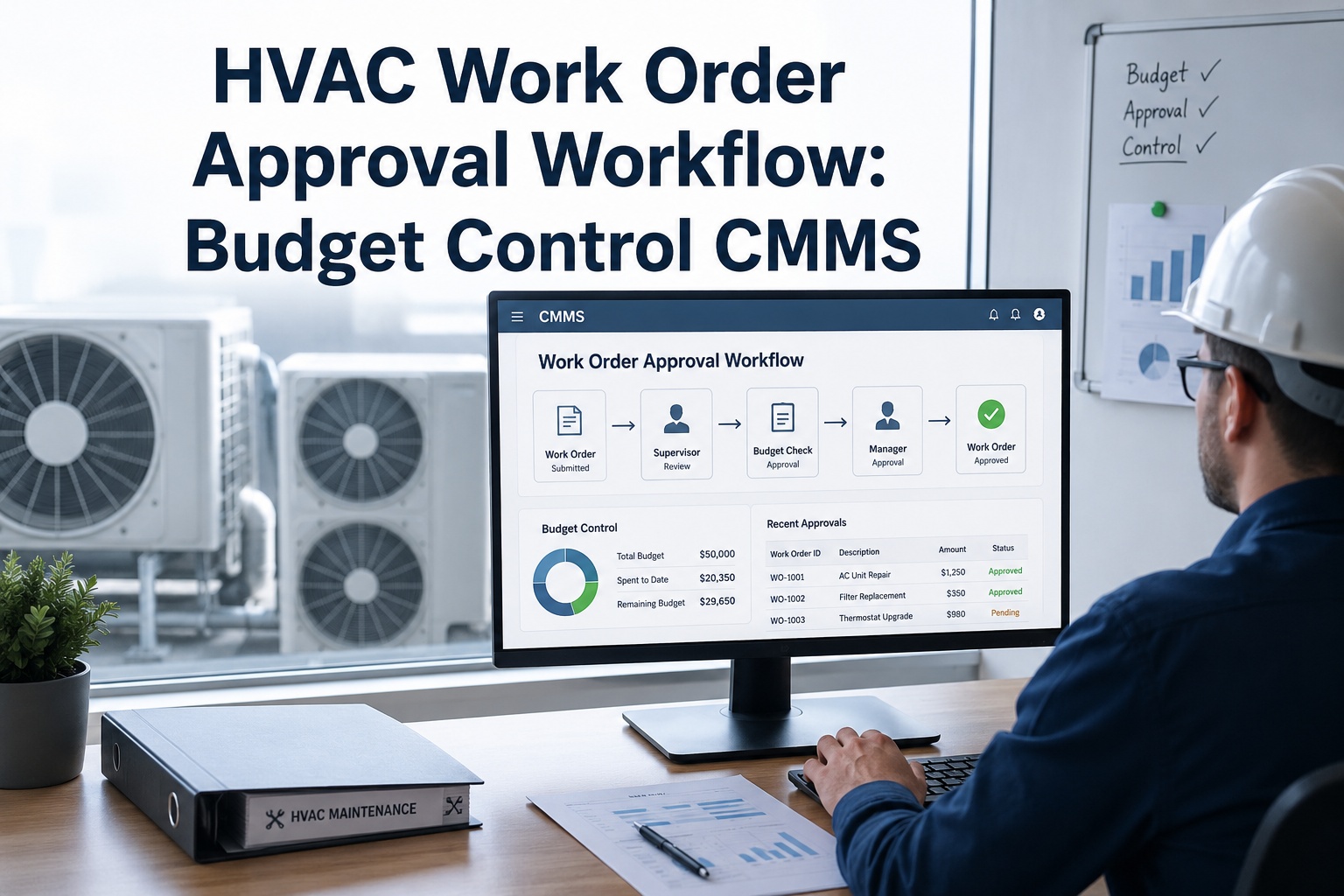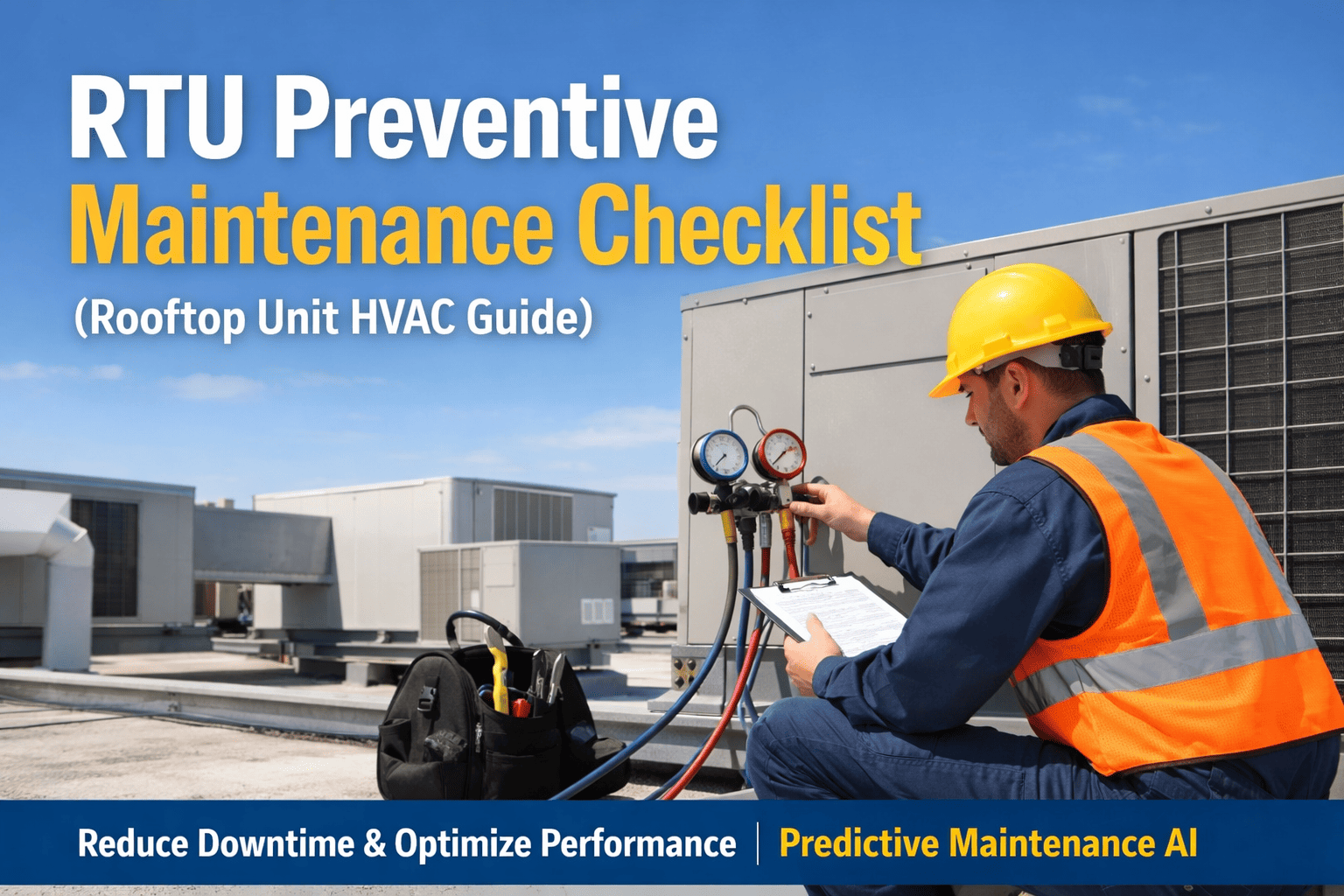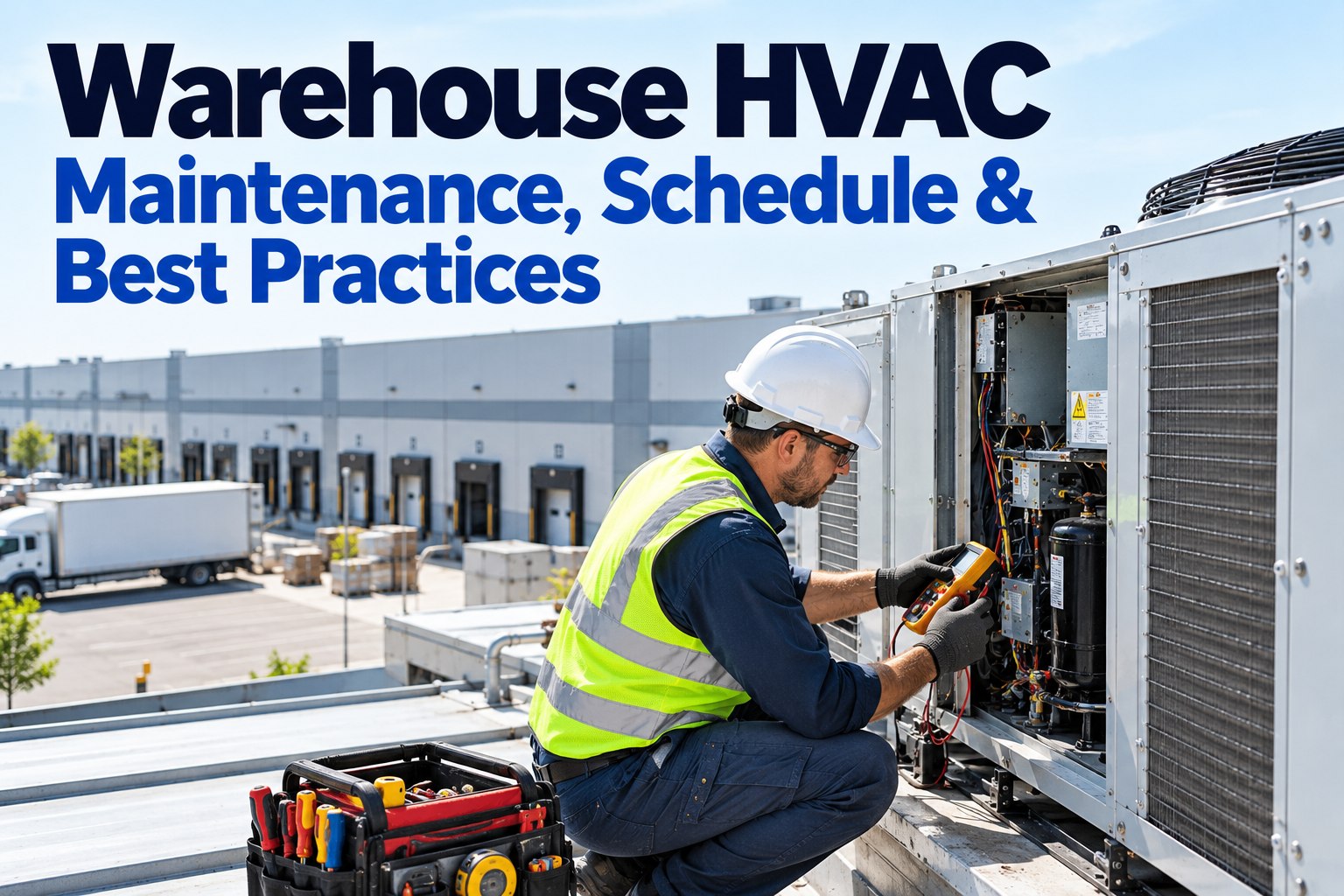
A warehouse doesn't fail the way an office does. Dock doors stand open for hours, warm air collects 30 feet up, filters clog with dust, and a rooftop unit that runs every shift has no quiet season. When the system slips, you see it as hot pick aisles, cold docks, condensation on the floor, and operators asking why the building feels wrong. Standard commercial PM plans rarely fit that environment. This guide walks the building zone by zone, with a checklist per system and a seasonal schedule. OxMaint AI maintenance management software helps teams track every unit by location, schedule its PMs, and keep service history on one record.
Warehouse HVAC Maintenance: Checklist, Schedule & Best Practices
Rooftop units, dock air, destratification fans, heaters, and ventilation all work differently from a typical office building. Use the zone map, equipment checklists, and seasonal calendar below to build a maintenance plan that fits how your warehouse really runs.
Why Warehouses Need Their Own HVAC Plan
Four conditions set warehouses apart, and each one changes what you inspect and how often. Start free and tailor PM schedules to each condition.
Your Warehouse, Zone by Zone
Think of the building as five zones, each with its own equipment and its own failure pattern. Not every site has every zone. Book a demo to map your own zones in OxMaint AI.
Equipment Checklists with Suggested Frequencies
Always follow manufacturer guidance and local safety rules, including rooftop fall protection and lockout/tagout. Frequencies here are starting points, so adjust them to dust levels, run hours, and climate. Start free and turn each card into a recurring PM.
- Inspect and replace filters
- Clean coils and clear drains
- Check belts, bearings, and fan operation
- Test economizer dampers and controls
- Inspect curbs, panels, and refrigerant lines for damage or leaks
- Check mounts, bolts, and blade condition
- Listen for vibration or bearing noise
- Confirm clearances, including from sprinklers
- Verify speed controls and direction settings
- Inspect burners, heat exchangers, and vents
- Check gas, electrical, and safety controls
- Replace filters and clean intakes
- Test thermostats and operating cycles
- Clean filters, blades, and discharge nozzles
- Check motors and door-linked switches
- Inspect dock seals and shelters for tears
- Look for gaps that let outdoor air in
- Check fans, louvers, and dampers move freely
- Clear dust and debris from intakes
- Confirm airflow reaches work areas
- Review ventilation needs where vehicles or processes add fumes
- Calibrate thermostats and sensors
- Check sensor placement at working height
- Verify schedules match shift patterns
- Review alarms and trend logs
The Unit Nobody Remembers Is the One That Fails.
In a large building, equipment gets lost on rooftops and above racking. OxMaint AI lets you list each unit by location, attach its PM schedule, and give technicians a mobile checklist, so winter heater checks and spring coil cleanings don't depend on memory.
A Year-Round Maintenance Calendar
Seasonal prep matters most before extreme weather. Book a demo to schedule seasonal PMs automatically.
- Service rooftop cooling
- Clean condenser and evaporator coils
- Check refrigerant systems for leaks
- Test economizers
- Monitor temperatures and alarms
- Check filters more often in dusty periods
- Verify dock seals and door habits
- Run fans for air movement
- Inspect heaters and make-up air
- Test safety controls
- Check vents and flues
- Reset schedules for shorter days
- Monitor heater performance
- Check condensate and freeze risk
- Review dock door infiltration
- Log breakdowns and repeats
Symptom → Check First
| What you notice | Check first |
|---|---|
| Hot or cold spots in aisles | Filters, blocked airflow, fan operation, sensor placement |
| Cold dock area in winter | Dock seals, air curtains, door habits, make-up air |
| Floor-level cold, ceiling-level warm | Destratification fan operation and settings |
| Rooftop unit cycling or tripping | Dirty coils or filters, airflow, belts, electrical connections |
| Condensation or water on floor | Condensate drains, humidity control, door seals |
| Unit heater won't fire | Gas or power supply, safety controls, thermostat |
How OxMaint AI Supports Warehouse HVAC Teams
Large sites need a clear record of what's installed, where, and when it was last serviced. Start free and load your first zone.
Frequently Asked Questions
Keep Every Zone Covered.
Load your rooftop units, fans, heaters, and dock equipment, schedule the checklists, and give your team one place to log every job.