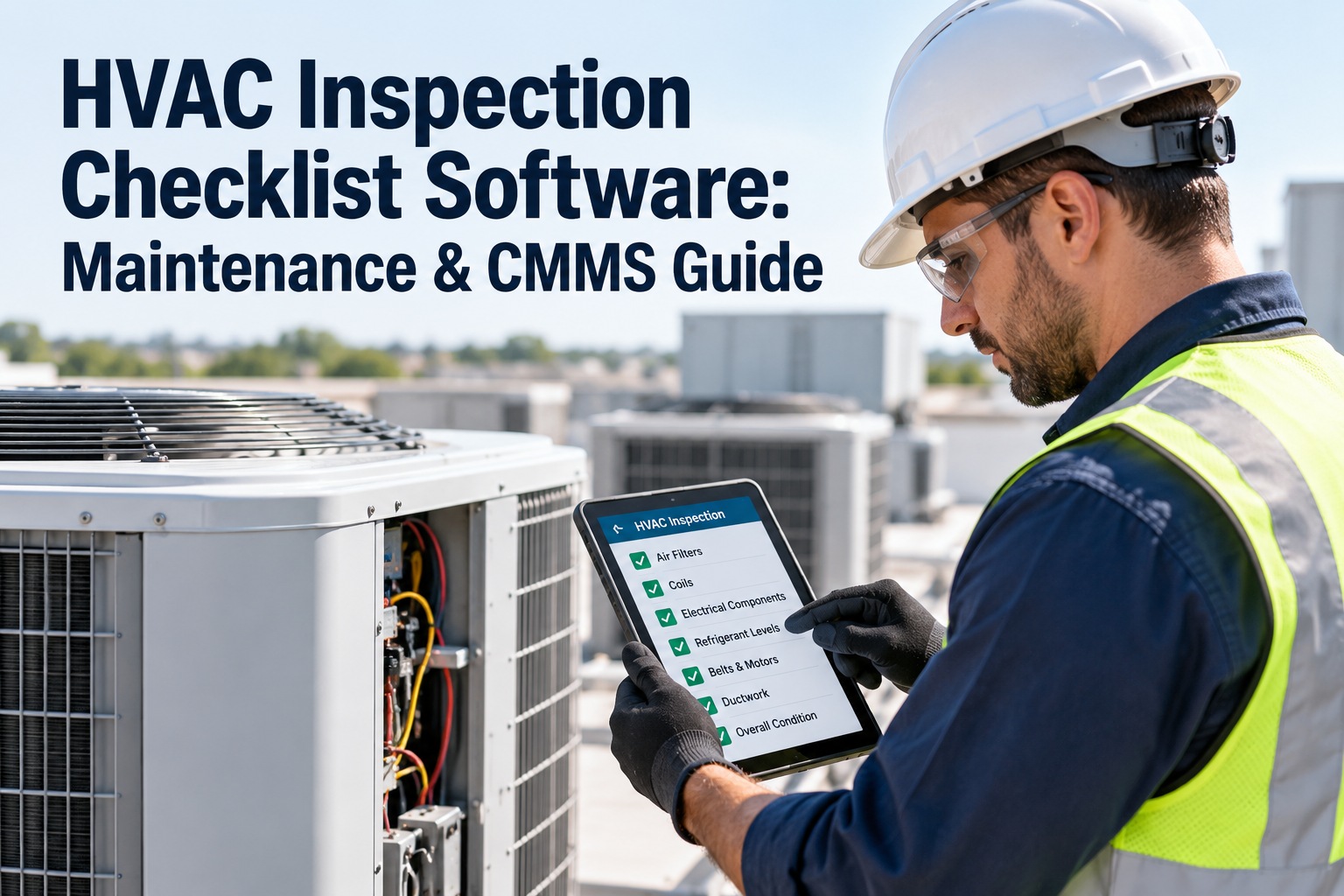
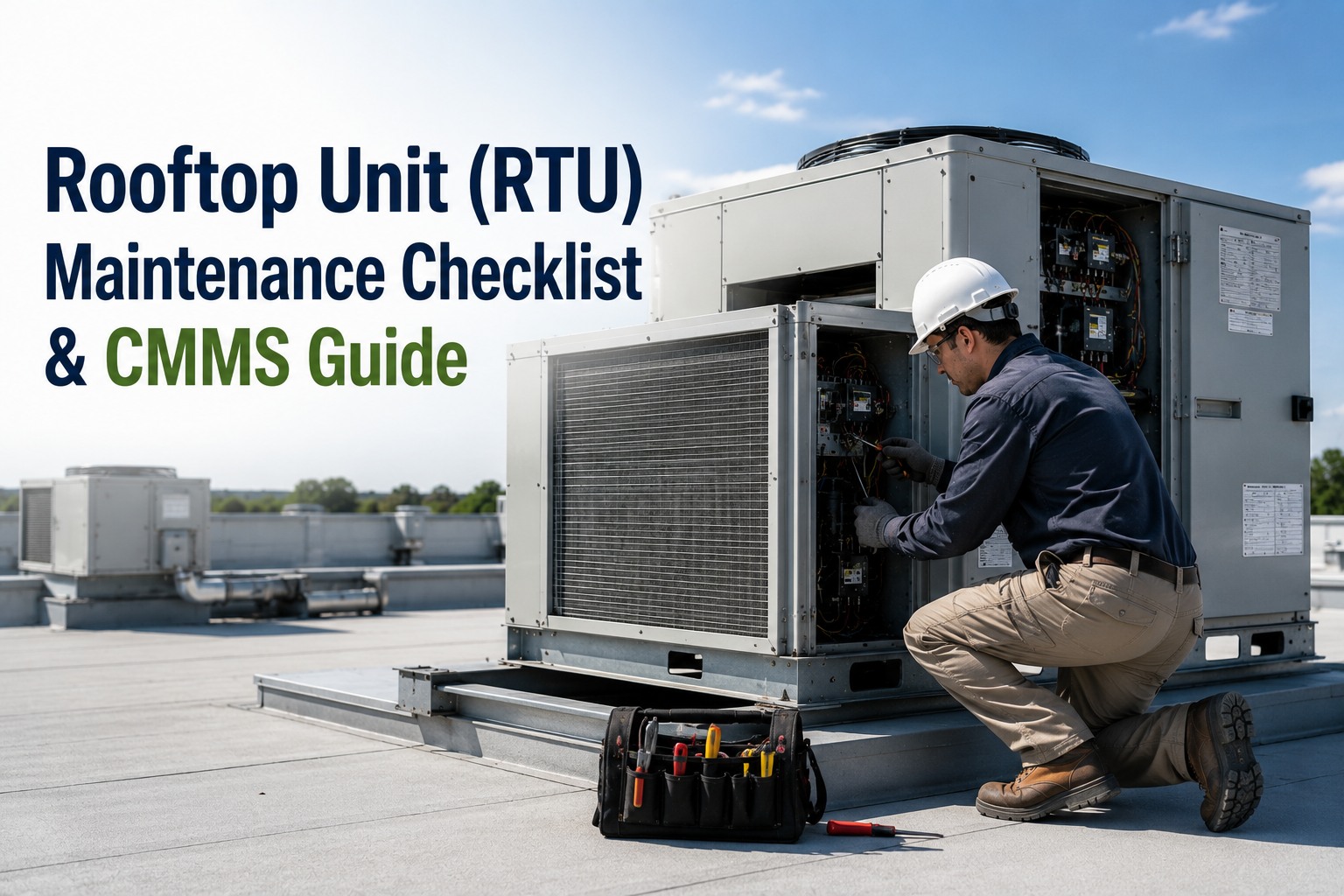
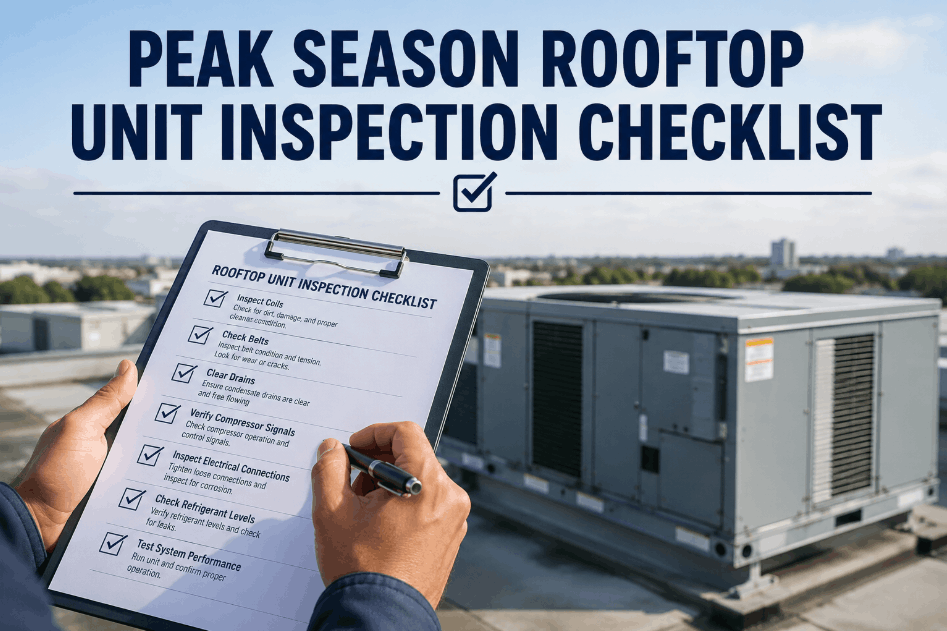
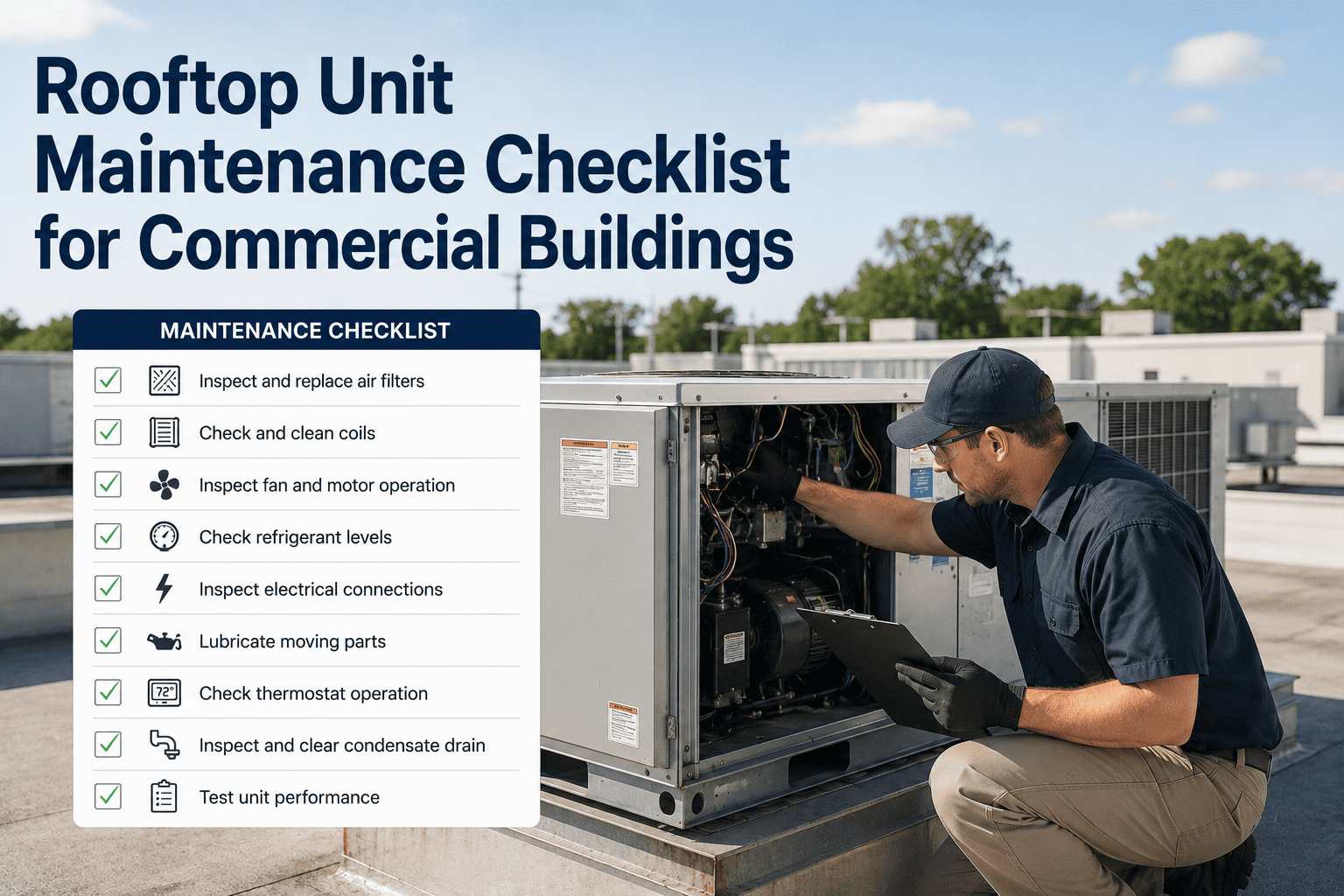
Rooftop units are the most weather-exposed, least-visited, and most frequently neglected HVAC equipment in commercial buildings. OxMaint’s AI-powered predictive maintenance platform brings RTU inspection checklists, real-time monitoring alerts, and automated PM scheduling to every rooftop unit in your portfolio — so your team catches refrigerant leaks, compressor degradation, and economizer faults before they cause emergency calls in peak summer. A single failed commercial RTU compressor costs $3,000 to $8,000 to replace, plus emergency labor. Systematic quarterly PM costs a fraction of that. This checklist covers every major RTU component — filters, coils, compressors, refrigerant, electrical, economizer, and controls — organized by monthly through annual frequency for commercial service technicians.
Checklist · Predictive Maintenance AI · P1 Critical
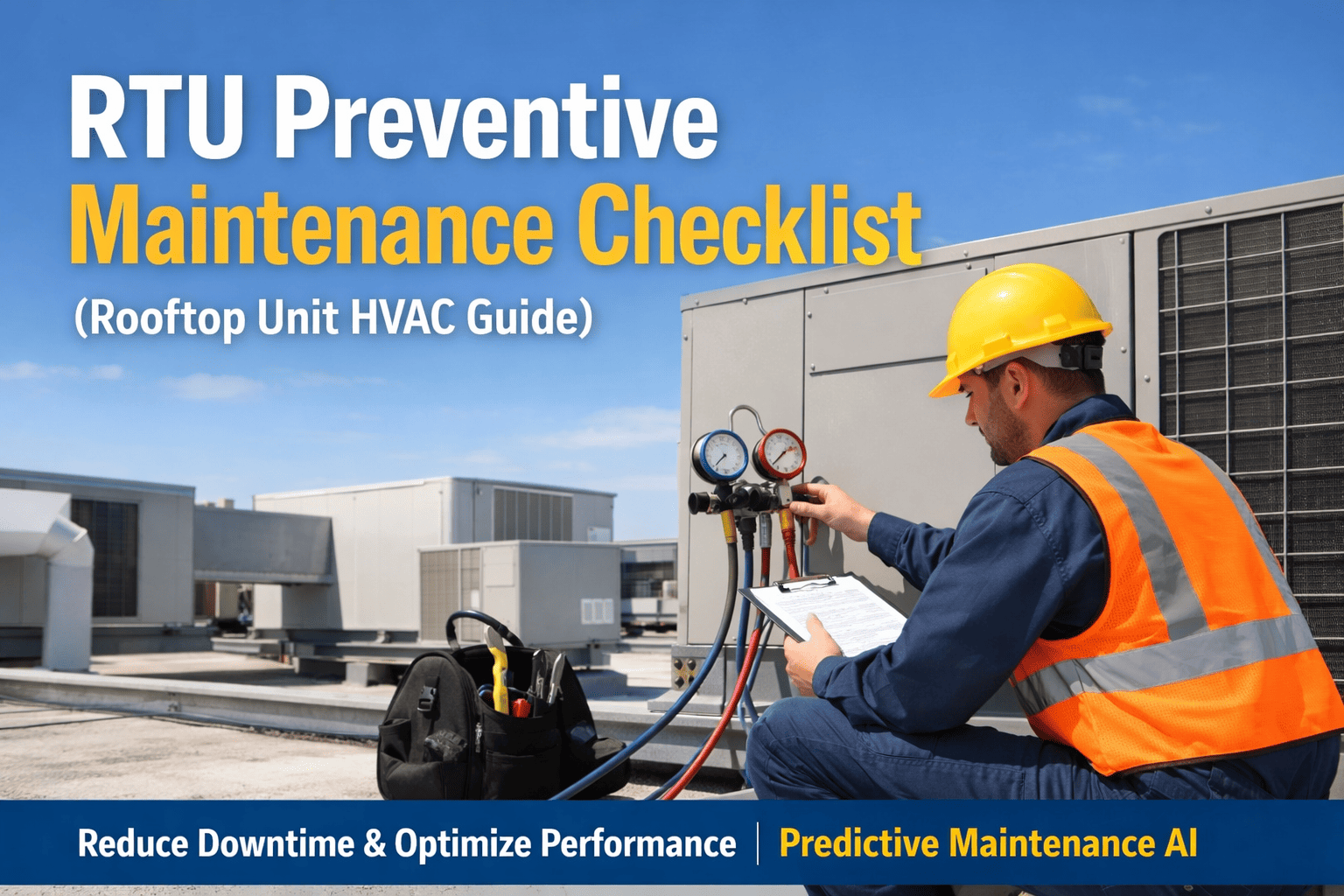
RTU Preventive Maintenance Checklist — Rooftop Unit HVAC Guide
Reduce commercial HVAC downtime with systematic RTU PM. Filters, coils, compressors, refrigerant, economizer, and controls — monthly through annual tasks for every rooftop unit.
Why RTUs Fail
Top RTU Failure Modes & Their PM Prevention
| Failure Mode | Warning Signs | PM Task That Prevents It | Cost If Ignored |
| Compressor failure |
High amp draw, elevated discharge temp, short cycling |
Quarterly refrigerant pressure check, amp log |
$3K–$8K replacement |
| Condenser coil fouling |
High head pressure, reduced cooling capacity |
Quarterly coil cleaning & fin inspection |
15–20% efficiency loss |
| Refrigerant leak |
Ice on suction line, poor cooling, elevated superheat |
Quarterly refrigerant pressure measurement |
EPA 608 violation + compressor damage |
| Economizer failure |
Damper stuck, no free cooling, OA fault alarms |
Quarterly economizer stroke and controls test |
Lost free cooling = $500–$2K/yr per unit |
| Capacitor failure |
Hard starts, compressor hum, fan slow to start |
Annual capacitor measurement (µF vs nameplate) |
Compressor damage if run undetected |
| Belt / bearing wear |
Squealing, vibration, reduced airflow |
Monthly belt inspection, quarterly bearing check |
Fan motor replacement if run to failure |
Monthly PM
Monthly RTU Inspection Tasks
Filters
Replace or clean filters — document pressure drop before and after replacement
Inspect filter rack and housing for bypass gaps or damaged frames
Confirm filter MERV rating matches unit specification for space served
Cabinet & Curb
Inspect unit curb and roof penetration for water infiltration or sealant damage
Check all cabinet panels for damage, missing screws, or unsealed gaps
Inspect condensate drain pan for standing water, algae, or blockage
Controls
Verify thermostat or BAS setpoint against measured supply air temperature
Check for active fault codes or alarms on unit controller display
Confirm occupied/unoccupied schedule matches actual building use
Quarterly PM
Quarterly RTU PM — Refrigerant, Coils & Electrical
Refrigerant Circuit
Check suction and discharge pressures with gauges — compare to saturation temperatures
Measure superheat at suction service valve — target 10–15°F for most systems
Scan refrigerant circuit for leaks with electronic leak detector — log any additions
Log compressor amp draw per phase — compare to nameplate and prior quarter
Coils & Heat Exchanger
Clean condenser coils with coil cleaner — straighten bent fins with fin comb
Inspect evaporator coil for ice formation, fouling, or refrigerant oil staining
For gas units: inspect heat exchanger for cracks, soot, or carbon deposits
Economizer & Electrical
Test economizer dampers through full 0–100% stroke — verify free cooling sequence
Inspect contactors, capacitors, and relays for pitting, burning, or discoloration
Tighten all electrical connections — log torque values on primary terminals
Catch RTU Problems Before They Become Emergency Calls
OxMaint’s AI predictive maintenance sends alerts when RTU refrigerant pressures, amp draws, or efficiency readings trend outside baseline — weeks before the unit fails.
Annual PM
Annual RTU Overhaul Checklist
Compressor & Refrigerant
Full compressor amp draw at start, running, and across multiple stages — compare to nameplate
Leak-check full refrigerant circuit per EPA 608 — document cumulative annual loss rate
Measure capacitor microfarad rating vs nameplate — replace if > 10% below spec
Mechanical & Structural
Replace belts regardless of visual condition — log belt size and tension setting
Lubricate all fan motor and blower bearings per manufacturer specification
Inspect curb, flashing, and roof penetration — reseal any gaps or lifted flashing
Controls & Efficiency
Calibrate supply air, return air, OA, and mixed air temperature sensors
Verify all safety controls — high pressure, low pressure, freeze stat, and limits
Calculate and log EER at current conditions — compare to nameplate and prior year
“RTUs get the least attention of any HVAC equipment in commercial buildings because they are out of sight on the roof. By the time an occupant complaint or an energy spike reveals a problem, the unit has been degrading for months. The facilities with the lowest RTU failure rates are the ones that track refrigerant pressures and amp draws quarterly in a CMMS — because the trend data shows compressor degradation long before the compressor fails.”
GF
Greg Fontaine
Commercial HVAC Service Manager · Certified in EPA 608 · 18 years RTU and rooftop system maintenance
FAQ
RTU PM — Common Questions
How often should RTU refrigerant levels be checked? +
Refrigerant pressures should be measured and logged quarterly for commercial RTUs. This is not the same as adding refrigerant — it is a pressure and superheat measurement that tells you whether the system is operating on its correct charge. An RTU that is 10% low on charge loses approximately 20% of its cooling capacity and forces the compressor to work harder, shortening its lifespan. EPA 608 also requires documenting any refrigerant additions — facilities with annual leak rates exceeding 30% of system charge must repair the leak within 30 days.
OxMaint tracks refrigerant additions and calculates annual leak rates automatically per EPA 608 requirements.
What is the correct RTU economizer setup and how do I verify it is working? +
A properly functioning economizer brings in outdoor air for free cooling when OA conditions are suitable — typically below 55°F enthalpy threshold. Verification requires testing full damper stroke from the control sequence, checking that the free cooling lockout sensor is calibrated correctly, and confirming the BAS enables economizer mode when OA conditions qualify. A stuck-closed economizer on a 20-ton RTU can cost $500 to $2,000 per year in unnecessary mechanical cooling.
Book a demo to see how OxMaint’s quarterly RTU template includes economizer verification steps with pass/fail criteria.
Can OxMaint manage RTU PM for a portfolio of multiple commercial buildings? +
Yes. OxMaint is designed for multi-site facility portfolios. Each RTU is set up as an asset with its own PM schedule, specification sheet, service history, and compliance records. The portfolio dashboard shows PM completion rates, overdue tasks, and trending equipment health across all sites from one view. Service technicians can be assigned to specific buildings or RTU groups, and work orders are delivered to their mobile devices with checklist items, prior service history, and equipment documentation pre-loaded.
Create a free account to configure your first RTU asset and PM schedule in under 10 minutes.
Manage Every RTU in Your Portfolio from One Platform
OxMaint tracks RTU PM across multiple sites, sends AI alerts when readings trend outside baseline, and builds the maintenance history that protects equipment warranty and reduces emergency service calls.