Walk into any world-class manufacturing facility and you'll notice something immediately: tools return to shadow boards within seconds of use, workstations stay clean through three-shift operations, and every team member knows exactly where each component belongs without asking. This isn't accidental — it's the result of rigorous 5S implementation with digital audit tracking that transforms chaotic production floors into precision operations. The difference between plants that achieve sustainable lean gains and those stuck in endless reorganization cycles comes down to one factor: converting 5S from a periodic cleanup event into a daily operational discipline enforced by real-time scorecards and accountability systems.
Lean Manufacturing · 5S Methodology · 2026
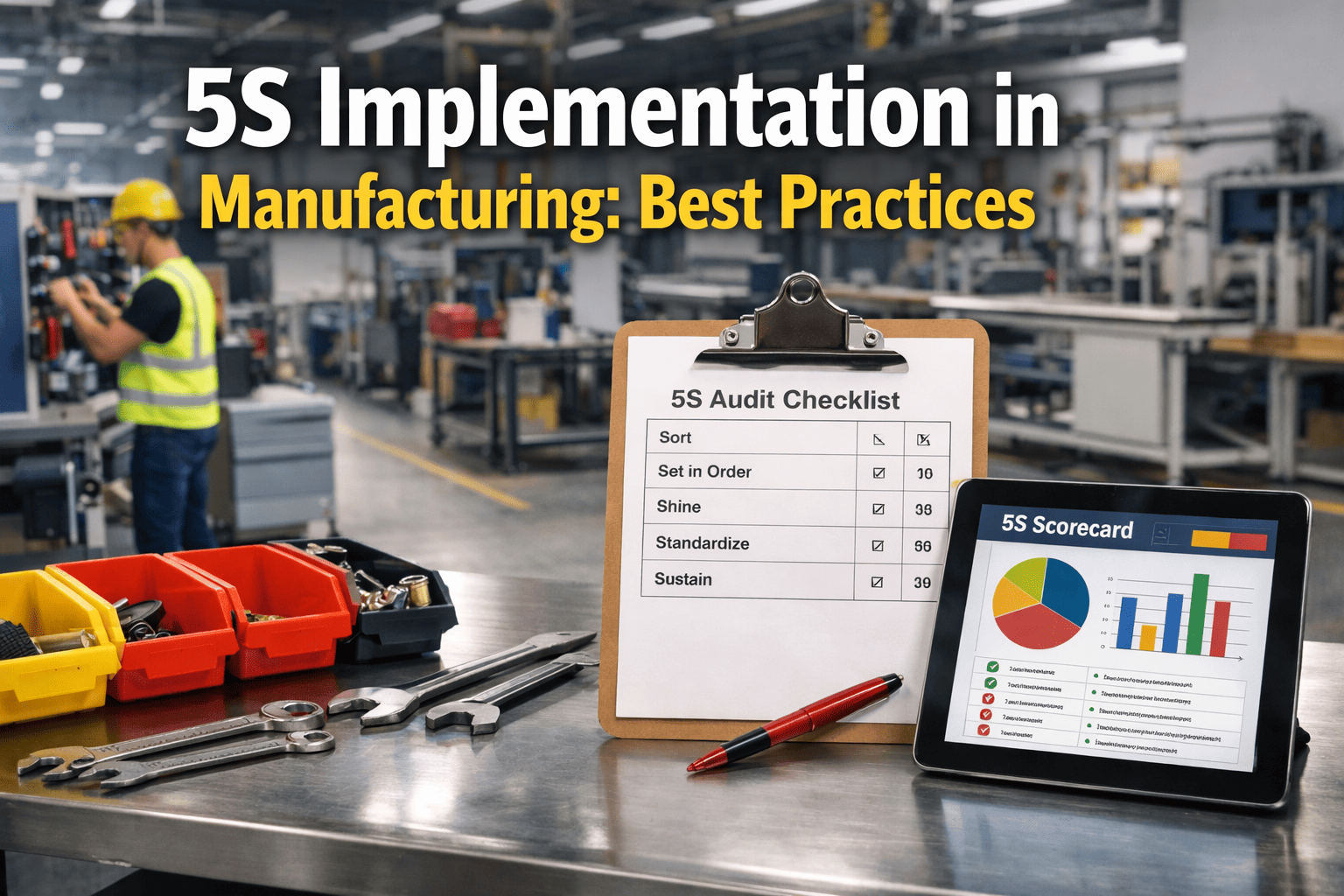
5S Implementation in Manufacturing: Best Practices
Complete guide to deploying Sort, Set in Order, Shine, Standardize, and Sustain — with digital audit tools, visual management systems, and proven strategies for long-term workplace organization excellence.
31%
average productivity increase after full 5S implementation in manufacturing
52%
reduction in time spent searching for tools and materials post-5S deployment
24min
saved per shift per operator through organized workstations and visual controls
78%
of 5S initiatives fail within 12 months without digital audit enforcement
The Five Pillars of Manufacturing 5S
Each pillar builds on the previous one, creating a systematic approach to workplace organization that eliminates waste, improves safety, and standardizes operational excellence.
1
Sort (Seiri)
Separate essential items from non-essential. Remove broken tools, expired materials, obsolete documentation, and unused equipment from the work area. Tag questionable items for team review before disposal.
Outcome: Only necessary items remain in the workspace
2
Set in Order (Seiton)
Organize remaining items for maximum efficiency. Create designated locations with visual labels, shadow boards for tools, color-coded storage zones, and clearly marked material flow paths.
Outcome: Everything has a specific home and visual location marker
3
Shine (Seiso)
Clean workspace thoroughly and establish inspection routines. Daily cleaning reveals equipment issues early, prevents contamination, and maintains visual management systems.
Outcome: Clean workspace becomes inspection opportunity
4
Standardize (Seiketsu)
Document best practices as standard procedures. Create visual work instructions, establish audit schedules, define 5S zones with clear ownership, and set scoring criteria.
Outcome: Consistent application across all shifts and work areas
5
Sustain (Shitsuke)
Embed 5S into daily operations through digital audits, scorecard tracking, leadership reviews, and recognition programs. Make compliance visible and non-compliance immediately noticeable.
Outcome: 5S becomes permanent operational behavior
90-Day 5S Implementation Roadmap
Week 1-2
Assessment & Training
Conduct current state photography and waste analysis
Train supervisors and team leads on 5S principles
Define 5S zones and assign area ownership
Establish baseline metrics and audit scoring system
Week 3-5
Sort & Set in Order
Execute red-tag campaigns to remove non-essential items
Install shadow boards and visual location markers
Create designated storage zones with clear labeling
Document before-after photos for each work area
Week 6-8
Shine & Standardize
Develop daily cleaning checklists and assign responsibilities
Create standard operating procedures for each 5S zone
Design visual work instructions and post at stations
Launch weekly digital audit schedule in CMMS
Week 9-12
Sustain & Optimize
Implement daily digital 5S scorecard tracking
Establish monthly leadership 5S audits and reviews
Create recognition system for top-performing zones
Integrate 5S scores into production performance dashboards
Why Digital 5S Audits Beat Paper Checklists
Traditional clipboard audits create compliance theater — forms get filled out, scores get recorded, but follow-through vanishes between shifts. Digital audit platforms transform 5S from documentation ritual into operational accountability.
Real-Time Visibility
Supervisors see zone scores the moment audits complete. No waiting for weekly rollup meetings — issues surface and get addressed same-shift.
Photo Evidence Capture
Auditors attach photos directly to non-conformance findings. No ambiguity about what needs correction — visual proof travels with the corrective action.
Automated Trend Analysis
System tracks scores over time and flags declining zones automatically. Pattern recognition catches deterioration before it becomes full regression.
Scheduled Audit Reminders
Digital calendar assigns audits to specific people on specific days. No more missed inspections or forgotten zones — system enforces discipline.
Corrective Action Tracking
Non-conformances auto-generate work orders with owners and due dates. Audit findings close the loop instead of dying in filing cabinets.
Historical Comparison
Compare current photos against baseline images from initial implementation. Visual progress documentation proves ROI and sustains momentum.
Sample 5S Audit Scorecard for Manufacturing Zones
| 5S Element | Audit Criteria | Score Range | Frequency |
|---|---|---|---|
| Sort | All items in work area are necessary for current operations | 0-20 points | Weekly |
| Set in Order | Tools and materials have designated locations with visual markers | 0-20 points | Weekly |
| Shine | Work area is clean and equipment shows no dirt or debris | 0-20 points | Daily |
| Standardize | Standard procedures visible and followed consistently | 0-20 points | Weekly |
| Sustain | Previous audit findings corrected and improvements maintained | 0-20 points | Weekly |
| Overall Zone | Composite score across all 5S elements | 0-100 points | Weekly |
Scoring: 90-100 = Excellent, 75-89 = Good, 60-74 = Needs Improvement, Below 60 = Critical Action Required
Common 5S Implementation Failures and How to Avoid Them
One-Time Event Mentality
Treating 5S as a quarterly cleanup day instead of daily discipline. Solution: Schedule recurring digital audits and tie scores to production metrics so 5S becomes continuous operational behavior.
No Visual Management
Creating organized storage without labels or shadow boards. Solution: Invest in professional visual markers, floor tape, and signage so anyone can find anything in under 30 seconds.
Audit Without Accountability
Conducting inspections but never following up on findings. Solution: Auto-generate corrective actions from audit non-conformances with assigned owners and tracked completion status.
Leadership Absence
Delegating 5S entirely to floor teams without management participation. Solution: Require monthly leadership audits and make 5S scores visible on executive dashboards.
Over-Complication
Creating 50-point audit checklists that take 90 minutes to complete. Solution: Keep audits under 20 criteria and 15 minutes — compliance drops when audits become burdensome.
No Recognition System
Expecting sustained effort without celebrating top performers. Solution: Publish zone rankings monthly and provide tangible rewards for consistent high scorers.
Measured Results from Manufacturing 5S Programs
43%
decrease in changeover time due to organized tooling and standardized setup procedures
67%
reduction in safety incidents attributed to improved housekeeping and hazard visibility
$127K
average annual savings per production line from reduced searching, rework, and equipment issues
Transform Your Manufacturing Floor with Digital 5S
Oxmaint digitizes your entire 5S program — from mobile audit checklists with photo capture to automated scorecard dashboards that track zone performance in real-time. Stop relying on paper forms that disappear between shifts and start building sustainable workplace organization that drives measurable productivity gains.
Frequently Asked Questions
What is 5S methodology and why is it important in manufacturing?
5S is a workplace organization system using Sort, Set in Order, Shine, Standardize, and Sustain to eliminate waste and improve efficiency. Manufacturing plants use it to reduce search time, prevent defects, improve safety, and create visual management systems that make problems immediately obvious.
How long does it take to implement 5S in a manufacturing facility?
Initial implementation takes 60-90 days for full deployment across production areas. However, true sustainability requires 6-12 months of consistent digital audit enforcement and leadership engagement. Oxmaint accelerates this with automated audit scheduling and scorecard tracking.
What is the difference between 5S and lean manufacturing?
5S is a foundational tool within lean manufacturing. Lean is the broader philosophy of eliminating waste, while 5S specifically addresses workplace organization. You cannot successfully implement other lean tools like kanban or SMED without first establishing 5S discipline in your work areas.
How do you sustain 5S after the initial implementation?
Sustainability requires digital audit systems that enforce accountability, visual scoreboards that make performance public, leadership participation in monthly reviews, and recognition programs for top-performing zones. Paper-based 5S programs fail because there's no real-time visibility or follow-through mechanism. Book a demo to see how digital enforcement works.
Ready to Build a World-Class Manufacturing Workplace?
Join production teams using Oxmaint to deploy 5S audits digitally, track zone scores automatically, and sustain workplace organization improvements that translate directly to productivity gains and quality improvements. Start your free trial today — no credit card required.