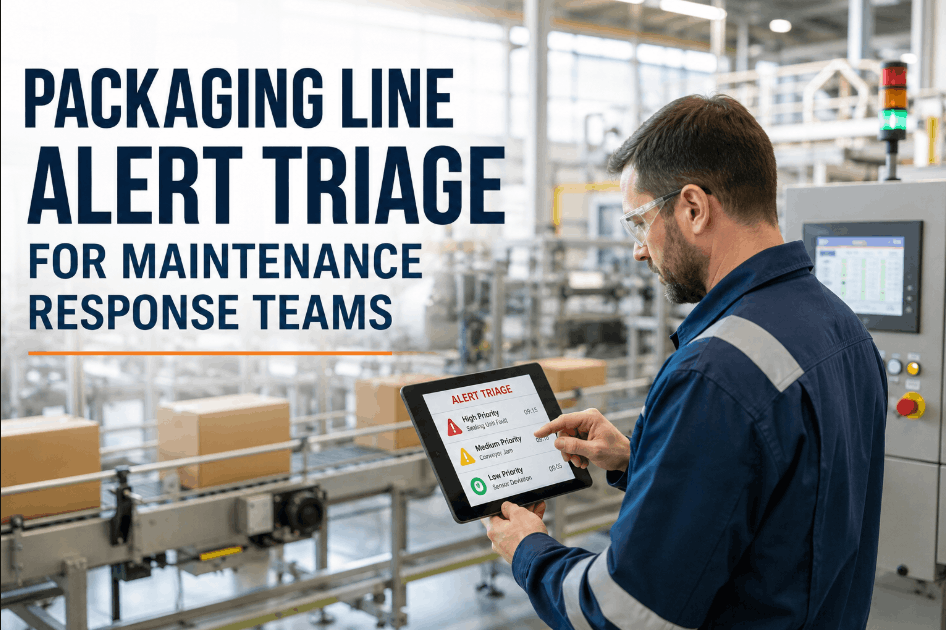
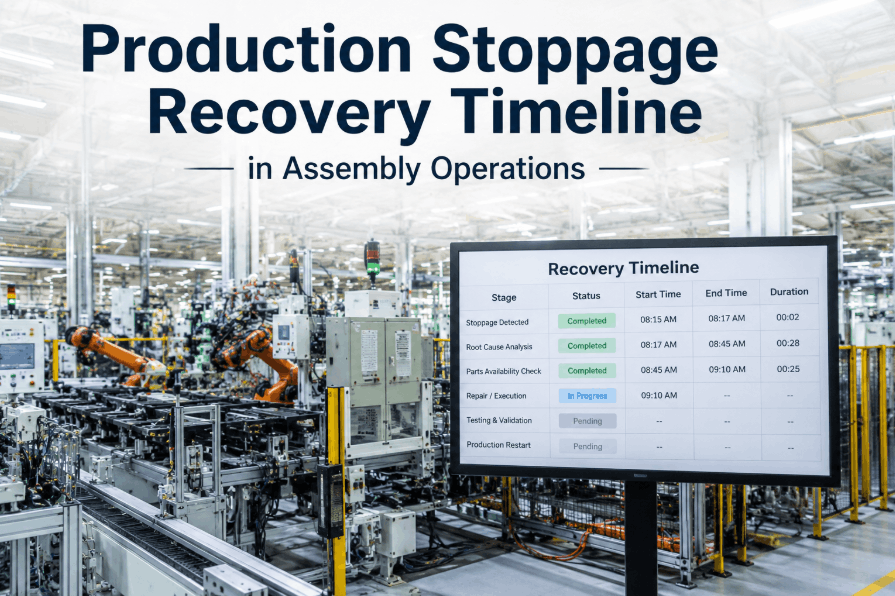
Triage tells a response team which alert matters most. Routing decides who actually receives it — and on a multi-line packaging operation running three shifts, that second step is where response lag and repeat disturbances quietly build up. Sign Up Free to start routing packaging alerts by line, severity, and technician skill inside Oxmaint, or Book a Demo to see a structured routing framework cut both response lag and recurring faults across your lines.
Maintenance Operations · Packaging · 2026
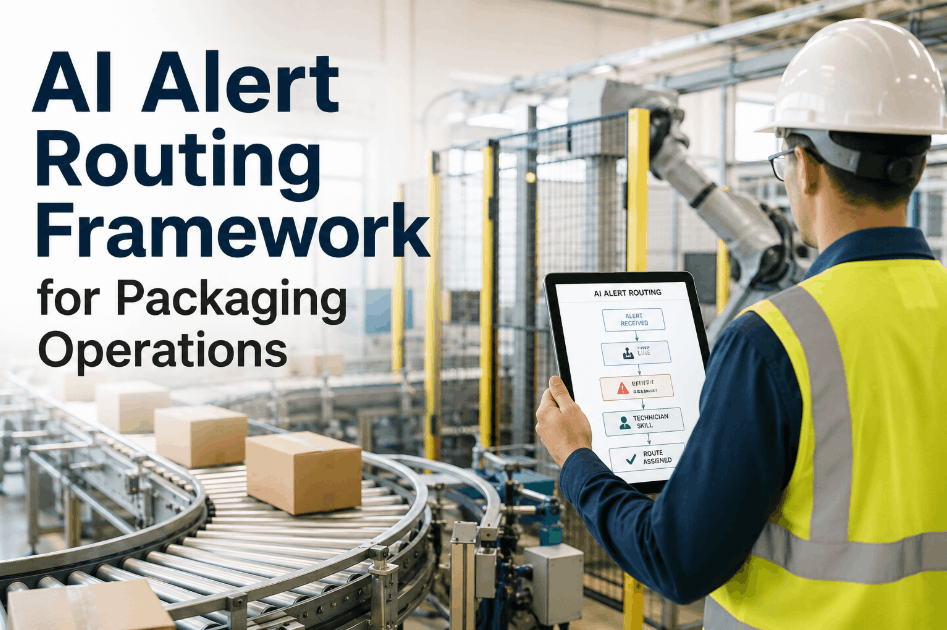
AI Alert Routing Framework for Packaging Operations
Route AI alerts by line, severity, and technician skill so packaging operations can cut response lag and reduce repeat disturbances.
50%+Faster average response time once routing logic replaces manual dispatch decisions
30–40%Reduction in response time from proximity-aware routing across multi-line portfolios
44%Fewer rework events when certification-aware routing replaces visibility-based assignment
73%Of routine alerts dispatched automatically with zero supervisor involvement
Where Packaging Alert Routing Breaks Down Across Lines
Every manual routing decision a supervisor makes — who is closest, who has the right skill, whether parts are in stock — is a judgment call made with incomplete data, repeated dozens of times a shift. Sign Up Free to map your technician certifications and line layout into Oxmaint before the next fault gets routed to the wrong person.
01
No Line-Level Routing Logic
Risk Window: Multi-line plants
Structural GapAlerts route to whoever is nearest the dispatch board rather than the technician with the right certification for that specific line's equipment.
02
Severity Treated Uniformly Across Lines
Risk Window: Bottleneck vs. redundant lines
Largest VariableA fault on the line with no production redundancy gets the same routing priority as one on a line with a backup unit standing by.
03
Skill-Blind Technician Assignment
Risk Window: Cross-shift coverage
Rework DriverDispatching a mechanical technician to an electrical fault, or vice versa, extends repair time and frequently requires a second visit to close the job.
04
No SLA Escalation Path
Risk Window: Overnight & weekend shifts
Unwatched ClockWithout continuous SLA monitoring, an overdue alert can sit unassigned for hours before anyone notices it never reached a technician.
05
Repeat Disturbance Pattern Invisible
Risk Window: Recurring line faults
Prevention InputThe same conveyor jam routed and cleared a dozen times across different shifts looks like a dozen isolated events instead of one pattern needing a permanent fix.
06
Cross-Shift Routing Gaps
Risk Window: Shift handover
Coverage GapRouting rules built around one shift's technician roster often don't account for who is actually certified and on the floor during the next shift.
Alert Routing — Without vs. With Oxmaint
Structured routing changes how fast a packaging fault reaches a qualified technician and how visible repeat disturbances become across the operation. Book a Demo to walk through your current alert routing process and identify where response lag is highest.
AI Alert Routing Maturity — Where Does Your Operation Score?
Alert routing maturity ranges from manual dispatch decisions made under shift pressure to a fully automated framework that matches every alert to a qualified technician within seconds. Book a Demo to assess your packaging operation's routing maturity with an Oxmaint solutions engineer.
AI Alert Routing Framework Maturity
Score 5 = fully automated, certification-aware routing · Score 1 = manual dispatch only
5
Fully Automated · Certification-Aware Routing
Every alert is matched to a qualified technician by skill, proximity, and workload within seconds, with continuous SLA monitoring and a full routing audit trail.
Profile: Response speed and rework rate are systematic outcomes of the routing framework, not the shift roster on duty.
4
Structured Routing · Partial SLA Automation
Most alerts route automatically by certification and proximity, but SLA escalation and repeat-fault detection still rely on manual review at some sites.
Action: Extend continuous SLA monitoring and pattern detection to every connected line.
3
Supervisor-Led Dispatch
A supervisor assigns technicians manually based on who is visible and available. Certification and proximity are considered but not systematically tracked.
Gap: Manual dispatch decisions made under shift pressure are the primary source of mismatched assignments at this level.
2
Reactive Assignment · No SLA Tracking
Technicians are assigned to whichever alert reaches them first, with no structured escalation if an alert goes unanswered.
Risk: Overdue alerts accumulate invisibly until a line stoppage forces attention.
1
No Routing Framework
Alerts are handled informally as they arise, with assignment depending entirely on who happens to be nearby and free.
Risk: Response time and technician-fault match are functions of luck, not design.
Stop Routing Alerts by Who's Closest to the Board.
Oxmaint routes every packaging alert by line, severity, and technician skill — cutting response lag and surfacing repeat disturbances before they become a pattern.
How Oxmaint Structures AI Alert Routing for Packaging Operations
Oxmaint's routing framework analyzes asset criticality, technician skill, inventory availability, and SLA windows for every incoming alert, then dispatches without supervisor input on routine cases. Sign Up Free to configure routing rules for your line layout and technician roster. Book a Demo to see the framework running against your current shift structure.
Line & Severity-Aware Scoring
Score in <2 Seconds
Priority weighted by line criticality, not just fault type
A fault on a bottleneck line with no redundancy is scored and routed ahead of an equivalent fault on a line with backup capacity, automatically and consistently across every shift.
Certification & Proximity Matching
Skill + Location + Load
Only qualified, available technicians are evaluated for each alert
Oxmaint checks active certifications, current workload, and proximity to the asset before assigning a work order, so an uncertified technician never receives a job outside their scope.
3-Tier SLA Escalation
50% → 100% → 120% of Window
Continuous SLA monitoring across every open alert, every shift
An escalation notification fires at 50% of the SLA window, escalates to supervisor review at 100%, and flags as critical at 120% — with zero manual monitoring required.
Pattern-Triggered Correction
Cross-Shift Pattern Detection
Recurring faults trigger a proactive correction sweep
When a failure pattern appears across similar assets or repeats on the same line across shifts, Oxmaint generates a proactive work order before the next routine alert routes the same fault again.
"
A jam on our case erector kept routing to whoever happened to be near the panel, regardless of whether they were certified on that equipment. We were averaging two visits per fault because the wrong technician got there first more often than not. Once Oxmaint started matching alerts to certification and proximity, first-visit completion on that line jumped almost overnight.
Operations Maintenance Lead — Packaging Plant, 4 Production Lines, Texas
Frequently Asked Questions
What is the difference between alert triage and alert routing?
Triage decides which alert matters most. Routing decides which qualified technician receives it. Both steps need to work together for response time to actually improve.
How does Oxmaint decide which technician gets an alert?
Oxmaint matches each work order to technicians based on certification scope for the fault type, current workload, and proximity to the asset, dispatching most routine cases automatically.
Can routing logic differ across lines in the same plant?
Yes. Oxmaint weights priority by line criticality, so a fault on a bottleneck line with no redundancy routes ahead of an equivalent fault on a line with backup capacity.
How does Oxmaint catch repeat disturbances across shifts?
Oxmaint tracks failure patterns across similar assets and shifts. When a fault recurs, it generates a proactive correction work order instead of letting it route as a new isolated alert each time.
Does AI alert routing require replacing existing line sensors?
No. Oxmaint connects to existing IoT sensors, PLC data, and mobile or QR-based reporting channels, applying routing logic on top of the alert sources you already have in place.
Route Every Packaging Alert to the Right Technician — Not Just the Nearest One.
Oxmaint routes alerts by line, severity, and technician skill, escalates overdue cases automatically, and surfaces repeat disturbances before they recur again.