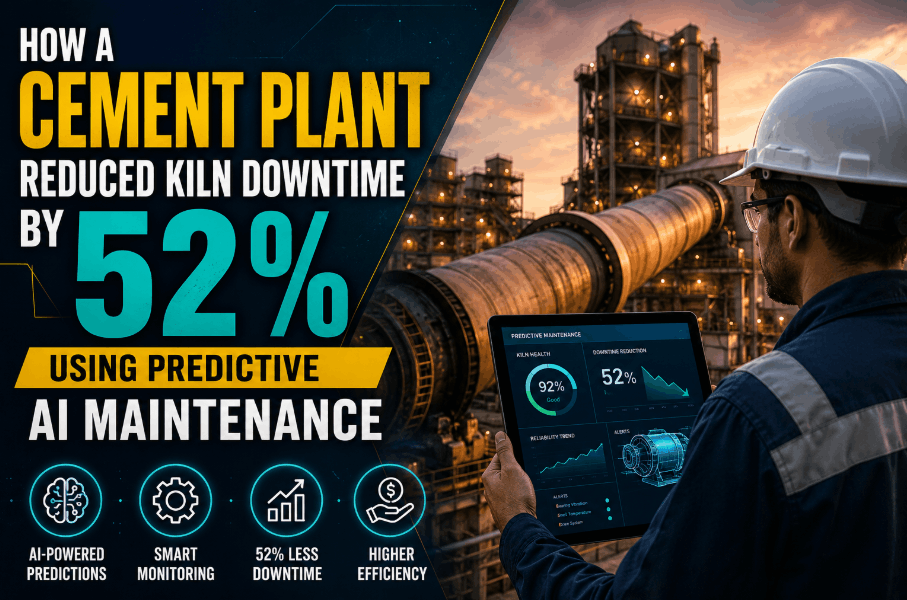
A high-volume packaging operation running three continuous shifts across two production lines was absorbing preventable downtime at a rate that was eroding output targets and straining OEM delivery commitments. Technicians were receiving maintenance alerts through verbal shift handoffs and paper-based call logs — with no structured routing, no priority classification, and no visibility into which recurring issues were driving the highest volume of repeat responses. The result was a reactive maintenance culture where the same failures recurred every 3–4 weeks, response times stretched well beyond acceptable thresholds, and shift supervisors had no operational data to act on until after production was already interrupted. After deploying Oxmaint's AI-powered CMMS platform — Sign Up Free to see how fast your packaging line can cut downtime — the facility reduced unplanned line stoppages by 52%, cut average technician response time from 34 minutes to 11 minutes, and eliminated the top three recurring failure patterns within 60 days.
Cut Packaging Line Downtime with Smart Alert Routing — Go Live in 30 Days
Oxmaint routes AI-powered maintenance alerts to the right technician at the right time — with priority classification, recurring issue tracking, and real-time line status visibility across every shift.
01 / The Facility
High-Volume Packaging. Three Shifts. Zero Alert Intelligence.
Facility Type
High-volume consumer goods packaging operation running continuous three-shift production across two primary lines. Operations governed by production uptime SLAs with customer-mandated delivery reliability requirements and internal OEE reporting obligations.
Scale
Single facility, three continuous production shifts. 160+ tracked assets including form-fill-seal machines, labeling systems, case erectors, conveyors, palletizers, and compressed air infrastructure. Annual throughput of approximately 18 million packaged units across product families.
Maintenance Team
11-person maintenance team across three shifts — one maintenance supervisor, seven technicians covering mechanical and electrical disciplines, two packaging line specialists, and one administrative coordinator managing work order logs and downtime reporting.
Downtime Baseline
Average unplanned downtime of 47 hours per month across both lines prior to deployment. Mean technician response time of 34 minutes from alert to floor arrival. Recurring failure events on the same assets representing 58% of total reactive work order volume.
Prior System
Verbal alert communication across shifts, paper-based call logs, and a shared production downtime spreadsheet updated at shift end. No real-time alert routing, no priority classification, and no structured visibility into recurring issue patterns across production lines.
Annual Overhead Exposure
Unplanned downtime across both packaging lines estimated at $480,000 in annualized lost production value. Technician time absorbed by repeat service visits on unresolved recurring failures contributed an additional 420 hours annually in avoidable labor overhead.
02 / The Challenge
Unrouted Alerts and Recurring Failures Are Compounding Packaging Line Downtime
For a packaging operation running on continuous production commitments, every unplanned line stoppage is a shipment at risk. When maintenance alerts reach technicians through verbal handoffs and paper call logs, response times stretch, priority conflicts go unresolved, and the same failures recur because root cause data is never captured and never acted on. This facility's downtime problem was not a staffing issue — it was the predictable outcome of an alert system that had no intelligence, no routing logic, and no connection to the asset history that would reveal why the same packaging line components were failing on a predictable cycle. Book a Demo to see how Oxmaint's AI alert routing closes these gaps in high-volume packaging environments.
34 min
Average alert response time
Technicians received alerts through verbal notification and paper call logs — with no priority classification or direct routing. By the time the right technician arrived, production line stoppages had already extended well past their recoverable window.
58%
Recurring failure work orders
More than half of all reactive work orders were repeat visits to the same assets — because no system captured root cause, tracked resolution quality, or flagged when a closed repair was likely to recur within the same production cycle.
47 hrs/mo
Unplanned line downtime
Forty-seven hours of unplanned production stoppages per month across both packaging lines — each stoppage preceded by an alert that reached the wrong technician, was deprioritized by verbal communication, or was deferred across a shift boundary without documentation.
$480K
Annualized downtime cost
Lost production value from unplanned stoppages estimated at $480,000 annually — driven not by catastrophic failure events but by high-frequency, low-severity recurring issues that an intelligent alert system could detect, route, and resolve before line impact occurred.
"We weren't short on technicians. We were short on information. The right person never knew about a problem until the line had already stopped — and then we'd fix the symptom and see the same failure three weeks later."
03 / The Solution
Oxmaint CMMS: AI Alert Routing, Recurring Issue Detection, and Real-Time Line Visibility for Packaging Operations
After evaluating available maintenance platforms against the facility's downtime reduction requirements, the maintenance supervisor and operations director selected Oxmaint for its AI-powered work order routing, mobile-first technician experience, and asset intelligence capabilities that aligned with existing packaging line classification practices. The priority was not replacing the maintenance team — it was giving the team a connected alert system that routed the right work to the right technician before stoppages compounded. Sign Up Free and activate your first AI-routed alert workflow in under a day.
AI ALERTS
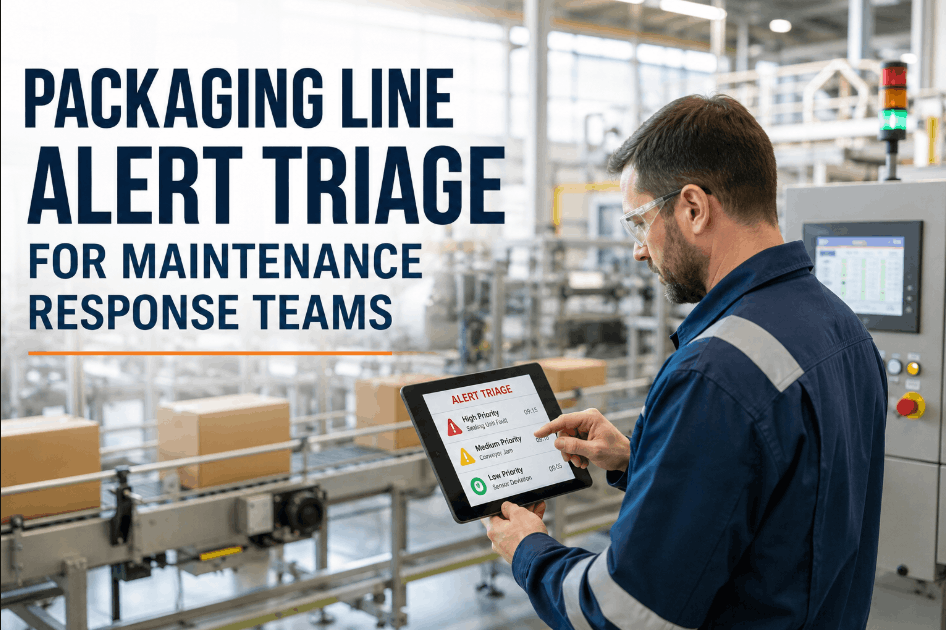
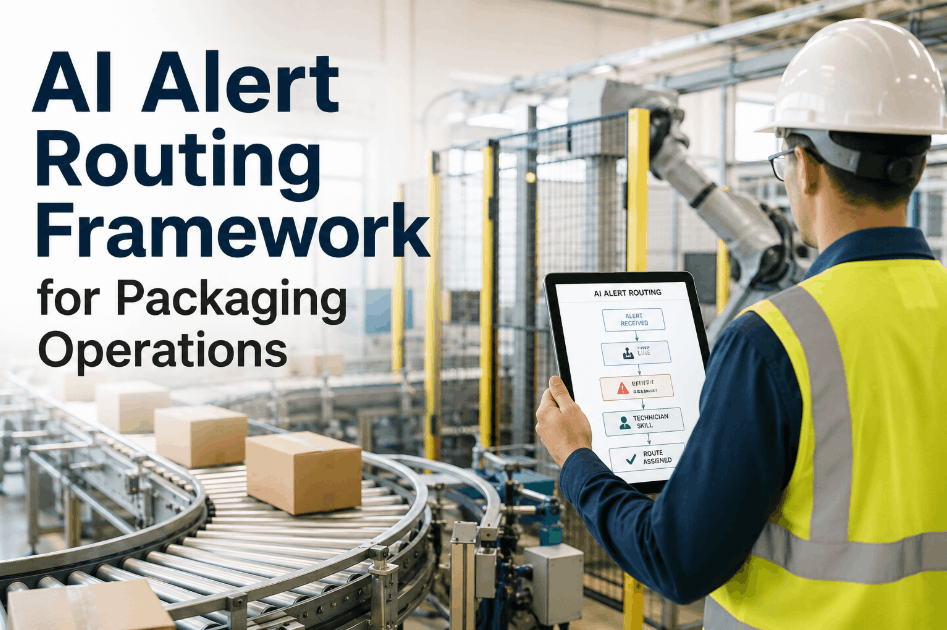
AI-powered alert triage configured across both packaging lines — with incoming fault signals classified by severity, asset criticality, and technician skill match before routing. High-priority alerts dispatched directly to the qualified technician's mobile device with asset context, failure history, and recommended first action — reducing time-to-floor from alert generation to arrival.
RECURRING ISSUES
Recurring failure detection logic applied across the asset registry — automatically flagging work orders on assets with repeat service events within configurable time windows. Technicians received recurring issue context at the point of repair, enabling root cause resolution rather than symptom-level fixes that regenerated the same failure cycle.
WORK ORDERS
Digital work order creation replaced paper call logs and verbal shift alerts across all three production shifts. Every work order captured alert source, technician assigned, response time, parts used, labor time, and resolution notes — building the asset intelligence foundation that AI alert routing depends on to improve over time.
LINE VISIBILITY
Supervisor dashboards providing real-time visibility into active alerts, open work orders, technician location by shift, and per-asset downtime accumulation — replacing end-of-shift spreadsheet updates with live operational data that shift supervisors could act on before line impact escalated.
PM SCHEDULING
Preventive maintenance schedules configured per asset and interval — with AI-assisted scheduling that adjusted PM timing based on production load and asset utilization patterns, reducing PM interference with peak packaging runs while maintaining service compliance.
04 / Implementation
AI Alert Routing Live in 21 Days. Top Three Recurring Failures Eliminated by Day 60.
Days 1–7
Asset Registry Build and Alert Threshold Configuration
All 160+ packaging line assets catalogued into Oxmaint's asset registry from existing equipment lists and maintenance logs. Alert severity thresholds and technician skill routing rules configured per asset class. Recurring failure patterns identified from historical paper call logs and entered as baseline context for AI triage logic. QR asset tags installed across both production lines and support infrastructure.
Days 8–21
Mobile Platform Deployment and AI Alert Routing Activation
Mobile platform deployed across all 11 team devices with push notification routing tested across three-shift production coverage. AI alert routing activated on day 14 — immediately surfacing three assets generating disproportionate alert volume with repeat response patterns that paper logs had never connected into a visible pattern. First AI-routed work orders reduced average response time from 34 minutes to 18 minutes within the first active week.
Days 22–40
Parallel Operations, Team Training, and Recurring Issue Resolution
Fifteen-day parallel period running paper call logs and digital alert routing concurrently across all three shifts. Technician onboarding completed in 1.5 hours per person. AI-flagged recurring failure on primary form-fill-seal machine resolved with root cause intervention on day 31 — eliminating a failure pattern that had generated 14 reactive work orders in the prior 90 days. By day 40, all 11 team members were operating exclusively through the digital platform.
Days 41–60
Full Digital Cutover and Line Performance Dashboard Go-Live
Complete paper elimination across all three production shifts. All alerts, work orders, and technician responses flowing exclusively through Oxmaint. Supervisor dashboard activated with live alert queue, response time tracking, and per-line downtime accumulation. Second and third recurring failure patterns resolved through AI-identified root cause interventions by day 58. Monthly unplanned downtime fell from 47 hours to 22 hours within the first full digital month.
05 / Results
60 Days to AI-Routed Alerts. Measurable Downtime Reduction Across Both Packaging Lines.
The transition from verbal alert communication to Oxmaint's AI-powered routing produced results that exceeded the facility's downtime reduction targets within the first two months of deployment. Response time dropped from 34 minutes to 11 minutes. Recurring failure work order volume fell by 73% as root cause interventions eliminated the patterns that had driven repeat visits. The maintenance team maintained the same headcount while absorbing significantly higher proactive work order volume — because AI alert routing freed technician time previously consumed by unproductive response delays and repeat service calls. Book a Demo to see how these outcomes map to your packaging line operations.
| Metric |
Before Oxmaint |
After Oxmaint |
Change |
| Unplanned line downtime per month |
47 hrs/month |
22 hrs/month |
−52% downtime hours |
| Average alert response time |
34 minutes |
11 minutes |
−68% response time |
| Recurring failure work order share |
58% |
16% |
−73% recurring events |
| Reactive vs. proactive work order ratio |
71% reactive |
29% reactive |
−59% reactive share |
| Work order record completeness |
54% |
100% |
Full record capture |
| PM compliance rate |
61% |
94% |
+54% PM compliance |
| Alert-to-resolution time (avg) |
4.2 hours |
1.4 hours |
−67% resolution time |
| Shift handoff maintenance visibility |
Verbal only |
Live AI alert queue |
Full real-time visibility |
| Administrative time on downtime records |
52 hrs/month |
19 hrs/month |
−63% admin overhead |
| Annualized downtime cost recovery |
$480K baseline |
Estimated $250K saved |
−52% cost recovery |
"The AI alert routing didn't change how many technicians we had. It changed when they got the right information. That 23-minute difference in response time is the difference between a short delay and a full line stoppage."
06 / Key Business Impact
What AI Alert Routing Protected Beyond Downtime Reduction
01
The 34-minute response time was not a technician availability problem — it was an information routing problem. Verbal alerts and paper call logs could not classify severity, identify the right skill match, or reach the correct technician before stoppages compounded. Oxmaint's AI routing closed that gap at the point of alert generation, not after the supervisor noticed the line was down.
02
With 58% of work orders representing recurring failures on the same assets, the facility was spending most of its maintenance capacity on symptoms rather than causes. Oxmaint's recurring issue detection connected repeat work orders to the same asset profiles — enabling the three root cause interventions that eliminated 73% of recurring failure volume within 60 days.
03
Three-shift packaging operations create a shift handoff gap that paper systems cannot bridge. Oxmaint's live alert queue gave all three shifts identical real-time visibility into open alerts, active work orders, and asset status — eliminating the verbal handoff failures that had allowed alerts to drop between shifts and stoppages to extend unnecessarily.
04
Shifting from 71% to 29% reactive work order volume freed the same 11-person maintenance team to execute preventive work, cross-train on additional line equipment, and contribute to a capital planning process for aging packaging infrastructure. The administrative coordinator recovered 33 hours per month previously spent on manual downtime log reconstruction.
See How AI Alert Routing Can Cut Your Packaging Line Downtime
Oxmaint's AI-powered CMMS delivers smart alert routing, recurring issue detection, and real-time line visibility — configured and live in under 30 days without IT overhead.
07 / FAQ
Frequently Asked Questions
How does AI alert routing reduce packaging line downtime?
AI alert routing classifies incoming fault signals by severity and technician skill match, then dispatches work orders directly to the right person's mobile device — cutting response time before stoppages compound. This facility reduced response time from 34 to 11 minutes.
How does Oxmaint detect and resolve recurring packaging line failures?
Oxmaint tracks repeat work orders on the same assets within configurable time windows, flags recurring patterns to supervisors, and surfaces root cause context to technicians at the point of repair — enabling resolution rather than symptom-level fixes that regenerate the same failure cycle.
Can Oxmaint provide maintenance visibility across three continuous production shifts?
Yes. Oxmaint's live alert queue and work order dashboard are accessible to all team members simultaneously across all shifts — eliminating verbal handoff gaps that allow alerts to drop between shifts and stoppages to extend unnecessarily.
How quickly can a packaging facility deploy Oxmaint's AI alert routing?
Facilities with existing asset lists are typically live with AI alert routing in 14–21 days. This 160-asset, 11-person facility had routing active on day 14 and saw measurable response time improvement within the first operational week.
What ROI can packaging operations expect from AI-powered maintenance alerts?
Facilities with high recurring failure rates and slow alert response times typically see measurable ROI within 60–90 days through reduced downtime hours, recovered production output, and eliminated repeat service labor. This facility estimated $250,000 in annualized savings within two months.
Does Oxmaint support preventive maintenance scheduling alongside AI alert routing?
Yes. Oxmaint combines AI-routed reactive alerts with structured PM scheduling per asset — including AI-assisted timing that adjusts PM windows based on production load to minimize interference with peak packaging runs while maintaining compliance.
How does Oxmaint improve work order record completeness in high-volume packaging environments?
Oxmaint's mandatory completion fields ensure every work order captures technician ID, alert source, response time, parts used, and resolution notes before closure — replacing paper call logs that captured less than 60% of the data needed for recurring issue analysis.
−52% Downtime. −68% Response Time. AI Alerts Live in 21 Days.
160 assets. Three shifts. One AI-powered CMMS platform. See what Oxmaint delivers for your packaging line.