The textile plant manager stares at a production halt notice—the third this quarter—as a critical spinning frame bearing waits in a purchase order queue while $45,000 of daily production capacity sits idle. Across the facility, warehouse shelves overflow with $2.3 million in slow-moving spare parts purchased "just in case," yet the exact component needed to restore Line 7 won't arrive for another 11 days due to international shipping constraints. Last quarter's unplanned downtime totaled 847 hours across dyeing equipment, weaving looms, and finishing machinery, representing $1.8 million in lost production—yet the maintenance team can't quantify which spare parts would have prevented 80% of those failures. Without AI-driven spare parts forecasting, barcode/QR tracking, and predictive maintenance manufacturing & plants protocols, textile operations oscillate between chronic stockouts and crippling inventory carrying costs.
This inventory chaos unfolds across textile manufacturing facilities worldwide as complex production equipment collides with volatile raw material costs and aggressive just-in-time delivery commitments. The average textile plant manages 15,000-40,000 SKUs across spinning, weaving, dyeing, and finishing operations with spare parts inventory representing 18-25% of total plant value—yet 68% still rely on reactive ordering approaches that generate 4-7x higher expedite costs while maintaining only 62% parts availability during critical failures.
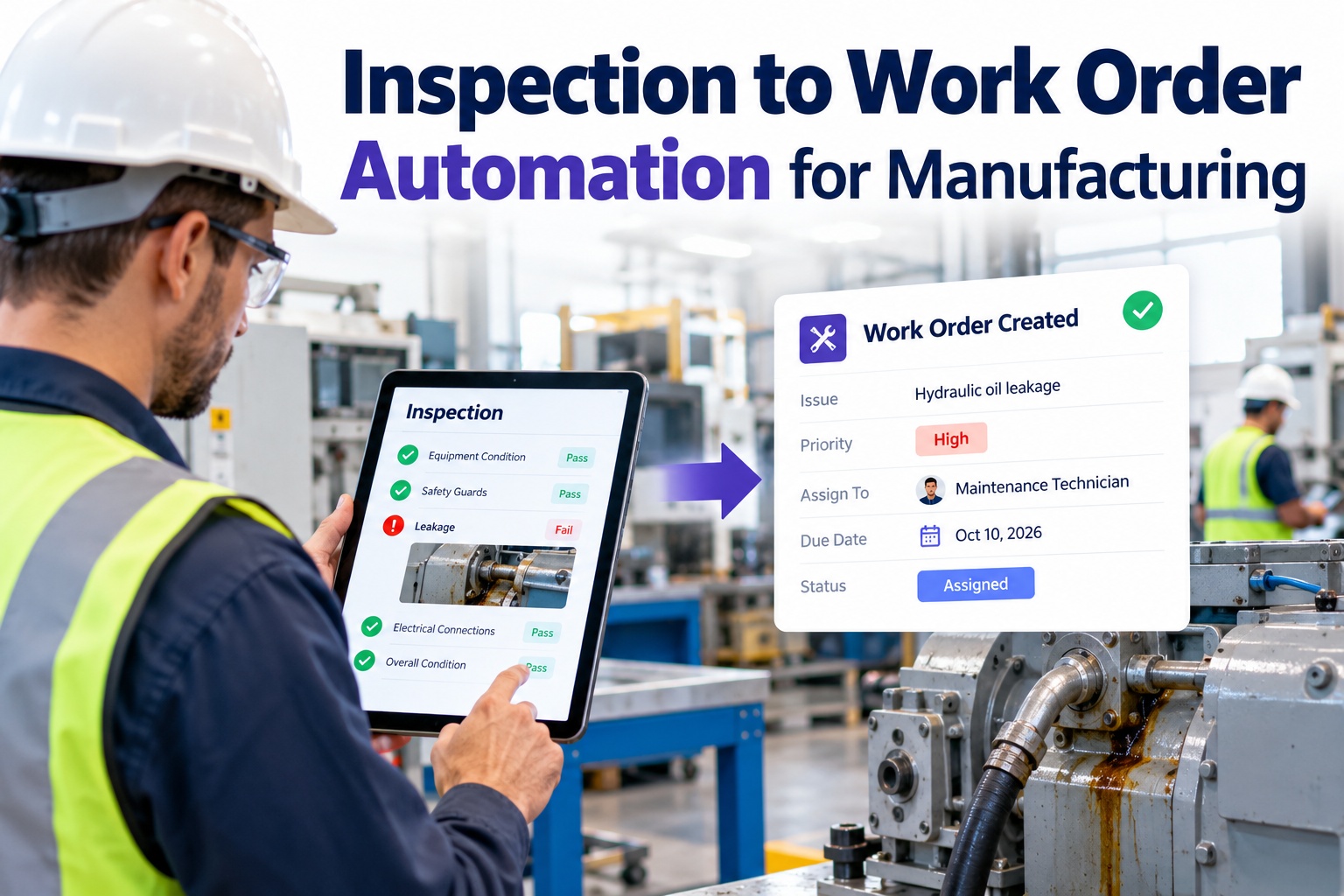
Textile manufacturers implementing AI-powered inventory optimization with IoT sensors, mobile inspections manufacturing & plants workflows, and machine learning algorithms achieve 45-65% inventory reductions while improving parts availability to 95-98% compared to traditional min/max approaches. The transformation lies in deploying work order automation, establishing risk scoring protocols, and leveraging Oxmaint CMMS platforms that convert spare parts chaos into predictable, data-driven inventory strategies delivering measurable downtime reduction. Facilities ready to eliminate inventory chaos can explore how AI-driven forecasting transforms spare parts management.
What if your textile plant could predict spare parts requirements 90-120 days before equipment failures—eliminating both stockouts and excess inventory?
While other textile manufacturers explain production delays and inventory write-downs to frustrated executives, plants using AI-driven forecasting prevent 80% of stockouts before they impact production. Discover why 200+ textile facilities trust Oxmaint to optimize their spare parts investments.
Transform Manufacturing & Plants Cost Control Through Condition Monitoring
Effective spare parts management for textile manufacturing requires understanding the interconnected ecosystem of condition monitoring, predictive maintenance manufacturing & plants protocols, and AI analytics that transform reactive ordering into proactive optimization. Modern Oxmaint CMMS platforms extend far beyond simple inventory tracking to include IoT sensors providing real-time equipment health data, machine learning algorithms identifying consumption patterns, and risk scoring systems prioritizing parts based on failure probability and production impact.
Traditional min/max ordering approaches waste 35-50% of inventory investments on slow-moving parts while maintaining inadequate coverage of high-consumption components. AI-driven forecasting analyzes equipment vibration signatures, thermal patterns, runtime cycles, and historical failure data—predicting parts requirements 90-120 days before failures occur with 85-92% accuracy compared to 40-55% accuracy for calendar-based ordering. Organizations seeking to improve forecasting accuracy can see how AI analytics optimize spare parts predictions.
Continuous monitoring of spinning frames, looms, and finishing equipment detecting bearing degradation 60-90 days before failure. Enables proactive ordering reducing emergency procurement by 70%.
Temperature sensors identifying motor winding deterioration, drive overheating, and electrical component stress. Prevents 68% of catastrophic motor failures requiring complete replacements.
Machine learning analysis of work order automation data identifying seasonal patterns, production intensity impacts, and equipment lifecycle stages. Optimizes reorder points by 45-60%.
ROI Calculator Approach: Quantifying AI Forecasting Returns
Justifying AI-driven spare parts forecasting investments requires systematic ROI calculation that translates technical capabilities into financial outcomes executives understand. Manufacturing & plants CMMS best practices demonstrate that structured ROI frameworks incorporating baseline costs, projected savings, and risk-adjusted timelines achieve 85% budget approval rates compared to 23% for proposals lacking quantified projections.
The foundation of accurate ROI calculation lies in capturing current inventory carrying costs across storage, obsolescence, capital opportunity cost, and emergency procurement premiums. Plants lacking visibility into these baseline expenses often underestimate savings potential by 40-60%, undermining budget proposals that could otherwise demonstrate compelling returns. Facility directors preparing for budget conversations can walk through ROI calculation methodologies with implementation specialists.
Textile Plant ROI Calculator Framework
| Equipment Category | Traditional Inventory Cost | AI-Optimized Cost | Annual Savings | ROI Timeline |
|---|---|---|---|---|
| Spinning Frame Parts | $680,000 - $950,000 | $340,000 - $475,000 | 50-55% reduction | 10-14 months |
| Dyeing Equipment Components | $420,000 - $680,000 | $210,000 - $340,000 | 48-52% reduction | 12-16 months |
| Weaving Loom Parts | $360,000 - $540,000 | $180,000 - $270,000 | 50-55% reduction | 11-15 months |
| Finishing System Parts | $280,000 - $420,000 | $155,000 - $231,000 | 45-50% reduction | 14-18 months |
| Compressor & Utility Parts | $185,000 - $290,000 | $102,000 - $160,000 | 42-48% reduction | 16-20 months |
From Reactive to Predictive — A Manufacturing & Plants Governance Model with Automation
Creating an effective spare parts optimization strategy requires systematic integration of work order automation, mobile inspections manufacturing & plants workflows, and AI analytics dashboards that ensure every inventory decision contributes to measurable cost reductions and availability improvements. Simply implementing forecasting software without redesigning procurement workflows produces marginal gains rather than transformational results.
Strategic implementation following proven manufacturing & plants CMMS best practices consistently delivers 80-95% of projected outcomes compared to 30-40% for rushed deployments lacking workflow redesign. The sequence matters significantly—establishing baseline data precedes AI activation, risk scoring precedes automated ordering, and vendor integration precedes full automation. Plants planning implementation can discuss phased rollout strategies with deployment specialists.
Textile Spare Parts Optimization Playbook
Deploy barcode/QR tags on every critical asset with complete specifications, installation dates, warranty information, and maintenance history imported into Oxmaint CMMS.
Install vibration, thermal, and energy monitoring sensors on critical equipment collecting 90-day baseline data to train AI algorithms for failure pattern recognition.
Score every spare part using combined metrics: equipment criticality, failure probability, lead time, and unit cost. Establish differentiated stocking policies by risk tier.
Configure automatic parts allocation when predictive maintenance triggers work orders, with intelligent substitution rules and vendor auto-notification for stockouts.
Establish EDI connections with critical suppliers enabling automated PO generation, real-time lead time updates, and performance tracking across multiple facilities.
Feed actual failure data and consumption patterns back into machine learning models quarterly, maintaining complete audit trail for ISO compliance and cost analysis.
Manufacturing & Plants Compliance Requirements
Textile manufacturers face stringent manufacturing & plants compliance requirements spanning ISO 9001 quality management, ISO 55000 asset management, environmental regulations, and safety standards. Strategic Oxmaint CMMS implementation creates audit-ready compliance logs demonstrating regulatory adherence while reducing documentation burden from 60-80 hours monthly to 3-6 hours through automated compliance tracking and digital audit trail generation.
Comprehensive audit trail documentation capturing every parts transaction, work order, and equipment intervention with timestamped accountability transforms quarterly audit preparation from stressful scramble to simple dashboard query. AI analytics identify compliance gaps proactively, flagging overdue calibrations, expired certifications, and approaching regulatory deadlines with automated escalation. Teams spending excessive hours on manual compliance documentation can discover how automated audit trails eliminate preparation stress.
Comprehensive parts traceability, calibration records, and work order documentation demonstrating process control and continuous improvement.
- Complete parts usage audit trail with timestamps
- Calibration tracking for measurement equipment
- Non-conformance reporting and corrective actions
- Supplier quality performance metrics
Lifecycle cost tracking, risk-based maintenance strategies, and performance measurement proving optimal asset utilization and investment decisions.
- Total cost of ownership calculations per asset
- Risk-based maintenance strategy documentation
- Asset performance KPI dashboards
- Capital replacement justification records
Hazardous materials tracking, waste disposal documentation, and energy efficiency records meeting EPA and state environmental regulations.
- Chemical inventory and SDS management
- Waste disposal manifests and tracking
- Energy consumption monitoring and reporting
- Emissions equipment maintenance records
Equipment safety inspections, hazard assessments, and corrective action tracking demonstrating due diligence compliance with OSHA requirements.
- Equipment safety inspection logs
- Lockout/tagout procedure documentation
- Incident investigation records
- Training completion verification
Audit-Ready Documentation Benefits
Energy Optimization Through Predictive Maintenance
Energy consumption represents 12-18% of textile manufacturing costs, with degrading equipment consuming 15-30% more power than properly maintained systems. AI-driven condition monitoring identifies energy inefficiencies through baseline deviation detection, enabling targeted interventions that simultaneously reduce energy costs and prevent equipment failures.
The synergy between spare parts forecasting and energy optimization creates compound savings—predictive bearing replacement reduces motor energy consumption by 8-12% while preventing catastrophic failure. Thermal monitoring of dyeing equipment heat exchangers identifies fouling through efficiency degradation, triggering cleaning chemical orders before steam costs escalate. Manufacturing operations seeking to maximize ROI can explore how energy correlation enhances spare parts forecasting.
Energy-Correlated Spare Parts Optimization
Motor Efficiency Monitoring
The Problem: Worn bearings, misalignment, and winding degradation cause motors to draw 8-12% more power. Traditional maintenance misses these issues until catastrophic failure.
The Solution: AI correlates power consumption patterns with vibration data to detect bearing wear 45-60 days before traditional vibration monitoring flags issues.
Real Example:
A spinning frame's motor showed 11% power consumption increase over 45 days. AI triggered bearing replacement during scheduled downtime. Post-replacement energy usage returned to baseline, saving $3,200 annually per motor across 85 spinning frames = $272,000 annual savings.
Thermal System Optimization
The Problem: Heat exchanger fouling in dyeing machines reduces thermal efficiency by 10-15%, requiring longer heating cycles and wasting energy.
The Solution: Continuous monitoring of inlet/outlet temperatures and energy consumption identifies fouling early. System automatically orders cleaning chemicals or schedules tube bundle replacements based on efficiency degradation rate.
Real Example:
A dyeing machine's heat recovery efficiency dropped from 78% to 68% over 60 days. AI scheduled cleaning 30 days before it would typically be noticed, preventing $18,000 in excess steam costs over the following quarter.
Compressed Air Leak Detection
The Problem: Compressed air leaks represent 20-35% of compressor energy waste—often costing $50,000-$120,000 annually in a typical textile plant. Manual leak detection during scheduled shutdowns misses 60-70% of leaks.
The Solution: Continuous pressure monitoring and ultrasonic sensors identify leaks in real-time. AI pinpoints exact locations and severity, automatically ordering replacement fittings and seals with precise quantities.
Real Example:
Pressure drop analysis revealed 14 significant leaks across the weaving floor. AI-guided repairs cost $8,400 in parts and labor but saved $87,000 annually in compressed air generation costs. ROI achieved in just 35 days.
Combined Energy Impact
These savings are in addition to the inventory reduction and downtime prevention benefits—creating a compound ROI effect.
Textile Equipment Risk Assessment Framework
Establishing strategic spare parts priorities requires systematic risk scoring that evaluates each component based on failure probability, production impact, and lead time constraints. Manufacturing & plants CMMS best practices demonstrate that structured risk assessment enables 40-55% more effective inventory allocation while ensuring critical components maintain appropriate stock levels regardless of historical consumption patterns.
Risk assessment frameworks combining asset criticality with real-time condition data outperform calendar-based approaches by 60-75% in failure prevention effectiveness. The distinction lies in evaluating actual equipment health rather than assumed degradation curves that ignore usage intensity, environmental factors, and maintenance quality variations. Manufacturing teams implementing risk-based prioritization can understand how AI-driven scoring optimizes resource allocation.
| Equipment Category | Critical Spare Parts | Stock Strategy | Failure Impact | Forecasting Method |
|---|---|---|---|---|
| Ring Spinning Frames | Spindle bearings, drive belts, pneumatic cylinders | Min 2-week buffer, predictive reorder | 20-30% line capacity loss | Vibration + runtime analytics |
| Jet Dyeing Machines | Pumps, heat exchangers, control valves | Critical spares on-site, OEM partnership | 100% batch loss, quality defects | Thermal + chemical exposure modeling |
| Air-Jet Looms | Nozzles, solenoid valves, electronic boards | High-use consumables on-site, electronics 48hr | Per-loom 2-4% capacity impact | Consumption history + production schedule |
| Finishing Calendars | Hydraulic cylinders, pressure rollers, heating elements | Long lead items buffered, consumables JIT | 60-80% finishing capacity loss | Pressure analytics + thermal monitoring |
| Compressor Systems | Filter elements, valve assemblies, oil separators | PM-driven reorder, condition-based replacement | Plant-wide air supply disruption | Runtime hours + vibration + thermal |
Spare Parts Risk Scoring Matrix
Conclusion
AI-driven spare parts forecasting for textile manufacturing represents the convergence of predictive maintenance manufacturing & plants excellence, intelligent inventory management, and energy optimization—where machine learning algorithms directly translate into reduced downtime, lower carrying costs, and improved production efficiency. Textile manufacturers implementing comprehensive forecasting programs with IoT sensors, AI analytics, and work order automation achieve 45-65% inventory reductions while improving parts availability to 95-98% through intelligent risk scoring and consumption prediction.
Understanding the interconnected architecture of condition monitoring systems, barcode/QR asset tracking, and mobile inspections manufacturing & plants workflows reveals that successful implementations require systematic transformation extending far beyond simple software installation. Manufacturing & plants CMMS best practices demonstrate that technology investments generate 5-8x returns when combined with proper risk scoring protocols, vendor integration, and playbook-driven implementation ensuring consistent execution across multi-site rollouts.
The 2025 manufacturing environment rewards facilities demonstrating proactive asset stewardship while penalizing those maintaining reactive approaches that produce costly stockouts and obsolete inventory write-downs. Success requires balancing proven predictive maintenance manufacturing & plants protocols delivering immediate availability improvements with emerging AI analytics innovations positioning operations for future efficiency gains and competitive advantage.
Imagine presenting next quarter's financial review with documented proof that AI forecasting prevented $800,000 in emergency expedite costs—what credibility would that build with executive leadership?
Every month without AI-driven forecasting is another month accumulating preventable stockouts and excess inventory. Join the 200+ textile manufacturers that transformed spare parts chaos into predictive excellence with Oxmaint's connected CMMS platform—the same technology optimizing textile operations worldwide.