Manufacturing Plant Conveyor System Maintenance and Troubleshooting
By oxmaint on February 21, 2026
Every manufacturing plant depends on its conveyor systems to keep production moving. When a belt stops, a roller seizes, or a motor overheats, the entire line grinds to a halt—and the clock starts ticking on lost revenue, delayed orders, and overtime labor costs. The reality is that most conveyor failures are entirely preventable. With the right inspection routine, troubleshooting knowledge, and maintenance tracking system, your plant can eliminate the majority of unplanned conveyor downtime before it ever happens. Schedule a free consultation to see how Oxmaint helps manufacturing teams build reliable conveyor maintenance programs that actually stick.
How to Prevent Conveyor Breakdowns in Manufacturing Plants
Conveyor breakdowns in manufacturing are rarely sudden. They follow a pattern: a small issue goes unnoticed, it gradually worsens under continuous operation, and eventually causes a complete shutdown during peak production. The key to prevention lies in catching problems early through structured inspections, proper lubrication, and timely component replacement. Plants that shift from reactive to preventive conveyor maintenance typically see dramatic improvements across every operational metric.
The Real Cost of Ignoring Conveyor Maintenance
Unplanned downtime cost per hour$260,000+
Conveyor failures that are preventable70%
Emergency repair cost multiplier vs. planned3 to 5x
Maintenance cost reduction with preventive programs40%
70% of conveyor failures are preventable—are yours being caught in time? Sign up for Oxmaint to automate preventive maintenance schedules, get mobile inspection checklists, and track every conveyor asset in your plant from one dashboard. Start reducing unplanned downtime from day one.
Daily, Weekly, and Monthly Conveyor Inspection Schedule
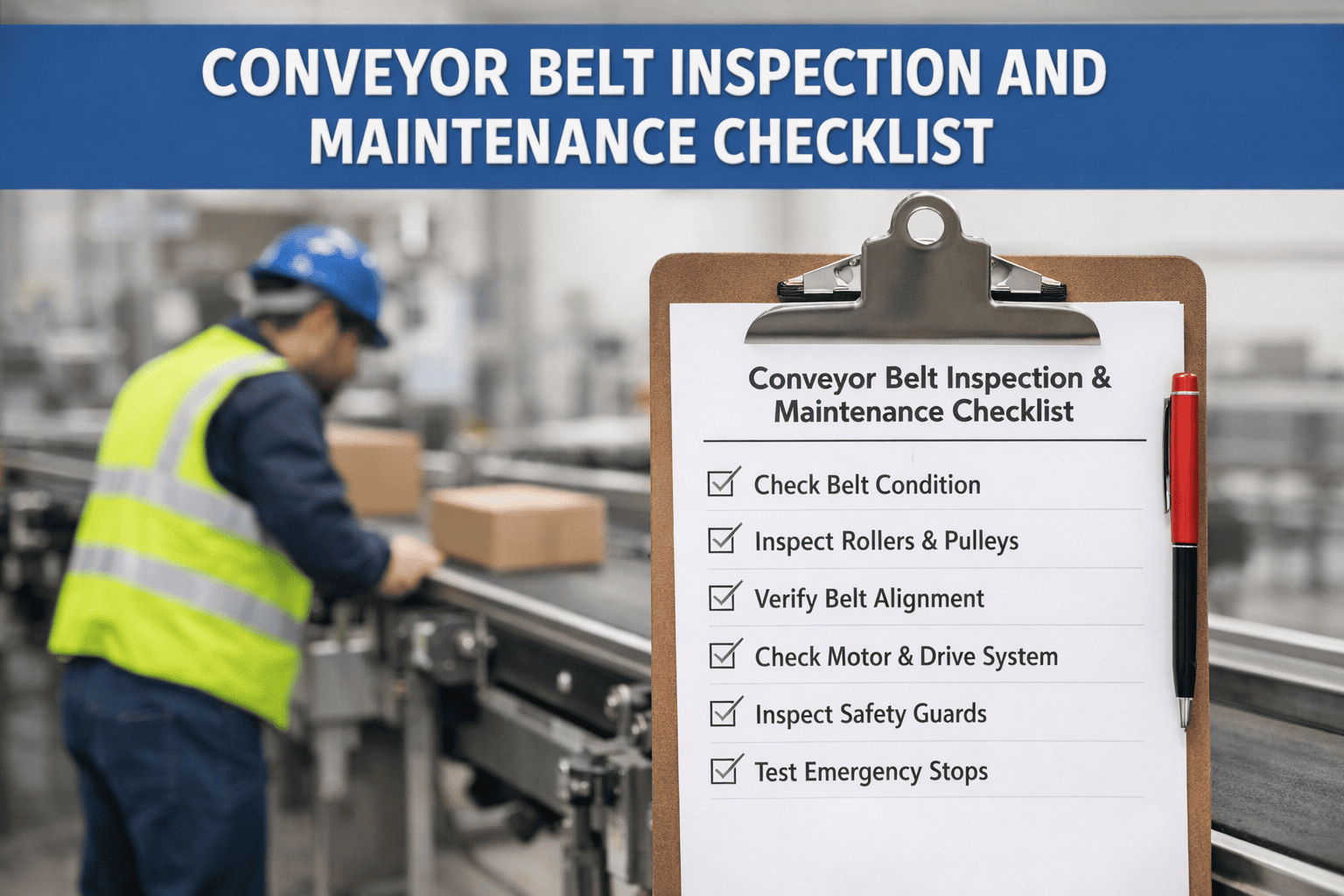
A structured inspection schedule is the foundation of conveyor reliability. The frequency of each task depends on how critical the check is and how quickly that particular failure mode develops. Below is a field-tested schedule used by maintenance teams in high-throughput manufacturing environments.
Every Shift / Daily
Walk the full conveyor length—look for belt fraying, edge damage, surface cuts, and material carryback
Verify belt is tracking centered across all idlers and pulleys
Listen for abnormal sounds—grinding bearings, squealing belts, rattling guards
Check for material spillage at loading zones and transfer points
Confirm all emergency stops and pull cords are accessible and functional
Weekly
Spin each roller and idler by hand—check for seized bearings, rough rotation, or wobble
Clean material buildup from pulleys, skirting, and belt scrapers
Inspect belt splices for separation, lifting edges, or visible wear
Check drive chain or belt tension on motor coupling
Monthly
Measure belt tension using a tension gauge and adjust take-up as needed
Lubricate all bearings, chains, and gearboxes per manufacturer specifications
Record motor amperage draw, operating temperature, and vibration readings
Inspect pulley lagging condition and crown profile
Quarterly / Annual
Measure belt thickness at multiple points to calculate remaining belt life
Perform laser alignment on drive and tail pulleys
Full structural inspection of frame, supports, walkways, and guards
Test all safety devices—belt drift switches, speed sensors, plugged chute detectors
Tracking these inspections across dozens of conveyors on paper is where most plants fall behind. Tasks get skipped, records go missing, and patterns become invisible. Sign up for Oxmaint to digitize every conveyor inspection, automate task reminders, and give your maintenance team mobile checklists they can complete right on the plant floor.
Top 8 Conveyor Belt Problems and How to Fix Them Fast
When a conveyor stops on the production floor, speed of diagnosis matters. Maintenance teams that can quickly narrow down root causes get production running again in minutes instead of hours. Here are the most common conveyor problems found in manufacturing plants, along with what causes them and how to resolve each one.
01
Belt Mistracking and Drifting
Root Causes
Misaligned idlers or pulleys, off-center material loading, worn pulley lagging, conveyor frame deflection, or buildup on rollers forcing the belt sideways.
Fix It
Realign idlers systematically from tail to head. Center the loading point. Replace worn lagging. Use a straightedge or laser to verify frame is level and square.
02
Belt Slippage on Drive Pulley
Root Causes
Insufficient belt tension, wet or oily belt surface, worn or smooth drive pulley lagging, or a snub pulley not providing enough wrap angle on the drive.
Fix It
Increase take-up tension. Install or replace ceramic or rubber lagging on the drive pulley. Add or adjust snub pulley position. Clean belt surface contamination.
03
Excessive Belt Wear and Surface Damage
Root Causes
Seized idlers creating friction points, material trapped between belt and structure, belt grade not matched to material abrasiveness, or excessive belt speed.
Fix It
Replace seized rollers immediately. Improve skirting and sealing at load zones. Upgrade belt grade to match material. Verify speed is within manufacturer specifications.
04
Roller and Idler Seizure
Root Causes
Bearing failure from contamination ingress (dust, water, debris), lubrication breakdown, overloading, or end-of-life bearing fatigue.
Fix It
Replace seized rollers and bearings. Install improved bearing seals for harsh environments. Establish a lubrication schedule based on operating conditions.
05
Motor Overheating and Tripping
Root Causes
Overloading beyond motor capacity, coupling misalignment, blocked cooling fins, voltage imbalance or supply issues, or excessive belt tension creating high drag.
Fix It
Reduce conveyor load. Realign motor-to-gearbox coupling. Clean motor cooling surfaces. Check electrical supply for voltage and phase balance. Reduce belt tension to spec.
06
Material Spillage at Transfer Points
Root Causes
Belt mistracking, overloading beyond belt capacity, worn or missing skirting, improper chute angle or design, or wind effects on lightweight materials.
Fix It
Correct belt tracking first. Adjust feed rate to match belt capacity. Replace skirting rubber. Redesign transfer chute geometry for better material containment.
07
Belt Splice Failure
Root Causes
Improper vulcanization temperature or cure time, excessive belt tension beyond splice rating, pulley diameters below belt minimum, or chemical degradation.
Fix It
Re-splice following manufacturer's exact procedure and specifications. Verify belt tension is within splice rating. Confirm all pulley diameters meet minimum requirements.
08
Excessive Noise and Vibration
Root Causes
Worn bearings, loose structural fasteners, misaligned pulleys or idlers, material buildup creating imbalance, or resonance from belt speed matching natural frequency.
Fix It
Use vibration analysis to isolate source. Tighten all structural connections. Clean material buildup. Replace worn bearings. Adjust belt speed if resonance is identified.
Tired of diagnosing the same conveyor problems over and over? Book a demo to see how Oxmaint automatically logs every repair, flags repeat failures across your conveyors, and generates preventive work orders so your team fixes root causes—not just symptoms.
Belt Tracking, Tension, and Alignment: The Critical Triangle
These three factors—tracking, tension, and alignment—are interconnected and responsible for the majority of conveyor belt issues in manufacturing. Getting one wrong creates a chain reaction that damages the belt, wears out components, and eventually stops production. Understanding how they work together is essential for any maintenance technician working with conveyors.
Belt Tracking
A properly tracked belt runs centered on the conveyor structure. Mistracking causes the belt to rub against the frame, creating edge damage, material spillage, and structural wear. Check tracking from the tail end forward, making small idler adjustments and allowing the belt to complete 3 full rotations before adjusting further.
Belt Tension
Correct tension prevents slippage without overloading bearings and splices. Too little tension causes the belt to slip on the drive pulley; too much tension accelerates bearing wear, stretches the belt, and overloads the motor. Use a tension gauge and follow the manufacturer's recommended sag percentage between idlers.
Pulley Alignment
Misaligned pulleys are the single biggest cause of belt mistracking. Both drive and tail pulleys must be perpendicular to the belt centerline and level. Use a laser alignment tool for precision. Even 1-2 degrees of misalignment creates persistent tracking problems that cannot be fixed by adjusting idlers alone.
How a CMMS Transforms Conveyor Maintenance Operations
Spreadsheets and paper logs cannot keep up with the maintenance demands of a busy manufacturing plant running multiple conveyor systems across shifts. A Computerized Maintenance Management System (CMMS) like Oxmaint centralizes every aspect of conveyor care—scheduling, work orders, parts inventory, and maintenance history—into one digital platform accessible from any device.
What Changes When You Switch to Digital Maintenance
Missed inspections due to forgotten paper schedules
Automated reminders sent directly to technician mobile devices
No visibility into which conveyors need attention first
Real-time dashboards showing asset health and overdue tasks
Spare parts run out during critical repairs
Inventory tracking with automatic reorder alerts at minimum stock
Repeat failures with no pattern analysis
Complete maintenance history reveals recurring issues and root causes
No accountability for completed or skipped tasks
Timestamped records with technician name, photos, and notes
Your Conveyors Deserve Better Than Spreadsheets
Oxmaint gives your maintenance team automated scheduling, mobile work orders, real-time asset tracking, and complete maintenance history for every conveyor in your plant. Set up takes minutes, not months—and your team can start logging inspections on day one.
Conveyor Safety Compliance: What Every Plant Must Know
Conveyor-related injuries remain one of the most common incident types in manufacturing plants. OSHA requires that conveyor systems include specific safeguards, and maintenance teams are responsible for verifying these protections remain functional. Failing a safety audit can result in citations, fines, and—far worse—serious injuries to plant personnel. Sign up for Oxmaint to build safety inspection checklists directly into your conveyor maintenance workflows.
Conveyor Safety Requirements
Emergency Stop Devices
Pull cords, push buttons, and trip wires must be accessible along the entire conveyor length and tested monthly to confirm they stop the system within required time.
Guard Rails and Covers
All nip points, pinch points, and moving parts must be guarded. Guards removed for maintenance must be replaced before the conveyor is restarted.
Lockout/Tagout Procedures
Every conveyor must have documented LOTO procedures. Maintenance must isolate all energy sources before any hands-on work. Train all personnel annually.
Belt Drift and Speed Sensors
Automatic shutdown sensors detect belt drift beyond safe limits and underspeed conditions indicating belt slip. These must be calibrated and tested quarterly.
Is your plant ready for the next safety audit? Sign up for Oxmaint to embed emergency stop testing, guard inspections, and LOTO verification directly into your conveyor maintenance workflows—with timestamped proof that every check was completed on time.
How often should conveyor belts be inspected in a manufacturing plant?
Visual inspections should happen every shift or daily, covering belt condition, tracking, and spillage. Weekly inspections should include roller, idler, and splice checks. Monthly tasks include tension measurement, lubrication, and motor condition monitoring. Quarterly and annual inspections cover structural integrity, belt thickness measurement, and safety device testing. Sign up for Oxmaint to automate these schedules and ensure nothing gets missed across shifts.
What is the most common cause of conveyor belt failure?
Belt mistracking is the most frequently reported conveyor issue in manufacturing plants. It is usually caused by misaligned idlers or pulleys, off-center loading, material buildup on rollers, or frame deflection. Left uncorrected, mistracking leads to edge wear, splice failure, material spillage, and eventually a complete belt failure requiring replacement.
How does a CMMS help reduce conveyor downtime?
A CMMS like Oxmaint eliminates missed inspections through automated scheduling and mobile notifications. It tracks complete maintenance history for each conveyor, making failure patterns visible so your team can address root causes instead of repeating the same repairs. Spare parts inventory management prevents stockouts during critical repairs. Book a demo to see these features in action for your plant.
When should a conveyor belt be replaced instead of repaired?
Replace the belt when thickness falls below manufacturer minimums, when the carcass or cords become exposed, when splices fail repeatedly despite proper installation, when elongation exceeds take-up capacity, or when edge damage affects more than 10% of belt width. Tracking these measurements over time in a CMMS helps predict replacement timing and budget for it in advance.
What safety checks are required for manufacturing conveyors?
OSHA requires that all conveyor emergency stop devices be functional and accessible, all nip and pinch points be properly guarded, lockout/tagout procedures are documented and followed, and belt drift and speed sensors are calibrated. Monthly testing of emergency stops and quarterly sensor calibration should be part of your standard maintenance program. Sign up for Oxmaint to integrate safety checks into your maintenance workflows.