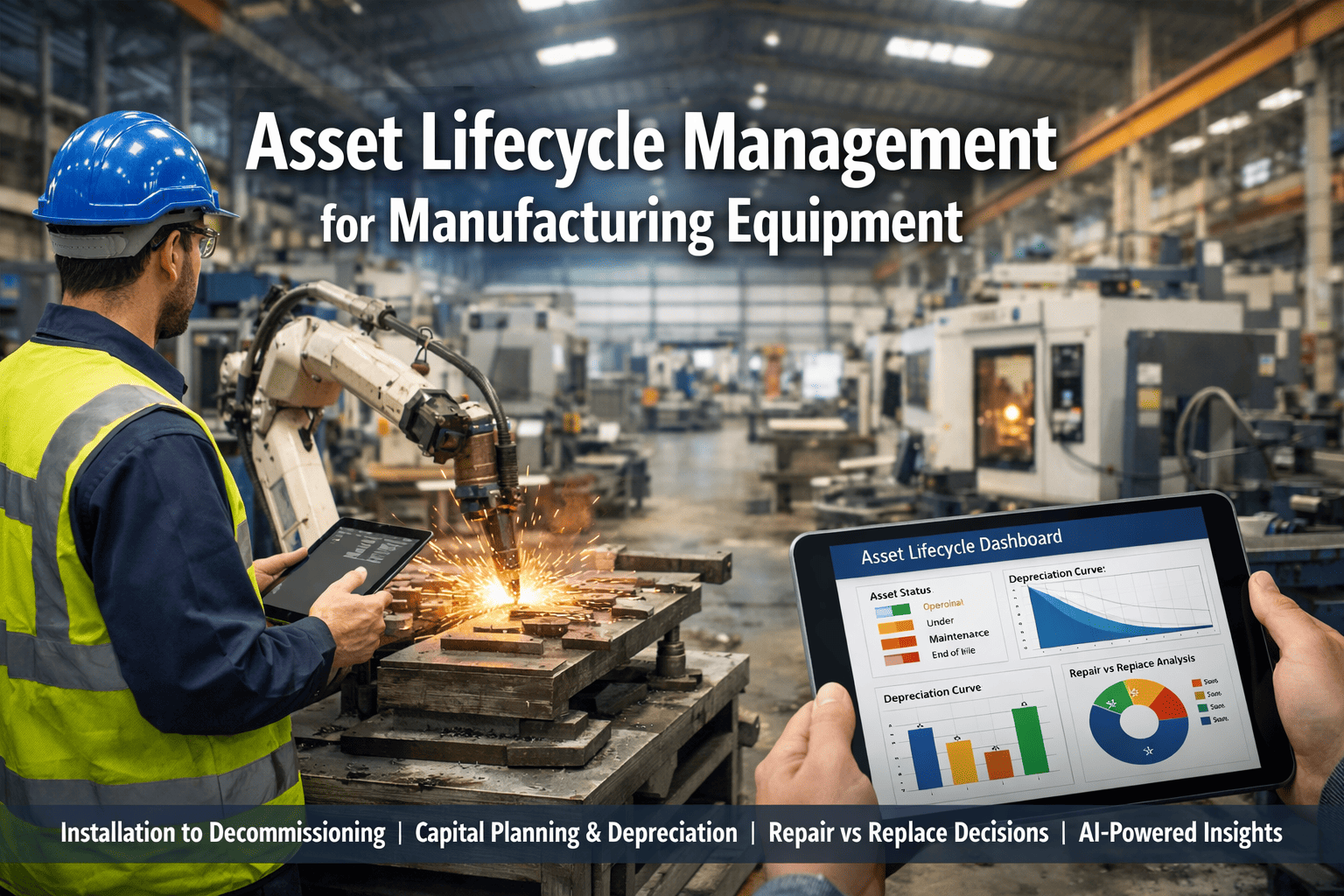
Asset lifecycle costing gives manufacturing and plant maintenance teams the financial clarity to move beyond reactive decisions and evaluate equipment on total cost of ownership — not just purchase price. From acquisition through decommissioning, every asset accumulates maintenance, energy, downtime, and disposal costs that dwarf the initial capital outlay. Plant engineers and reliability teams who apply structured lifecycle cost analysis consistently make better repair-vs-replace decisions, extend asset ROI, and eliminate the budget surprises that follow unplanned equipment failures. Sign Up Free with OxMaint to centralize your asset cost data and build lifecycle costing models that drive smarter plant equipment decisions.
Why Asset Lifecycle Costing Matters in Plant Maintenance
In industrial environments, capital purchase decisions made without lifecycle cost visibility routinely produce assets that are cheap to acquire but expensive to operate. A compressor selected on initial price alone may carry three times the maintenance burden of a higher-spec alternative over its service life. Book a Demo to see how OxMaint aggregates maintenance history, downtime records, and work order costs into a per-asset lifecycle cost register your team can act on.
Core Components of Asset Lifecycle Cost Analysis
A complete lifecycle cost model captures every cost category that accumulates from initial procurement through end-of-life disposal. Sign Up Free to use OxMaint's asset cost tracking to build per-asset lifecycle registers without spreadsheet overhead.
Capital and Installation Costs
Purchase price, freight, commissioning, initial calibration, and installation labor form the acquisition cost baseline. These represent the smallest share of total lifecycle cost but are the most visible — and often the most overweighted in procurement decisions.
Energy and Utility Consumption
For motors, compressors, HVAC, and process equipment, energy cost over a 10–15 year asset life frequently exceeds acquisition cost. Efficiency degradation as assets age compounds this cost — making energy trending a key component of lifecycle cost modeling.
Preventive and Corrective Maintenance Labor and Parts
Cumulative maintenance cost — labor hours, parts consumed, contractor spend — tracked per asset in OxMaint produces the cost curve that reveals when an asset crosses from economically viable to replacement-justified. Without this data, replacement decisions are made on instinct.
Production Loss and Downtime Cost
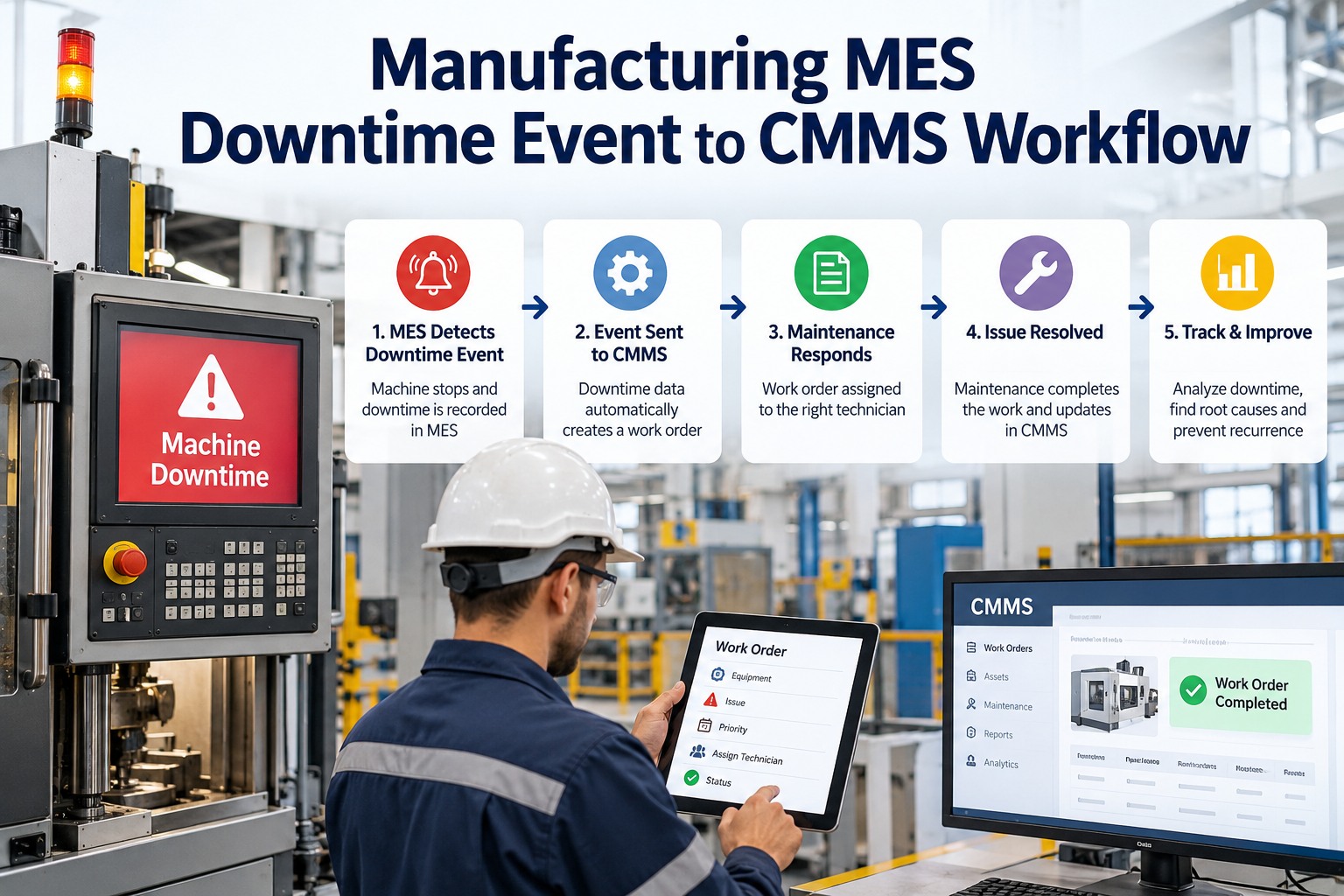
Unplanned downtime carries the highest per-hour cost of any lifecycle component. OxMaint's downtime analytics attribute production loss events to specific assets — converting raw downtime minutes into financial impact data that strengthens the business case for replacement or capital upgrade.
Failure Risk and Obsolescence Exposure
Assets operating beyond OEM lifecycle guidance carry increasing failure probability and often depend on discontinued spare parts. Lifecycle costing quantifies this risk exposure as a financial liability — enabling proactive replacement before a critical failure forces a more expensive emergency response.
Decommissioning and Salvage Value
End-of-life decommissioning costs and residual salvage or trade-in value complete the lifecycle model. Assets with hazardous material components can carry significant disposal cost that must factor into replacement timing and alternative equipment selection.
Lifecycle Cost Failure Modes: Where Plant Equipment Decisions Go Wrong
Book a Demo to see how OxMaint surfaces the asset cost patterns that most commonly distort plant equipment investment decisions.
| Decision Failure Mode | Root Cause | Financial Impact | OxMaint Solution | Risk Level |
|---|---|---|---|---|
| Lowest-bid procurement | No lifecycle cost model at purchase stage | High maintenance and energy cost over asset life | Asset cost benchmarking at procurement | Very High |
| Delayed replacement on aging assets | No cumulative cost visibility triggering replacement | Escalating repair spend + downtime risk | Lifecycle cost dashboards with replacement triggers | High |
| Reactive repair on end-of-life equipment | Missing failure history and cost accumulation data | Emergency repair premium + unplanned downtime | Work order cost history per asset in CMMS | High |
| Spare parts stockout on aging platforms | No obsolescence monitoring program | Extended downtime, expedite freight costs | Lifecycle alerts for OEM end-of-support dates | Medium–High |
| Energy cost blindspot | Energy not tracked as asset cost component | Inflated utility spend on degraded equipment | Energy cost integration in lifecycle register | Medium |
| Capex approval without TCO data | No structured total cost of ownership model | Misallocated capital budget cycles | OxMaint lifecycle cost reports for capital planning | High |
Asset Lifecycle Costing Framework: Implementation Steps
Implementing asset lifecycle costing in a plant environment follows a structured sequence that builds from data foundation through decision-support output. OxMaint provides the CMMS infrastructure to execute each stage without custom development. Sign Up Free to begin building your plant asset lifecycle register today.
Asset Register and Criticality Classification
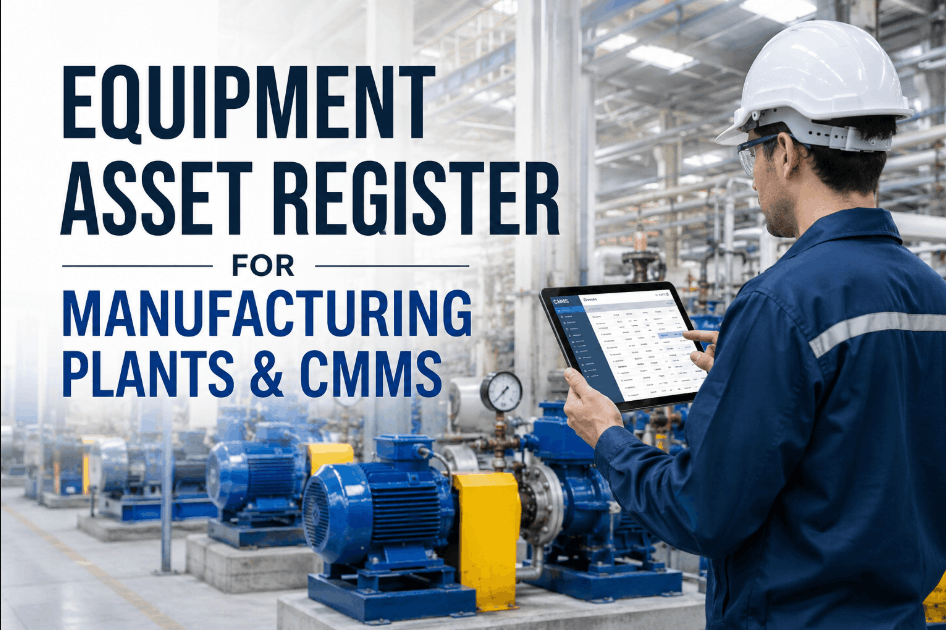
Create a complete asset register with criticality classification — critical, important, or standard — based on failure impact on production, safety, and regulatory compliance. Criticality determines the investment level justified in lifecycle cost management for each asset class.
Historical Cost Data Capture
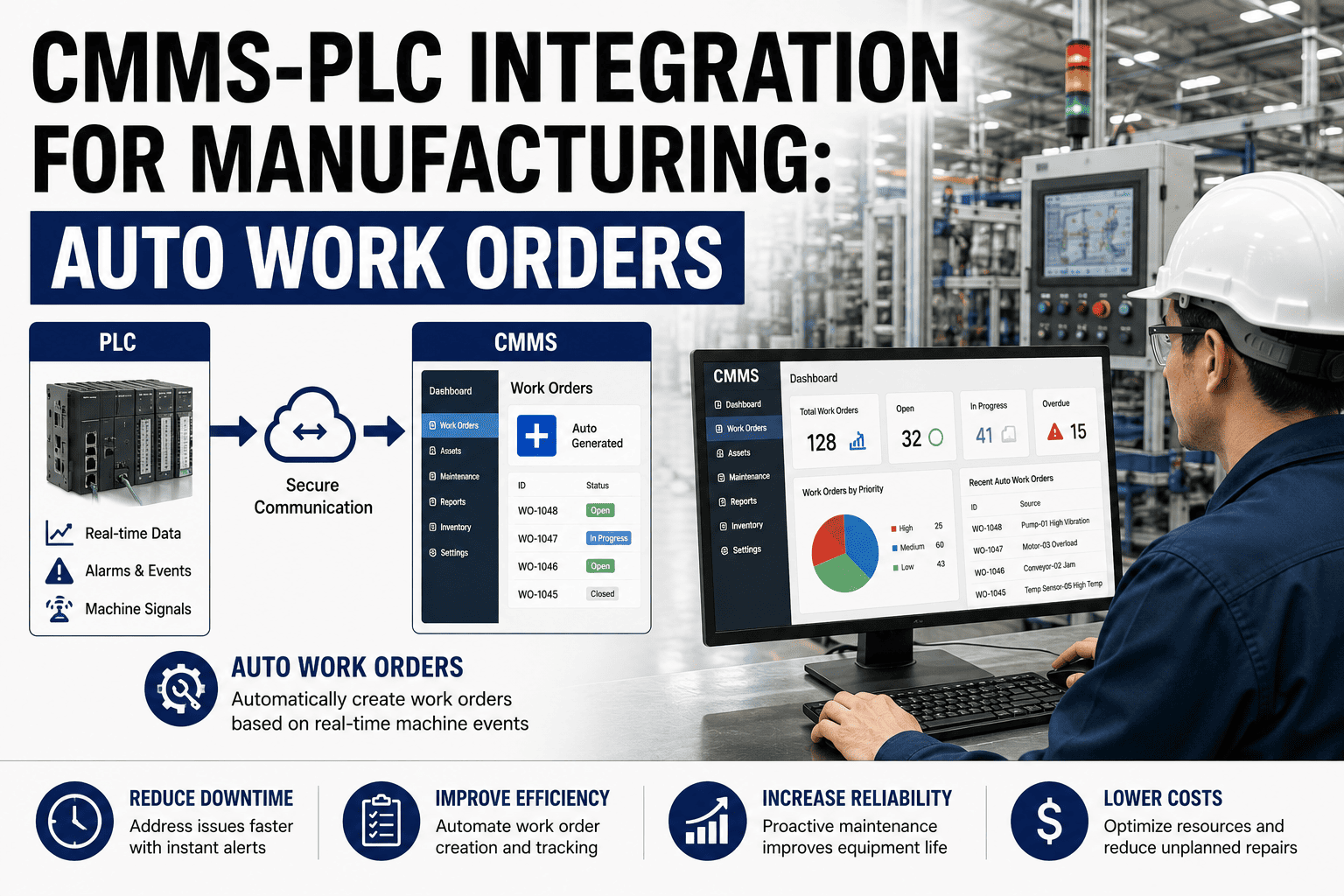
Capture maintenance labor hours, parts cost, contractor invoices, and downtime events per asset in OxMaint's work order system. Assets without historical cost data should begin accumulation immediately — even partial cost history is significantly more useful than none for replacement decision modeling.
Lifecycle Cost Modeling and Threshold Setting
Build per-asset lifecycle cost models that sum maintenance, energy, downtime, and risk cost components. Set replacement threshold triggers — typically when annual maintenance cost exceeds 30–40% of current replacement value — that generate automatic review flags in OxMaint.
Repair-vs-Replace Analysis Integration
Integrate lifecycle cost data into repair authorization workflows. When a corrective work order cost on a high-age asset exceeds a defined threshold relative to cumulative lifecycle spend, OxMaint flags the work order for repair-vs-replace evaluation before maintenance expenditure is approved.
Capital Planning and Budget Cycle Alignment
Export OxMaint lifecycle cost analytics to capital planning cycles. Assets approaching replacement thresholds visible 12–18 months ahead of projected failure enable capital budget requests with financial justification — replacing reactive emergency replacement with planned capital deployment.
How OxMaint Supports Asset Lifecycle Costing in Plant Environments
Frequently Asked Questions: Asset Lifecycle Costing for Plant Equipment
What is asset lifecycle costing in plant maintenance?
Asset lifecycle costing calculates the total cost of owning and operating a plant asset from acquisition through decommissioning — including maintenance, energy, downtime, and disposal — to support repair-vs-replace and capital investment decisions.
When should a plant asset be replaced based on lifecycle cost?
A common replacement trigger is when annual maintenance cost exceeds 30–40% of current replacement value, or when cumulative downtime cost indicates that continued operation is more expensive than replacement. OxMaint can automate this threshold monitoring per asset.
How does a CMMS support asset lifecycle costing?
A CMMS like OxMaint accumulates work order costs, parts spend, and downtime events per asset automatically — building the cost history needed for lifecycle modeling without separate data collection effort.
What data is needed to build a lifecycle cost model for plant equipment?
Acquisition cost, cumulative maintenance labor and parts, energy consumption, downtime frequency and duration, and OEM lifecycle data are the core inputs. OxMaint captures maintenance and downtime data operationally as work orders are executed.
How does lifecycle costing improve capital budget planning?
Lifecycle cost data identifies assets approaching replacement thresholds 12–18 months ahead of projected failure — enabling capital replacement requests with financial justification rather than emergency procurement under production pressure.