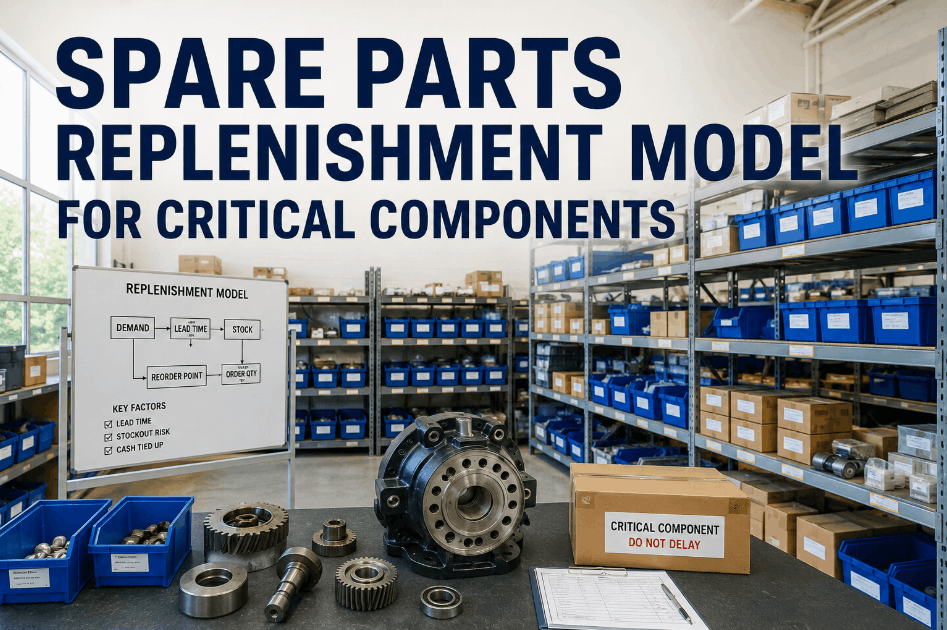
Demand swings, reorder point drift, and delayed replenishment decisions quietly drain spare parts coverage until the moment an urgent maintenance request arrives to an empty shelf. When repairable items run short and stock coverage isn't actively monitored, even a well-staffed maintenance team loses hours waiting on material flow instead of completing repairs. This checklist helps maintenance, procurement, and inventory teams review replenishment rules, validate reorder points, assess availability gaps, and restore parts continuity before critical stock runs out. Oxmaint's Sign Up Free platform connects live inventory levels to work order consumption, giving teams the demand planning data needed to trigger replenishment at the right time — not after the gap appears. From restock plan reviews to fill rate monitoring, poor replenishment timing is one of the most correctable drivers of maintenance delay. Book a Demo to see how Oxmaint's inventory management tools automate reorder triggers and keep critical stock coverage aligned with actual maintenance demand. Use this checklist before your next procurement cycle or inventory review period.
Automate Spare Parts Replenishment with Oxmaint
Connect work order consumption to live inventory — trigger reorders at the right time and maintain coverage for every critical part.
1. Reorder Point Validation & Replenishment Rules
Replenishment decisions anchored to outdated reorder points fail silently. Validating that reorder rules reflect current demand patterns is the starting point for any effective parts replenishment review.
2. Stock Coverage & Availability Check
Coverage gaps are not always visible in inventory system records. Physical availability checks and on-hand verification prevent the situation where the system shows stock but the shelf is empty.
3. Demand Planning & Demand Swing Management
Reactive replenishment manages the past. Demand planning manages the future. Linking upcoming maintenance schedules to inventory positions prevents coverage gaps before they affect urgent work.
4. Purchase Timing & Material Flow Control
Even accurate reorder points fail when procurement cycle times are slow. Purchase timing and internal approval speed are as important to parts continuity as safety stock levels.
5. Inventory Watch & Restock Plan Execution
Replenishment planning without execution tracking reverts to reactive stocking. Closing the loop between reorder decisions and actual inventory recovery is what maintains continuous parts coverage.
Keep Critical Parts Coverage Aligned with Maintenance Demand
Oxmaint connects work order consumption to inventory replenishment — so your procurement team reorders at the right time, every time.
Frequently Asked Questions — Spare Parts Replenishment
1. How often should spare parts reorder points be reviewed?
Reorder points for critical parts should be reviewed at minimum every 6 months and immediately after any significant shift in production volume, maintenance strategy, or supplier lead time. Parts with recurring coverage gaps warrant immediate review regardless of schedule.
2. What is the best way to manage demand swings in spare parts inventory?
Link your PM schedule and planned turnaround scope to inventory planning 60–90 days in advance. Pre-reserving parts against known high-demand windows prevents reactive maintenance from draining stock that is already committed to planned work.
3. How does a CMMS improve spare parts replenishment?
A CMMS like Oxmaint links parts consumption directly to closed work orders, enabling automatic reorder triggers, PM-driven demand forecasting, and coverage gap alerts — so replenishment is driven by real maintenance data, not manual stock checks.
4. What is the most common replenishment mistake in maintenance operations?
Setting reorder points to average lead time without a variability buffer is the most common error. Any supplier delay beyond the average depletes safety stock before replenishment arrives. Adding a lead time variability buffer to critical parts reorder points is the most impactful single change most teams can make.
5. How should repairable spare parts be tracked in a replenishment plan?
Repairables should be tracked with expected return-to-stock dates and treated as on-order inventory only when confirmed return dates are within the replenishment window. If a repairable's return date slips beyond coverage need, backup sourcing should be triggered immediately.
Ready to Eliminate Coverage Gaps from Your Parts Inventory?
Oxmaint gives maintenance and procurement teams the demand planning, reorder automation, and inventory visibility needed to keep critical parts available when work orders arrive.