AI Weld Defect Detection Software: Automated Inspection Guide
By Willam Jerry on October 14, 2026
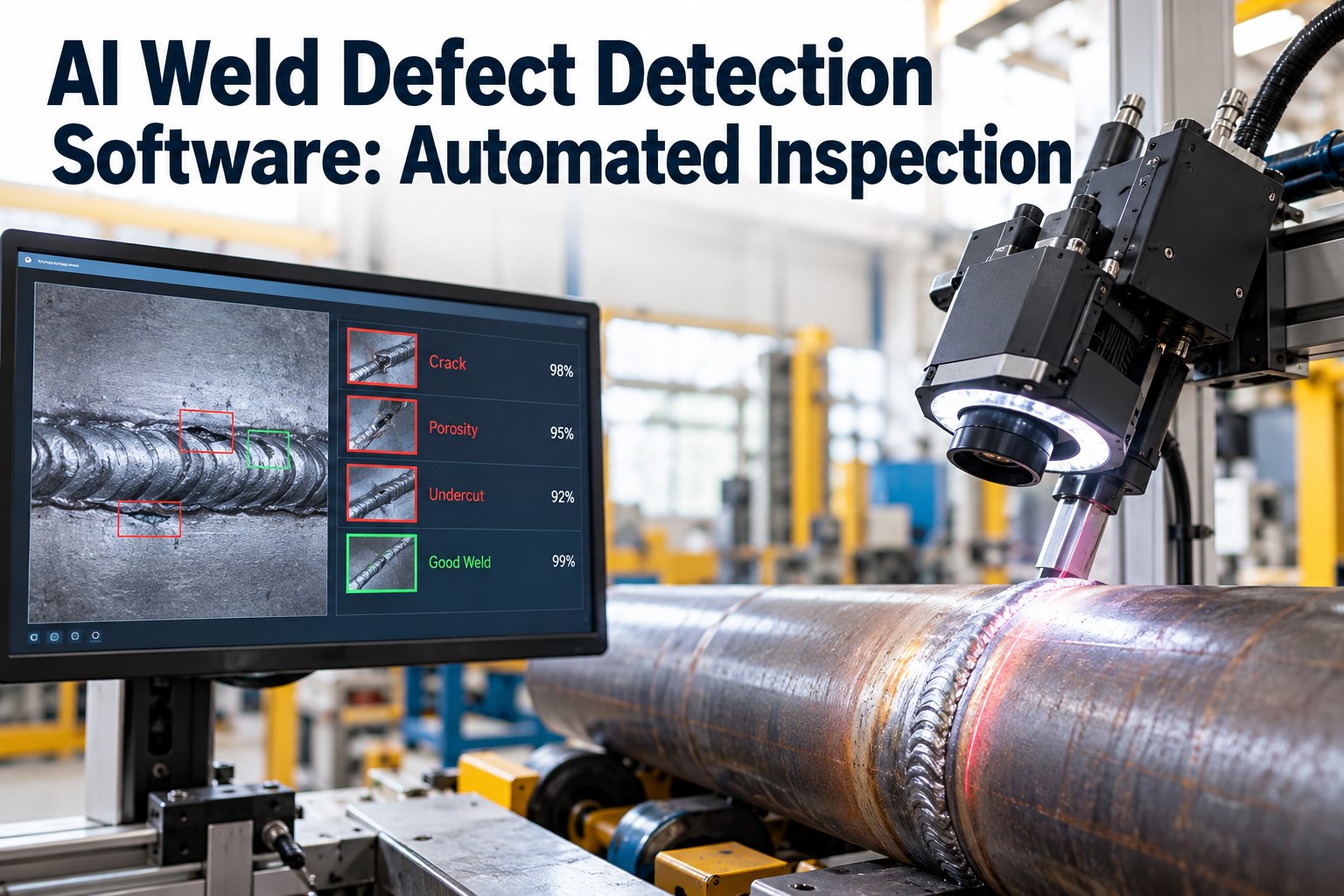
A human weld inspector can catch most porosity and cracks on a visual pass, but holds that quality for maybe 90 minutes before fatigue, lighting and shift pressure start costing calls. AI weld defect detection doesn't tire, doesn't blink, and classifies 100% of welds against the same trained model — porosity, crack, undercut, incomplete fusion, slag inclusion, overlap — with a severity score tied back to the weld ID. OXMAINT AI is the AI-powered CMMS and maintenance management software that turns every AI finding into a traceable record — weld ID, image, class, severity, repair order — so inspection stops being a bottleneck and becomes part of the production flow.
AI WELD DEFECT DETECTION · AUTOMATED INSPECTION · 2026
AI Weld Defect Detection Software: Automated Inspection
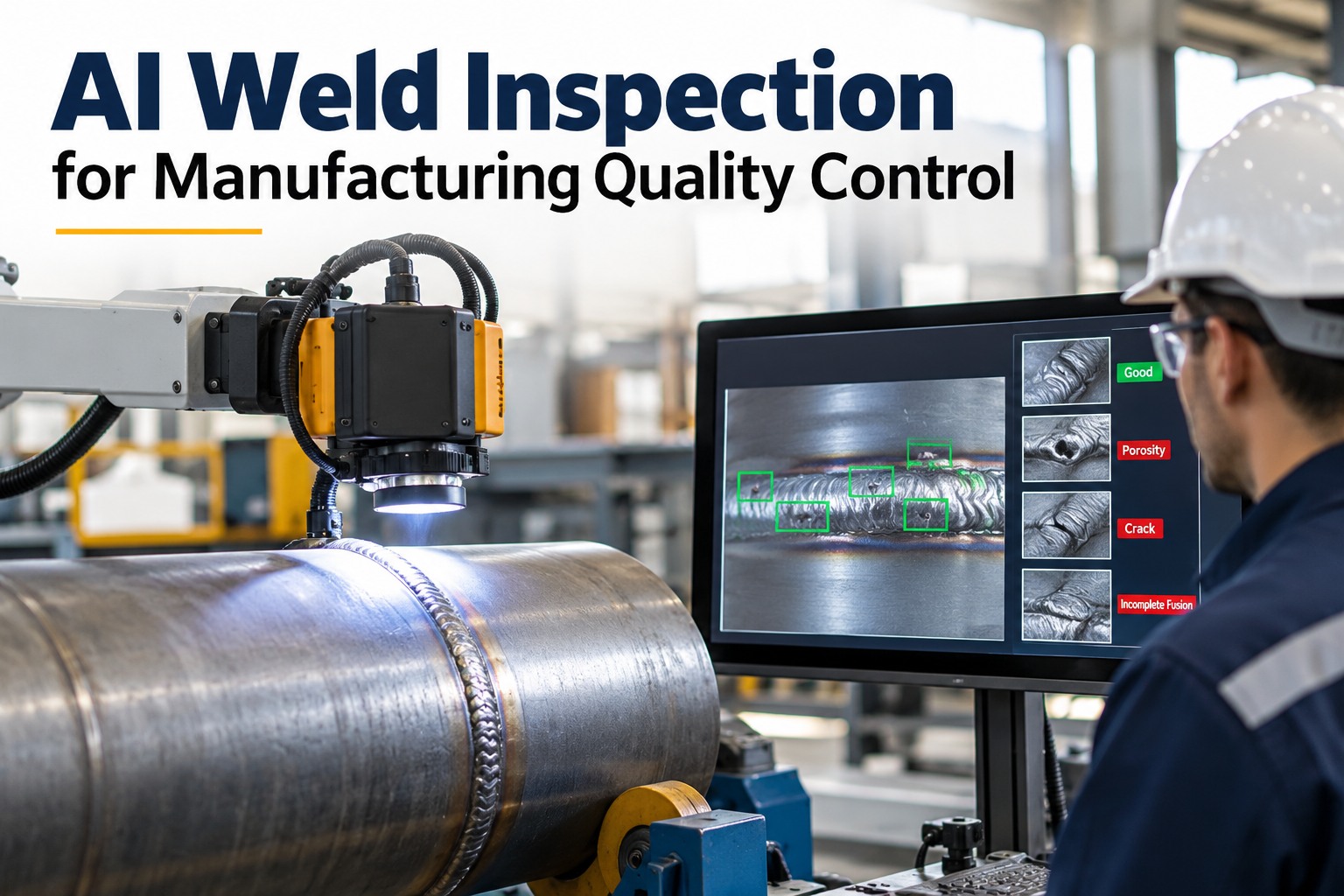
Visual weld inspection by a human catches the obvious defects on the pass that gets looked at. The ones that slip — subsurface porosity, hairline cracks under spatter, inconsistent undercut — are what fail at pressure test or in service. OXMAINT AI runs the vision pipeline, holds the AWS D1.1 and ISO 5817 acceptance criteria, and routes every borderline weld directly to the inspector's queue with the image, the class and the severity already attached.
weld coverage with AI vision — against the ~5-10% sampling rate of manual visual inspection on volume production
6
defect classes AWS D1.1 and ISO 5817 define as the universal taxonomy — what every trained model is scored against
<1 sec
per-weld classification latency on modern vision models — faster than the next weld lays down
1
weld ID stitches the image, the AI call, the inspector review and the repair order into one traceable chain
The Six Defect Classes the Model Has to Call
The AWS D1.1 Structural Welding Code and ISO 5817 quality classification together define the universal taxonomy any trained vision model is measured against. Each class has a signature appearance — and a signature failure mode when it is missed. OXMAINT AI holds the acceptance criteria per weld class, so an AI call is interpreted against the standard, not a generic threshold — schedule a walkthrough of the defect taxonomy in OXMAINT AI.
Crack
Signature: linear discontinuity breaking the weld surface, often jagged under magnification
Failure mode: structural fracture under cyclic or impact load; most critical defect class
Porosity
Signature: round gas pockets on or just below the surface; clustered or scattered
Failure mode: reduced load-bearing cross-section; leak paths in pressure applications
Undercut
Signature: groove melted into the base metal next to the weld toe; depth is the acceptance call
Failure mode: stress concentration at the toe; fatigue crack initiation site
Incomplete Fusion
Signature: linear dark band at the weld-base interface or between passes — no metallurgical bond
Failure mode: joint parts under tension or shear; often invisible on surface vision alone
Slag Inclusion
Signature: irregular dark non-metallic islands trapped in or on the weld bead
Signature: weld metal rolled onto the base without fusion, creating a lip at the toe
Failure mode: notch effect at the toe; stress raiser; typically a reject under AWS D1.1
The Automated Inspection Pipeline, End to End
The pipeline isn't one AI call — it's six stages, each with its own job. Light the weld, capture the image, preprocess for the model, classify, score severity against the standard, and route the action. OXMAINT AI runs stages 3-6 natively and interfaces to the capture layer at stage 2, so the whole chain lives on one platform.
01
Lighting & Capture
Controlled lighting on the weld (dome, bar, laser line) and a fixed-position camera. Robot cell, inline conveyor, or handheld rig.
→
02
Image Preprocess
Contrast normalization, ROI crop, perspective correction. Removes the easiest 30% of false calls before the model ever sees the image.
→
03
AI Classification
Trained CNN or vision-transformer model returns a defect class and a confidence score — often with bounding box or heatmap overlay.
→
04
Severity Scoring
Measured against AWS D1.1 or ISO 5817 acceptance level B/C/D for that joint class. Pass, borderline, or reject.
→
05
Inspector Review
Borderline and reject calls queue to a human inspector with the image, class and severity already attached. Pass calls auto-close.
→
06
Action & Record
Rejects raise a rework or repair work order against the weld ID. The full image, call, review and action chain is retained.
AI vs Manual Visual Inspection: The Honest Comparison
AI vision isn't a replacement for a qualified AWS CWI — it is a multiplier. The inspector moves from calling every weld to adjudicating the ones the model flagged as borderline. The honest comparison across six dimensions:
Dimension
AI vision
Manual visual (CWI)
Coverage
100% of welds, every shift
Sample 5-10% on volume production
Consistency
Same model, same call — shift to shift
Degrades with fatigue, lighting, time pressure
Latency
< 1 second per weld
Minutes per weld on a close visual pass
Subsurface defects
Not seen by surface vision alone — needs RT/UT
Not seen by surface vision alone — needs RT/UT
Edge cases & judgment
Flags, does not adjudicate — needs the CWI
Where the inspector's value is highest
Record & traceability
Image + call + decision retained per weld ID
Clipboard entry — patchy, hard to retrieve
Legend: navy stripe = where this approach wins; grey stripe = where it does not
The Inspector Is Not Replaced — They Are Promoted.
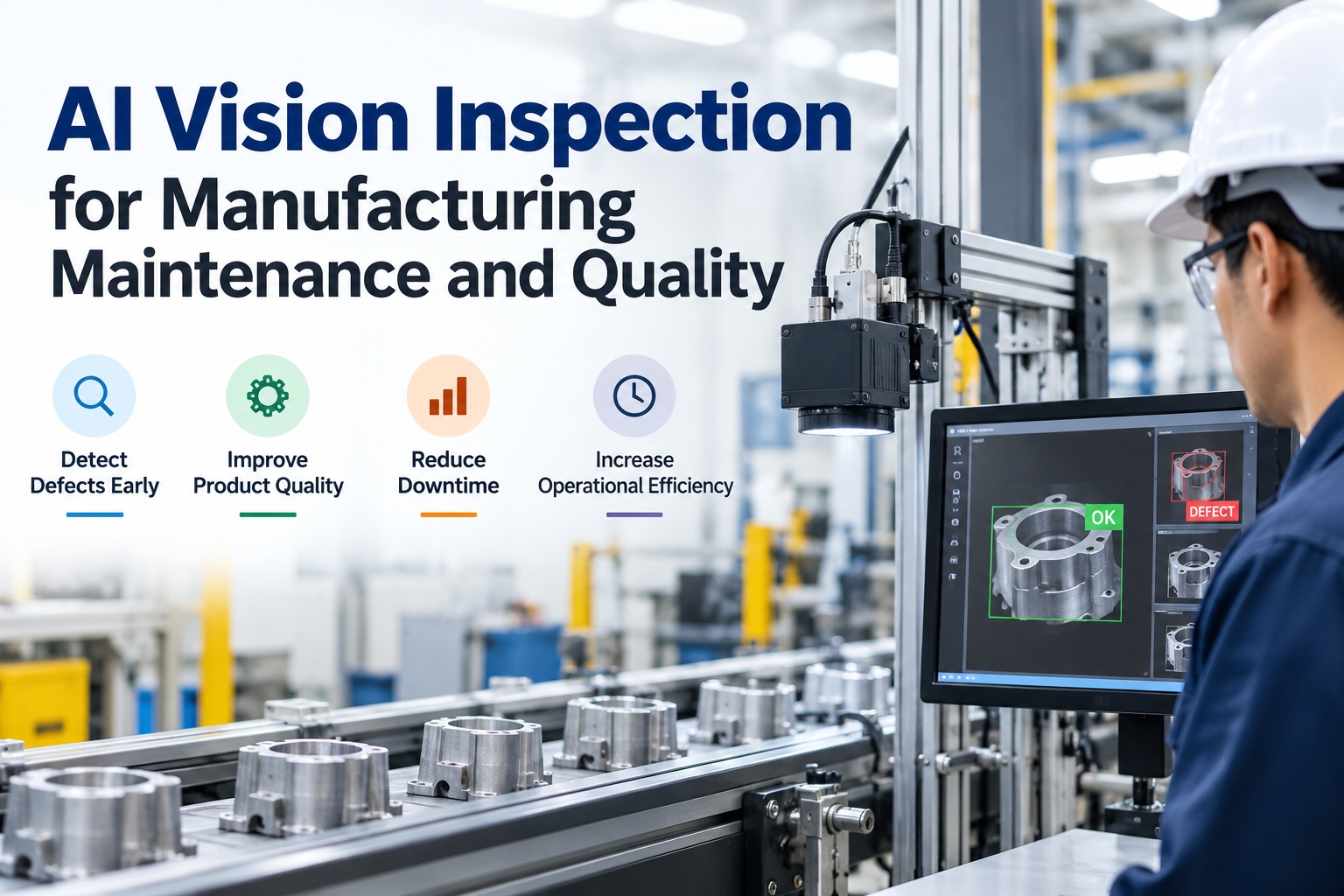
AI vision calls every weld; the CWI adjudicates the ones that need judgment. The OXMAINT AI maintenance management software holds the model output, the inspector verdict, and the resulting work order on one chain — so the inspector spends time on the welds that matter and leaves the obvious passes to the model.
AI weld inspection deploys in one of three patterns depending on how the welds are made. The right pattern is dictated by the physics of the cell — speed, access, product mix — not by what the vendor sells. OXMAINT AI integrates with the capture layer in all three.
INLINE · ROBOT CELL
Fixed camera on a robot cell
The best fit for repetitive welds on an automated line — chassis seams, automotive body shop, pressure vessel long seams. Fastest cycle; tightest control over lighting.
INLINE · CONVEYOR
Camera above the conveyor
For discrete fabricated parts moving on a line — brackets, frames, small assemblies. One camera station covers multiple weld families via part recognition.
OFFLINE · HANDHELD
Tablet / handheld rig for the inspector
For heavy fabrication, structural steel, pipework — welds that don't come to the camera. Inspector photographs each weld; AI classifies in the field, posts to OXMAINT AI.
What a Live Weld Inspection Queue Looks Like
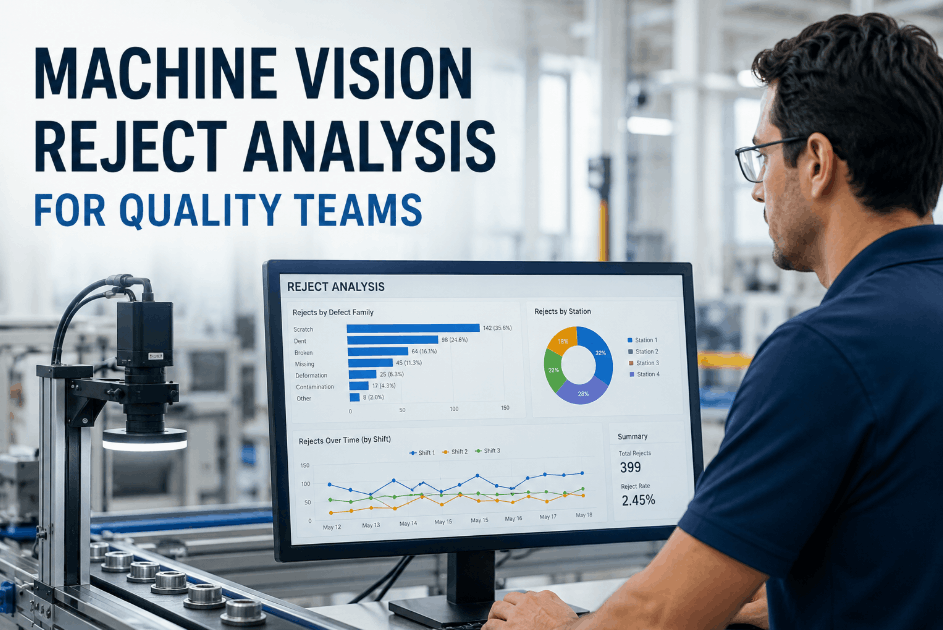
The daily view the shift inspector actually opens is a priority-ranked queue of borderline and reject calls. Pass calls close themselves; the inspector's time stays on the ones that need judgment. OXMAINT AI holds this queue per cell and per inspector, with the image preview, AI call and severity on each row.
LIVE INSPECTION QUEUE · CELL 3 · SHIFT B
1,284
welds inspected
1,196
auto-pass
76
borderline — review
12
reject — rework WO
W-20418Crackconf 0.94REJECT · WO raised
W-20425Undercutconf 0.71Borderline — review
W-20431Porosityconf 0.68Borderline — review
W-20440Passconf 0.97Auto-pass
W-20447Incomplete Fusionconf 0.88REJECT · WO raised
Inspector reviews 76 borderline this shift — the model closed 1,196 pass calls automatically
Six Pitfalls That Sink an AI Vision Project
Nearly every stalled AI weld inspection rollout fits one of six patterns. Each one is correctable without changing the AI model.
POOR LIGHTING
The model is only as good as the image. Inconsistent lighting across shifts drives false positives that teach the inspector to ignore the system.
NO WELD ID
An AI call that isn't tied to a specific weld with a traceable ID is noise — nobody can rework what nobody can locate.
NO ACTION LOOP
Reject calls that don't open a rework work order die in a dashboard. The AI catch is wasted.
UNTUNED THRESHOLDS
Confidence thresholds left at vendor defaults produce either a flood of false positives or a dangerous silence on real defects.
DRIFTED MODEL
Materials, filler, process window change over time. A model trained once and never retrained slowly loses accuracy on current production.
NO HUMAN LAYER
Removing the CWI entirely and letting AI auto-reject welds without adjudication is how a bad call becomes a scrapped part at full material cost.
Every weld on every part held with a unique ID, joint class, acceptance standard and image history — the thread that stitches AI output to physical rework.
Standards Library
AWS D1.1 and ISO 5817 level B/C/D acceptance criteria held per weld class — AI output is scored against the standard, not a generic limit.
Vision-Ingest Interface
OXMAINT AI reads AI output from inline camera cells and handheld rigs — model vendor stays flexible, platform stays single.
Inspector Queue & Review
Borderline calls queue to the shift inspector with image, class and severity attached — verdict posts back and closes the chain.
Reject → Rework WO
A reject raises a rework or repair work order against the weld ID with the AI image and class pre-attached — no transcription.
Model Drift Watch
False-positive and false-negative rates tracked over time per cell — a drifting model surfaces before it becomes a quality escape.
Frequently Asked Questions
Does AI weld inspection replace the AWS CWI?
No — it multiplies them. The AI calls every weld; the CWI adjudicates the borderline and reject findings. The inspector's time moves from calling the obvious to deciding the hard ones. OXMAINT AI holds the AI call, the inspector verdict and the resulting work order on one chain. Start free and set up the inspector-review loop in OXMAINT AI.
Can AI vision catch subsurface defects?
Surface AI vision cannot — subsurface porosity, lack of fusion between passes and internal cracks need radiographic or ultrasonic inspection. The AI covers the surface class exhaustively so RT/UT can be reserved for the welds and joint classes that actually need it.
Which acceptance standard should the model score against?
AWS D1.1 for structural steel in North America, ISO 5817 (level B/C/D) for most European and global fabrication, ASME IX for pressure applications. OXMAINT AI holds all three and picks the right one per weld class.
How often does the vision model need retraining?
Review quarterly; retrain when false-positive or false-negative rates drift beyond the agreed band, or when a new material, filler or joint class enters production. OXMAINT AI tracks the drift metrics automatically so the retrain is triggered by data, not calendar.
How fast can we go live?
First-cell live typically runs 6-10 weeks from kickoff — lighting install, camera calibration, baseline model, inspector-queue setup, OXMAINT AI integration. Book a walkthrough and the team will scope your cell.
Call Every Weld. Adjudicate the Ones That Matter.
Put the AI vision pipeline, the weld-ID registry, the standards library and the inspector-adjudication loop on the OXMAINT AI maintenance management software — 100% coverage, consistent calls, traceable rework, drift watched over time. The inspector keeps their judgment call; the model takes the volume.