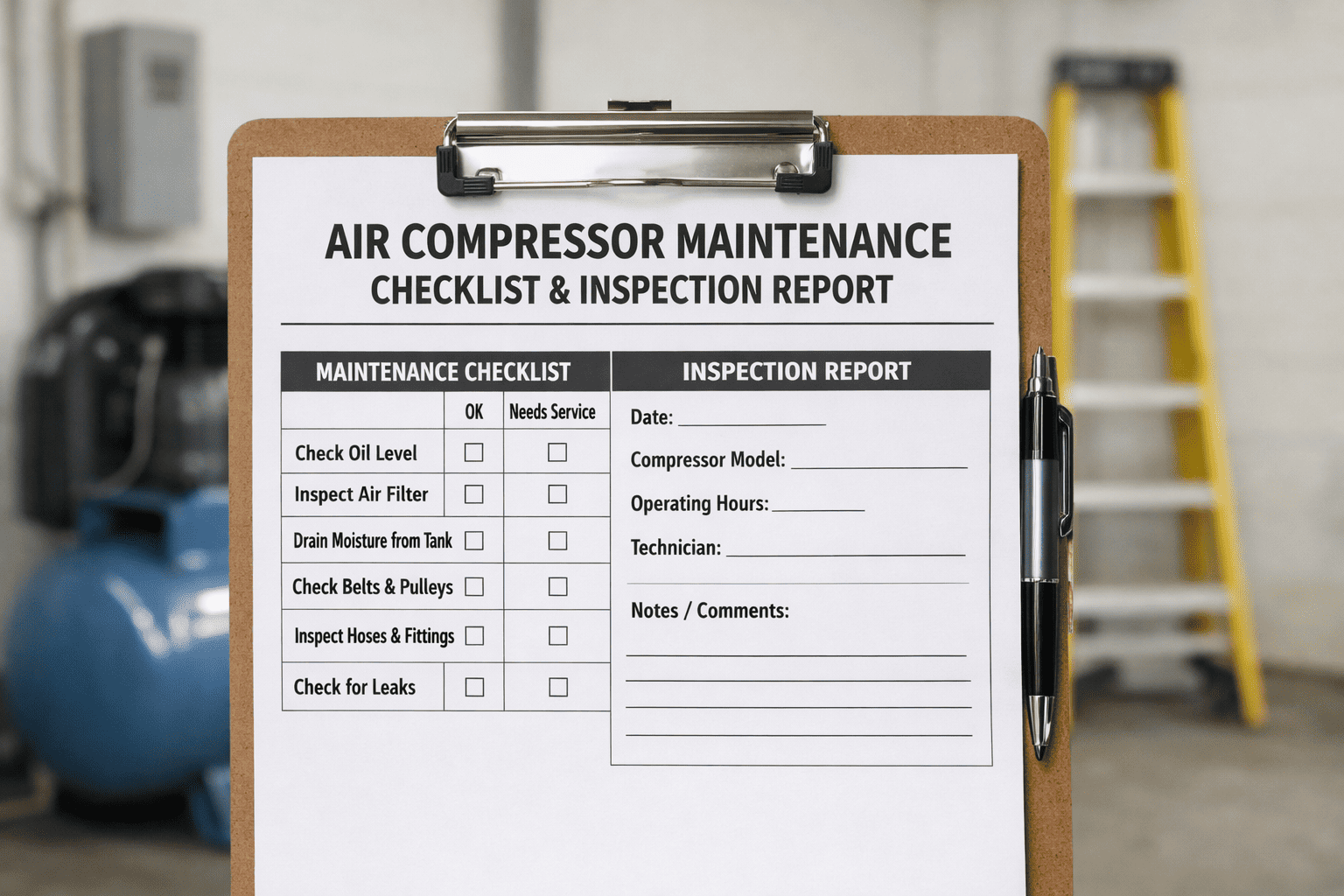
Compressed air powers everything from pneumatic tools and CNC machines to packaging lines and paint booths — yet most manufacturing plants treat their air compressors as set-and-forget equipment. The result is predictable: energy bills climb silently, small leaks compound into massive waste, and one missed oil change leads to a catastrophic air-end failure that shuts down production for days. A structured preventive maintenance checklist transforms this cycle by giving your technicians a clear, repeatable process for keeping every compressor running at peak efficiency and catching problems before they become emergencies. Schedule a free demo to see how Oxmaint replaces paper-based inspections with automated, trackable compressor maintenance workflows your whole team can follow.
How to Build a Preventive Maintenance Schedule for Air Compressors
A preventive maintenance schedule is the backbone of compressor reliability. Without one, maintenance becomes reactive — your team only touches the compressor when something breaks. With a structured schedule based on operating hours, calendar intervals, and manufacturer recommendations, you move from firefighting to forecasting. The key is matching the right tasks to the right intervals and ensuring nothing falls through the cracks.
Pre-Start and Daily Air Compressor Inspection Checklist
Daily inspections are your first line of defense against compressor failure. These quick, operator-level checks take less than ten minutes but catch the early warning signs — pressure anomalies, oil discoloration, condensate accumulation, and unusual vibrations — that indicate developing problems. Consistency is everything: a checklist completed every shift is worth more than a thorough inspection done sporadically. Sign up for Oxmaint free to auto-assign daily compressor checklists to your operators every shift — so no inspection step ever gets skipped again.
Weekly, Monthly, and Quarterly Compressor Service Tasks
Beyond daily inspections, air compressors need progressively deeper maintenance at weekly, monthly, and quarterly intervals. These tasks target the components that degrade gradually — belts stretch, cooler fins accumulate grime, electrical connections loosen from thermal cycling, and separator elements slowly clog. Skipping these scheduled services does not save time; it borrows trouble that returns with interest in the form of higher energy bills and unplanned failures.
| Maintenance Task | Interval | What to Do | Consequence of Skipping |
|---|---|---|---|
| Belt Tension and Condition | Weekly | Check for cracks, glazing, and fraying. Adjust tension to manufacturer spec using a tension gauge. | Loose belts slip and waste energy; worn belts snap without warning, causing immediate shutdown. |
| Automatic Drain Traps | Weekly | Verify all auto-drains are cycling properly. Check for stuck-open or stuck-closed conditions. | Stuck-open drains bleed compressed air continuously. Stuck-closed traps flood lines with water. |
| Cooler Fin Cleaning | Monthly | Blow out aftercooler and oil cooler fins with dry compressed air. Remove oil or grease buildup. | Fouled coolers cannot reject heat, raising discharge temps and triggering thermal shutdowns. |
| Oil-Air Separator Differential | Monthly | Read pressure drop across the separator element. Replace when differential exceeds OEM threshold. | High differential means backpressure that wastes energy. Excessive carryover pushes oil downstream. |
| Compressed Air Leak Survey | Monthly | Walk the full distribution system with an ultrasonic detector. Tag, log, and prioritize every leak found. | Undetected leaks waste 20-30% of total compressor output — thousands of dollars per year in electricity. |
| Electrical Connections | Quarterly | Inspect contactors, terminal blocks, and motor wiring for discoloration, pitting, or looseness. | Loose terminals arc and overheat, damaging contactors and potentially causing electrical fires. |
| Vibration Baseline Check | Quarterly | Use a vibration pen or analyzer on motor and air-end bearings. Compare to baseline readings. | Rising vibration indicates bearing degradation — catching it early prevents catastrophic air-end failure. |
How to Detect and Fix Compressed Air Leaks in Your Facility
Compressed air leaks are the single largest source of wasted energy in most manufacturing plants. Industry studies consistently show that facilities without a leak management program lose 20-30% of their total compressor output through leaks — and that percentage can climb to 40-50% in older systems with deferred maintenance. The good news is that a systematic find-tag-fix-verify approach can recover most of that lost capacity without purchasing additional compressor horsepower. Book a demo to see how Oxmaint manages your entire leak survey workflow — from tagging and logging each leak through repair assignment and post-fix verification.
Improving Compressed Air System Efficiency: Proven Strategies
Maintaining the compressor itself is only half the equation. True efficiency gains come from optimizing the entire compressed air system — from the compressor room to the point of use. Pressure settings, piping layout, demand-side controls, and heat recovery all affect how much energy you spend per cubic foot of delivered air. The difference between a well-optimized system and a neglected one can be 25-35% in annual energy costs.
Annual Overhaul and Seasonal Compressor Adjustments
Annual maintenance covers the deep-dive inspections and component replacements that sustain compressor reliability year over year — motor insulation tests, valve rebuilds, bearing assessments, and full oil system overhauls. Equally important are seasonal adjustments: ambient temperature and humidity swings directly affect cooling capacity, condensate volume, and oil viscosity requirements.
| Service Task | When | Procedure Details |
|---|---|---|
| Complete Oil Change with Lab Analysis | Annually or per OEM hours | Drain and replace compressor oil. Send a sample for lab analysis checking for metal particles, moisture content, acid number, and viscosity breakdown. Results reveal internal wear before it becomes visible. |
| Motor Insulation (Megger) Testing | Annually | Test motor winding insulation resistance with a megohmmeter. Trend results year over year — declining resistance predicts motor failure months in advance. |
| Intake and Discharge Valve Rebuild | Annually (reciprocating units) | Remove valves, inspect plates and springs, replace worn components and gaskets. Worn valves allow blow-by that wastes significant energy per compression cycle. |
| Air-End Bearing Assessment | Per OEM schedule | Inspect or replace air-end bearings on rotary screw compressors. Bearing failure is the primary cause of catastrophic air-end damage — the single most expensive compressor repair. |
| Hot-Season Preparation | Before summer | Deep clean all cooler cores, verify ventilation fans and louvers, check ambient temperature alarms. High ambient temps reduce compressor capacity and can trigger thermal shutdowns. |
| Cold-Season Preparation | Before winter | Ensure condensate drains have freeze protection. Verify oil viscosity grade matches low-temperature operation. Check inlet air heating on units drawing outdoor air. |
What to Document in a Compressor Inspection Report
A standardized inspection report ensures every technician captures the same critical data during each compressor visit. Consistent documentation makes it easy to spot degradation trends over time, justify equipment replacement decisions with data, and maintain audit-ready compliance records for insurance and regulatory purposes.