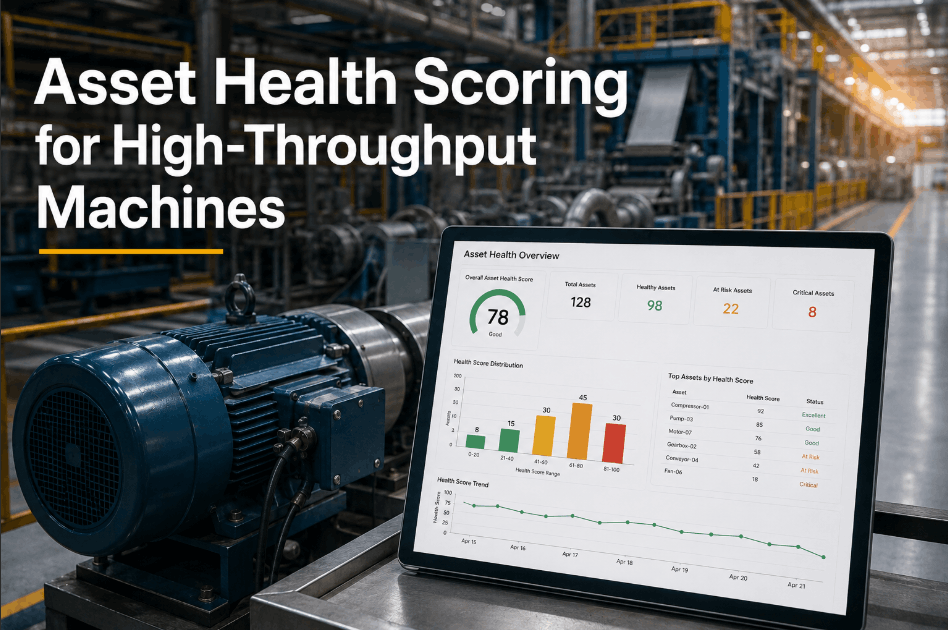
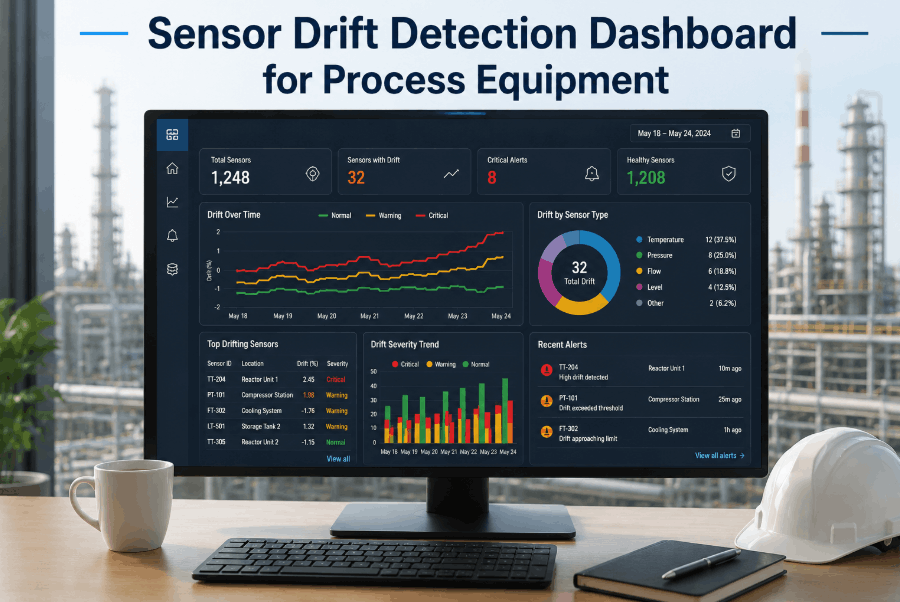
Asset health scoring gives high-throughput manufacturing operations a single, comparable metric to rank machine condition across an entire production floor — before small degradation trends escalate into output-disrupting failures. When production lines run at full capacity, individual sensor readings and isolated maintenance histories are difficult to compare across asset types, shifts, and production areas. Asset health scores aggregate vibration trends, thermal data, runtime hours, PM compliance rates, and recent failure history into a composite score that makes asset condition visible, comparable, and actionable at a glance. Sign Up Free to activate Oxmaint's asset health scoring module across your high-throughput machine population today. Facilities using structured asset health scoring prioritize maintenance interventions on the assets most likely to fail next — reducing unplanned downtime by 25–40% and extending mean time between failures by 20–30% within the first year of deployment. Book a Demo to see how Oxmaint calculates and tracks asset health scores across your plant floor in real time.
ASSET HEALTH SCORING · PREDICTIVE MAINTENANCE · HIGH-THROUGHPUT MANUFACTURING
Score and Rank Every Machine's Health Condition in Oxmaint
Composite health scoring, degradation trend tracking, maintenance priority ranking, and real-time condition dashboards — purpose-built for high-output manufacturing operations.
Why Asset Health Visibility Fails in High-Throughput Environments
High-throughput plants run dozens to hundreds of machines simultaneously under variable load conditions. Without a unified health scoring framework, maintenance planners rely on subjective technician assessments, lagging failure data, and disconnected sensor readings to make prioritization decisions — leaving the highest-risk assets invisible until they fail. Sign Up Free to map your current asset health visibility gaps using Oxmaint's machine condition assessment tools.
WHY ASSET HEALTH VISIBILITY BREAKS DOWN IN HIGH-THROUGHPUT PLANTS
01
No Unified Condition Metric
Vibration readings, oil analysis results, thermal scans, and runtime hours exist in separate systems with no composite view. Maintenance planners cannot compare condition severity across asset types without manually synthesizing data from multiple sources.
02
Degradation Trends Missed Between Inspections
When condition assessments occur at fixed inspection intervals, gradual degradation that accelerates between visits goes undetected. High-throughput machines operating at elevated loads can transition from marginal to critical condition in days — faster than monthly inspection cycles can capture.
03
Maintenance Priority Based on Loudest Request
Without scored health rankings, maintenance planning allocates technician time to the most recently reported or most vocally escalated machines — not the machines closest to failure. High-risk assets that degrade quietly receive attention only after they fail.
04
PM Compliance Not Weighted in Condition Assessment
A machine with three missed PM cycles has a materially higher failure risk than an identical machine with full PM compliance — even if both show similar sensor readings today. Health scoring that ignores PM history underestimates risk for machines with deferred maintenance.
05
Feature Drift in Sensor Baselines
As machines age and operating conditions evolve, the sensor baselines used to calculate health status become inaccurate without periodic recalibration. A machine scored as healthy based on year-old baselines may actually be operating in an early-failure regime.
06
No Fleet-Level Comparison View
Individual machine condition is reviewed in isolation rather than ranked across the full asset population. Fleet-level comparison views are what allow maintenance managers to identify the bottom-quartile assets that represent disproportionate breakdown risk and require prioritized attention.
Asset Health Score Architecture: Five Input Dimensions
An effective asset health score for high-throughput machines aggregates multiple condition signals into a single normalized score that accounts for mechanical condition, operational loading, maintenance history, and failure risk. Book a Demo to see how Oxmaint calculates composite health scores across your asset population using your existing data sources.
ASSET HEALTH SCORE — 5 INPUT DIMENSIONS FOR HIGH-THROUGHPUT MACHINES
01
Mechanical Condition Signals
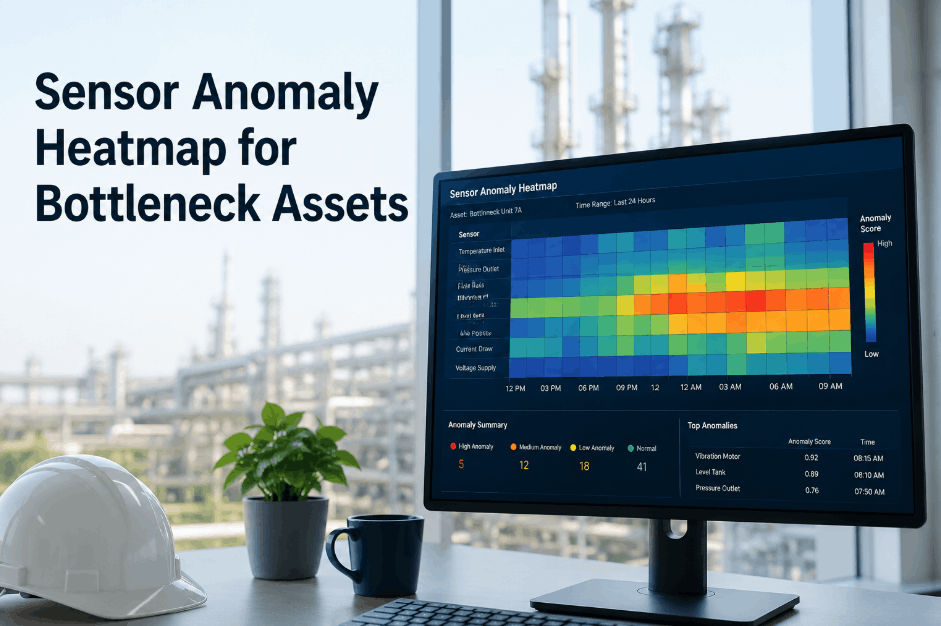
Vibration signature deviation from baseline, bearing temperature trends, acoustic emission patterns, and lubricant condition indicators are normalized against asset-class baselines. Oxmaint integrates with sensor networks and condition monitoring tools to ingest these readings directly into the health scoring calculation.
02
Operational Load and Runtime Factors
Machines operating at high load percentages age faster than nameplate specifications assume. Oxmaint factors actual runtime hours, throughput rate relative to rated capacity, and production cycle intensity into health scoring — giving assets running at 95% load the appropriate degradation weighting compared to machines running at 60%.
03
PM Compliance History
The ratio of completed PM tasks to scheduled PM tasks over the trailing 90–180 days directly influences asset health score. Machines with PM compliance rates below 70% receive a health score penalty that reflects their elevated failure risk from deferred preventive maintenance, regardless of current sensor readings.
04
Recent Failure and Work Order History
Frequency of recent corrective work orders, days since last unplanned failure, and open work order count for the asset are weighted as health score inputs. An asset with three corrective work orders in 60 days scores lower than an identical asset with zero — even if both show identical sensor readings today.
05
Age and Replacement Proximity
Assets approaching or exceeding their expected service life receive an age-adjusted health score that reflects increasing failure probability even when mechanical condition readings remain within acceptable ranges. Oxmaint's asset registry tracks installation dates and design life parameters to apply age factors automatically.
Asset Health Scoring KPIs: Benchmarks for High-Throughput Operations
Asset health scoring programs require their own performance metrics to measure whether the scoring system is accurately predicting failures and enabling timely interventions. These benchmarks reflect manufacturing industry standards for condition-based maintenance programs. Book a Demo to see Oxmaint's asset health KPI dashboard tracking condition scores and prediction accuracy across your full machine population.
ASSET HEALTH SCORING KPIs — HIGH-THROUGHPUT MANUFACTURING BENCHMARKS
Score Prediction Accuracy
Failures predicted by low health score ÷ total failures
< 45%
65–78%
> 85%
Critical Asset Score Coverage
Scored critical assets ÷ total critical assets
< 60%
80–92%
100%
Intervention Lead Time
Avg days between score drop alert and scheduled WO
> 14 days
3–7 days
< 48 hrs
Score Refresh Frequency
How often asset health scores are recalculated
Weekly / manual
Daily
Continuous / real-time
Fleet Bottom-Quartile Resolution
Lowest-scoring 25% assets with active WOs ÷ total
< 40%
65–80%
> 90%
Unplanned Downtime from Scored Assets
Downtime hours from assets with prior low health scores
No reduction
–20 to –30%
> –40%
How Oxmaint Powers Asset Health Scoring for High-Throughput Machines
Oxmaint's CMMS and predictive maintenance platform calculates, tracks, and acts on asset health scores within the same system where work orders are created, assigned, and completed. Rather than managing a separate health scoring tool, maintenance teams see condition scores, intervention triggers, and work order queues in a unified dashboard. Sign Up Free to configure Oxmaint's asset health scoring framework for your machine population today.
HOW OXMAINT DELIVERS ASSET HEALTH SCORING FOR HIGH-THROUGHPUT OPERATIONS
01
Composite Health Score Engine
Aggregates mechanical condition, runtime load, PM compliance, failure history, and asset age into a single normalized score (0–100) for every asset in the system — updated automatically as new data arrives.
02
Fleet-Level Health Ranking Dashboard
View the full asset population ranked by health score, with color-coded criticality bands and filters by production area, asset class, and shift — giving maintenance planners an instant prioritization view every morning.
03
Score-Triggered Work Order Generation
Configure automatic work order generation when an asset's health score drops below defined thresholds — ensuring that deteriorating machines receive inspection work orders before shift supervisors or control room staff manually identify the issue.
04
Degradation Trend Visualization
Track health score trends over time to distinguish rapid degradation from slow decline — and forecast how many days remain before a machine crosses intervention thresholds, enabling planned maintenance windows to be scheduled in advance.
05
Sensor Baseline Recalibration Alerts
Oxmaint detects when sensor readings suggest baseline drift — triggering recalibration work orders to ensure health scores remain accurate as operating conditions evolve and machines age beyond original specification assumptions.
06
Capital Planning Integration
Fleet-level health score trends across asset classes give maintenance and operations leadership the data foundation for replacement capital planning — identifying asset populations approaching end-of-life before failures drive emergency procurement decisions.
ASSET HEALTH SCORING · CONDITION MONITORING · PREDICTIVE MAINTENANCE
Rank Every Machine by Health Condition Before the Next Breakdown
Composite health scoring, real-time fleet ranking, score-triggered work orders, and degradation forecasting — built for high-throughput manufacturing operations that cannot afford reactive surprises.
Frequently Asked Questions
Q1 What is an asset health score in manufacturing maintenance?
An asset health score is a composite metric that aggregates multiple condition inputs — mechanical sensor data, PM compliance history, failure frequency, runtime load, and asset age — into a single normalized score that represents a machine's current condition and proximity to failure.
Q2 Why does PM compliance history affect asset health scoring?
Machines with deferred or missed PM tasks carry elevated failure risk that sensor readings alone do not capture. A machine with clean sensor data but three missed lubrication cycles is statistically more likely to fail than a machine with identical sensors and full PM compliance — health scoring must reflect both dimensions.
Q3 How does Oxmaint calculate asset health scores without dedicated IoT hardware?
For assets without sensor networks, Oxmaint calculates health scores from CMMS data alone — PM compliance rate, corrective work order frequency, inspection findings, and asset age. Sensor-based inputs are added as available to improve score accuracy without requiring full IoT deployment as a prerequisite.
Q4 How often should asset health scores be updated in high-throughput environments?
For production-critical and single-point-of-failure assets in high-throughput operations, continuous or daily score updates are the benchmark. Machines operating at high load levels can deteriorate rapidly, making weekly or manual refresh cycles insufficient to catch accelerating degradation before failure occurs.
Q5 Can asset health scores trigger automatic work orders in Oxmaint?
Yes. Oxmaint allows maintenance managers to configure score thresholds at which conditional work orders are automatically generated, pre-populated with inspection checklists and asset context — ensuring deteriorating assets receive scheduled attention without requiring manual monitoring of every individual machine.
Q6 How does asset health scoring differ from traditional condition monitoring?
Traditional condition monitoring tracks individual sensor parameters in isolation. Asset health scoring synthesizes multiple inputs — sensors, maintenance history, load data, and age — into a single prioritization metric that allows fleet-level comparison and proactive intervention scheduling rather than alert-by-alert reactive response.
ASSET HEALTH · CMMS · HIGH-THROUGHPUT MANUFACTURING · PREDICTIVE MAINTENANCE
Start Scoring Your Machine Population's Health Condition in Oxmaint
From composite scoring to fleet ranking and automatic intervention triggers — Oxmaint gives high-throughput operations the condition visibility to act before machines fail and production stops.