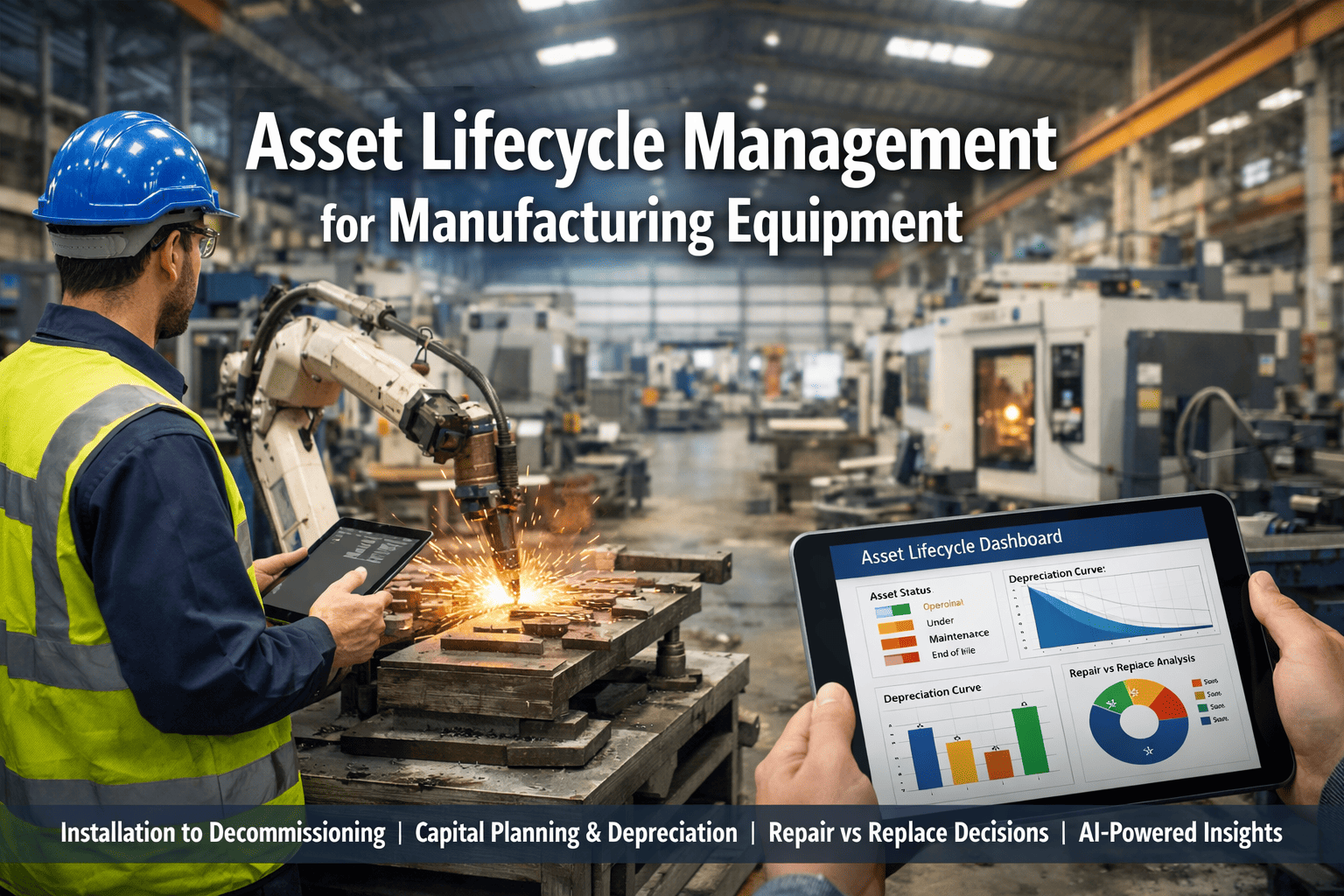
Most manufacturers treat asset management as five separate problems: procurement runs acquisition, operations handles commissioning, maintenance keeps things running, finance tracks depreciation, and disposal happens when something breaks for the last time. The result is predictable — assets that underperform from day one because commissioning was rushed, maintenance programmes that start too late because handover documentation was incomplete, and replacement decisions made in crisis mode because no one tracked lifecycle cost. Research from the Asset Management Council shows that manufacturers with integrated lifecycle management achieve 18-23% lower total cost of ownership and extend useful asset life by 15-30% compared to those managing each phase independently. Asset lifecycle management is not a process — it is the framework that connects every decision from specification to decommissioning, ensuring each phase informs the next. OxMaint's asset lifecycle management system tracks every asset from purchase order through commissioning, operation, maintenance, performance tracking, and end-of-life decisions in a single connected platform.
Manufacturing · Asset Management
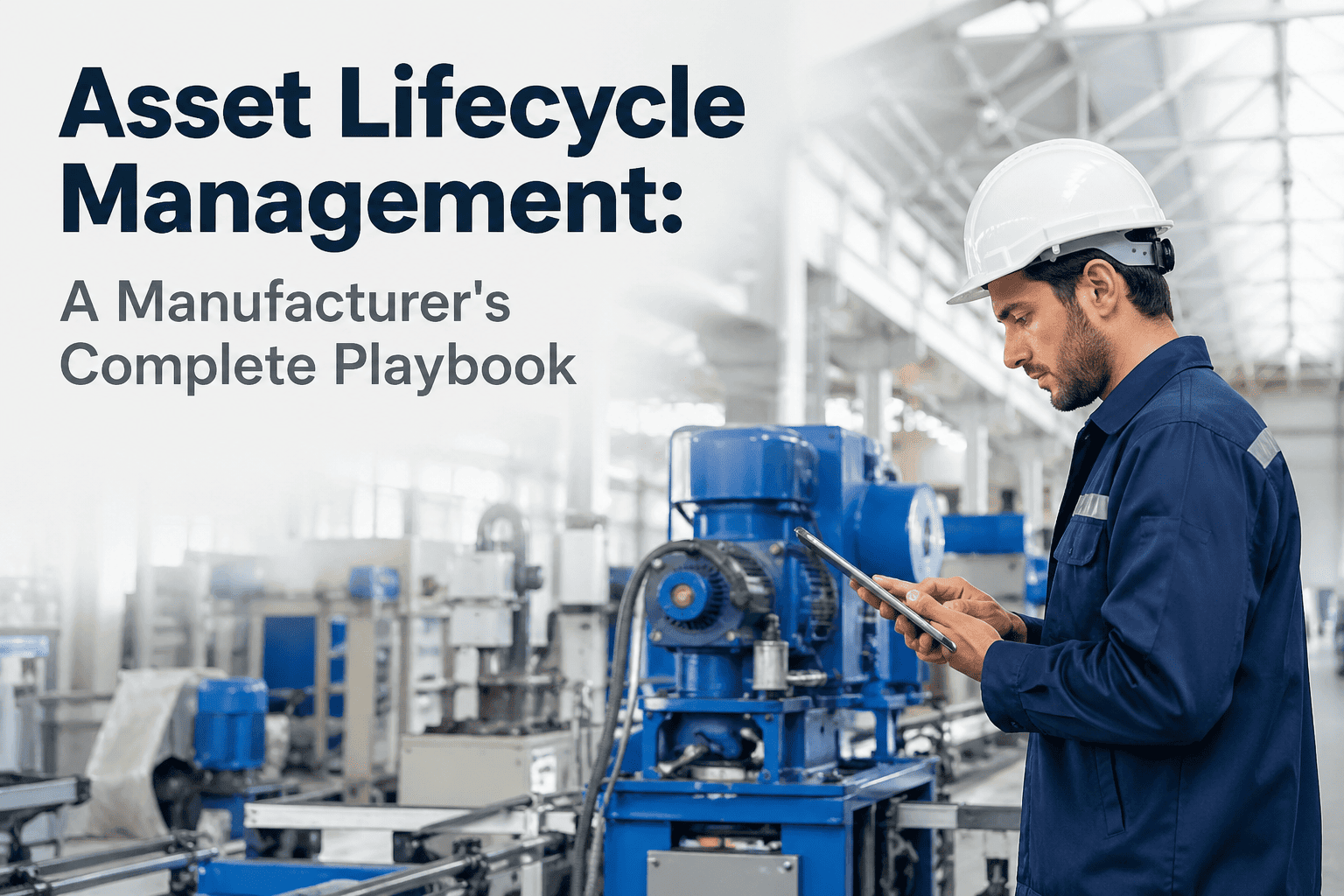
Asset Lifecycle Management: A Manufacturer's Complete Playbook
Master Every Phase — From Acquisition to Decommissioning
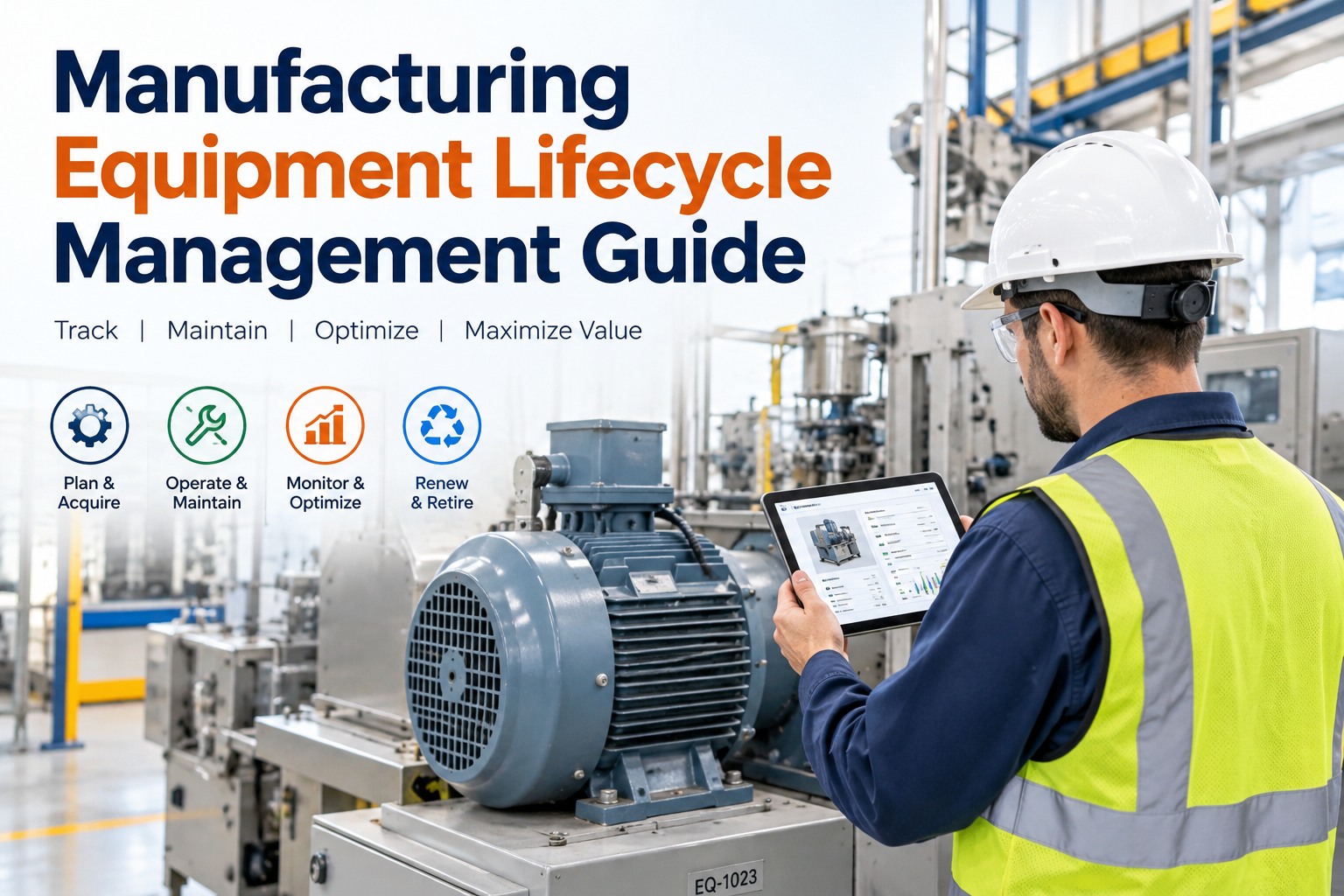
The 6 Phases of Asset Lifecycle Management
01
Planning & Acquisition
Defining requirements, evaluating vendors, calculating lifecycle cost projections, and making procurement decisions based on total cost of ownership rather than purchase price alone.
Key Decision: Which asset specification delivers lowest 10-year TCO?
02
Installation & Commissioning
Physical installation, performance verification, operator training, and documentation handover. The phase where 40% of lifecycle problems originate if rushed or incomplete.
Key Decision: Asset accepted and maintenance baseline established?
03
Operation & Utilisation
Daily production use, performance monitoring, utilisation tracking, and operator-level maintenance. The longest phase where operational decisions determine asset longevity.
Key Decision: Is the asset being operated within design parameters?
04
Maintenance & Reliability
Preventive maintenance execution, failure response, condition monitoring, and continuous reliability improvement. The phase that determines whether an asset reaches expected lifespan.
Key Decision: Is PM compliance preventing failures or just consuming resources?
05
Performance Tracking & Analysis
OEE monitoring, failure pattern analysis, cost tracking, and lifecycle performance benchmarking. Data that informs replacement timing and future procurement decisions.
Key Decision: When does repair cost exceed replacement value?
06
Replacement & Disposal
End-of-life decision making, decommissioning planning, disposal compliance, and knowledge transfer to inform next-generation asset specifications.
Key Decision: Replace, rebuild, or run-to-failure?
Track Every Asset Phase in One Connected System
OxMaint connects acquisition records, commissioning documentation, maintenance history, performance data, and replacement planning in a single asset register that follows each piece of equipment through its entire lifecycle.
Phase 1: Planning & Acquisition — Making Decisions That Determine 10-Year TCO
Lifecycle Cost Analysis
Purchase price represents 20-35% of total lifecycle cost for industrial assets. A machine quoted at $180,000 with 8% higher energy consumption costs $47,000 more over 10 years than a $195,000 alternative with better efficiency. Acquisition decisions made on purchase price alone ignore the 65-80% of cost that occurs after delivery.
Vendor Performance History
Manufacturers with integrated asset systems track warranty claims, spare parts lead times, and field reliability by vendor across their entire installed base. This historical data transforms vendor selection from sales presentations into evidence-based decisions grounded in actual performance data from identical equipment already in production.
Maintenance Requirement Forecasting
Every asset specification comes with implied maintenance requirements — lubrication intervals, consumable replacement frequency, calibration needs, and spare parts inventory. Manufacturers who evaluate these requirements during procurement avoid discovering 18 months later that annual maintenance costs exceed original projections by 40%.
Acquisition Decision Framework: Purchase Price vs. Total Cost of Ownership
| Cost Component |
Equipment Option A |
Equipment Option B |
10-Year Difference |
| Purchase Price |
$180,000 |
$195,000 |
+$15,000 |
| Installation & Commissioning |
$22,000 |
$18,000 |
-$4,000 |
| Annual Energy Cost (10 years) |
$14,200/yr = $142,000 |
$9,600/yr = $96,000 |
-$46,000 |
| Maintenance & Parts (10 years) |
$68,000 |
$51,000 |
-$17,000 |
| Downtime Cost (10 years) |
$34,000 |
$19,000 |
-$15,000 |
| Total 10-Year TCO |
$446,000 |
$379,000 |
-$67,000 (15% lower) |
Phase 2 & 3: Commissioning Through Operation — The Handover That Determines First-Year Performance
Documentation Handover
Manufacturer manuals, electrical schematics, parts lists, recommended maintenance schedules, and performance baseline data. Assets commissioned without complete documentation start life with a 30-40% higher failure rate in the first 24 months because maintenance teams lack the information needed to service them correctly.
Performance Baseline Establishment
Recording vibration signatures, temperature profiles, power consumption, and output quality during commissioning creates the reference point that identifies degradation later. Without baseline data, maintenance teams cannot distinguish normal variation from the early signatures of developing failures.
Initial Spare Parts Provisioning
Identifying critical spare parts with long lead times and stocking them before the asset enters production. The alternative is discovering 8 months into operation that a $400 component has a 12-week lead time and its failure stops a $2M/month production line.
Operator Training & Qualification
Documented operator training on proper operating procedures, shutdown sequences, and early failure indicators. Operators who understand equipment limitations prevent 35-50% of failures that would otherwise occur from operating outside design parameters.
Phase 4 & 5: Maintenance Through Performance Tracking — Data That Predicts Replacement Timing
Cumulative Maintenance Cost
Total maintenance spend tracked from commissioning through current date. When cumulative cost reaches 60-75% of replacement cost, economic analysis shifts from repair justification to replacement timing evaluation.
Failure Frequency Trend
MTBF tracked monthly over the asset's operational life. A declining MTBF trend signals the transition from random failures into wear-out phase — the period where replacement becomes more economical than continued repair.
Performance Degradation
OEE, output quality, and energy consumption compared to commissioning baseline. An asset operating at 78% of original capacity may still run, but the lost production value often exceeds replacement cost within 12-18 months.
Spare Parts Availability
Manufacturer support status for critical components. When key parts move to obsolete status with no alternative suppliers, continued operation carries risk that a single component failure could cause permanent retirement.
Turn Lifecycle Data Into Replacement Decisions Before Crisis Forces Them
OxMaint tracks cumulative maintenance cost, failure trends, and performance degradation automatically — giving you the data to plan replacements strategically rather than react to catastrophic failures.
Phase 6: Replacement & Disposal — End-of-Life Decisions That Inform Next-Generation Procurement
Economic Trigger
Annual maintenance cost exceeds 15-20% of replacement cost
Reliability Trigger
MTBF declined 40%+ from peak, failures disrupting production schedules
Performance Trigger
Output capacity below 75% of baseline, quality defects increasing
Obsolescence Trigger
Critical spare parts discontinued, no alternative suppliers available
Technology Trigger
New generation equipment offers 25%+ efficiency improvement
Compliance Trigger
Equipment no longer meets current environmental or safety regulations
Frequently Asked Questions
How does asset lifecycle management differ from basic maintenance tracking?
Maintenance tracking records repairs after they happen. Asset lifecycle management connects acquisition decisions, commissioning data, maintenance history, performance trends, and replacement planning in one system — enabling you to make better procurement decisions based on actual lifecycle cost data from assets already in service.
What percentage of lifecycle cost typically occurs after the initial purchase?
For most industrial equipment, purchase price represents only 20-35% of total lifecycle cost. Energy consumption, maintenance, spare parts, and downtime account for 65-80% of TCO over a 10-15 year lifespan — making post-purchase costs far more significant than acquisition price.
When should a manufacturer start planning asset replacement?
Replacement planning begins when cumulative maintenance cost reaches 50-60% of replacement cost, or when MTBF shows a sustained declining trend. Waiting for catastrophic failure forces crisis-mode procurement at higher cost with longer lead times and production disruption during installation.
Can OxMaint track assets that were purchased before the system was implemented?
Yes. OxMaint accepts historical data import for existing assets — installation dates, past maintenance records, and current condition assessments. Even without complete commissioning documentation, tracking lifecycle data from the implementation date forward provides the trend analysis needed for future replacement decisions.
How does lifecycle management improve procurement decisions for future assets?
Historical lifecycle data shows which vendors delivered assets that met projected reliability, which equipment exceeded energy consumption forecasts, and which models required excessive maintenance. This evidence-based procurement eliminates vendor claims and focuses specifications on actual performance outcomes from comparable equipment already in your facility.
Asset Lifecycle Management — OxMaint
Manage Assets From Purchase Order to Decommissioning in One Connected Platform
Stop managing asset phases in isolation. OxMaint connects acquisition records, commissioning data, maintenance history, performance tracking, and replacement planning — giving you lifecycle visibility that reduces TCO and extends asset life.