Maintenance cost control is one of the most persistent operational challenges facing automotive suppliers — and one of the hardest to close when workflows are fragmented, work orders are paper-based, and asset history is locked in spreadsheets. A mid-size automotive parts supplier running four production lines found itself absorbing avoidable maintenance spend: reactive repairs were consuming budget, PM compliance was below 60%, and supervisors had no real-time visibility into asset health or technician workload. The records existed in silos, but there was no system connecting work orders to asset history, scheduling to actual execution, or maintenance cost to line output. If your plant is losing ground to reactive maintenance spend and disconnected workflows, Sign Up Free to see how Oxmaint structures CMMS automation from work order creation to closure — or Book a Demo with an operations specialist.
CMMS Automation · Work Order Management · Preventive Maintenance
Cut Maintenance Costs with Automated Work Order and Asset Management
Workflow standardization, PM scheduling enforcement, real-time asset tracking, and cost analytics — Oxmaint helps automotive suppliers replace reactive spend with measurable maintenance efficiency.
Plant Profile
The Operation: Four Production Lines, Reactive Maintenance Culture, and No CMMS Discipline
Plant Overview
IndustryAutomotive parts manufacturing — four active production lines, OEM supply chain environment
Asset Count210+ tracked assets including stamping presses, conveyors, CNC equipment, and utilities
Team28 maintenance technicians, 3 supervisors, 1 maintenance planner
Prior SystemPaper-based work orders, shared spreadsheets for PM scheduling, no digital asset history
Oxmaint FeaturesCMMS Automation · Digital Work Orders · PM Scheduling · Asset Management · Cost Tracking · Inventory Control · Technician Dispatch · Reporting
Baseline Pressure Points
58%
PM compliance rate — nearly half of scheduled preventive maintenance tasks were missed or delayed each month
3.1×
Higher cost per corrective repair versus equivalent planned maintenance task across the same asset population
41%
Of maintenance hours were unplanned reactive work — consuming budget with no visibility into root cause or recurrence patterns
Root Cause Analysis
Why Maintenance Costs Kept Rising — And Why Reactive Work Kept Crowding Out Planned Activity
A 90-day review of work order records, maintenance spend, and downtime logs identified four structural gaps driving cost escalation. The plant had maintenance staff and asset records — but no integrated system connecting scheduling, execution, and cost. PM tasks were managed in spreadsheets that were not connected to technician dispatch. Work orders were handwritten and not linked to asset history. Parts usage was tracked separately from labor, and no system flagged recurring failures or overdue PMs before they became breakdowns. Sign Up Free to identify your own maintenance cost gaps — or Book a Demo to see how Oxmaint applies CMMS automation to your asset population.
38%
No Automated PM Scheduling — Preventive Work Was Missed Consistently
Preventive maintenance was tracked in spreadsheets with no automated triggers or technician notifications. PMs were skipped during busy production periods with no system flag, allowing asset condition to degrade silently until a breakdown forced intervention.
27%
Paper Work Orders Disconnected From Asset History
Work orders were created on paper and filed manually. No digital link existed between completed jobs and the asset record — making it impossible to identify repeat failure patterns, track MTBF, or build maintenance cost history per asset.
22%
Parts and Labor Costs Tracked in Separate Systems
Inventory consumption was logged separately from work order completion. True cost-per-job and cost-per-asset data did not exist. Budget variance was only visible at month-end, too late to intervene on high-frequency spenders before overage occurred.
13%
No Real-Time Supervisor Visibility Into Technician Workload
Supervisors had no live view of open work orders, technician assignments, or task completion status. Urgent breakdowns were communicated verbally, creating response delays and leaving planned work stranded with no reassignment mechanism.
The Solution
How Oxmaint Automated Maintenance Workflows Across All Four Production Lines
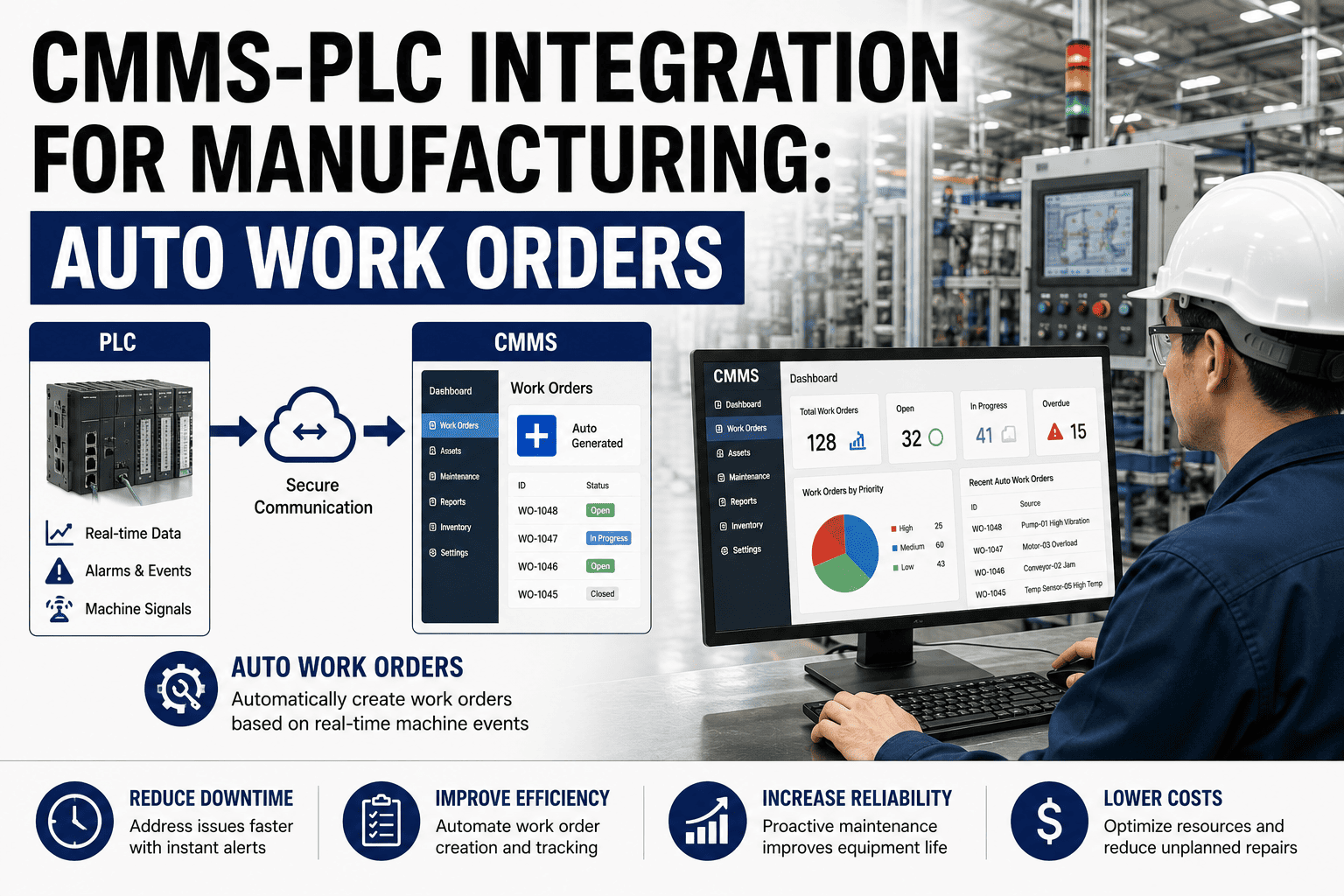
The supplier deployed Oxmaint without restructuring its maintenance team or changing its asset population. The platform replaced paper work orders with a digital workflow that triggered PM schedules automatically, routed work orders to technicians by skill and availability, and captured parts and labor costs against each job at closure. Asset history accumulated in real time — giving supervisors and planners the failure pattern and cost data needed to shift spend from reactive correction to planned prevention. Inventory was integrated into work order execution, ensuring parts consumption was always linked to the job that drove it. Book a Demo to see how the platform brings CMMS discipline to your maintenance environment.
01
Automated PM Scheduling With Technician Dispatch and Completion Tracking
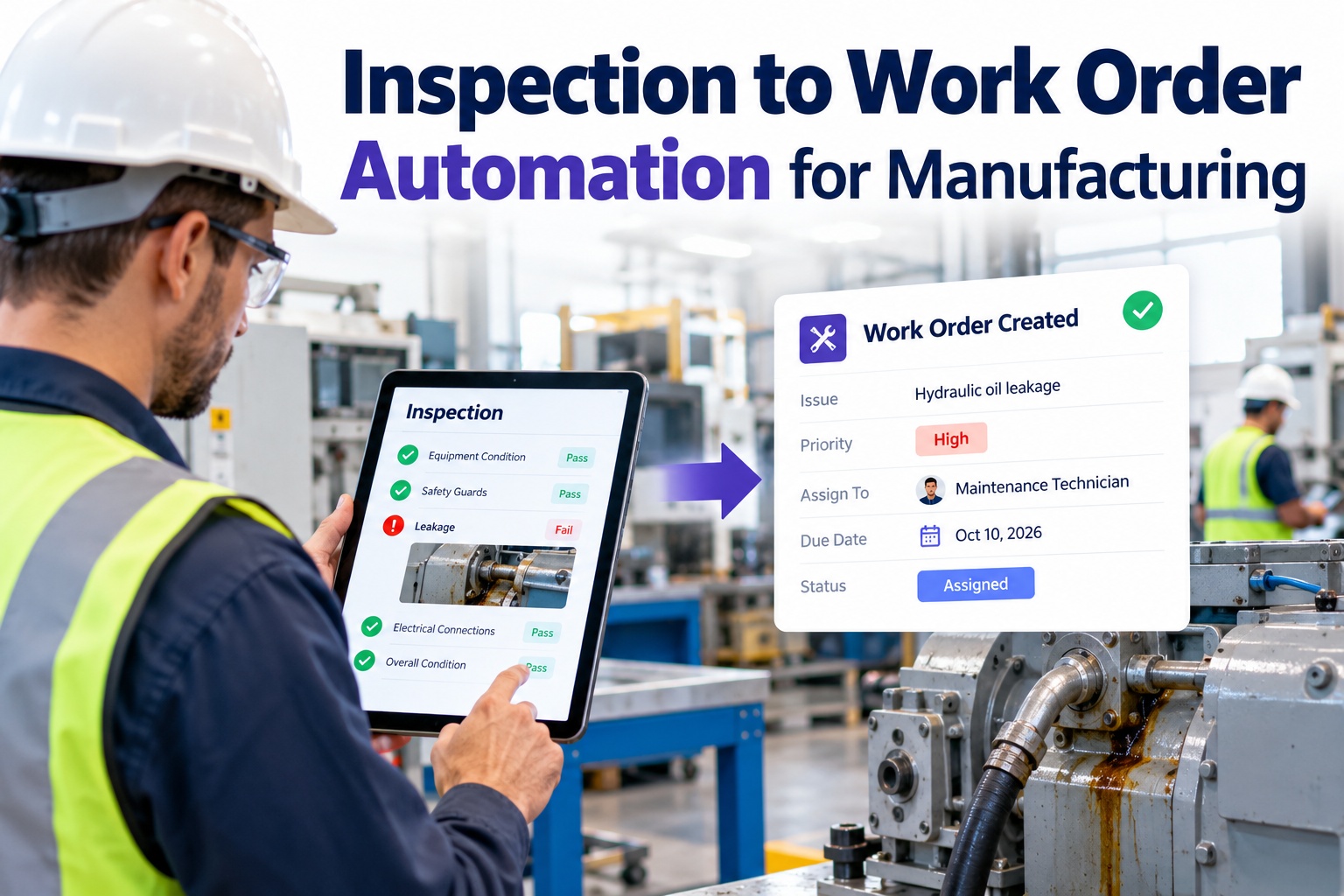
Each asset was assigned a preventive maintenance schedule calibrated to manufacturer intervals and operational history. PM triggers were system-generated and pushed directly to assigned technicians — eliminating the spreadsheet dependency that allowed tasks to be skipped without visibility.
02
Digital Work Orders Linked to Asset Records and Failure History
Work orders were created, assigned, and closed digitally — with every job automatically linked to the asset record. Failure codes, repair notes, and labor time were captured at each closure, building a searchable asset history that surfaced repeat failures and chronic underperformers.
03
Integrated Parts and Labor Cost Capture Against Every Work Order
Inventory consumption was linked directly to work order execution — parts issued for a job were deducted from stock and costed against that job automatically. Labor hours captured at closure gave planners a true cost-per-job and cost-per-asset view without manual reconciliation.
04
Real-Time Supervisor Dashboard for Workload and Backlog Visibility
Supervisors gained a live view of open work orders, technician assignments, PM compliance status, and overdue tasks. Urgent breakdowns could be escalated and reassigned within the platform — reducing response lag and protecting planned maintenance schedules from disruption.
Results at 90 Days
What Maintenance Cost and Compliance Numbers Looked Like Three Months After Deployment
31%
Reduction in total maintenance costs — driven by PM compliance lift and reactive work displacement
91%
PM compliance rate — up from 58% under the manual spreadsheet scheduling system
54%
Drop in unplanned reactive maintenance hours — from 41% of total hours to 19%
+67%
Work orders with complete cost capture — parts, labor, and failure code linked at closure
43%
Faster work order response time — from verbal escalation to digital dispatch and assignment
4.2×
ROI on platform cost within 90 days from reduced reactive repair spend and parts waste
| Metric |
Before Oxmaint |
90 Days After |
Change |
| Total maintenance cost |
Baseline |
-31% vs baseline |
-31% |
| PM compliance rate |
58% |
91% |
+33 pts |
| Reactive maintenance share |
41% of hours |
19% of hours |
-54% |
| Work orders with cost linkage |
~18% |
85% |
+67% |
| Average work order response time |
4.1 hrs avg |
2.3 hrs avg |
-43% |
| Audit preparation time (maintenance records) |
18 hrs avg |
6 hrs avg |
-67% |
Key Business Impact
What Closing the CMMS Automation Gap Means for Automotive Supplier Operations
"Automotive suppliers operating in OEM supply chains face a specific maintenance challenge: the cost of unplanned downtime is amplified by just-in-time delivery commitments. A missed PM that becomes a breakdown doesn't just generate a repair bill — it creates a line stoppage, a delivery exception, and a supplier scorecard hit that can take quarters to recover from. The plants that close this gap don't do it by adding maintenance headcount. They do it by giving the team they already have a system that enforces PM schedules, connects work to asset history, and makes the cost of every repair visible. When technicians can see what's overdue, supervisors can see what's open, and planners can see what each asset is costing — the shift from reactive to planned maintenance happens without a culture change initiative. The system makes planned maintenance the path of least resistance."
Marcus Hendley, Industrial Maintenance Systems Advisor
19 years automotive manufacturing operations · Former maintenance manager, Tier 1 supplier network · Specialist in CMMS implementation, PM program design, and maintenance cost reduction
PM Compliance · Work Order Automation · Maintenance Cost Control
Replace Reactive Maintenance Spend With Automated CMMS Discipline
Automated PM scheduling, digital work orders, integrated cost capture, and real-time supervisor visibility — Oxmaint gives automotive suppliers the CMMS structure that drives measurable maintenance cost reduction.
FAQs
Frequently Asked Questions
How does Oxmaint reduce maintenance costs for automotive suppliers?
Oxmaint automates PM scheduling, digital work order dispatch, and cost capture — shifting spend from reactive repairs to planned maintenance. Most plants see measurable cost reduction within 60–90 days of deployment.
Can Oxmaint replace paper-based work order systems in a plant environment?
Yes. Oxmaint digitizes work order creation, assignment, and closure — with all records linked to the asset and accessible from mobile devices on the floor. No paper dependency required.
Does Oxmaint track parts inventory and link it to work order costs?
Yes. Parts issued for a job are deducted from inventory and costed against that work order automatically — giving planners true cost-per-job visibility without manual reconciliation.
How does Oxmaint improve PM compliance in a high-demand production environment?
PM triggers are system-generated and pushed directly to technicians — eliminating spreadsheet dependency. Overdue PMs are flagged automatically, keeping compliance visible to supervisors without manual follow-up.
How quickly can an automotive plant deploy Oxmaint and see results?
Most plants achieve digital work order and PM scheduling deployment within the first two weeks. PM compliance improvement and cost visibility gains are typically measurable within 30 days.
Every Planned Repair Is a Reactive Cost Prevented
Give Your Automotive Plant the CMMS Automation It Needs
Oxmaint brings automated PM scheduling, digital work orders, integrated cost tracking, and real-time operational visibility to automotive supplier operations — with no additional maintenance headcount required.