
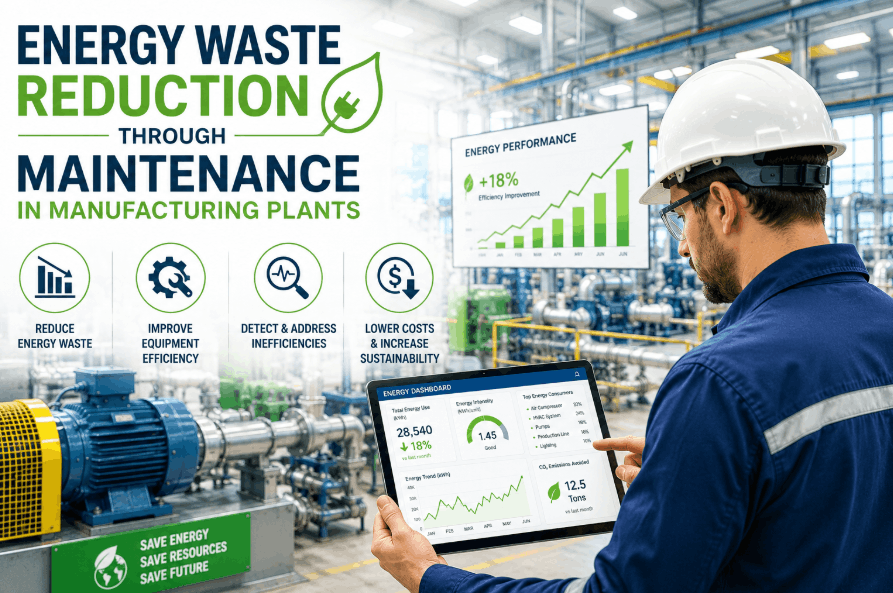
The cement plant operations manager reviews the monthly energy report showing $847,000 in electricity costs—representing 38% of total production expenses—yet when asked which specific equipment drives consumption and where optimization opportunities exist, the response is generic: "the kiln uses most power." Energy meters provide facility-level totals without equipment-specific breakdowns, making targeted improvement impossible. The maintenance team tracks runtime hours but cannot correlate energy consumption with equipment condition, missing the reality that a misaligned raw mill consumes 12-18% more power than baseline while simultaneously accelerating component wear—creating compounded losses invisible to traditional monitoring.
This energy blindness affects cement manufacturing operations globally, where electrical energy represents 30-40% of production costs and thermal energy adds another 40-50%. The average cement plant operates 400-800 critical assets—rotary kilns, vertical roller mills, ball mills, crushers, separators, fans, compressors, conveyors—yet lacks real-time visibility into equipment-specific energy consumption, efficiency degradation patterns, or maintenance-energy correlation. Without asset intelligence integrating IoT sensors, condition monitoring, and AI analytics, facilities cannot distinguish between normal consumption and efficiency losses from mechanical degradation, misalignment, or suboptimal operation.
Cement producers implementing comprehensive asset intelligence platforms achieve 8-15% energy cost reductions within 12-18 months while simultaneously improving equipment reliability by 35-55% through early failure detection. This dual benefit—reduced energy waste plus extended asset life—generates $2-6M annual value for typical 3,000 TPD plants. Organizations ready to transform energy management from reactive monitoring to predictive optimization can explore how Oxmaint CMMS integrates asset intelligence.
What if you could identify which 10 pieces of equipment waste $400,000 annually in excess energy—and systematically optimize them over the next 9 months?
While other cement plants accept energy costs as "fixed overhead," operations leveraging asset intelligence reduce consumption by 8-15% while improving reliability by 35-55%. Discover why 120+ cement producers trust Oxmaint to optimize energy and maintenance simultaneously.
The Cement Plant Energy Challenge
Cement manufacturing is among the most energy-intensive industrial processes, consuming 110-120 kWh per ton of cement produced plus 3.2-3.8 GJ of thermal energy. Understanding where this energy goes—and how equipment condition impacts consumption—is essential for optimization.
Typical Energy Distribution (Per Ton of Cement)
- Rotary kiln fuel consumption (65-70%)
- Pre-heater tower operation (15-20%)
- Drying processes (10-15%)
Case Study: Southeast Asian Cement Plant
This detailed case study examines a 3,200 TPD cement plant that implemented comprehensive asset intelligence over 12 months, reducing energy costs by $3.2M annually while improving equipment reliability and environmental compliance.
Facility Profile
The Problem State (Q1 2023)
Energy Monitoring: Single facility meter with monthly utility billing. No equipment-specific consumption data. Energy reports showed totals only—no ability to identify high consumers or track efficiency trends by asset.
Maintenance Approach: Time-based preventive maintenance manufacturing & plants on critical equipment. No condition monitoring beyond monthly vibration checks. Reactive response to failures with no predictive capability.
Baseline Performance Metrics:
- Electrical Consumption: 118.4 kWh/ton (8.4% above industry benchmark)
- Thermal Consumption: 3.76 GJ/ton (9.2% above best practice)
- Annual Energy Cost: $22.1M (38% of production costs)
- Unplanned Downtime: 412 hours annually ($2.8M impact)
- Maintenance Costs: $4.2M annually (heavy reactive repairs)
- Equipment Reliability: 87.3% availability (below 92% target)
- Environmental Incidents: 7 emissions exceedances, 3 regulatory warnings
Critical Incident (Implementation Catalyst): Cement mill bearing failure caused 47-hour shutdown during peak demand season—$340,000 lost production plus $95,000 emergency repair. Post-mortem revealed bearing operated 6 weeks with elevated vibration that went undetected, consuming 14% excess power while degrading toward failure. Management mandated predictive maintenance and energy optimization integration.
Implementation Roadmap (12 Months)
Months 1-2
Deployed comprehensive asset tracking manufacturing & plants with barcode/QR tags on all 847 critical assets. Imported equipment specifications, energy ratings, maintenance histories. Established baseline energy consumption for each major system through temporary sub-metering campaign.
Months 3-4
Installed 184 IoT sensors on critical equipment: vibration monitors on rotating equipment, thermal sensors on motors/bearings, power monitors on high-consumption assets, process sensors in kiln/mills. Integrated with Oxmaint CMMS for real-time condition monitoring and automated alert generation.
Months 5-6
Configured AI analytics engine analyzing patterns across equipment condition, energy consumption, production variables. System learns normal operating signatures and flags deviations indicating efficiency degradation or developing failures. Automated work order generation for condition-based interventions.
Months 7-12
Systematic equipment optimization based on intelligence insights: corrected misalignments, rebalanced rotating equipment, optimized process parameters, implemented predictive lubrication, established energy-aware spare parts planning. Continuous AI training improving prediction accuracy.
Results After 12 Months (Q1 2024)
Financial Impact Summary
"We knew energy costs were high but couldn't pinpoint where waste occurred. Asset intelligence revealed our cement mill #2 consumed 16% more power than mill #1 due to classifier inefficiency we'd never detected. Correcting this single issue saved $340,000 annually—nearly 20% of our total implementation cost. The combination of IoT sensors and AI analytics transformed us from reactive firefighting to proactive optimization. We now predict failures 30-60 days in advance, schedule maintenance during planned stops, and continuously optimize energy efficiency."
Accelerate Manufacturing & Plants Response Time Using AI + IoT Data
Asset intelligence combines three technologies creating capabilities impossible with traditional monitoring: IoT sensors providing real-time equipment data, AI analytics identifying patterns and predicting failures, and integrated CMMS automating maintenance response. Understanding each component and their integration is essential for effective implementation.
IoT Sensor Layer: Real-Time Data Collection
Accelerometers on rotating equipment (motors, fans, mills, crushers) detect bearing wear, misalignment, imbalance, looseness. Continuous monitoring catches degradation 30-60 days before failure—enabling planned intervention vs. emergency repair.
Infrared cameras and fixed sensors monitor motor windings, electrical connections, bearing temperatures, kiln shell temperatures. Detect overheating indicating electrical faults, lubrication issues, or refractory degradation.
Real-time electrical consumption, power factor, harmonics, phase balance per equipment. Identifies efficiency degradation from mechanical issues—misaligned equipment draws 8-15% excess power detectable before other symptoms appear.
Temperature, pressure, flow, level sensors throughout production process. Correlate process conditions with equipment performance and energy consumption—optimizing operating parameters for efficiency.
AI Analytics Layer: Intelligence & Prediction
AI learns normal operating signatures for each equipment incorporating production rate, material characteristics, environmental conditions. Flags deviations indicating developing problems—often detecting issues weeks before human operators notice symptoms.
Analyzes historical failure patterns combined with current condition data predicting specific failure modes with 30-90 day advance warning. Provides probability scores and recommended inspection/intervention timing.
Identifies relationships between equipment condition and energy consumption invisible to manual analysis. Example: 6% power increase correlating with 0.15mm vibration rise indicating developing misalignment requiring correction.
Beyond detecting problems, AI suggests specific corrective actions based on similar historical situations. "Raw mill vibration pattern matches 14 previous cases resolved through roller bearing replacement—schedule maintenance."
CMMS Action Layer: Automated Response
AI-detected issues automatically create work orders with priority, required skills, estimated duration, spare parts requirements. Eliminates manual intervention between detection and action—accelerating response 4-6x.
Failure predictions trigger parts ordering ensuring availability before breakdown occurs. Reduces emergency procurement (2-4x cost premium) while minimizing inventory carrying costs through demand forecasting.
Automatically calculates maintenance priority considering failure probability, production impact, safety consequences, available maintenance windows. Ensures critical interventions occur before less important tasks.
Automatically generates audit-ready documentation: sensor readings, AI recommendations, maintenance actions, outcomes. Tracks SLA compliance for regulatory requirements and internal performance standards.
Making Audits Painless — A Manufacturing & Plants Framework with Analytics
Cement plants face extensive auditing: environmental emissions compliance, energy consumption reporting, safety standards verification, quality system certification, financial audits of maintenance expenditures. Asset intelligence automates documentation generation transforming audits from stressful investigations to routine verification.
Environmental Compliance Audits
- Continuous emissions monitoring documentation (particulate, NOx, SOx, CO2)
- Baghouse performance verification and maintenance records
- Equipment operating within permitted parameters proof
- Corrective action documentation for exceedances
IoT sensors monitor emissions control equipment continuously. When baghouse differential pressure indicates filter degradation, system automatically generates maintenance work order, tracks completion, verifies performance restoration—creating complete audit trail without manual documentation.
Energy Reporting & Optimization Audits
- Equipment-specific energy consumption documentation
- Energy efficiency improvement initiative tracking
- Consumption trend analysis and variance explanation
- Energy management system certification (ISO 50001)
Power monitoring provides equipment-level consumption data automatically. AI analytics identify efficiency improvements: "Cement mill power reduced 8.2% through roller profile optimization saving $127K annually"—documented with before/after data, implementation details, verified savings.
Maintenance & Safety Audits
- Critical equipment preventive maintenance completion verification
- Inspection records for safety systems (guards, interlocks, emergency stops)
- Corrective action closure documentation for identified hazards
- Technician training and certification records
CMMS tracks all maintenance activities with timestamps, digital signatures, photo documentation, completion verification. Mobile inspections require barcode scanning confirming correct equipment, preventing record falsification. Automated PM scheduling ensures 95%+ completion rates.
Financial & Operational Audits
- Maintenance expenditure justification and ROI documentation
- Spare parts inventory accuracy and usage verification
- Downtime cost analysis and improvement initiatives
- Equipment reliability metrics and trends
System tracks every maintenance activity with costs, outcomes, reliability impact. Automated ROI calculations: "Predictive maintenance investment $240K yielded $1.8M downtime reduction plus $580K energy savings—7.5x first-year return." All claims backed by timestamped sensor data and financial records.
Key Energy Optimization Opportunities
Asset intelligence reveals specific energy waste sources invisible to facility-level monitoring. These six optimization categories represent 85-90% of achievable energy savings in cement plants.
Grinding Circuit Optimization
Issue: Mills (raw, cement, coal) represent 55-60% of electrical consumption. Classifier inefficiency, separator performance degradation, grinding media wear, and improper loading conditions waste 8-18% of grinding energy.
Asset Intelligence Solution: Power monitoring per mill identifies efficiency variations. AI correlates power consumption with production rate, fineness, material characteristics. Flags degradation: "Cement mill #2 consuming 6.8 kWh per ton vs. 5.9 kWh baseline—investigate classifier performance."
Rotating Equipment Efficiency
Issue: Misalignment, imbalance, bearing wear, and belt tension problems increase motor power consumption by 5-15% while accelerating component failure. These conditions often persist months undetected without vibration monitoring.
Asset Intelligence Solution: Vibration sensors detect mechanical issues correlating with power increases. "ID fan power up 12% concurrent with 0.18mm vibration rise—bearing degradation detected 45 days before failure threshold."
Compressed Air System Leaks
Issue: Cement plants operate extensive compressed air systems (pneumatic controls, conveying, cleaning). Leak rates of 20-35% are common without systematic detection—equivalent to running 1-2 compressors solely feeding leaks.
Asset Intelligence Solution: Ultrasonic leak detection integrated with asset tracking identifies and prioritizes leak repairs. System tracks compressor load factor trending revealing leak accumulation between repair campaigns.
Kiln Thermal Efficiency
Issue: Refractory degradation, coating formation, infiltration air leaks, and burner inefficiency increase fuel consumption by 5-12%. Thermal imaging reveals shell temperature patterns indicating internal conditions requiring correction.
Asset Intelligence Solution: Fixed thermal sensors and periodic infrared scanning create kiln thermal profiles. AI compares current patterns to optimal signatures identifying: "Hot spot at 47m indicates refractory thinning—schedule inspection during next planned stop."
Process Control Optimization
Issue: Suboptimal feed rates, excess oxygen, improper temperatures, and equipment sequencing waste energy across the production process. Operators make adjustments based on experience rather than data-driven optimization.
Asset Intelligence Solution: AI analyzes relationships between process parameters, equipment performance, and energy consumption. Recommends optimal setpoints: "Reduce kiln speed 0.3 RPM and increase feed rate 2% for 4.2% fuel savings with equivalent clinker quality."
Auxiliary Systems Right-Sizing
Issue: Fans, conveyors, and auxiliary equipment often operate at fixed speeds regardless of production rate. Part-load operation at full speed wastes 30-50% of auxiliary system energy during reduced production periods.
Asset Intelligence Solution: IoT monitoring reveals actual utilization vs. installed capacity. Business case for VFDs justified with consumption data: "ID fan VFD retrofit: $145K investment, $98K annual savings, 18-month payback."
Implementation Roadmap
Successful asset intelligence deployment follows phased approach balancing quick wins with comprehensive capability development. This roadmap reflects lessons learned from 120+ cement plant implementations.
Foundation (Months 1-3)
- Deploy Oxmaint CMMS with comprehensive asset registry (all 400-800 critical assets)
- Install IoT sensors on top 30-40 energy consumers (mills, fans, compressors, kiln drives)
- Establish energy baselines through temporary sub-metering where permanent monitoring not yet installed
- Train maintenance team on condition monitoring concepts and CMMS workflows
Expansion (Months 4-6)
- Expand sensor coverage to 100+ critical assets across all production systems
- Activate AI analytics with 3-4 months of baseline data for pattern learning
- Implement predictive maintenance manufacturing & plants workflows replacing reactive repairs
- Deploy mobile inspections with barcode/QR scanning for compliance documentation
Optimization (Months 7-12)
- Systematic correction of identified inefficiencies (alignment, balance, process optimization)
- Integrate spare parts planning with failure predictions for proactive procurement
- Configure automated audit reporting for all compliance requirements
- Implement energy-aware production scheduling optimizing equipment utilization
Continuous Improvement (Months 13+)
- Refine AI models with historical performance data improving prediction accuracy
- Expand optimization to additional systems based on ROI opportunities
- Share best practices across multiple plants if applicable
- Maintain competitive advantage through sustained operational excellence
Key Performance Metrics
Track these metrics monthly demonstrating asset intelligence value while identifying remaining improvement opportunities.
Energy Metrics
Equipment Reliability Metrics
Asset Intelligence Performance
Conclusion
Energy optimization through asset intelligence represents transformational opportunity for cement manufacturers where energy costs typically consume 35-40% of production expenses. The case study demonstrates that systematic implementation—combining IoT sensors, AI analytics, and integrated CMMS—delivers 8-15% energy reductions while simultaneously improving equipment reliability by 35-55%. This dual benefit creates compounded value: reduced energy waste plus extended asset life generating $2-6M annual savings for typical 3,000 TPD operations.
Success requires viewing energy management and maintenance as interconnected disciplines rather than separate functions. A misaligned fan consumes excess energy while accelerating toward failure—creating dual losses that asset intelligence detects weeks or months before traditional monitoring. The integration of real-time IoT data, pattern recognition through AI analytics, and automated maintenance response through CMMS transforms cement plants from reactive operations to predictive enterprises continuously optimizing performance.
The competitive advantage belongs to cement manufacturers that leverage technology converting invisible losses into visible opportunities. Asset intelligence makes the invisible visible—revealing which specific equipment wastes energy, predicting failures before occurrence, and quantifying ROI from every optimization initiative. The framework outlined here provides proven roadmap for cement plants ready to achieve world-class energy performance and operational excellence simultaneously.
Imagine presenting your next operations review showing $3.2M annual energy savings and 47% downtime reduction—what credibility would that build with executive leadership?
Every month without asset intelligence is another month of preventable energy waste and reliability losses. Join the 120+ cement producers that transformed operations from reactive monitoring to predictive optimization with Oxmaint's proven asset intelligence platform—the same technology delivering results across global cement operations.

.png)


