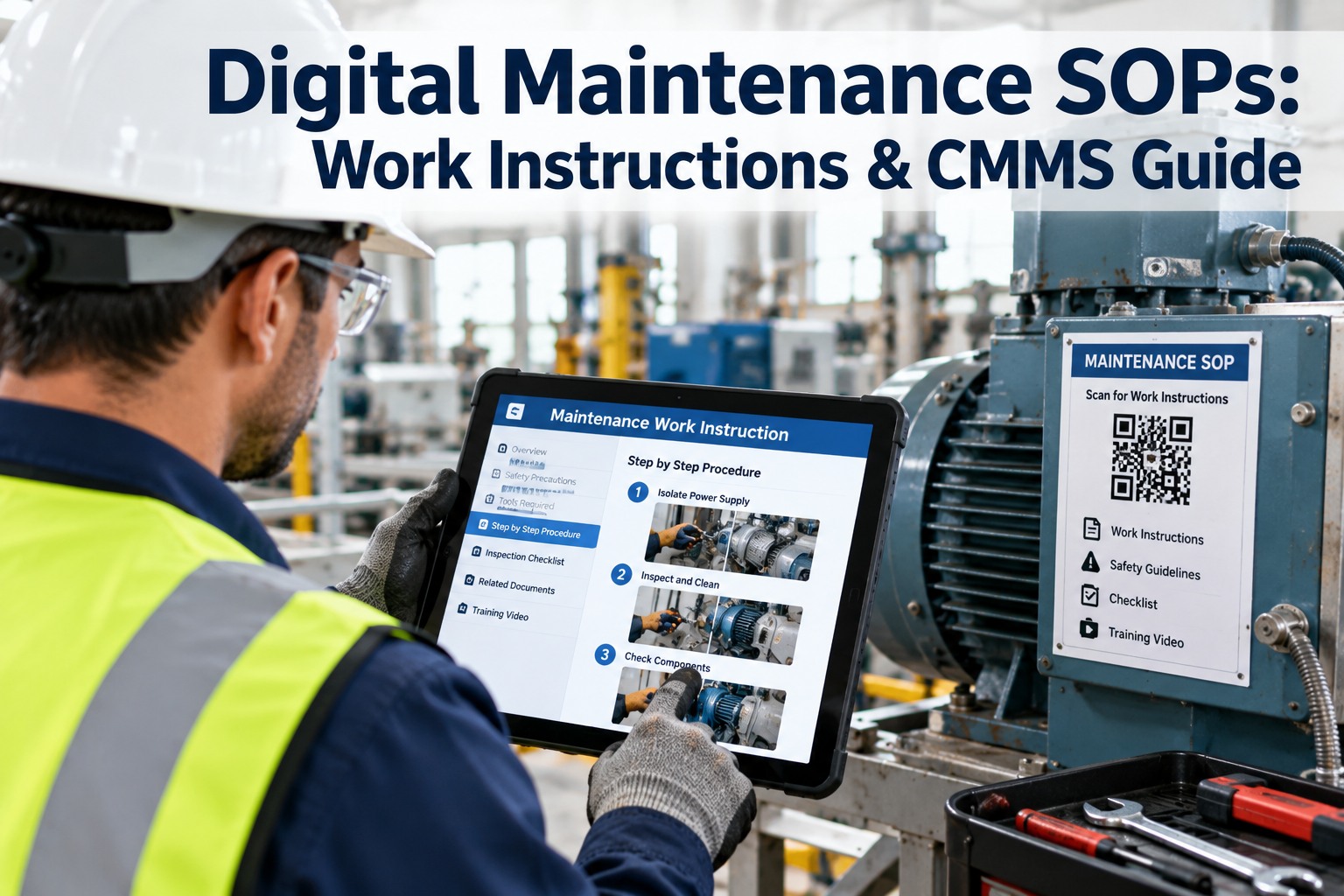
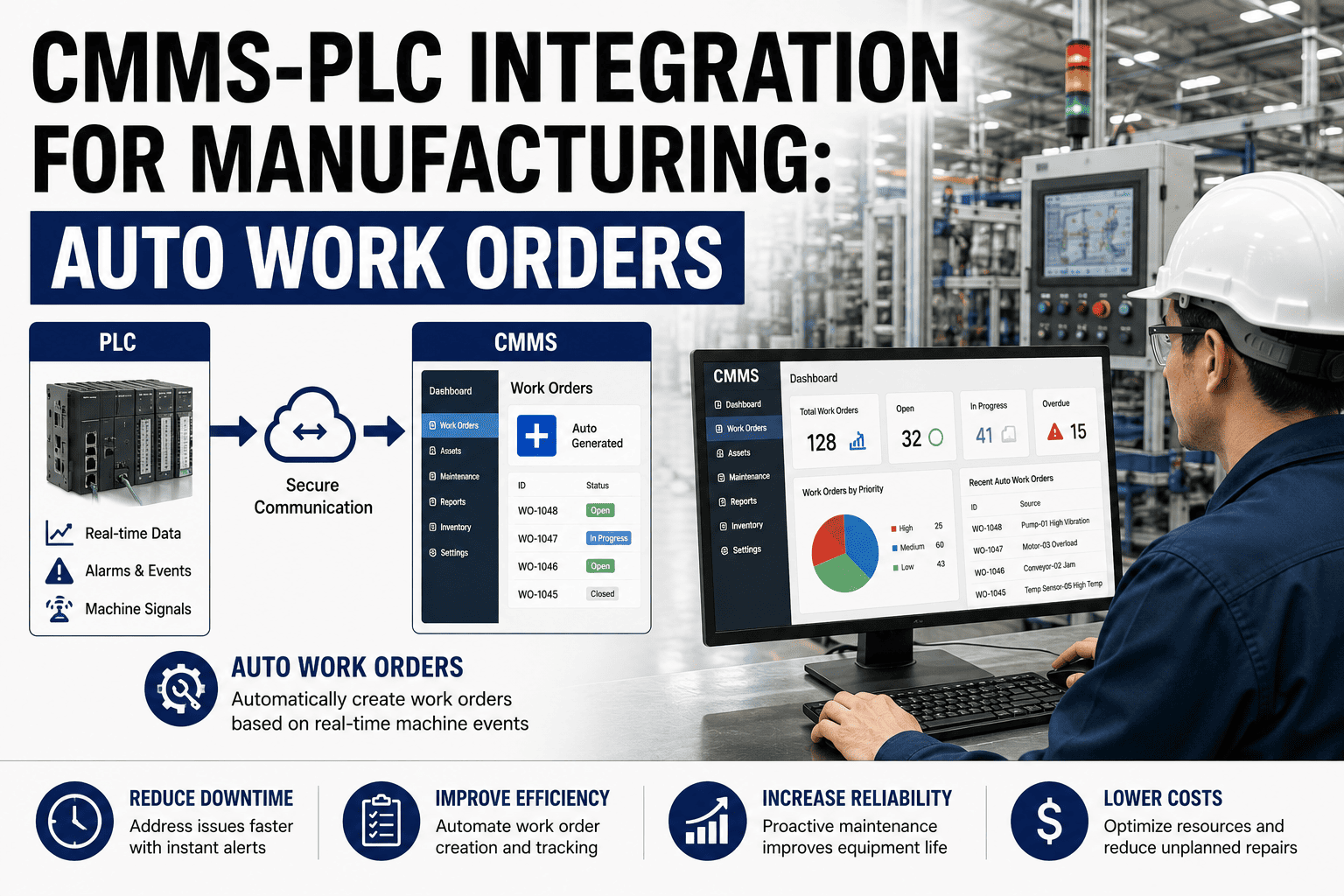
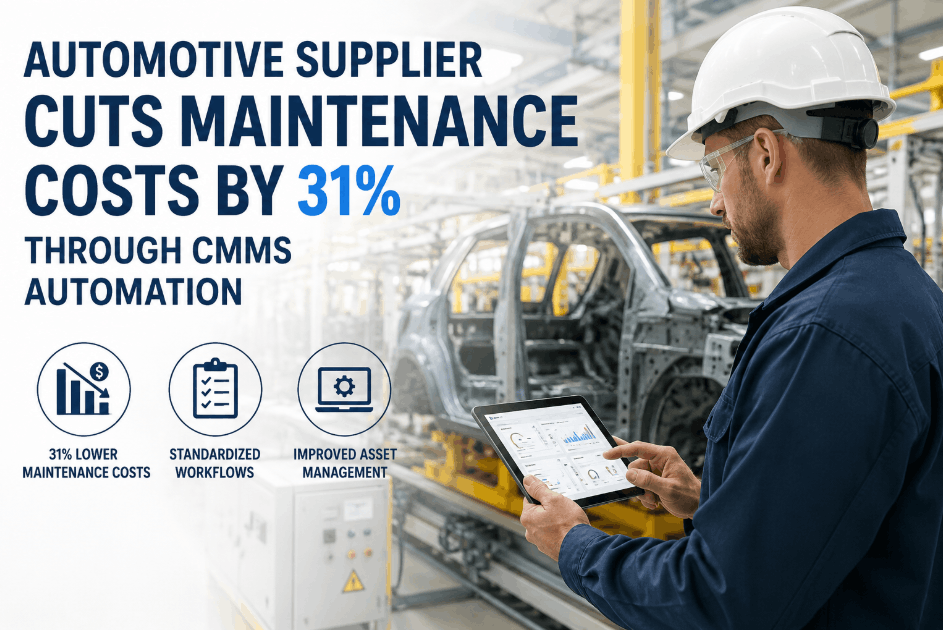
An automotive Tier-2 supplier producing stamped metal components and subassemblies for three OEM programs was approaching an operational breaking point. Clipboards, paper work orders, and manual preventive maintenance logs had become the single largest source of production delays, missed PM windows, and unplanned equipment stoppages. With 280+ production and tooling assets spread across two shifts and a 9-person maintenance team juggling reactive calls and compliance paperwork, the plant had no systematic visibility into what was due, what was done, or what was about to fail. Within 30 days of deploying Oxmaint's CMMS platform — Sign Up Free to see how fast your facility can go paperless — the plant eliminated all paper-based maintenance processes, cut administrative overhead by 60%, and increased preventive maintenance compliance from 54% to 96%.
Go Paperless in 30 Days — Without Disrupting Production
Oxmaint gives automotive manufacturers digital work orders, real-time asset tracking, and PM scheduling that technicians actually use — deployed in under a month without IT overhead.
01 / The Facility
Tier-2 Automotive Manufacturing. Two Shifts. Zero Visibility.
Facility Type
Tier-2 automotive supplier producing stamped metal components, sub-assemblies, and precision-machined parts for three active OEM programs. Operations governed by IATF 16949 quality management requirements with internal audit obligations and customer-mandated uptime SLAs.
Scale
Single facility, two production shifts. 280+ tracked assets including stamping presses, CNC machining centers, conveyor systems, welding cells, tooling fixtures, and compressed air infrastructure. Annual production capacity of approximately 4.2 million components across OEM programs.
Maintenance Team
9-person maintenance team across two shifts — one maintenance supervisor, five technicians covering mechanical and electrical disciplines, two tooling specialists, and one administrative coordinator handling work order records and PM scheduling.
Compliance Baseline
PM compliance rate of 54% prior to deployment. Average of 11 missed or overdue preventive maintenance tasks per month. Manual work order records incomplete on 41% of closed jobs — creating audit exposure and IATF 16949 documentation gaps.
Prior System
Paper work order pads, clipboard-based PM checklists, handwritten technician logs, and a shared spreadsheet updated weekly by the administrative coordinator. No real-time visibility into open work, asset status, or PM due dates across shifts.
Annual Overhead Exposure
Administrative time consumed by manual record management, work order reconstruction, and audit preparation estimated at 1,800 hours annually across the maintenance and quality functions. Reactive maintenance events triggered by missed PMs contributed an estimated $340,000 in annualized unplanned downtime cost.
02 / The Challenge
Paper Maintenance in a High-Volume Production Environment Creates Compounding Failures
For a Tier-2 automotive supplier, missed preventive maintenance is not an administrative inconvenience — it is a direct production risk with OEM-level consequences. When PM schedules live on clipboards and technician availability is communicated verbally across shifts, tasks get delayed, deferred, and forgotten. Equipment that should be serviced on a defined interval runs until it fails. The failure triggers an unplanned stoppage, a reactive repair, a delay in component delivery, and in the worst cases, a customer escalation. This facility's challenges were not the result of poor technician performance — they were the predictable outcome of a maintenance system built around paper that could not scale across two shifts, 280 assets, or an evolving OEM production calendar. Book a Demo to see how Oxmaint closes these gaps in automotive manufacturing environments.
54%
PM compliance rate
Fewer than 6 in 10 scheduled preventive maintenance tasks were completed on time — with missed PMs concentrated on shared assets and equipment that crossed shift boundaries, where handoff communication was entirely verbal and undocumented.
41%
Incomplete work order records
Nearly half of all closed work orders lacked complete documentation — missing technician sign-off, parts used, time-on-task, or root cause notation. Every incomplete record was a potential IATF 16949 audit finding and a lost data point for future maintenance planning.
60 hrs/mo
Admin time on paper records
The administrative coordinator spent approximately 60 hours per month manually updating spreadsheet logs, transcribing paper work orders, and preparing documentation packages for internal audits — time entirely consumed by record-keeping rather than maintenance planning or asset optimization.
11 missed PMs/mo
Overdue preventive tasks
Eleven preventive maintenance tasks missed their scheduled window each month on average — each representing equipment operating beyond its designed service interval and generating accelerated wear, elevated failure risk, and eventual reactive downtime on production-critical assets.
"We had nine technicians working hard every shift and still falling behind. The problem wasn't effort — it was that nobody could see the whole picture at the same time. Paper doesn't give you that."
03 / The Solution
Oxmaint CMMS: Digital Work Orders, PM Scheduling, and Asset Intelligence for Automotive Manufacturers
After evaluating three CMMS platforms against the facility's operational requirements, the maintenance supervisor and plant manager selected Oxmaint for its rapid deployment model, mobile-first technician experience, and structured asset management capabilities that aligned with existing tooling and equipment classification practices. The priority was not implementing a complex enterprise system — it was replacing paper with a connected digital workflow that both shifts could use without retraining weeks or IT project timelines. Sign Up Free and configure your first PM schedule in under a day.
WORK ORDERS
Digital work order creation replaced paper pads and clipboard logs across both shifts. Technicians received, actioned, and closed work orders from mobile devices on the production floor — with mandatory completion fields ensuring every job captured technician ID, parts used, labor time, and resolution notes before closure.
PM SCHEDULING
Preventive maintenance schedules configured per asset, interval, and criticality tier — with automated mobile alerts dispatching PM work orders to the assigned technician before the window expired. Shift handoff PM visibility replaced verbal communication with a live digital task queue accessible to both shifts simultaneously.
ASSET REGISTRY
All 280+ production and tooling assets catalogued into a structured digital registry with QR-tagged equipment profiles containing service history, manufacturer intervals, parts lists, and technician notes — giving every team member complete asset context at the point of work without locating paper binders or calling the coordinator.
INSPECTIONS
Digital inspection checklists deployed for stamping press condition monitoring, tooling dimension checks, and shift-start equipment walkthroughs — replacing clipboard forms with structured mobile checklists that auto-generated work orders when observations fell outside defined tolerance thresholds.
REPORTING
Supervisor compliance dashboards provided real-time visibility into open work orders, PM completion rates, overdue tasks, and asset downtime history — replacing the weekly spreadsheet update cycle with live operational data available to plant leadership at any time without coordinator involvement.
04 / Implementation
Fully Paperless in 30 Days. First 100% PM Compliance Week in Day 22.
Days 1–6
Asset Registry Build and QR Tag Installation
All 280+ production assets, tooling fixtures, and infrastructure equipment catalogued into Oxmaint's asset registry from existing spreadsheet records and equipment manuals. Manufacturer service intervals cross-referenced and entered per asset. QR asset tags printed and installed across the production floor and tooling storage areas. Existing paper PM history digitized and linked to asset profiles for baseline service context.
Days 7–14
PM Schedule Configuration and Mobile Platform Deployment
Preventive maintenance schedules configured for all critical assets — categorized by production line, asset criticality, and service interval. Mobile platform deployed across all 9 team devices with offline mode tested across the production floor environment. Automated PM alert routing configured by shift assignment. First system-generated PM work orders issued on day 12, surfacing 14 assets with overdue or near-due service windows that paper records had not flagged.
Days 15–24
Parallel Operations, Team Training, and Inspection Checklist Activation
Ten-day parallel period running paper and digital systems concurrently across both shifts. Technician onboarding completed in 1.5 hours per person; maintenance supervisor and coordinator training completed in 3 hours including dashboard and reporting configuration. Digital inspection checklists activated for stamping presses and welding cells on day 18. By day 24, all 9 team members were using the platform independently without coordinator intervention.
Days 25–30
Full Digital Cutover and Compliance Dashboard Go-Live
Complete paper elimination across both production shifts. All work orders, PM tasks, and inspection records flowing exclusively through Oxmaint. Supervisor compliance dashboard activated with live PM completion rate, open work order count, and asset status monitoring. First digital audit-ready maintenance report generated in under 2 hours — replacing the 3-day manual preparation process previously required for internal quality reviews. Plant achieved 100% PM completion in its first full digital week.
05 / Results
30 Days to Paperless. 6 Months of Measurable Operational Improvement.
The transition from paper-based maintenance to Oxmaint's connected CMMS produced results that exceeded the facility's operational targets within the first quarter of deployment. PM compliance climbed from 54% to 96% within 45 days. Administrative overhead dropped immediately as digital work order closure replaced manual transcription. The maintenance team gained real-time visibility across both shifts for the first time — and the plant manager could see the entire maintenance operation's status from a dashboard rather than waiting for end-of-week spreadsheet updates. Book a Demo to see how these outcomes map to your facility's operations.
| Metric |
Before Oxmaint |
After Oxmaint |
Change |
| PM compliance rate |
54% |
96% |
+78% improvement |
| Missed PM tasks per month |
11 tasks/month |
1 task/month |
−91% missed PMs |
| Work order record completeness |
59% |
100% |
100% complete records |
| Administrative time on records |
60 hrs/month |
24 hrs/month |
−60% admin overhead |
| Unplanned downtime (monthly) |
39 hrs/month |
21 hrs/month |
−46% downtime hours |
| Repeat maintenance events (30-day) |
22% |
6% |
−73% repeat visits |
| Audit preparation time |
3 days manual |
Under 2 hours |
−93% prep time |
| Shift handoff PM visibility |
Verbal only |
Live digital queue |
Full real-time visibility |
| Paper-based maintenance records |
100% paper |
0% paper |
Fully digital in 30 days |
| Reactive vs. proactive work order ratio |
68% reactive |
31% reactive |
−54% reactive work |
30 days
Full paperless deployment
"We went from 54% PM compliance to 96% in six weeks. The difference wasn't hiring more people — it was finally having a system that told us what needed to happen before something broke."
06 / Key Business Impact
What the Paperless Transition Protected Beyond Maintenance Efficiency
01
The 54% PM compliance rate was a scheduling visibility failure, not a workforce issue. Paper boards and spreadsheets disconnected from technician workflows meant due dates passed without triggering action. Oxmaint's mobile PM queue gave both shifts real-time visibility into what was due — removing the gap that turned missed PMs into equipment failures.
02
With 41% of work orders incomplete, asset-level cost tracking was impossible. Oxmaint's mandatory completion fields created a full, searchable maintenance history per asset — enabling the supervisor to identify seven high-cost assets whose cumulative repair spend justified planned replacement over continued reactive servicing.
03
Verbal shift handoffs caused tasks to drop and equipment status to be assumed rather than confirmed. Oxmaint's live work order queue gave both shifts identical real-time visibility — eliminating the communication gap that had contributed to repeat repair events and missed PMs on shared production assets.
04
Shifting from 68% to 31% reactive work freed the same 9-person team to execute planned maintenance without adding headcount. The administrative coordinator recovered 36 hours per month previously spent transcribing paper records — redirected toward parts inventory management and audit preparation.
See How Fast Your Plant Can Go Paperless
Oxmaint's automotive CMMS delivers digital work orders, mobile PM scheduling, and real-time asset tracking — configured and live in under 30 days without IT projects or lengthy vendor timelines.
07 / Impact Summary
Operational and Financial Outcomes at Six Months
OEM Delivery Reliability
Reducing unplanned downtime by 46% across production assets directly improved on-time component delivery performance — eliminating the reactive stoppage events that had periodically disrupted OEM shipping commitments and triggered customer escalations.
IATF 16949 Audit Readiness
Complete digital work order records and PM compliance documentation reduced internal audit preparation from 3 days to under 2 hours — giving the quality team defensible maintenance records for every asset without manual reconstruction or record-gathering cycles.
Maintenance Team Capacity
Shifting from 68% reactive to 31% reactive work order volume freed the maintenance team to execute planned work, cross-train on additional asset types, and contribute to a capital planning process that previously lacked the asset data needed for defensible replacement decisions.
Financial Recovery
Recovered production value from reduced unplanned downtime, eliminated administrative overtime, and deferred emergency repair spend contributed an estimated $210,000 in annualized financial improvement against the pre-deployment operational cost baseline.
$210K
Annual savings recovered
08 / FAQ
Frequently Asked Questions
How does a CMMS improve preventive maintenance compliance in automotive manufacturing?
A CMMS automates PM scheduling and routes mobile work orders directly to technicians before due dates expire — replacing paper calendars and verbal handoffs that routinely allow tasks to be missed. Oxmaint's platform brought this facility from 54% to 96% PM compliance within 45 days of deployment.
Can Oxmaint replace paper work orders in an automotive plant without disrupting production?
Yes. Oxmaint's mobile-first platform is designed for rapid deployment with minimal disruption — technicians typically complete onboarding in under 2 hours. This facility ran a 10-day parallel period before full cutover, reaching paper-free operations in 30 days total without production interruption.
How does Oxmaint support IATF 16949 maintenance documentation requirements?
Oxmaint generates complete digital work order records with technician attribution, time stamps, parts used, and resolution notes — providing the maintenance documentation traceability required in IATF 16949-regulated environments. Audit preparation time at this facility dropped from 3 days to under 2 hours.
How does Oxmaint handle maintenance visibility across two production shifts?
Oxmaint provides a live digital work order queue and PM task dashboard accessible to all team members simultaneously — giving both shifts identical real-time visibility into open tasks, overdue PMs, and asset status without verbal handoffs or paper boards.
How quickly can an automotive Tier-2 supplier deploy Oxmaint?
Facilities with existing asset lists are typically fully operational in 30–40 days. This 280-asset, 9-person facility completed full deployment in 30 days — including asset registry setup, PM schedule configuration, team training, and digital cutover — without external implementation support.
What ROI can automotive manufacturers expect from a CMMS investment?
Facilities with low PM compliance and paper-based records typically see measurable ROI within one to two quarters through reduced reactive maintenance costs, recovered production output, and eliminated administrative overhead. This facility achieved an estimated $210,000 in annualized savings within six months.
Does Oxmaint support QR-based asset tracking for production equipment and tooling?
Yes. Oxmaint supports QR-tagged asset profiles that technicians scan on mobile devices to access complete service history, PM schedules, and manufacturer intervals at the point of work — eliminating the need to locate paper binders or contact the administrative coordinator mid-repair.
96% PM Compliance. 100% Digital Records. Deployed in 30 Days.
280 assets. Two shifts. One connected CMMS platform. See what Oxmaint delivers for your automotive manufacturing facility.