A machining center can hold tenths for years on its linear guide rails, or start chattering and losing size within months. The difference is rarely the rail itself. It is whether lube reaches every carriage, whether the wipers still keep chips and coolant out, and whether anyone notices when the way covers start to sag. This checklist sorts linear guide rail maintenance by frequency so operators, technicians and planners know exactly what to check and when. Start free in Oxmaint AI to turn it into recurring PM work orders, or book a demo to see the sign-off flow.
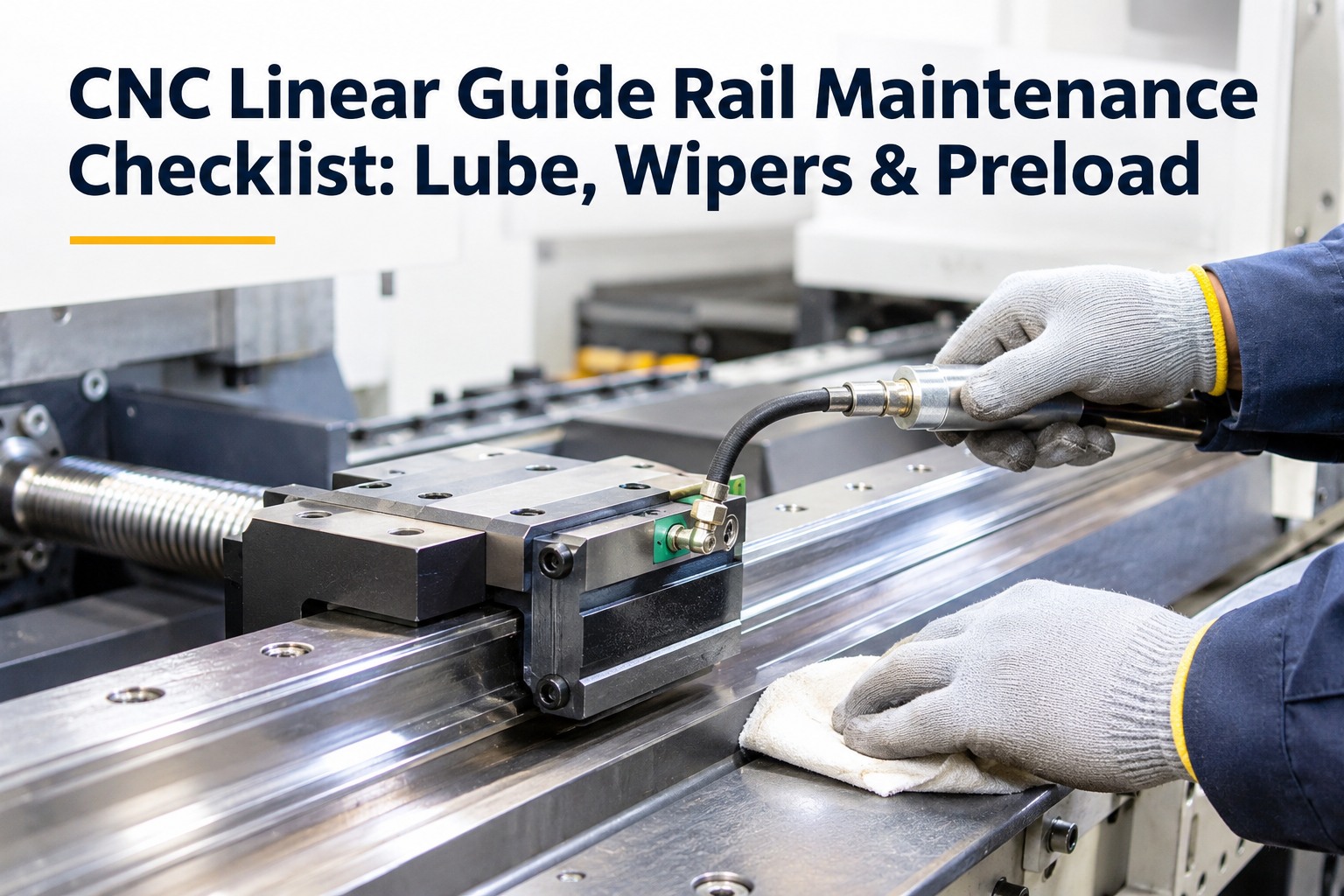
CNC Linear Guide Rail Maintenance Checklist: Lube, Wipers & Preload
Lubrication points, wiper seals, way covers and preload checks, arranged by shift, week, month and year, with what a failed check should trigger.
What a Linear Guide Rail Does and Why It Fails
A linear guide rail is a hardened steel track with a recirculating-ball or roller carriage that carries the table, saddle or column along each axis. It fails in three common ways: the carriage runs dry, contamination gets past the end seals, or preload is lost through wear or a crash. All three show up first as small changes in sound, finish or position, long before a rail has to be replaced.
- Look for an oil film on exposed rail sections
- Clear chips piled against way cover edges
- Listen for grinding or ticking during axis jog
- Confirm no lube or way oil alarm is active
- Check lube tank level and refill with the specified grade
- Inspect carriage end seals and wipers for tears
- Wipe and inspect telescopic covers for dents or gaps
- Check coolant is not pooling on the rails
- Verify each carriage receives oil at its port
- Inspect wiper strips on way covers and replace if hardened
- Check rail mounting bolts on accessible sections
- Run each axis full stroke and note any tight spots
- Check preload by measuring carriage play with an indicator
- Run a ballbar or geometry test to catch drift
- Replace worn end seals and scraper plates
- Review the asset history for repeat failures
Failure Signs and What Each One Means
| Symptom | Likely cause | First action |
|---|---|---|
| Squeal or grinding on jog | Dry carriage or blocked lube port | Check metering and port flow |
| Chips under the cover | Torn wiper or damaged cover | Replace wiper, inspect rail face |
| Poor finish on one axis | Lost preload or worn carriage | Indicator test for play |
| Rust spots on rail | Coolant ingress, no oil film | Clean, oil and fix the seal |
| Position drift after a crash | Bent rail or shifted block | Geometry check before production |
Turn This Checklist Into Recurring Work Orders
Schedule each frequency as PM in Oxmaint AI, assign it to the right person and keep the record of every check.
How Oxmaint AI Closes the Loop
Lube oil, wipers and seals used on each job are tracked against the asset, and the parts forecast is based on actual usage, so the next order of wiper kits is grounded in what the machines consumed.
Guide rails rarely fail suddenly. The early signs are a dry rail, a torn wiper or a carriage that sounds different on jog. A checklist that operators actually complete, with a work order the moment a check fails, does more for rail life than any replacement schedule.
Frequently Asked Questions
Keep Every Rail Running Smooth and True
Turn this checklist into recurring PM with sign-off and work orders for every failed check.