Cobot Maintenance in Manufacturing: Use Cases, Benefits & ROI (2026)
By oxmaint on February 12, 2026
Manufacturing facilities worldwide are deploying collaborative robots at an unprecedented rate. By 2026, the global cobot market is projected to exceed $9 billion, with manufacturers relying on these machines for everything from machine tending to precision assembly. But the real question most plant managers face is not whether to deploy cobots — it is how to keep them running at peak performance without drowning in paperwork and missed maintenance windows. Unmanaged cobot maintenance leads to unexpected breakdowns, production bottlenecks, and inflated repair costs that erode the very ROI these machines were purchased to deliver. Schedule a consultation to explore how a structured maintenance approach can protect your cobot investment and maximize uptime across your facility.
What Makes Cobot Maintenance Different from Traditional Robot Upkeep
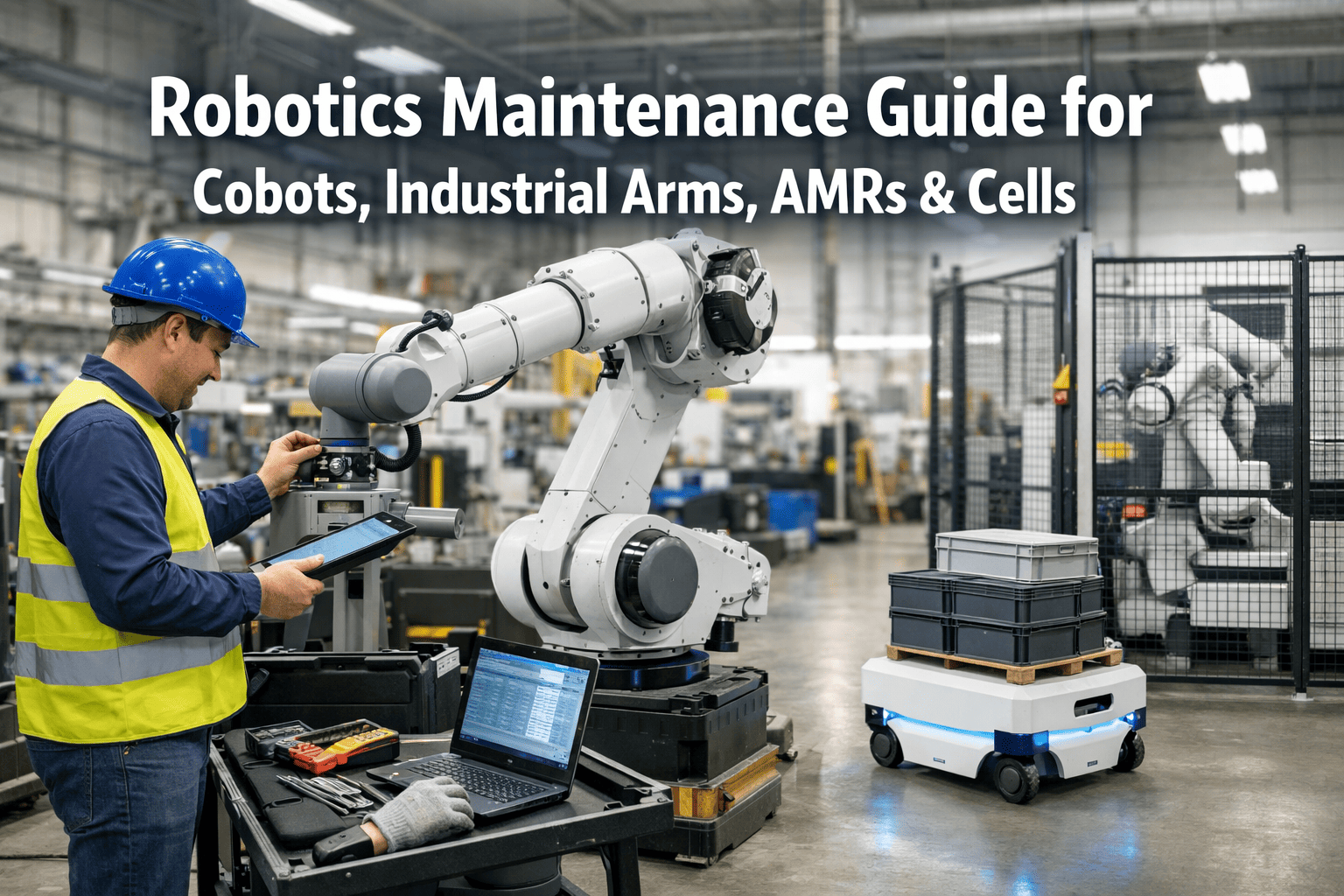
Cobots are fundamentally different from conventional industrial robots. They operate without safety cages, share workspace with human operators, and rely on sophisticated force-torque sensing, integrated vision systems, and lightweight harmonic drives that demand a distinct maintenance approach. Applying old-school robotic maintenance procedures to cobots creates blind spots that lead to premature wear, safety incidents, and avoidable downtime.
Cobot vs. Traditional Industrial Robot Maintenance
Traditional Industrial Robots
Maintained during scheduled plant shutdowns
Heavy-duty gearboxes with long service intervals
Safety systems are cage-based and static
Dedicated robotics engineers handle all repairs
Failure impact limited to isolated robotic cell
Collaborative Robots (Cobots)
Run continuously alongside operators — maintenance windows are narrow
Precision harmonic drives require more frequent monitoring
Safety sensors and force limiters must be validated regularly
Floor technicians can handle most PM tasks with proper CMMS guidance
Failure disrupts human-cobot workflow across multiple stations
Key Takeaway: Cobots need shorter, more frequent maintenance interventions managed through a digital system that tracks runtime hours, component wear, and safety compliance — not quarterly shutdowns managed by spreadsheets.
Where Cobots Are Deployed — and What Fails First
Understanding where cobots operate in your facility directly determines what maintenance tasks matter most. Each application stresses different components, and a one-size-fits-all PM schedule misses critical failure points. Here are the six most common manufacturing use cases and the maintenance realities behind each one.
Manufacturing Use Cases and Maintenance Priorities
Use Case 01
CNC Machine Tending
Primary StressGripper wear, chip contamination
Failure RiskMisgrip causing scrap or machine crash
Running multiple cobot applications across your floor? Oxmaint lets you create application-specific PM templates so every cobot gets exactly the maintenance attention its use case demands — no more, no less.
Building a Preventive Maintenance Program for Your Cobot Fleet
A structured preventive maintenance program is the single most impactful step you can take to protect cobot uptime. The table below outlines a comprehensive PM schedule based on OEM recommendations and real-world manufacturing experience — designed to be managed entirely through a CMMS like Oxmaint.
Recommended Cobot PM Schedule
Task
Interval
Time Required
Work Order Type
Skill Level
Visual inspection and surface cleaning
Every shift
5-10 min
Checklist inspection
Operator
End-effector condition check
Daily
10-15 min
Condition-based inspection
Operator
Cable and harness routing inspection
Weekly
15-20 min
Scheduled PM
Technician
Safety function and force-limit testing
Monthly
30-45 min
Compliance work order
Technician
Joint lubrication and backlash check
Every 5,000 hours
45-60 min
Scheduled PM
Technician
Software and firmware updates
As released by OEM
30-90 min
Planned corrective
Engineer
Full calibration and accuracy audit
Annually
2-4 hours
Scheduled PM
Engineer
Oxmaint auto-generates these work orders based on runtime hours, calendar intervals, or condition triggers — ensuring nothing falls through the cracks. Sign up to configure PM schedules for your specific cobot models.
Quantifying the ROI: What the Numbers Actually Show
Cobot maintenance is not a cost center — it is a profit lever. Manufacturers who implement structured, CMMS-driven maintenance programs consistently report measurable improvements in uptime, cost control, and technician efficiency. Here is what the data reveals across real manufacturing deployments.
Measured Impact of CMMS-Driven Cobot MaintenanceAggregated from manufacturing facilities, 2024-2025
45%
Reduction in unplanned cobot downtime after implementing automated PM scheduling
62%
Faster mean-time-to-repair when technicians use mobile work orders with embedded procedures
28%
Lower annual maintenance spend per cobot through optimized parts inventory and task scheduling
91%
PM compliance rate achieved — up from an average of 54% with paper-based tracking
We went from losing two shifts a month to cobot breakdowns to less than three hours of unplanned downtime per quarter. The difference was not the cobots themselves — it was finally having a system that told us what needed attention before it failed.
— Maintenance Manager, Automotive Tier 1 Supplier
Want to see these results at your facility? Book a personalized demo and we will walk through work order automation, PM scheduling, and analytics dashboards configured for cobot-driven manufacturing.
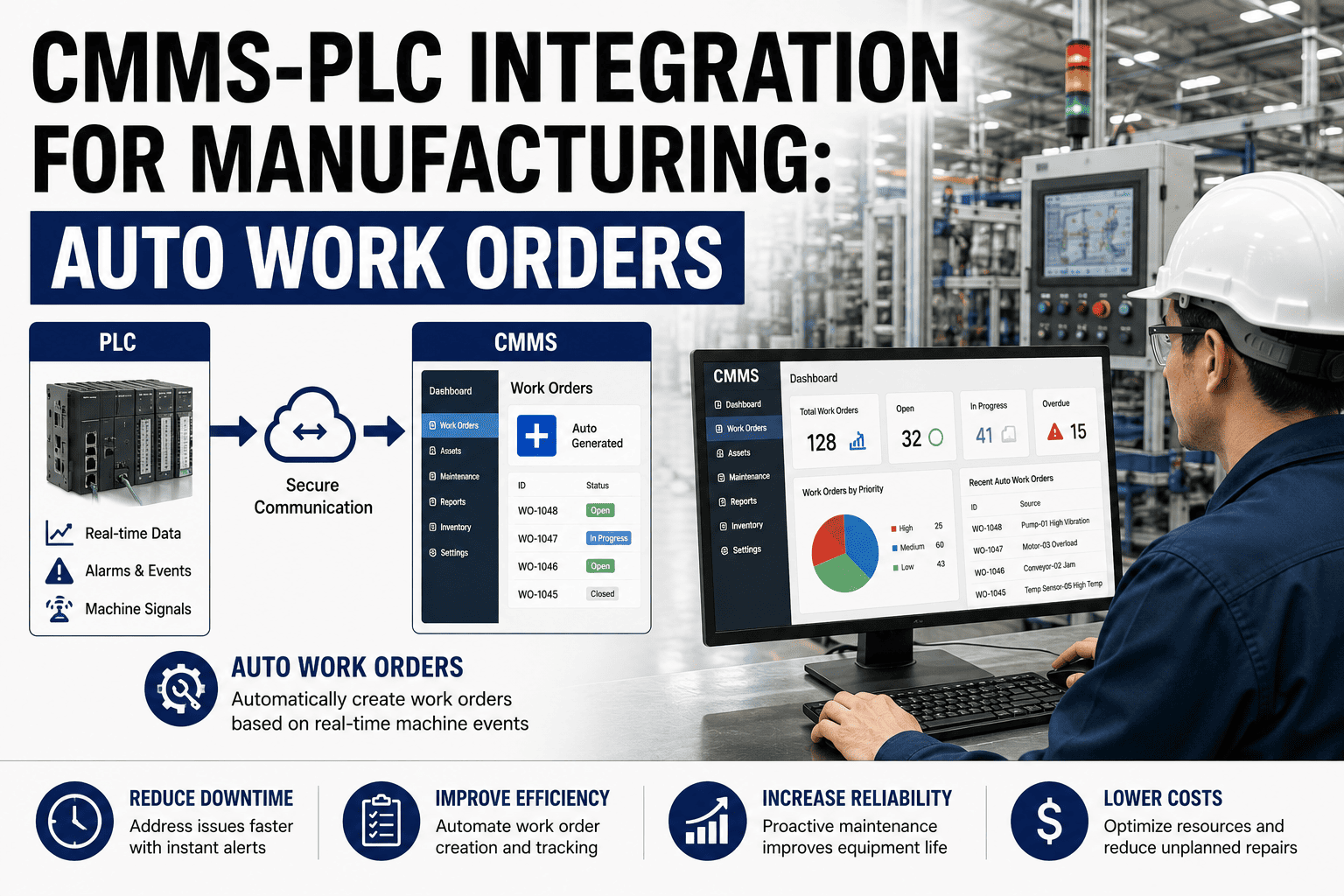
Raw maintenance logs are just noise until they are structured, analyzed, and visualized. Oxmaint transforms every completed work order into actionable intelligence that helps you answer the questions maintenance managers actually need answered — which cobots cost the most, which failure modes repeat, and where your team's time is going.
Critical Maintenance Analytics for Cobot Fleets
MTBF Trending by Cobot
Track mean time between failures for each unit individually. Spot which cobots are degrading faster and investigate root causes before they become production problems.
Maintenance Cost per Asset
Break down labor hours, spare parts consumption, and contractor costs for each cobot. Identify units where repair costs are approaching replacement thresholds.
Failure Mode Pareto Analysis
See which failure categories — mechanical, electrical, software, operator error — account for the largest share of downtime hours and direct improvement efforts accordingly.
PM Compliance and Schedule Adherence
Monitor whether preventive tasks are completed on time, overdue, or skipped entirely. Low compliance is the single strongest predictor of future breakdowns.
91%
From Reactive Fixes to Predictive Intelligence: A Maturity Roadmap
Most manufacturers do not jump straight from reactive maintenance to predictive analytics. The journey happens in stages, and a CMMS is the foundation that makes each stage possible. Here is where your cobot maintenance program likely sits today — and where it needs to go.
Cobot Maintenance Maturity Journey
Stage 1
Reactive
Fix cobots when they break. No records, no scheduling, maximum unplanned downtime. Most costly approach per operating hour.
Stage 2
Preventive
Schedule PM tasks by time or runtime hours using a CMMS. Reduces failures by 37% or more. The foundation for everything that follows.
Stage 3
Condition-Based
Monitor actual component condition — vibration, temperature, current draw — and trigger work orders when thresholds are crossed rather than on fixed schedules.
Stage 4
Predictive
AI models trained on historical work order data and sensor feeds predict failures days or weeks in advance. Maximum component life utilization with near-zero unplanned downtime.
Oxmaint supports every stage — from basic PM scheduling to IoT-integrated predictive work orders. Book a demo to see which stage fits your current operation and how to advance.
Your Cobots Deserve Maintenance as Smart as They Are
Every missed PM task, every lost work order, every breakdown that could have been prevented — it all adds up to lost production and eroded ROI. Oxmaint gives your maintenance team a single platform to schedule preventive tasks, track every work order from creation to completion, and analyze fleet-wide performance trends so you can stop reacting and start optimizing.
How does Oxmaint handle maintenance for mixed cobot fleets with different brands?
Oxmaint is brand-agnostic. Each cobot — whether Universal Robots, FANUC, ABB, Doosan, or any other manufacturer — is registered as an individual asset with its own PM schedules, OEM-recommended task lists, spare parts inventory, and complete maintenance history. You get a unified dashboard regardless of how many brands are on your floor.
Do we need IoT sensors installed on our cobots before we can use Oxmaint?
No. Oxmaint delivers immediate value through manual data entry, mobile inspection checklists, and calendar or runtime-based PM scheduling — no additional sensors needed. When your operation is ready to layer in condition-based or predictive capabilities, Oxmaint integrates with IoT platforms to auto-trigger work orders from sensor data. Sign up free to start with basic PM scheduling today.
What analytics does Oxmaint provide specifically for cobot maintenance?
Oxmaint dashboards include MTBF and MTTR trending per cobot, total maintenance cost per asset, PM compliance rates, failure mode Pareto charts, technician productivity metrics, and spare parts consumption reports. All data is filterable by location, asset type, time period, or work order category — and exportable for management reporting. Schedule a demo to explore the analytics engine live.
How quickly can we get Oxmaint running for our cobot fleet?
Most manufacturing teams have their cobot assets registered, PM schedules configured, and technicians creating work orders within one to two weeks. Oxmaint's mobile-first design means minimal training — most technicians are productive on day one.
Can operators submit maintenance requests directly from the production floor?
Yes. Operators can submit maintenance requests from any smartphone or tablet with photos, descriptions, and priority levels. These requests flow directly into the work order queue where supervisors can assign, schedule, and track them through completion — eliminating verbal handoffs and lost sticky notes entirely.