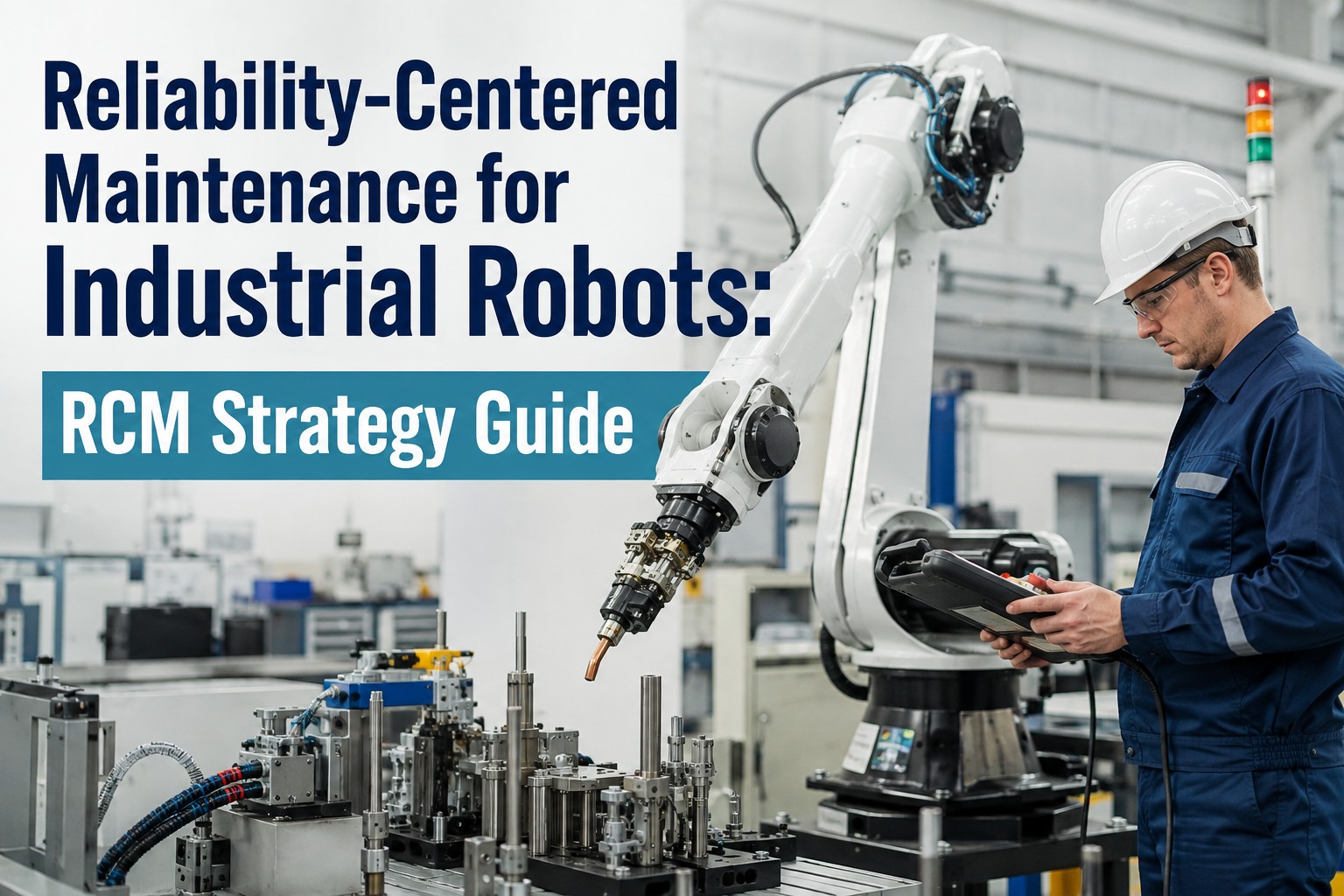
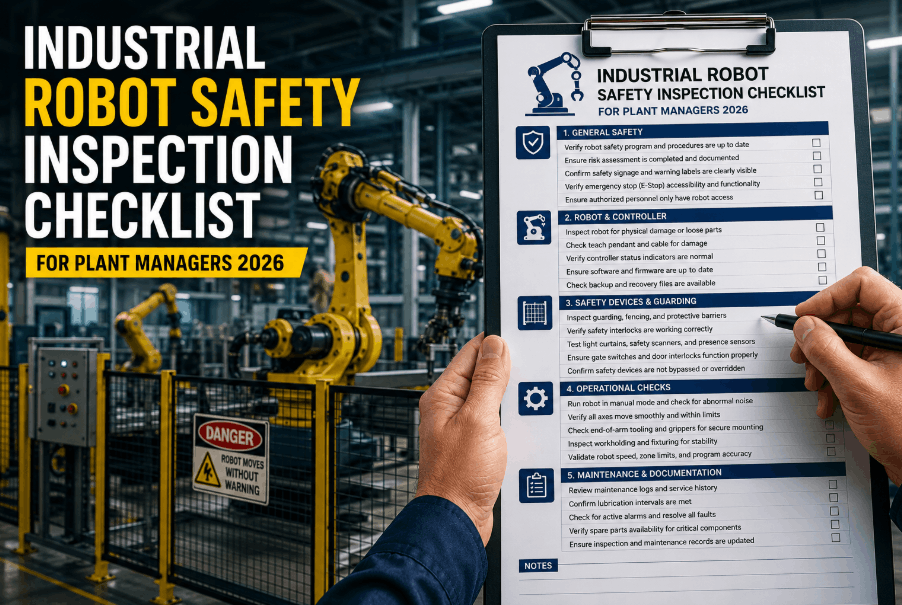
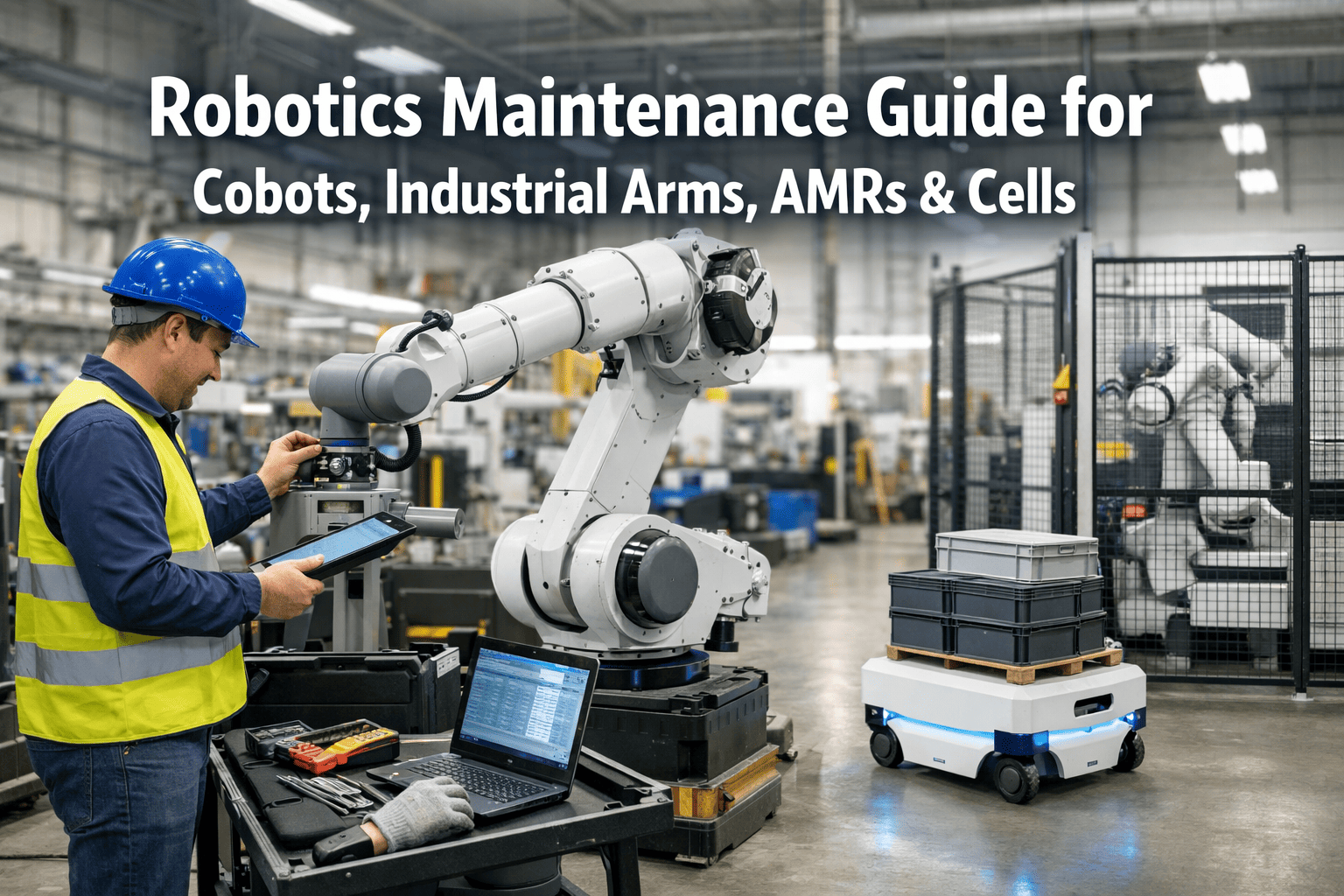
Collaborative robots — cobots — have moved from pilot programmes to production floors across automotive, electronics, food processing, and general manufacturing in the past five years. Unlike traditional industrial robots that operate in caged, isolated cells, cobots are designed to share workspace with human operators, handling repetitive or physically demanding tasks while a person works alongside them. The appeal is straightforward: lower cost than full automation, no safety guarding infrastructure, and the flexibility to be redeployed as production needs change. But cobots bring their own maintenance requirements, safety management obligations, and integration considerations that plant teams need to understand before and after deployment. Sign in to OxMaint to manage cobot maintenance alongside your full asset register, or book a demo to see how cobot work orders and inspection records integrate with your maintenance programme.
Robotics / Automation Strategy
The Rise of Cobots in Manufacturing: Benefits, Risks, and Maintenance
Collaborative robots are reshaping production floors worldwide. Understand the real productivity gains, the safety obligations under ISO/TS 15066, and the maintenance programme every cobot deployment needs to stay reliable and compliant.
Cobots vs Industrial Robots: The Key Differences
Understanding what cobots are — and what they are not — is essential before evaluating whether they fit your production environment. The distinction matters for safety planning, installation cost, and the type of tasks they can perform.
Traditional Industrial Robot
SpeedHigh speed, high force
SafetyPhysical cage or light curtain required
CostHigh capital + significant installation
ProgrammingSpecialist robotics engineer required
RedeploymentFixed installation, difficult to move
Human proximityNot designed for shared workspace
Collaborative Robot (Cobot)
SpeedReduced speed for safe collaboration
SafetyForce/torque sensing limits on contact
CostLower capital, minimal installation
ProgrammingHand-guided or tablet-based programming
RedeploymentPortable, task-flexible
Human proximityDesigned for shared workspace operation
Where Cobots Are Delivering the Most Value
01
Assembly and Fastening
High-repetition assembly tasks — screw driving, clip insertion, connector placement — are a primary cobot application. Cobots maintain consistent torque and positioning across thousands of cycles without fatigue-related quality variation.
02
Machine Tending
Loading and unloading CNC machines, injection moulding tools, and press brakes. Cobots free operators from repetitive machine tending cycles, reducing musculoskeletal strain and allowing one operator to oversee multiple machines simultaneously.
03
Quality Inspection
Camera-equipped cobots perform consistent visual inspection at inspection stations — detecting surface defects, dimensional deviations, and assembly errors with repeatability that exceeds manual inspection for high-volume production.
04
Packaging and Palletising
End-of-line packaging tasks — pick and place, case packing, pallet stacking — involve repetitive motion that causes high injury rates in manual operations. Cobots handle these tasks consistently while adjusting to variable product configurations.
05
Welding and Surface Treatment
Small-to-medium batch welding, polishing, and sanding applications where fixture costs make traditional robot cells uneconomical. Cobots can be reprogrammed between product variants without specialist robotics knowledge.
06
Collaborative Kitting
In assembly operations, cobots handle the repetitive component retrieval while the human performs the judgment-based assembly steps. The combination achieves higher throughput than either human-only or robot-only approaches for complex assemblies.
Manage Cobot Maintenance in OxMaint
Cobot PM schedules, joint inspection records, end-of-arm tooling maintenance, and safety compliance checks — all tracked in your central asset register alongside the rest of your plant equipment.
Cobot Safety: ISO/TS 15066 and What It Means for Plant Operations
Cobots are not inherently safe — they are designed for safer human collaboration when correctly deployed, assessed, and maintained. ISO/TS 15066 defines the technical requirements for human-robot collaboration and is the governing standard for cobot safety assessments. Plant teams deploying cobots must understand its core requirements.
| Collaboration Mode |
Description |
Key Requirement |
Plant Implication |
| Safety-Rated Monitored Stop |
Robot stops when human enters workspace |
Reliable detection and stop system |
Area sensors must be maintained and tested regularly |
| Hand Guiding |
Operator physically guides robot motion |
Force-limiting end effector |
End effector force limits must be verified on PM schedule |
| Speed and Separation Monitoring |
Robot slows as human approaches |
Certified position and speed monitoring |
Sensor calibration and monitoring system maintenance required |
| Power and Force Limiting |
Robot limits contact force on collision |
Biomechanical force limits per ISO/TS 15066 Annex A |
Force/torque sensor calibration on defined inspection interval |
A cobot risk assessment must be completed before deployment and reviewed whenever the cobot is redeployed to a new task, its end-of-arm tooling is changed, or its operating environment is modified. Safety validation is not a one-time activity.
Cobot Maintenance Programme: What to Inspect and When
Cobots require structured preventive maintenance — manufacturer-defined intervals for joint inspection, lubrication, cable integrity, end-of-arm tooling wear, and software updates. Neglecting cobot maintenance degrades positioning accuracy, increases collision event risk, and can void manufacturer support agreements.
Daily
Visual inspection of cable runs and connectors
End-of-arm tooling wear check
Collision event log review
Force/torque limit verification run
Monthly
Joint lubrication check per manufacturer spec
Repeatability accuracy test at key positions
Safety area sensor calibration check
Controller software version review
Annual
Full joint inspection and backlash measurement
ISO/TS 15066 compliance re-assessment
Risk assessment review for any changed conditions
Force/torque sensor recalibration
"
The cobot deployments that fail are not failing because of the robot — they are failing because the plant treated the cobot as a set-and-forget appliance rather than a maintained industrial asset. The force-limiting system that makes a cobot safe requires calibration. The end-of-arm tooling that interfaces with product requires regular wear assessment. The risk assessment that justified the deployment becomes invalid the moment you change the task. Plants that build a proper PM programme around their cobots from day one get the uptime and the safety performance. Those that do not get incident investigations and extended warranty voids.
Dr. Kenji Watanabe
Robotics Safety Consultant · 19 years human-robot collaboration system design · Specialist in ISO/TS 15066, CE marking for collaborative systems, and cobot maintenance programme development for automotive and electronics manufacturers
Cobot ROI: What the Numbers Look Like in Practice
£18k–£45k
Typical cobot unit cost
Including end-of-arm tooling and basic integration. Significantly lower than traditional robot cell total cost.
6–18 months
Typical payback period
For machine tending and repetitive assembly applications in single-shift operations.
3–5 hrs/day
Operator time recovered
Per cobot deployment in machine tending — time that shifts to higher-value quality and oversight tasks.
15–25%
Throughput improvement
Typical for assembly applications where cobots handle repetitive sub-tasks alongside human operators.
Frequently Asked Questions
Are cobots safe to operate without safety guarding?
Cobots are designed for safer human collaboration, but they are not unconditionally safe without assessment. Every cobot deployment requires a site-specific risk assessment under ISO/TS 15066. Depending on the task, speed, payload, and end-of-arm tooling, additional safeguarding may still be required even for cobots.
OxMaint tracks safety compliance records for cobot deployments.
What happens when a cobot is redeployed to a different task?
Redeployment to a new task — or a change in end-of-arm tooling, payload, or operating environment — invalidates the original risk assessment. A new risk assessment under ISO/TS 15066 is required before the cobot restarts in its new application. This is one of the most commonly missed compliance requirements in cobot operations.
Book a demo to see how OxMaint tracks redeployment compliance.
How often do cobots need preventive maintenance?
Daily visual inspection, monthly mechanical and calibration checks, and annual full compliance re-assessment are the baseline frequencies for most cobot manufacturers. Specific intervals vary by manufacturer and operating cycle count — check the OEM documentation for your specific platform and build your PM schedule accordingly in your CMMS.
Which cobot brands are most widely deployed in manufacturing?
Universal Robots (UR series) leads market share globally, followed by FANUC CRX, ABB GoFa, KUKA LBR iisy, and Techman Robot. Each platform has different payload ranges, reach specifications, and maintenance requirements.
OxMaint supports asset records for all major cobot platforms alongside your full equipment register.
Can a non-robotics engineer programme and operate a cobot?
Yes — cobot programming interfaces are designed for operators and technicians without robotics backgrounds. Hand-guided programming (physically moving the arm to teach positions) and tablet-based visual programming are standard features on most platforms. However, safety assessment and advanced integration work still typically requires specialist knowledge.
Cobots Are Assets. Manage Them Like One.
OxMaint tracks cobot PM schedules, safety inspection records, joint maintenance history, and compliance check status — giving your maintenance team full visibility of every cobot in your plant.