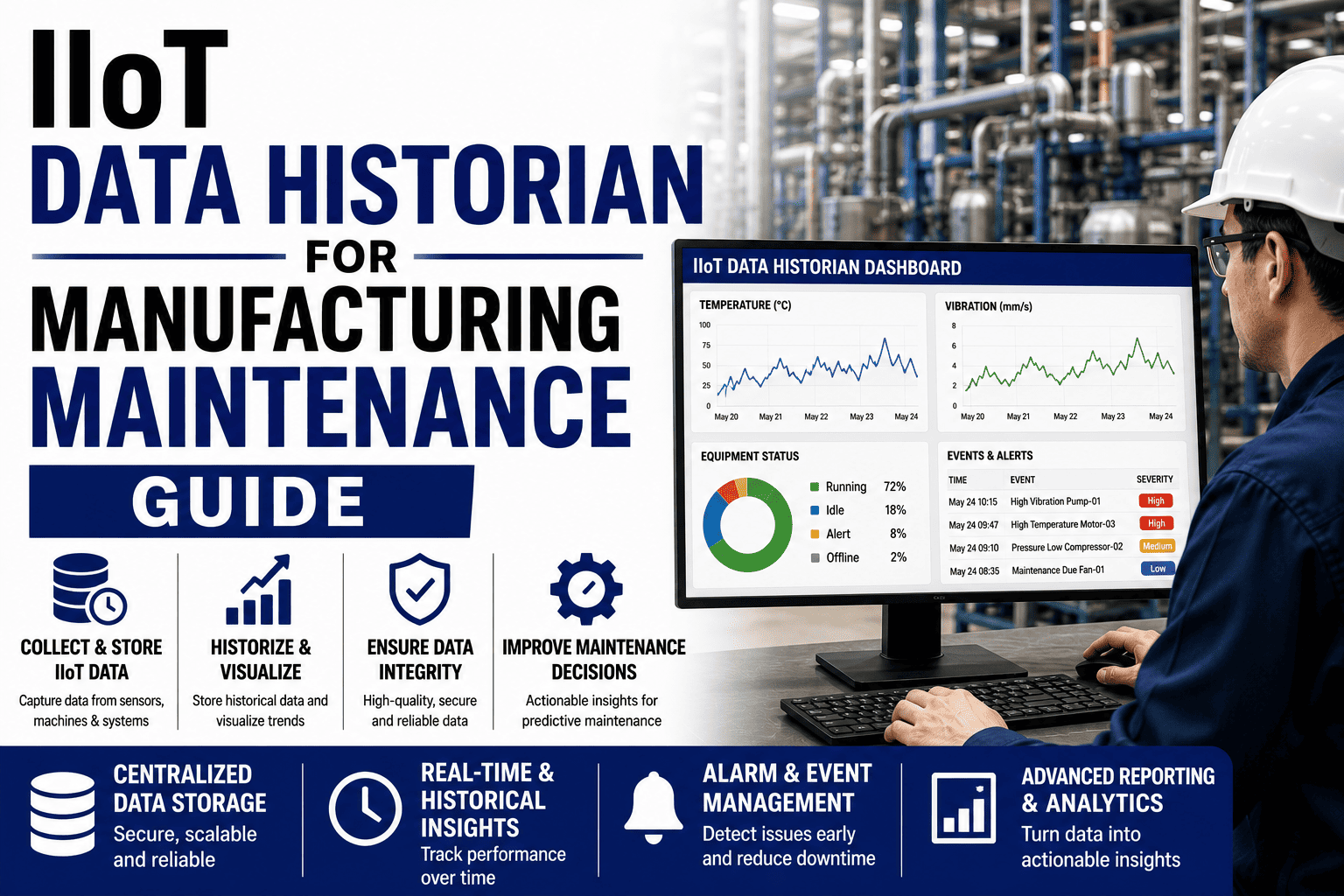
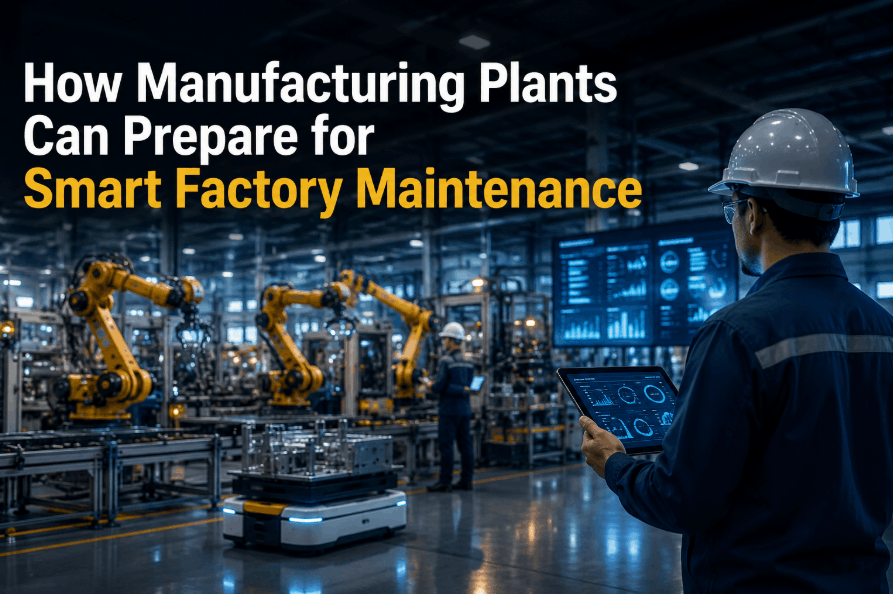
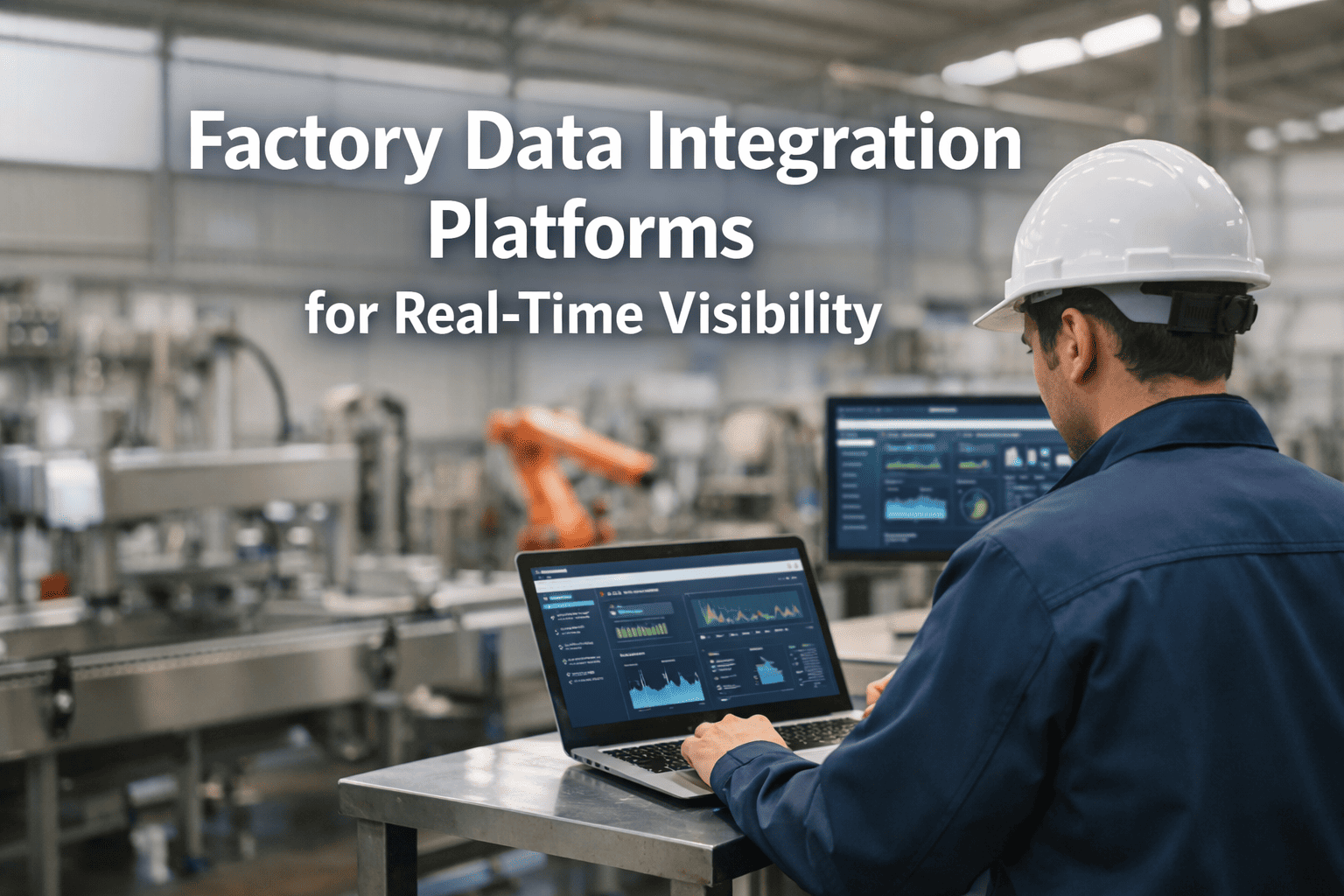
Every factory floor today sits on a quiet fault line — machines generating terabytes of data on one side, and operational decisions still made on gut feel on the other. OxMaint's Industrial IoT Platform closes that gap by connecting your legacy equipment, PLCs, sensors, and SCADA systems into a single real-time intelligence layer — so your maintenance, operations, and quality teams finally speak the same data language. Book a 30-minute demo to see how manufacturers with mixed-vintage equipment are going live in days, not months.
$514B
Global IIoT market size in 2025 — growing at 16.8% CAGR through 2035
63%
of manufacturers report legacy machine data is inaccessible or siloed from modern analytics systems
28.7%
of all IIoT revenue comes from manufacturing — the largest end-use segment globally
18%
CAGR for US industrial IoT platforms through 2030 — the fastest-growing infrastructure category in manufacturing
The Core Challenge
Why Most Smart Factory Projects Stall Before They Start
73% of manufacturers attempting IIoT adoption cite integration with existing infrastructure as their number one barrier. The machines are there. The data exists. The gap is connectivity.
Legacy Equipment Gaps
Machines from the 1990s and 2000s were never designed to transmit data. Most IIoT platforms require modern hardware — OxMaint bridges the gap with protocol-agnostic IoT gateways that work with Modbus, OPC-UA, MQTT, and proprietary PLCs.
Data in Silos
SCADA lives in operations. ERP lives in finance. CMMS lives in maintenance. None of them talk to each other in real time — which means decisions made in one system are invisible to the others until it is too late.
IT/OT Security Divide
Connecting operational technology to the cloud introduces cybersecurity risk that IT teams fear and OT teams do not fully understand. A platform without a clear IT/OT security architecture creates more problems than it solves.
ROI Uncertainty
Generic IIoT platforms sell infrastructure, not outcomes. Without pre-built manufacturing use cases — predictive maintenance, OEE tracking, quality correlation — most teams cannot calculate a business case that gets budget approved.
OxMaint Industrial IoT Platform
Connect Every Machine on Your Floor — Without Replacing a Single One
OxMaint connects to your existing equipment in days. Legacy PLCs, modern sensors, SCADA outputs, and ERP data streams — all feeding one unified platform built for manufacturing operations teams.
How OxMaint's IIoT Architecture Works: Edge to Insight
OxMaint uses a four-layer architecture — from machine-level edge collection through to actionable insight delivery — designed to be deployed incrementally so you can start with one production line and scale to the entire plant without a disruptive rollout.
01
Edge Data Collection
OxMaint IoT gateways sit at the machine level and collect data from PLCs, sensors, vibration monitors, temperature probes, and production counters via Modbus RTU/TCP, OPC-UA, MQTT, BACnet, and direct 4-20mA signal conversion. No modification to existing equipment required.
Modbus RTU/TCP
OPC-UA
MQTT
BACnet
02
Secure Data Transport
Collected data is encrypted at the edge and transmitted to OxMaint's cloud via TLS 1.3 with certificate-based device authentication. Edge processing handles time-sensitive alerts locally — so critical alarms trigger in milliseconds even during network interruptions.
TLS 1.3 Encryption
Edge Processing
Offline Resilience
03
Platform Integration Layer
OxMaint normalises incoming machine data into a unified data model and integrates bidirectionally with your ERP, CMMS, MES, and quality management systems via REST API and pre-built connectors. Data from every source becomes queryable in a single context.
REST API
ERP Connectors
MES Integration
CMMS Sync
04
AI-Powered Insight Delivery
Connected data feeds OxMaint's AI analytics layer — producing predictive maintenance alerts, OEE calculations, quality correlation analysis, and energy efficiency scoring in real time. Insights are delivered via dashboards, mobile alerts, and automated work order creation.
Predictive Maintenance
OEE Tracking
AI Analytics
Auto Work Orders
Six Manufacturing Use Cases — Built Into the Platform
OxMaint is not a generic IoT middleware layer. It ships with pre-built use case modules that generate value from day one — no custom development, no lengthy implementation projects.
01
Predictive Maintenance
Vibration, temperature, and current draw data from connected assets feed OxMaint's AI failure prediction model — generating maintenance alerts 7 to 14 days before failure occurs. Work orders are created automatically, parts are flagged for pre-ordering, and technicians arrive with the right information at the right time.
Avg. 37% reduction in unplanned downtime within 90 days
02
OEE Monitoring and Improvement
Real-time availability, performance, and quality data from every production line feed OxMaint's OEE dashboard — broken down by machine, shift, product family, and operator. Loss events are categorised automatically, giving production managers a daily prioritised improvement agenda rather than a weekly report nobody reads.
Industry benchmark OEE improvement: 6 to 12 percentage points
03
Quality Data Correlation
Process parameter data from connected machines — temperature, pressure, speed, cycle time — is correlated against quality inspection results to identify the specific machine states that produce defects. Quality engineers can trace a customer complaint back to a 4-hour window of process variation rather than spending weeks in manual investigation.
Root cause identification reduced from weeks to hours
04
Energy Consumption Intelligence
Sub-meter energy data from connected equipment is aggregated against production output — giving energy managers a cost-per-unit metric at machine level, not just building level. Abnormal consumption patterns trigger alerts before they inflate the monthly bill, and shift-level comparison surfaces which operational practices consume the most energy per unit produced.
Typical energy cost reduction: 8 to 15% within six months
05
Digital Twin Monitoring
OxMaint creates a live asset digital twin for every connected machine — tracking its real-time state, accumulated run hours, maintenance history, spare parts consumption, and performance trend in a single asset record. This becomes the single source of truth that maintenance, operations, and asset management teams all work from simultaneously.
Full asset lifecycle visibility from commissioning to retirement
06
Condition-Based Work Orders
When a connected asset crosses a defined threshold — vibration amplitude, operating temperature, pressure delta, cycle count — OxMaint automatically creates a work order with the machine state data attached, assigns it to the correct technician team, and logs the corrective action outcome for future model training. Human intervention is required only at the wrench, not at the computer.
Maintenance backlog reduced by up to 40% in the first quarter
Ready to Connect Your Factory?
Most manufacturers go live on their first production line within 5 days. No IT project. No hardware rip-and-replace.
OxMaint's implementation team handles protocol configuration, gateway deployment, and dashboard setup. Your operations team gets trained in one session and starts generating insights from day one.
5 days
Average time to first live machine dashboard
Zero
Equipment modifications required for legacy integration
200+
Industrial protocols supported out of the box
IIoT Platform Comparison: What to Look For and What to Avoid
Not every industrial IoT platform is built for manufacturing operations teams. Most were built for developers. Here is how the critical selection criteria differ between generic platforms and manufacturing-specific solutions like OxMaint.
| Selection Criterion |
Generic IIoT Platforms |
OxMaint |
| Legacy equipment connectivity |
Requires hardware upgrade or vendor gateway — often months of work |
Protocol-agnostic gateways connect legacy PLCs and sensors without modification |
| Time to first insight |
3 to 9 months of implementation before operational value appears |
Live machine dashboards within 5 days of gateway installation |
| Manufacturing use cases |
Raw data platform — use cases require custom development |
Pre-built modules for maintenance, OEE, quality, energy, and compliance |
| IT/OT security architecture |
Cloud-native architecture — OT security often an afterthought |
Edge-first architecture with local processing, TLS 1.3 transport, and zero-trust access |
| Target user |
Developers and data engineers — operations teams need training |
Built for maintenance managers, plant engineers, and quality teams |
| ERP and MES integration |
Custom API development required — cost and timeline unpredictable |
Pre-built connectors for SAP, Oracle, and major MES platforms |
| Predictive maintenance AI |
AI layer requires separate licensing and data science resources |
Included — trains on your asset history, no data science team required |
| Pricing model |
Platform fee plus implementation plus developer cost — total cost opaque |
Per-asset subscription — cost scales with value delivered |
Scroll right on mobile to see full comparison
Industrial Protocol and System Compatibility
OxMaint is built on the assumption that your factory is not a greenfield site. Real factories run Modbus RTU devices from 2003 alongside modern OPC-UA enabled machines and everything in between. OxMaint connects all of them.
Field Protocols
Modbus RTU
Modbus TCP
OPC-UA
OPC-DA
MQTT
BACnet
EtherNet/IP
PROFINET
PLC & Sensor Brands
Siemens S7
Allen-Bradley
Schneider Electric
Mitsubishi MELSEC
Omron
ABB
Honeywell
Yokogawa
Enterprise System Connectors
SAP PM
SAP S/4HANA
Oracle EAM
IBM Maximo
Infor EAM
Microsoft Dynamics
REST API
Webhook
We had seventeen different machines from nine different manufacturers — some from the 1990s, some brand new — and we assumed connecting them into one system would take a year and a large budget. OxMaint had all seventeen sending live data into a single dashboard in four days. The predictive maintenance alerts alone paid for the first year within three months.
— Plant Engineering Manager, Tier 1 Automotive Components Supplier, 2,200 employees, Czech Republic
Frequently Asked Questions — Industrial IoT Platform for Manufacturing
How does OxMaint connect to machines that were not designed to transmit data?
OxMaint uses protocol-agnostic edge gateways that install at the machine panel and read existing PLC signals, sensor outputs, and 4-20mA analogue signals without modifying the machine or its control logic. For machines with no digital output at all, vibration and temperature clamp sensors can be added non-invasively to collect the most critical condition monitoring data.
Sign in to OxMaint to see the full compatibility matrix for your specific equipment.
How long does it take to deploy OxMaint across a production line?
Most manufacturers see their first live machine dashboard within five working days of gateway hardware delivery. A single production line — typically 5 to 20 machines — is fully connected and calibrated within two to three weeks. OxMaint's implementation team handles protocol configuration, threshold setting, and dashboard setup as part of the onboarding process.
Book a demo to see a live deployment walkthrough for a facility similar to yours.
Does OxMaint work offline or in facilities with limited internet connectivity?
Yes. OxMaint's edge gateway architecture processes time-critical data locally — predictive alerts, threshold alarms, and condition-based triggers all fire at the edge regardless of network connectivity. Data collected during offline periods is synchronised to the cloud platform when connectivity resumes, ensuring no gaps in the historical record. This makes OxMaint suitable for remote facilities, basement plant rooms, and high-security environments with restricted internet access.
Sign in to OxMaint to review edge deployment architecture documentation.
How does OxMaint handle IT/OT security requirements for connecting factory equipment to the cloud?
OxMaint uses a unidirectional data flow architecture — edge gateways transmit data to the cloud but accept no inbound connections from the internet, eliminating the primary attack surface for industrial cyber threats. All data is encrypted in transit via TLS 1.3 and at rest using AES-256. Device authentication uses certificate-based identity, not shared credentials. OxMaint's IT security documentation package covers network architecture, data residency, and access control configurations required for industrial cybersecurity audits.
Book a demo to review the IT/OT security architecture with your IT team.
Can OxMaint integrate with our existing ERP and CMMS systems?
OxMaint ships with pre-built connectors for SAP PM, SAP S/4HANA, Oracle EAM, IBM Maximo, Infor EAM, and Microsoft Dynamics 365. For systems not on the pre-built list, OxMaint offers a documented REST API and webhook integration that any ERP vendor's integration team can implement. The most common integration pattern is automatic work order creation in your CMMS when OxMaint generates a predictive maintenance alert — so your maintenance team works in the system they already know.
Sign in to OxMaint to review available ERP integration documentation.
What is the pricing model for OxMaint's IIoT platform?
OxMaint is priced on a per-asset subscription model — you pay based on the number of connected assets, not on data volume or user count. This means costs scale directly with the number of machines delivering value, rather than with infrastructure usage that is difficult to predict or control. Hardware gateway costs are included in the subscription for qualifying plans.
Book a demo to get a pricing estimate for your specific asset count and deployment requirements.
OxMaint · Industrial IoT Platform · Smart Manufacturing · Industry 4.0 Connectivity
Your machines are already generating the data that could transform your operations. OxMaint connects it, analyses it, and puts it in front of the right person at the right time — starting this week.
Legacy connectivity. Predictive maintenance AI. OEE tracking. Quality data correlation. Energy intelligence. All from one platform built for manufacturing teams, not developers.