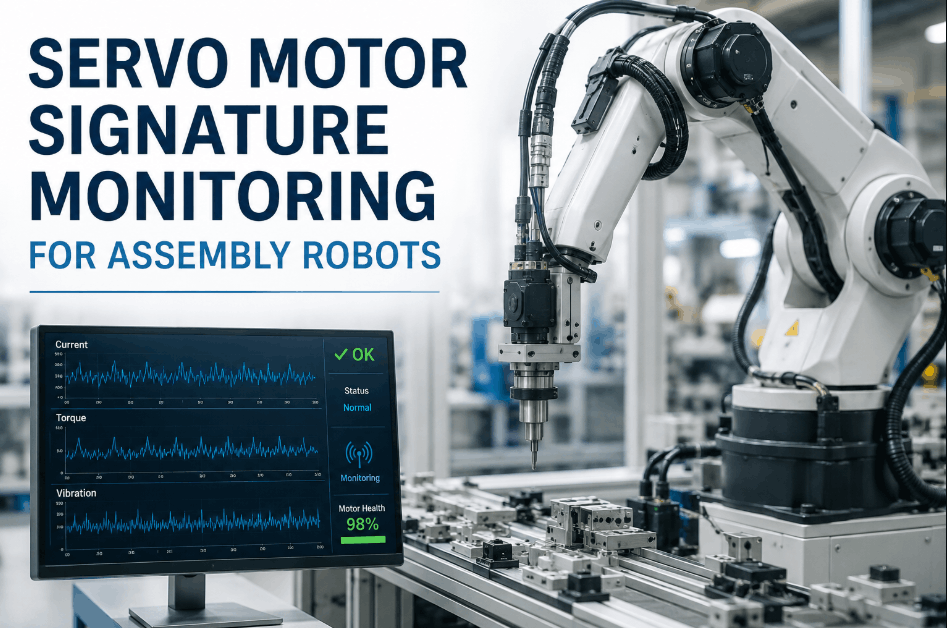
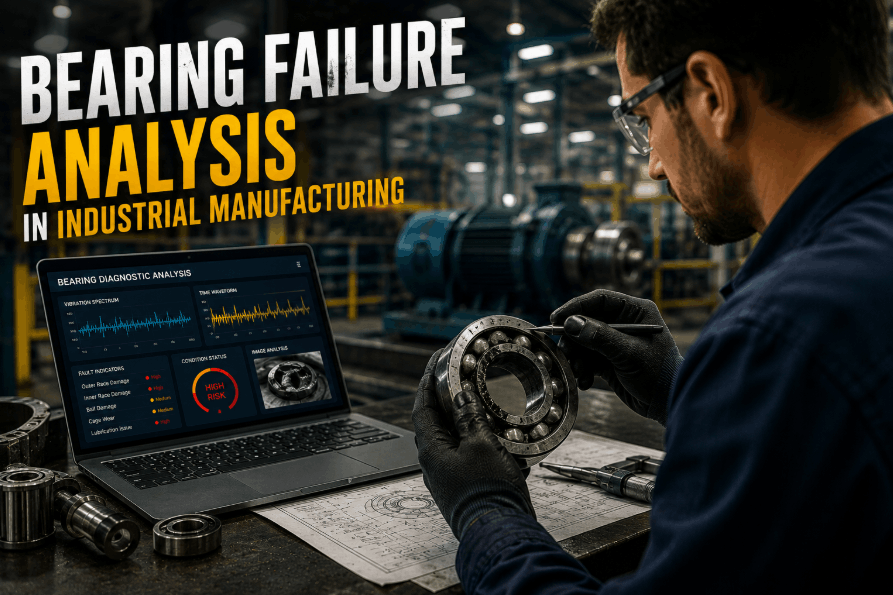
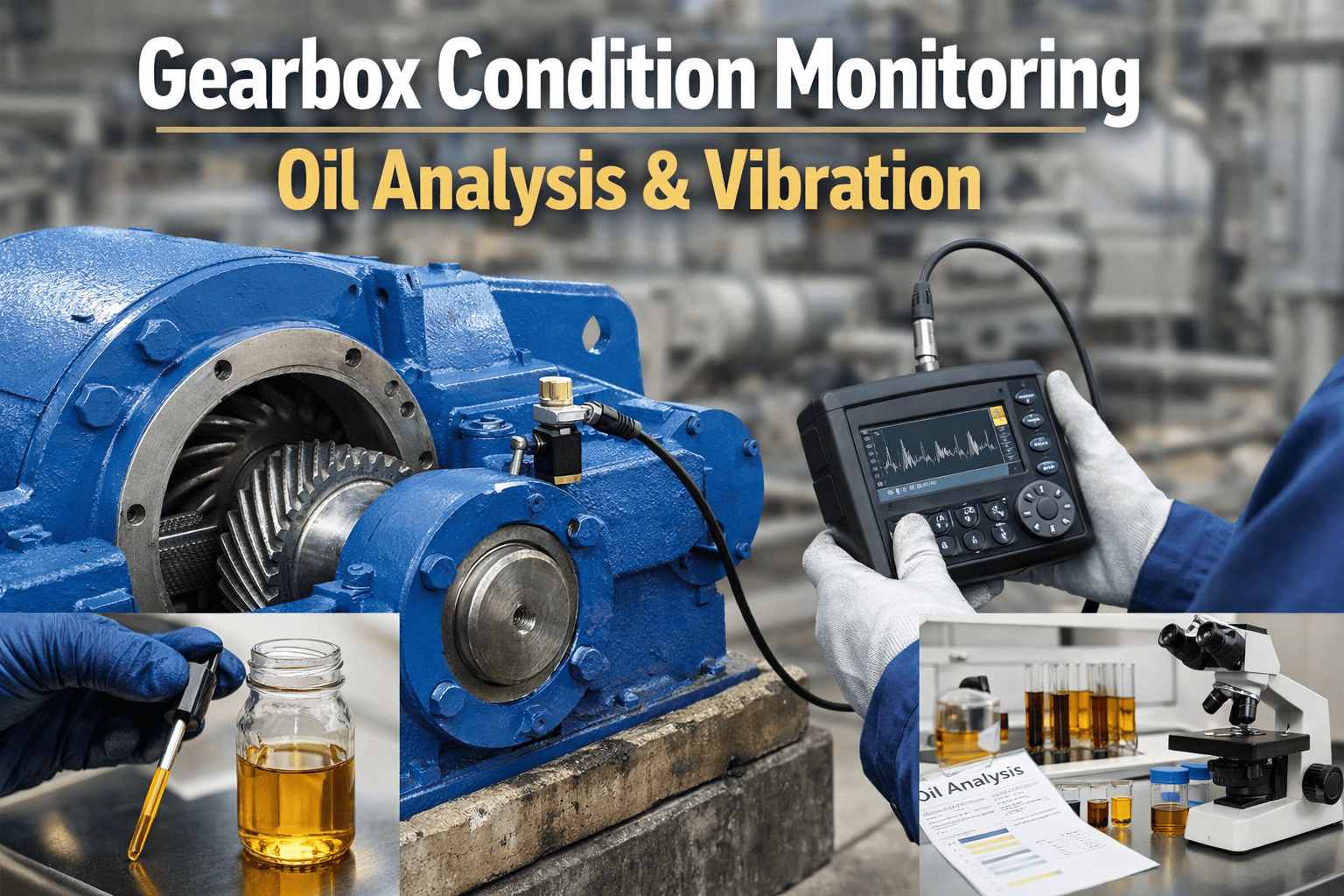
Electric motors consume 45% of all global electricity and drive virtually every production process in modern industry — yet 80% of motor failures are preventable with the right monitoring in place. When a motor fails without warning, the direct repair cost is only the beginning: the lost production, emergency labour, and secondary equipment damage typically multiply the total impact by 8 to 15 times. AI-based predictive maintenance changes this entirely by reading motor current signatures, vibration patterns, and thermal data continuously — flagging degradation months before failure occurs. Start your free OxMaint trial and connect your first motor within 24 hours, or book a live demo to see AI motor diagnostics on real industrial equipment today.
OxMaint AI · Electric Motor Predictive Maintenance
AI Motor Health Analytics That Predict Failures Before They Stop Your Production
Current signature analysis, vibration trending, and thermal pattern monitoring — unified in one platform that turns motor sensor data into scheduled maintenance actions.
80%
Of motor failures are bearing or winding related — both predictable with AI
45%
Global electricity consumed by electric motors
$38K
Average cost of unplanned industrial motor failure
3.5×
ROI in year one from AI motor monitoring programmes
Why Electric Motors Fail: The Real Distribution of Root Causes
Motor failure analysis from thousands of post-mortem investigations across industrial sectors consistently points to the same root causes. Understanding which failure mode drives which percentage of failures tells you exactly where to focus your monitoring effort — and what signals to look for in each category.
Contamination & Environment
43%
Bearing Failure
Detectable via vibration spectrum analysis (BPFO, BPFI frequencies) and thermal trending up to 90 days before failure. Most cost-effective monitoring target in any motor fleet.
26%
Stator Winding
Inter-turn short circuits and insulation breakdown produce characteristic current asymmetry detectable via MCSA. Thermal imaging confirms winding hotspots non-invasively.
20%
Rotor + Shaft
Broken rotor bars create specific sideband patterns at ±2sf around the fundamental current frequency — invisible to all monitoring methods except current signature analysis.
3 AI Diagnostic Technologies: What Each Measures and What It Catches
Reliable motor health prediction requires three complementary measurement streams. Each technology has a unique detection window, fault coverage, and installation profile. Used together under AI correlation, they cover 95%+ of all motor failure modes from a single monitoring system.
How It Works
Current transducers clamp onto motor power cables at the MCC or starter panel — no shaft access, no production interruption. The motor current waveform encodes every mechanical event in the drivetrain as a frequency modulation. AI analyses the spectral content of the current signal to extract rotor fault frequencies, bearing defect signals, load variation patterns, and winding asymmetry signatures.
Faults Detected
Broken rotor bars
Stator inter-turn shorts
Air gap eccentricity
Bearing defects (indirect)
Load imbalance
Gearbox mesh faults
How It Works
Accelerometers mounted on bearing housings at drive end (DE) and non-drive end (NDE) capture the full vibration spectrum. For each motor, AI loads the bearing defect frequencies (BPFO, BPFI, BSF, FTF) based on bearing geometry. The presence, amplitude growth rate, and harmonic structure of these frequencies map directly to fault type and severity stage — giving a precise remaining useful life estimate, not just a binary alarm.
Faults Detected
DE bearing outer race fault
NDE bearing inner race fault
Shaft misalignment (1×, 2×)
Mass imbalance (1× dominant)
Mechanical looseness
Resonance conditions
How It Works
PT100 resistance temperature detectors embedded in stator windings or mounted on frame surfaces provide continuous thermal data. AI applies load-normalisation to distinguish fault-driven temperature increases from legitimate load changes — because a motor running 5°C hotter under double the load is healthy, while a motor running 5°C hotter at the same load is degrading. Thermal imaging surveys confirm winding hotspot distribution across all three phases.
Faults Detected
Insulation degradation
Phase current imbalance
Cooling system blockage
Overloading conditions
Winding hotspots (Phase A/B/C)
Bearing lubrication failure
What an AI Motor Health Score Looks Like in Practice
OxMaint translates raw sensor streams into a single Motor Health Score per asset — updated continuously and decomposed into sub-scores for each failure mode. Here is what the dashboard view looks like for a fleet of four critical motors at different stages of health.
Pump Motor P-101
185 kW · 1,480 RPM
Normal
Normal
Normal
Healthy — No Action
Fan Motor F-204
75 kW · 2,960 RPM
Stage 2 Fault
Normal
+4°C Deviation
Plan in 21 Days
Compressor Motor C-012
315 kW · 1,480 RPM
Stage 3 Fault
Inter-turn Risk
+12°C Deviation
Act Within 7 Days
Conveyor Motor CV-07
55 kW · 960 RPM
Normal
Normal
Normal
Healthy — No Action
OxMaint generates this view automatically from your motor sensor data — no manual data entry, no analyst required. Every health score is backed by multi-sensor evidence and root cause classification.
OxMaint · AI Motor Analytics Platform
Which motors in your facility are at Stage 2 or Stage 3 right now — and do you know?
OxMaint connects to your existing motor sensors and delivers health scores, fault classifications, and prioritised work orders from day 10 of deployment. No infrastructure overhaul. No specialist analyst.
Motor Fault Detection: From First Signal to Failure — The Full Timeline
Every motor fault follows a measurable progression from initial signal to functional failure. The P-F interval — the time between the point a failure becomes detectable and the point it becomes functional failure — determines how much time you have to act. AI monitoring maximises the usable portion of that interval.
Phase 1 — Sub-threshold Detection
Micro-Fault Signal Emerges
Kurtosis rises in vibration spectrum. Ultrasonic stress wave emission detectable. Current spectrum shows sideband emergence below noise floor for most conventional systems — but within AI detection range.
Up to 6 months before failure
Phase 2 — Defect Frequency Emergence
Bearing / Rotor Fault Signature Confirmed
BPFO or BPFI appears in vibration spectrum. Current spectrum shows rotor bar sidebands at ±2sf. Winding temperature begins deviating 2–5°C above load-normalised baseline. AI classification confidence exceeds 85%.
30–90 days before failure
Phase 3 — Accelerated Degradation
Fault Growth Accelerates — Secondary Damage Begins
Broadband noise floor rises. Temperature deviation exceeds 8°C. Sideband harmonics proliferate around fault frequencies. Secondary damage to shaft and housing begins. Intervention at this stage is 4–8× more expensive than Phase 2.
7–30 days before failure
Phase 4 — Imminent Failure
All Sensors Alarming — Emergency Shutdown Risk
Audible noise. Extreme vibration. Temperature spike above rated limits. Current distortion visible on plant metering. Emergency shutdown is the only safe response. Secondary damage already extensive.
Hours to days
OxMaint targets Phase 1 and Phase 2 detection — where the cost of intervention is lowest, the scheduling flexibility is highest, and secondary damage has not yet begun.
The True Cost of Motor Failure: A Frame-by-Frame Breakdown
Most maintenance managers see only the repair invoice when a motor fails. The full cost picture — including production loss, labour, emergency logistics, and secondary damage — is typically 8 to 15 times higher. Understanding each cost component is what makes the ROI case for AI monitoring undeniable.
Motor Replacement or Rewind
$2,000–$8,000
The only cost most facilities account for. Represents 10–15% of total failure cost.
Emergency Labour & Contractor Call-Out
$3,000–$12,000
Emergency premium rates, weekend and night call-outs, specialist contractor mobilisation.
Secondary Equipment Damage
$4,000–$20,000
Shaft damage, coupling destruction, driven equipment impact. Present in 62% of unplanned failures.
Lost Production (per hour)
$15,000–$260,000/hr
The dominant cost driver. Production loss during unplanned downtime dwarfs all direct repair costs.
Compliance & Incident Reporting
$1,000–$5,000
Regulatory notifications, incident investigation, environmental reporting in process industries.
Total unplanned motor failure cost (typical industrial facility)
$25,000 — $305,000+
vs. $800–$3,500 for a planned motor intervention triggered by AI predictive alert
AI Motor Monitoring Results Across Industries
The performance improvements from AI motor monitoring are consistent across sectors — because motor failure physics does not change by industry. What changes is the consequence of failure, the monitoring priority, and the specific fault modes most prevalent in each environment.
Water & Wastewater
Motor MTBF improvement
+210%
Unplanned downtime reduction
73%
Maintenance cost reduction
41%
Pump motor monitoring in water treatment facilities — primarily targeting bearing and winding faults in continuously-running submersible and dry-mounted motors.
Cement & Mining
Secondary damage events eliminated
94%
Emergency repair cost reduction
68%
Avg detection lead time
52 days
High-power kiln drive and mill motor monitoring in dusty, high-vibration environments — where MCSA proves especially valuable for no-access motor positions.
Food & Beverage
Compliance incidents avoided
100%
Planned vs unplanned ratio
94:6
Conveyor, mixer, and packaging line motor monitoring — thermal monitoring plays a critical role in detecting lubrication breakdown before bearing failure triggers a food safety incident.
| Motor Parameter |
Without AI Monitoring |
With OxMaint AI |
Improvement |
| Mean Time Between Failures |
18–24 months |
48–72 months |
+2.5× MTBF |
| Unplanned downtime hours/year |
120–200 hrs |
8–20 hrs |
90% reduction |
| Average repair cost per event |
$18,000–$45,000 |
$800–$3,500 |
95% cost reduction |
| Secondary damage rate |
62% |
Less than 3% |
-59 percentage points |
| Motor energy efficiency loss |
3–8% degradation undetected |
Flagged within 2% deviation |
Full efficiency recovery |
Frequently Asked Questions
Does OxMaint work on motors already installed in the field, or only new installations?
OxMaint is designed for retrofit deployment on existing motor assets — no modifications to the motor, starter, or control system are required. Current transducers clamp onto existing power cables at the MCC panel, accelerometers mount on bearing housings using adhesive or threaded studs, and temperature probes connect to existing PT100 or thermocouple wiring.
Book a scoping call and OxMaint's deployment team will confirm compatibility with your existing motor infrastructure before any equipment is purchased or installed.
How does OxMaint handle motors that run at variable speeds on VFDs?
Variable frequency drives complicate traditional current signature analysis because fault frequencies shift proportionally with drive output frequency. OxMaint's MCSA module applies slip-frequency-normalised analysis — computing fault frequency positions dynamically based on actual drive output frequency at each measurement point, not a fixed line frequency assumption. This makes AI motor monitoring equally effective on fixed-speed direct-on-line and variable-speed VFD-driven motors.
Start your free trial to configure VFD motor assets with the correct drive output frequency tracking parameters.
What is the minimum motor size or rating that makes AI monitoring cost-effective?
As a general rule, AI continuous monitoring is cost-justified for motors above 15 kW in critical applications, and above 37 kW in general industrial use — where a single unplanned failure cost exceeds one year of monitoring cost by a significant margin. Below those thresholds, periodic vibration route monitoring may be more appropriate. OxMaint supports both continuous monitoring and scheduled route-based inspection workflows, so facilities can apply the right monitoring intensity to each motor based on criticality and failure consequence rather than a one-size-fits-all approach.
Can OxMaint detect winding insulation degradation before a winding failure occurs?
Yes — winding insulation degradation produces two detectable signals before complete failure: thermal asymmetry between phases (detectable through temperature monitoring) and current imbalance between phases (detectable through MCSA). OxMaint monitors both signals simultaneously and correlates them to distinguish insulation degradation from supply voltage imbalance — which produces similar thermal and current patterns but requires a completely different intervention.
Book a demo to see how winding health scoring is presented in the OxMaint motor health dashboard.
OxMaint · Electric Motor Predictive Maintenance
Your Motors Are Telling You Exactly When They Will Fail.
Is Your Maintenance System Listening?
OxMaint connects to your motor current, vibration, and thermal data and delivers health scores, fault classifications, and prioritised work orders — automatically, from your existing sensors. Most facilities are live within 10 days.