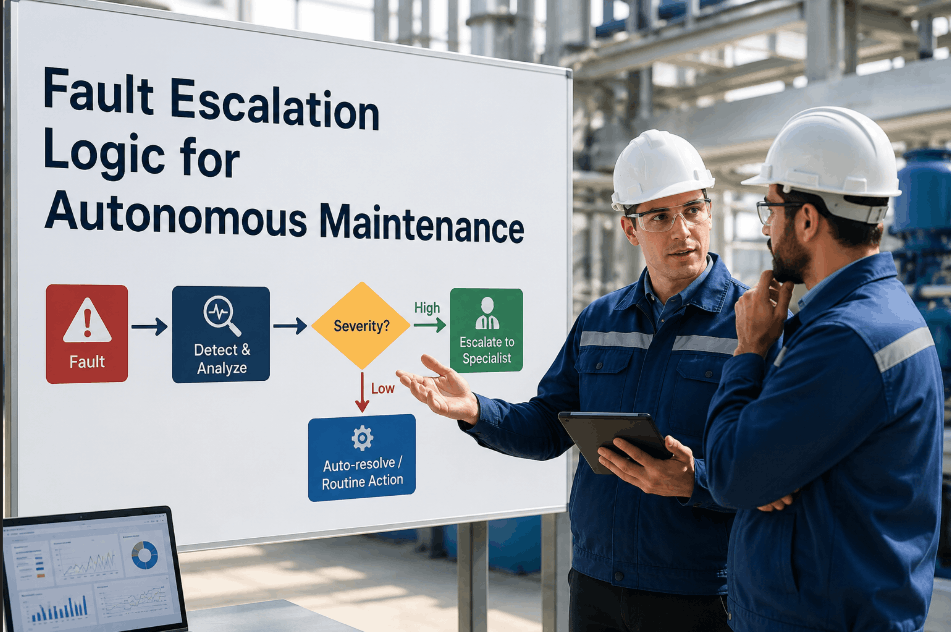
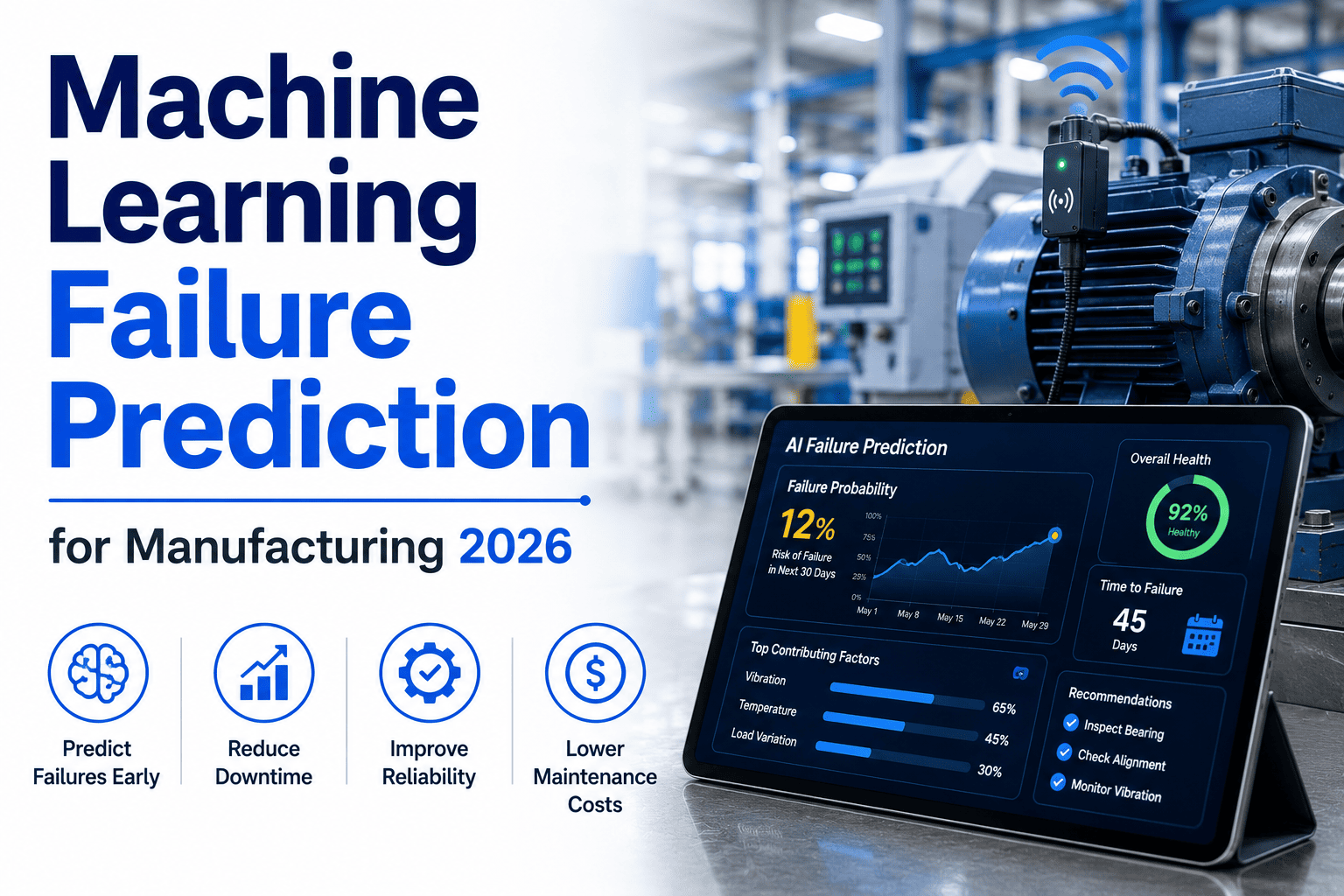
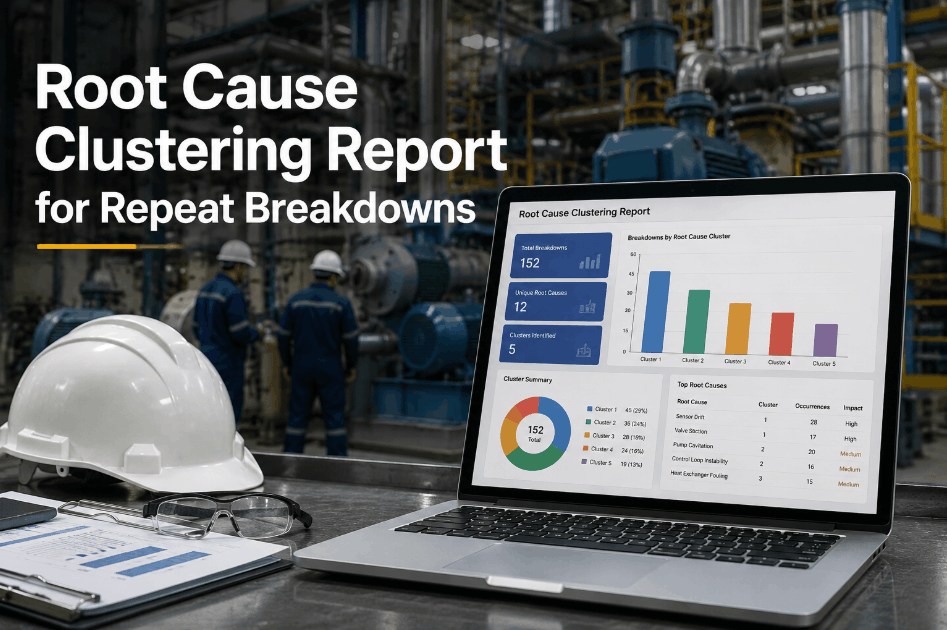
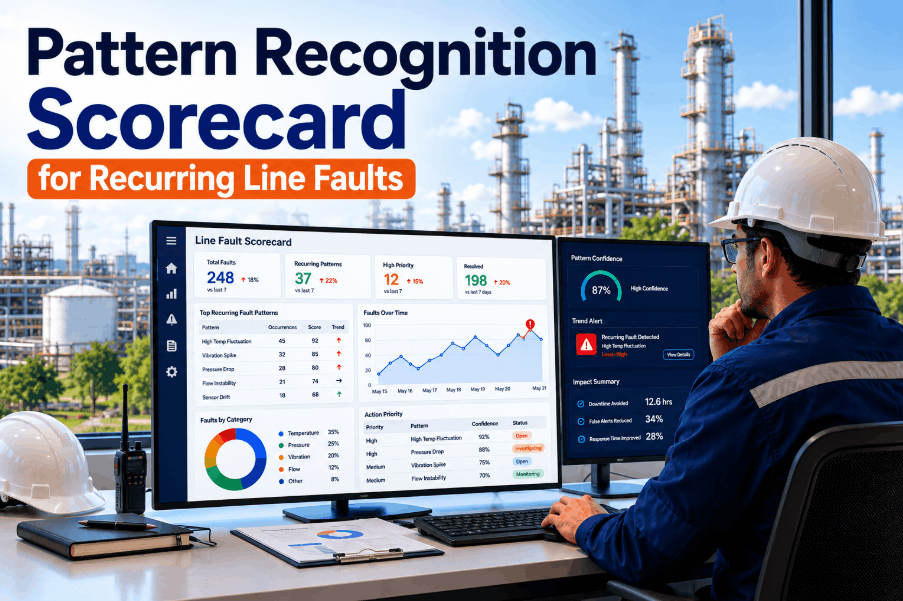
Fault escalation logic is the decision layer that determines whether an autonomous maintenance routine handles a detected fault independently, routes it to a technician, escalates it to a reliability engineer, or halts production pending emergency intervention — without delay and without ambiguity. As manufacturing operations increase automation and reduce continuous human monitoring, the absence of clearly defined escalation logic is the most common reason autonomous maintenance programs stall at implementation or generate costly false escalations that erode operator trust. Sign Up Free to configure Oxmaint's fault escalation and autonomous work order routing framework for your plant's autonomous maintenance program. Facilities with structured fault escalation logic see 35–55% reductions in response latency for critical fault events and achieve sustained autonomous maintenance compliance rates above 80% within the first 90 days of deployment. Book a Demo to see how Oxmaint's escalation engine routes the right fault to the right person in the right timeframe — automatically, across every shift and production zone.
FAULT ESCALATION · AUTONOMOUS MAINTENANCE · CMMS AUTOMATION
Design Fault Escalation Logic That Never Stalls in Oxmaint
Configurable escalation rules, automatic work order routing, fault severity classification, and multi-tier response workflows — built for manufacturing operations moving toward autonomous maintenance.
Why Fault Escalation Logic Fails in Autonomous Maintenance Programs
Most autonomous maintenance implementations define detection thresholds and response procedures for expected fault types — but fail to account for the edge cases, escalation gaps, and routing ambiguities that surface during live operations. When escalation logic is incomplete, faults either stall in unassigned queues or trigger inappropriate escalations that undermine confidence in the autonomous system. Sign Up Free to audit your current escalation logic gaps using Oxmaint's autonomous maintenance workflow review tools.
ROOT CAUSES OF ESCALATION FAILURE IN AUTONOMOUS MAINTENANCE PROGRAMS
01
Undefined Fault Severity Tiers
When fault events are not classified into severity tiers — informational, warning, critical, safety-stop — autonomous routines cannot determine the appropriate escalation path. Every fault triggers the same response regardless of production impact or safety risk.
02
No Shift-Aware Routing Rules
Escalation logic that routes faults to a specific technician without shift-aware fallback rules generates unresponded alerts during off-shifts, holidays, and sick absences. Faults that arrive during coverage gaps stall until someone notices — not until the logic routes to an available alternative.
03
Missing Time-Based Auto-Escalation
If a fault work order is not acknowledged within a defined SLA window, it must automatically escalate to the next response tier — shift supervisor, maintenance manager, or plant director. Without time-based escalation triggers, unacknowledged faults age silently in queues.
04
Autonomous Routine Boundary Ambiguity
Autonomous maintenance programs must clearly define which fault types are within the autonomous routine's scope to handle independently versus which require human authorization before action. Ambiguous boundaries generate routine stalls when autonomous systems encounter edge-case faults they were not explicitly programmed to handle.
05
Over-Escalation Causing Alert Fatigue
Escalation logic that routes too many informational and low-severity faults to human responders generates the same alert fatigue problem as anomaly detection false alarms — engineers begin ignoring escalation notifications, including genuine critical-fault escalations that require urgent response.
06
No Escalation Audit Trail
Without a timestamped record of fault detection, escalation trigger, routing decision, acknowledgment, and resolution, autonomous maintenance programs cannot demonstrate compliance during audits or identify which escalation paths are systematically underperforming.
Fault Escalation Logic Framework: Four Severity Tiers
Effective fault escalation logic for autonomous maintenance programs requires a tiered severity classification system with defined routing paths, SLA windows, and fallback rules at each level. Book a Demo to see how Oxmaint's escalation engine implements this framework across your facility's autonomous maintenance workflows.
FAULT ESCALATION LOGIC — 4-TIER SEVERITY FRAMEWORK FOR AUTONOMOUS MAINTENANCE
Tier 1 — Safety Stop
Personnel hazard, emergency stop trigger, pressure relief activation
Halt machine — lock out — generate emergency WO
Immediate: safety officer + shift manager
Response within 15 minutes
Tier 2 — Critical Fault
Imminent failure risk, production at risk, single-point asset
Flag asset — reduce load — generate priority WO
Reliability engineer + maintenance supervisor
Response within 2 hours
Tier 3 — Warning Fault
Degradation trending outside normal, no immediate failure risk
Log event — generate scheduled inspection WO
Assigned technician via next shift planning
Response within 24–48 hours
Tier 4 — Informational
Minor variance, within acceptable operating range, monitoring flag
Log to asset record — update health score — no WO
Review in weekly planning meeting only
No immediate escalation required
Designing Escalation Routing Rules: Five Configuration Principles
The routing logic within each severity tier determines whether an escalation reaches the right person in time. These five configuration principles prevent the most common escalation routing failures in autonomous maintenance programs. Book a Demo to see how Oxmaint's routing rule builder implements each principle in its escalation configuration interface.
5 CONFIGURATION PRINCIPLES FOR AUTONOMOUS MAINTENANCE ESCALATION ROUTING
01
Primary-Fallback-Override Routing Chains
Every escalation path must define a primary recipient, a fallback if the primary is unavailable (off-shift, unacknowledged within SLA), and a final override that reaches someone with authority to act — regardless of shift coverage. Oxmaint's routing chain builder enforces this three-level structure for every escalation rule configured in the system.
02
Shift Roster Integration for Real-Time Routing
Escalation logic must route to currently on-shift personnel, not to a static named technician. Integrating live shift rosters into Oxmaint's escalation engine ensures that fault notifications reach available responders automatically — without manual handoffs between shifts or out-of-hours routing failures.
03
Acknowledgment-Triggered Time Escalation
Configure Oxmaint to automatically escalate any unacknowledged fault work order to the next tier in the routing chain after a defined interval: 15 minutes for Tier 1, 30 minutes for Tier 2, 4 hours for Tier 3. Time-based escalation ensures that stalled alerts never age silently, regardless of whether the primary responder is available.
04
Asset Criticality Override Rules
For single-point-of-failure assets, apply criticality overrides that push fault events up one severity tier regardless of the fault's initial classification. A Tier 3 warning on a primary production compressor with no redundancy should route with Tier 2 urgency — escalation logic must account for asset criticality, not just fault characteristics.
05
Escalation Audit Trail Capture
Every escalation event — detection timestamp, classification decision, routing path taken, acknowledgment time, and resolution outcome — must be logged immutably in Oxmaint's audit trail. Escalation records support compliance documentation, SLA performance measurement, and systematic identification of which routing paths are underperforming across facilities.
Fault Escalation KPIs for Autonomous Maintenance Programs
Measuring escalation logic performance requires KPIs that capture routing accuracy, response speed, SLA compliance, and the ratio of appropriate to false escalations. These benchmarks define performance standards for autonomous maintenance programs in manufacturing. Sign Up Free to activate Oxmaint's escalation performance tracking dashboard for your autonomous maintenance deployment.
FAULT ESCALATION KPIs — AUTONOMOUS MAINTENANCE PROGRAM BENCHMARKS
Tier 1 Response Time
Time from safety-stop trigger to first human response
> 30 min
10–15 min
< 5 min
Escalation SLA Compliance
Escalations acknowledged within SLA ÷ total escalations
< 65%
82–92%
> 96%
False Escalation Rate
Escalations classified as false positive ÷ total escalations
> 35%
10–20%
< 8%
Routing Accuracy Rate
Escalations reaching correct responder first attempt ÷ total
< 60%
78–88%
> 95%
Autonomous Resolution Rate
Faults resolved autonomously ÷ total fault events
< 25%
45–65%
> 75%
Escalation Audit Completeness
Escalation events with full audit trail ÷ total events
< 70%
88–95%
100%
How Oxmaint Powers Fault Escalation Logic for Autonomous Maintenance
Oxmaint's CMMS provides the escalation rule configuration, shift-aware routing, time-based escalation triggers, and immutable audit trail that autonomous maintenance programs require to route faults reliably across every shift, season, and operating scenario. Sign Up Free to configure your facility's fault escalation logic within Oxmaint's autonomous maintenance framework today.
HOW OXMAINT POWERS FAULT ESCALATION FOR AUTONOMOUS MAINTENANCE PROGRAMS
01
Configurable Escalation Rule Builder
Build multi-tier escalation rules by asset, fault type, severity tier, and time window — without code. Oxmaint's rule builder enforces primary-fallback-override routing chains and validates configuration completeness before rules go live.
02
Live Shift Roster Integration
Oxmaint routes escalations to currently on-shift personnel based on live roster data — automatically updating routing paths across shift changes, vacation schedules, and unplanned absences without manual re-assignment of escalation rules.
03
Time-Based Auto-Escalation Engine
Configurable SLA timers automatically escalate any unacknowledged fault work order to the next routing tier — ensuring that stalled critical alerts never age silently beyond response windows, regardless of first-tier responder availability.
04
Asset Criticality Override Rules
Apply asset criticality tiers from Oxmaint's asset registry to automatically elevate fault severity classifications for single-point-of-failure machines — ensuring production-critical assets receive appropriately urgent routing regardless of raw fault severity.
05
Mobile Push and SMS Escalation Delivery
Escalation notifications reach responders via Oxmaint's mobile app push notifications and SMS — ensuring that off-desk technicians, engineers, and managers receive and acknowledge critical fault alerts wherever they are on the plant floor.
06
Immutable Escalation Audit Trail
Every escalation event is timestamped and logged with detection source, classification decision, routing path, acknowledgment time, and resolution outcome — creating a compliance-ready audit record for every fault event across your autonomous maintenance program.
FAULT ESCALATION · AUTONOMOUS MAINTENANCE · CMMS AUTOMATION · MANUFACTURING
Configure Fault Escalation Logic That Routes the Right Problem to the Right Person
Tiered severity classification, shift-aware routing chains, time-based auto-escalation, and full audit trails — Oxmaint gives autonomous maintenance programs the escalation backbone they need to operate reliably at scale.
Frequently Asked Questions
Q1 What is fault escalation logic in autonomous maintenance?
Fault escalation logic is the rule set that determines how detected faults are classified by severity, which response path they follow, who receives notifications, and how unacknowledged alerts are automatically elevated to higher-authority responders — without human intervention in the routing process itself.
Q2 How does shift-aware routing prevent escalation failures during off-hours?
Shift-aware routing connects escalation rules to live roster data, ensuring notifications always route to a currently available responder. When the primary contact is off-shift or unavailable, the system automatically routes to the on-shift fallback — preventing unacknowledged alerts from aging in queues overnight or across weekends.
Q3 What is the difference between a safety-stop fault and a critical fault in this framework?
A safety-stop fault represents an immediate personnel hazard or emergency condition requiring machine halt before any human inspection. A critical fault signals imminent asset failure risk that requires urgent human intervention — but does not mandate a production stop pending assessment by a qualified responder.
Q4 How does Oxmaint prevent over-escalation and alert fatigue in autonomous maintenance?
Oxmaint's tiered severity classification and configurable fault filtering ensure that informational and warning faults are logged without generating human notifications. Only Tier 1 and Tier 2 faults trigger active escalation — keeping responder notification volume focused on events that genuinely require human action.
Q5 Why is an immutable escalation audit trail important for compliance?
Regulatory audits and internal safety reviews require documented evidence that critical faults were detected, routed, acknowledged, and resolved within defined time windows. An immutable audit trail in Oxmaint provides timestamped records for every escalation event — demonstrating compliance without manual log reconstruction.
Q6 Can Oxmaint support autonomous maintenance programs across multiple production facilities?
Yes. Oxmaint's multi-facility architecture allows each site to configure site-specific escalation rules, routing chains, and SLA windows while giving corporate maintenance and reliability leadership a consolidated view of escalation performance, SLA compliance, and autonomous resolution rates across all facilities simultaneously.
FAULT ESCALATION LOGIC · AUTONOMOUS MAINTENANCE · CMMS · PLANT RELIABILITY
Build Autonomous Maintenance Escalation Logic That Actually Works in Oxmaint
From severity tier configuration to shift-aware routing and compliance audit trails — Oxmaint gives reliability teams the escalation infrastructure to run autonomous maintenance programs that route faults correctly, every shift, at every facility.