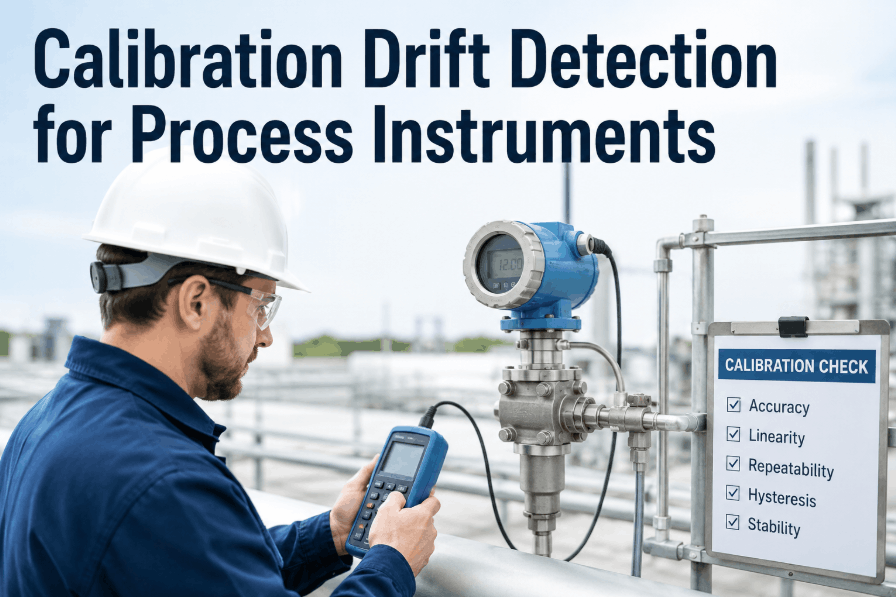
A process manufacturing plant operating across four instrumentation zones and three shift teams had built a compliance liability it could not see. Calibration records lived in disconnected binders, technician sign-offs were tracked on shared paper logs, and traceability between field instruments and quality documentation was reconstructed manually before every audit. With 190+ calibrated instruments, no single record path, and audit windows arriving with increasing frequency, the plant faced growing risk of nonconformance findings, SOP drift, and failed evidence closure. Sign Up Free to see how Oxmaint closes calibration traceability gaps in regulated manufacturing environments. Within 60 days of deploying Oxmaint's CMMS platform, the plant established a single shared calibration record path across all instrument teams, reduced audit preparation time by 82%, and eliminated sign-off confusion that had previously delayed certification cycles by an average of 11 days.
Standardize Calibration Traceability Across Every Instrument Team
Oxmaint delivers digital calibration records, instrument-level audit trails, and sign-off workflows that connect field verification to compliance documentation — deployed in under 60 days without IT overhead.
01 / The Facility
Process Manufacturing Plant. Multiple Instrument Zones. Fragmented Calibration Records.
Facility Type
Process manufacturing plant producing chemical intermediates under regulatory oversight with ISO 9001 quality management obligations, instrument calibration traceability requirements, and internal audit cycles recurring every quarter. Three active shift teams across four instrumentation zones with no centralized calibration record system.
Scale
Single facility. 190+ calibrated instruments including pressure transmitters, temperature sensors, flow meters, analytical instruments, and safety-critical measurement devices. Calibration intervals ranging from monthly to annual based on instrument criticality and regulatory requirements.
Instrument Team
11-person instrumentation team across three shifts — one instrument supervisor, seven calibration technicians assigned by zone, two quality documentation coordinators, and one compliance lead responsible for audit evidence preparation and regulatory submission packages.
Compliance Baseline
Calibration record completeness at 61% prior to deployment. Average of 14 instruments per month with missing or incomplete traceability documentation. Sign-off delays averaging 11 days between field verification and quality record closure — creating recurring audit exposure and nonconformance risk.
Prior System
Zone-specific paper binders for calibration certificates, shared clipboard logs for technician sign-offs, manual spreadsheet tracking of overdue instruments, and an email chain workflow for quality record approval. No single shared record path visible across instrument teams or accessible to compliance leadership in real time.
Annual Risk Exposure
Audit preparation cycles consuming an estimated 2,200 hours annually across instrumentation and quality functions. Recurring nonconformance findings tied to calibration traceability gaps contributing to delayed certification renewals and customer audit escalations on three separate OEM-linked quality programs.
02 / The Challenge
Disconnected Calibration Records Create Compounding Compliance and Quality Risk
For a regulated process manufacturer, calibration traceability is not a documentation preference — it is a legal and contractual obligation with direct consequences for product release, regulatory standing, and customer audits. When instrument records are distributed across zone binders, sign-offs are tracked on shared paper, and quality coordinators reconstruct evidence packages from memory and email, the compliance system becomes dependent on individual recall rather than documented process. Book a Demo to see how Oxmaint eliminates calibration traceability gaps in regulated manufacturing environments. This facility's challenges were structural — the absence of a single shared record path meant that calibration data existed in fragments, sign-off discipline depended on verbal reminders, and audit evidence could not be produced on demand without days of manual reconstruction.
61%
Record completeness rate
Fewer than two in three calibration records contained complete traceability documentation — missing technician attribution, as-found and as-left readings, reference standard identification, or quality sign-off confirmation required for regulatory defensibility.
11 days
Average sign-off delay
Field verification and quality record closure were separated by an average of 11 days — driven by manual routing between zones, email-based approval workflows, and coordinator unavailability that left calibration events undocumented in the compliance record.
14 instruments/mo
Traceability documentation gaps
Fourteen instruments per month entered audit windows with incomplete or missing calibration traceability — each representing a potential nonconformance finding, a delayed certificate renewal, or a customer-facing quality escalation on regulated production programs.
2,200 hrs/yr
Audit preparation overhead
Annual hours consumed by manual audit evidence assembly, record reconstruction, and cross-zone calibration data reconciliation — time spent compensating for fragmented records rather than improving calibration system performance or reducing instrument downtime.
"Every audit cycle started the same way — two coordinators spending a week reconstructing what happened in the field. We weren't managing calibration. We were managing the gaps in our calibration records."
03 / The Solution
Oxmaint CMMS: Unified Calibration Records, Digital Sign-Off Workflows, and Instrument-Level Audit Trails
After evaluating four CMMS and calibration management platforms, the instrument supervisor and compliance lead selected Oxmaint for its structured asset registry, mobile-first technician workflow, and configurable sign-off routing that matched the plant's existing instrument zone and approval hierarchy. The implementation priority was replacing fragmented zone binders with a single shared calibration record path accessible to all instrument teams and compliance leadership simultaneously. Sign Up Free and configure your first instrument calibration schedule in under a day.
CALIBRATION RECORDS
Digital calibration records replaced zone binders and paper certificates across all 190+ instruments. Technicians captured as-found readings, as-left values, reference standard identification, and calibration result on mobile devices at the point of work — with mandatory field completion enforcing complete traceability before record closure.
SIGN-OFF WORKFLOWS
Structured digital sign-off routing replaced the email chain approval process. Calibration records moved automatically from technician field closure to quality coordinator review to compliance sign-off — with escalation alerts triggered when approvals exceeded configured time thresholds, eliminating the 11-day average delay.
INSTRUMENT REGISTRY
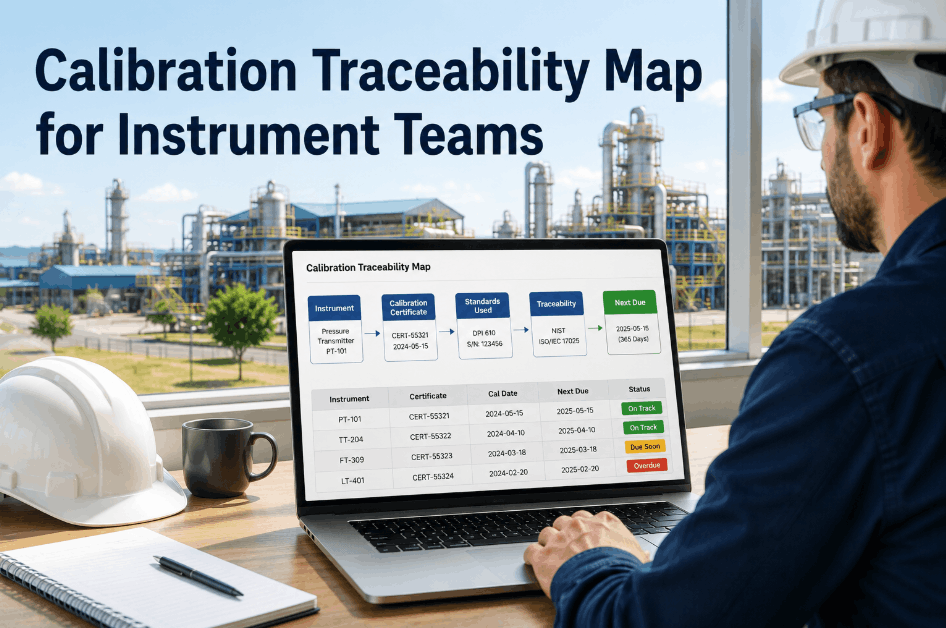
All 190+ calibrated instruments catalogued into a structured digital registry with QR-tagged instrument profiles containing calibration history, interval schedules, reference standard traceability chains, and technician attribution — giving compliance leadership complete instrument context without manual binder searches or coordinator involvement.
AUDIT TRAIL DASHBOARDS
Compliance dashboards provided real-time visibility into calibration status by zone, instrument, and sign-off stage — replacing the weekly manual spreadsheet update with live audit evidence accessible to quality leadership at any time. Overdue calibration alerts dispatched automatically before interval windows expired.
AUDIT EVIDENCE EXPORT
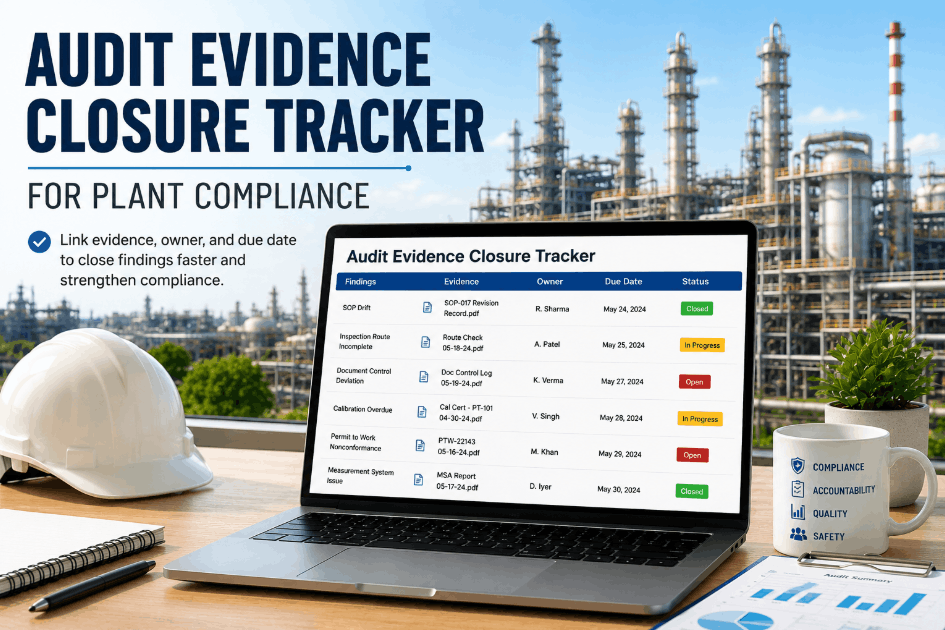
Digital audit evidence packages generated on demand from Oxmaint's reporting engine — replacing the 3-day manual reconstruction process with structured calibration history exports containing complete traceability documentation, technician attribution, and sign-off chains required for regulatory and customer audit submissions.
04 / Implementation
Single Shared Record Path Live in 45 Days. First 100% Traceability Audit Week on Day 51.
Days 1–8
Instrument Registry Build and QR Tag Installation
All 190+ calibrated instruments catalogued into Oxmaint's asset registry from existing spreadsheet records, zone binders, and equipment manuals. Calibration intervals, reference standard requirements, and instrument criticality tiers entered per asset. QR instrument tags printed and installed across all four instrumentation zones. Existing paper calibration certificates digitized and linked to instrument profiles for baseline traceability context.
Days 9–18
Calibration Schedule Configuration and Sign-Off Routing Setup
Calibration schedules configured for all instruments by zone, interval, and criticality tier. Digital sign-off routing configured to match existing approval hierarchy — field technician closure, zone lead review, quality coordinator approval, compliance sign-off. Mobile platform deployed across all 11 team devices. First system-generated calibration work orders issued on day 14, surfacing 19 instruments with overdue or near-due calibration windows that paper records had not flagged.
Days 19–35
Parallel Operations, Team Onboarding, and Audit Dashboard Activation
15-day parallel period running paper binders and digital system concurrently across all zones. Technician onboarding completed in 2 hours per person; compliance lead and coordinator training completed in 4 hours including dashboard configuration and audit evidence export setup. Compliance dashboard activated on day 28 with live calibration status across all zones. By day 35, all 11 team members were completing calibration records and sign-offs exclusively through Oxmaint.
Days 36–60
Full Digital Cutover and Compliance Evidence Go-Live
Complete paper elimination across all instrumentation zones by day 45. All calibration records, sign-offs, and traceability documentation flowing exclusively through Oxmaint. First digital audit evidence package generated in under 90 minutes on day 51 — replacing the 3-day manual preparation process. Plant achieved 100% calibration record completeness and zero traceability documentation gaps in its first full digital audit cycle.
05 / Results
60 Days to a Single Record Path. Full Calibration Traceability Across All Instrument Teams.
The transition from fragmented zone records to Oxmaint's unified calibration management platform produced outcomes that exceeded the facility's compliance targets within the first audit cycle. Calibration record completeness reached 100% within 60 days. Sign-off delays dropped from 11 days to under 6 hours. The compliance team had real-time traceability across all 190+ instruments for the first time — and audit evidence packages that previously took 3 days to assemble were generated in under 90 minutes. Book a Demo to see how these outcomes map to your facility's calibration and compliance operations.
| Metric |
Before Oxmaint |
After Oxmaint |
Change |
| Calibration record completeness |
61% |
100% |
+64% improvement |
| Sign-off cycle time |
11 days avg |
Under 6 hours |
−97% sign-off delay |
| Instruments with traceability gaps/month |
14 instruments |
0 instruments |
100% gap elimination |
| Audit preparation time |
3 days manual |
Under 90 minutes |
−82% prep time |
| Nonconformance findings (calibration) |
3–4 per audit cycle |
0 per audit cycle |
Zero findings |
| Certification renewal delays |
11 days avg delay |
On-schedule |
Full on-time compliance |
| Shared calibration record visibility |
Zone-isolated binders |
Live unified dashboard |
Real-time cross-zone access |
| Paper-based calibration records |
100% paper |
0% paper |
Fully digital in 45 days |
| Annual audit overhead (hours) |
2,200 hrs/yr |
390 hrs/yr |
−82% overhead reduction |
−97%
Sign-off delay reduced
45 days
Full paperless deployment
"We went from chasing sign-offs across zones to having a single dashboard where every calibration record, every approval, and every audit trail was visible in real time. The difference was not more people — it was one connected system."
06 / Key Business Impact
What Calibration Traceability Standardization Protected Beyond Documentation Efficiency
01
The 61% record completeness rate was a structural failure, not a technician failure. Zone-isolated binders and email-chain sign-offs created documentation gaps that were invisible until an audit surfaced them. Oxmaint's mandatory field completion and digital routing closed the gap between field verification and quality record closure — eliminating the 14-instrument monthly traceability deficit that had generated recurring nonconformance findings.
02
With incomplete records, calibration cost tracking and instrument replacement planning were impossible. Oxmaint's complete per-instrument history enabled the compliance lead to identify six high-frequency calibration drift instruments whose repeat adjustment records justified replacement over continued servicing — and provided the documented evidence needed for capital authorization.
03
Verbal sign-off coordination between zones allowed records to age in approval queues without visibility. Oxmaint's structured routing with escalation alerts gave quality coordinators automatic notification when approvals exceeded configured thresholds — reducing the average sign-off cycle from 11 days to under 6 hours without additional headcount.
04
Recovering 1,810 hours annually from audit preparation overhead freed the quality team to focus on SOP alignment, calibration procedure improvement, and measurement system analysis — work that had been deferred for years due to time consumed by manual record reconstruction before every audit cycle.
See How Fast Your Plant Can Standardize Calibration Traceability
Oxmaint delivers unified calibration records, digital sign-off workflows, and real-time instrument audit trails — configured across your instrument teams in under 60 days without IT projects or lengthy vendor timelines.
07 / Impact Summary
Operational and Compliance Outcomes at Six Months
Regulatory Audit Readiness
Complete digital calibration records and instrument-level traceability chains reduced audit preparation from 3 days to under 90 minutes — giving the compliance team defensible documentation for every instrument without manual reconstruction or cross-zone record gathering.
Nonconformance Elimination
Zero calibration-related nonconformance findings in the two audit cycles following deployment — ending the recurring finding pattern that had triggered corrective action workflows and consumed quality team capacity on remediation documentation.
Instrument Team Capacity
Eliminating manual record reconstruction and sign-off chasing freed calibration technicians and coordinators to focus on measurement system analysis, calibration procedure optimization, and cross-zone knowledge transfer that the previous system had made structurally impossible.
Document Integrity
Mandatory digital field completion ensured every calibration event produced a complete, timestamped, technician-attributed record — creating the document integrity baseline required for ISO 9001 and customer-facing quality program obligations across all instrument zones.
61%
Record completeness before
100%
Record completeness after
−82%
Audit prep time reduced
Zero
Nonconformance findings
08 / FAQ
Frequently Asked Questions
How does a CMMS improve calibration traceability across multiple instrument teams?
A CMMS creates a single shared record path for every calibration event — capturing as-found readings, reference standard identification, technician sign-offs, and approval routing in one connected system. Oxmaint brought this facility from 61% to 100% calibration record completeness within 60 days.
Can Oxmaint replace zone-based paper calibration binders without disrupting operations?
Yes. Oxmaint's mobile-first platform runs parallel to existing paper systems during a transition period. This 190-instrument facility completed full cutover in 45 days with a 15-day parallel period, reaching zero paper records without interrupting production or audit obligations.
How does Oxmaint support ISO 9001 calibration documentation requirements?
Oxmaint generates complete digital calibration records with technician attribution, timestamps, as-found and as-left readings, and approval chains — providing the traceability documentation required for ISO 9001 and similar regulatory frameworks. Audit evidence packages are generated on demand in under 90 minutes.
How does Oxmaint reduce sign-off delays across distributed instrument teams?
Oxmaint routes calibration records automatically through configured approval hierarchies with escalation alerts when approvals exceed defined time thresholds — replacing email chains and verbal routing that allowed records to age in queues. This facility reduced average sign-off time from 11 days to under 6 hours.
How quickly can a process manufacturing plant deploy Oxmaint for calibration management?
Facilities with existing instrument lists are typically fully operational in 45–60 days. This 190-instrument, 11-person facility completed full deployment in 60 days — including instrument registry setup, calibration schedule configuration, sign-off routing, and digital cutover without external implementation support.
Does Oxmaint support QR-based instrument identification for field calibration workflows?
Yes. Oxmaint supports QR-tagged instrument profiles that technicians scan on mobile devices to access complete calibration history, interval schedules, and reference standard requirements at the point of calibration — eliminating binder searches and coordinator calls mid-procedure.
What ROI can regulated manufacturers expect from implementing CMMS-based calibration management?
Facilities with fragmented calibration records typically see measurable ROI within one to two audit cycles through eliminated nonconformance findings, recovered audit preparation overhead, and deferred corrective action costs. This facility eliminated all calibration-related audit findings within 60 days of deployment.
100% Calibration Traceability. Zero Nonconformance Findings. Deployed in 60 Days.
190 instruments. Four zones. Three shifts. One connected calibration management platform. See what Oxmaint delivers for your regulated manufacturing facility.