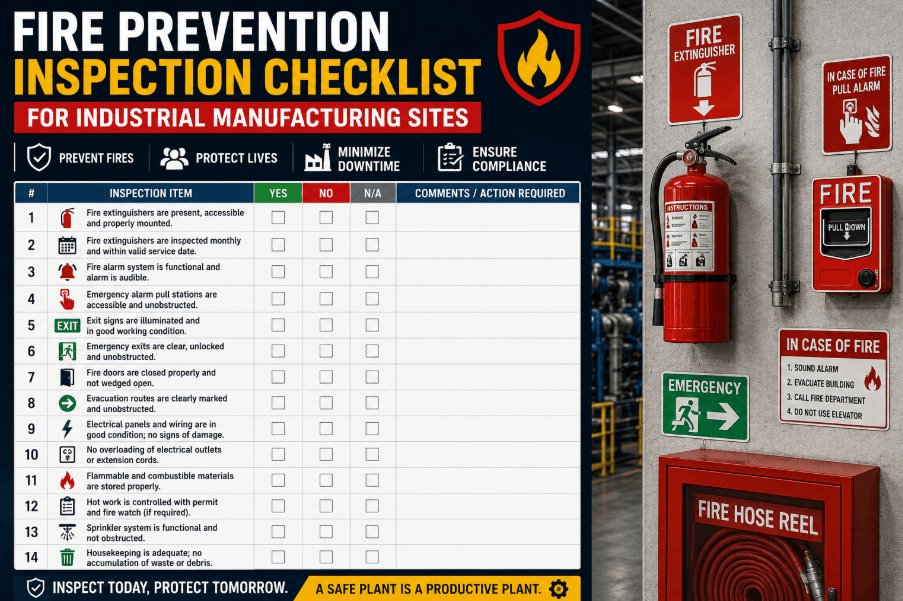
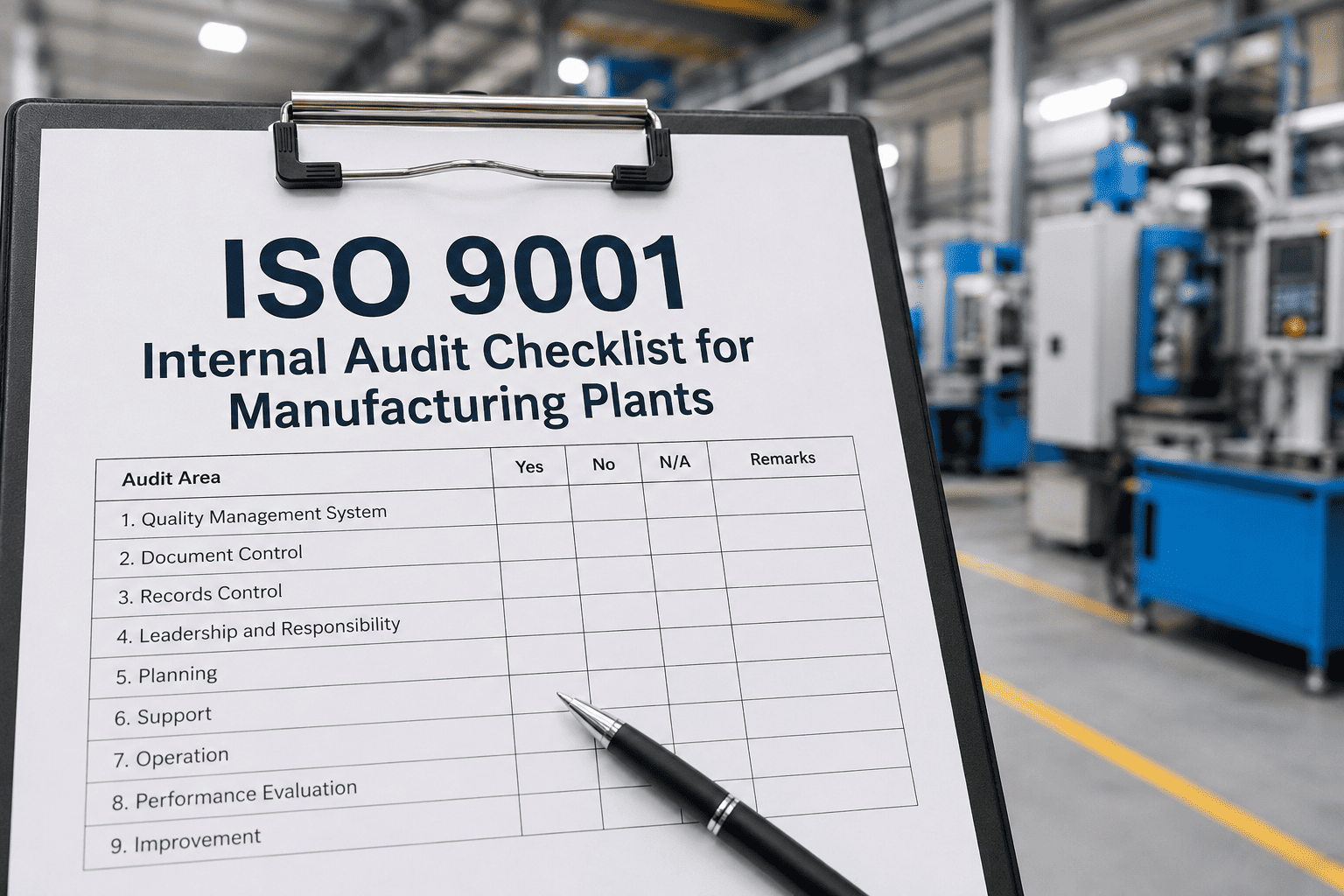
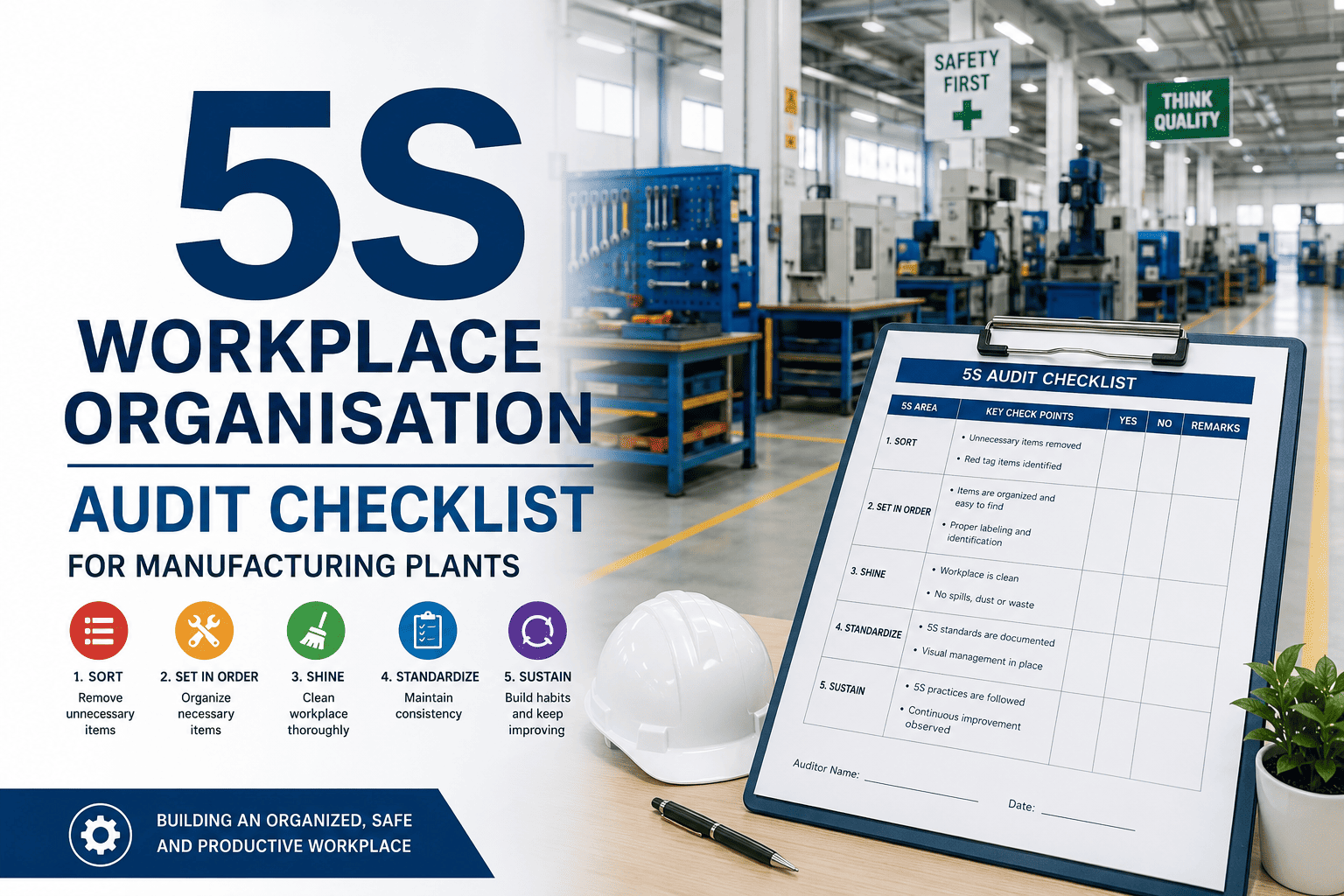
Fire in a manufacturing facility is rarely sudden — it is almost always the product of weeks or months of missed inspections, ignored hazards, and deferred maintenance. NFPA 1, NFPA 72, NFPA 25, and OSHA 1910.157 impose strict inspection duties on every facility that stores flammable materials, runs hot work operations, or uses industrial heating equipment. Manufacturing plants that run documented fire safety inspection programs report 65% faster regulatory audit completion and substantially lower property insurance premiums. This checklist covers every fire safety inspection tier — daily walk-arounds, weekly device checks, monthly system tests, and annual certification — with each item tied to the exact standard it satisfies, the failure mode it prevents, and the consequence of skipping it. Start managing your fire safety inspections digitally with OxMaint's fire compliance platform, built for industrial and manufacturing environments.
Fire Prevention · Life Safety · NFPA Compliance
Fire Safety Inspection Checklist for Manufacturing Plants
Daily, weekly, monthly, and annual inspection items covering extinguishers, sprinkler systems, fire alarms, evacuation routes, and hot work controls — mapped to NFPA 1, NFPA 72, NFPA 25, and OSHA 1910 standards.
Daily Checks
Weekly Checks
Monthly Checks
Annual Checks
65%
Faster regulatory audits with documented fire inspection programs
$2.3B
Annual manufacturing property losses from industrial fires (NFPA data)
NFPA 25
Governs sprinkler and suppression system inspection intervals and testing
4 Tiers
Every required fire safety inspection level in a single compliance checklist
Daily
Daily Fire Safety Walk-Around
The daily fire safety check is a 10-minute walk-around that catches the hazards most likely to appear between shifts — blocked exits, improperly stored flammables, and hot work residue from the previous shift. These checks are required under OSHA 1910.37 for egress and NFPA 1 for general fire prevention.
Egress & Exit Routes
All emergency exit doors confirmed unobstructed and fully openable — no pallets, equipment, or waste blocking exit paths; door hardware functional with no padlocks on final exit doors used during occupancy
Standard: OSHA 1910.37 / NFPA 101 · Record: Daily egress log · Role: Safety Officer · Frequency: Daily
Exit and emergency lighting visually confirmed illuminated — all exit signs lit, emergency luminaires operational; any non-illuminated unit tagged and reported immediately for same-shift repair
Standard: NFPA 101 / OSHA 1910.37(b) · Record: Lighting check log · Role: Safety Officer · Frequency: Daily
Housekeeping & Flammable Materials
Combustible waste and scrap accumulation inspected — metal swarf, oily rags, cardboard, and packaging removed from production floor to designated waste areas; no combustibles within 3 metres of heating equipment or electrical panels
Standard: NFPA 1 Chapter 10 / OSHA 1910.106 · Record: Housekeeping inspection log · Role: Shift Supervisor · Frequency: Daily
Flammable liquid storage areas checked — all containers properly labelled, sealed, and stored in approved flammable storage cabinets; no unapproved containers; quantity in work area within permit limit
Standard: NFPA 30 / OSHA 1910.106 · Record: Flammable storage log · Role: Shift Supervisor · Frequency: Daily
Hot Work Controls
Post-hot-work fire watch inspection completed — 30-minute fire watch after welding, cutting, or grinding work ends; area re-inspected at 60 minutes and again at the end of shift for smouldering fires in insulation or hidden voids
Standard: NFPA 51B · Record: Hot work permit and fire watch log · Role: Hot Work Supervisor · Frequency: After every hot work session
Weekly
Weekly Fire Device Inspection
Weekly inspections cover portable fire extinguishers, sprinkler system control valves, and alarm panel status — devices that must be in ready condition at all times but whose physical status can change without triggering an alert. NFPA 10 and NFPA 25 both specify weekly inspection requirements for these systems.
Fire Extinguishers
Each extinguisher visually inspected in place — confirm accessible (no obstructions within 1 metre), mounted in designated location, pressure gauge in green zone, pin and tamper seal intact, and label legible with correct class for local hazard
Standard: NFPA 10 / OSHA 1910.157 · Record: Extinguisher inspection tag + log · Role: Safety Officer · Frequency: Weekly
Extinguisher inspection tag updated — date and inspector initials recorded on attached tag; any extinguisher with discharged gauge, missing pin, broken seal, or damaged hose removed and replaced immediately with a serviceable unit from reserve stock
Standard: NFPA 10 Section 7.2 · Record: Inspection tag + master log · Role: Safety Officer · Frequency: Weekly
Sprinkler System & Suppression Controls
Sprinkler system control valves confirmed fully open and sealed — any closed or partially closed control valve discovered during inspection is an immediate emergency requiring fire watch until valve is restored and cause investigated
Standard: NFPA 25 Section 13.3 · Record: Control valve inspection log · Role: Safety Officer · Frequency: Weekly
Fire Alarm Panel
Fire alarm control panel status checked — no fault, trouble, or disabled zone indicators; any zone in alarm or trouble status investigated and cleared; record panel status and any active conditions in weekly log
Standard: NFPA 72 · Record: Panel status log · Role: Fire Systems Technician · Frequency: Weekly
Managing Fire Safety Across Multiple Buildings or Sites?
OxMaint schedules fire safety inspections by tier, assigns them by role, and flags overdue items before your next regulatory audit — all without spreadsheets or paper forms.
Monthly
Monthly Fire System Tests
Monthly fire safety tasks require brief system tests and documented results. They cover alarm device function, sprinkler water flow, emergency lighting battery, and suppression system agent levels — items that can degrade silently over weeks of normal plant operation.
Fire Alarm System
Manual call point (pull station) tested at rotating locations monthly — one station per zone tested each month so all stations are tested within a 12-month cycle; confirm alarm activation, monitoring centre notification, and reset function
Standard: NFPA 72 Chapter 14 · Record: Alarm test log · Role: Fire Systems Technician · Frequency: Monthly (rotating)
Smoke detector sensitivity test performed on rotating sample — NFPA 72 requires sensitivity testing within first year, then every two years; detectors found outside listed sensitivity range cleaned or replaced immediately
Standard: NFPA 72 Section 14.4 · Record: Detector test report · Role: Fire Systems Technician · Frequency: Monthly (rotating sample)
Emergency Lighting
Emergency lighting 30-second test performed — simulate power failure and confirm all emergency luminaires illuminate; any unit that fails to illuminate within 10 seconds of power loss is a non-conformity requiring same-day repair
Standard: NFPA 101 Section 7.9 / BS 5266 · Record: Emergency lighting test log · Role: Electrical Technician · Frequency: Monthly
Sprinkler System Flow Test
Wet pipe sprinkler system inspector's test valve opened to confirm water flow alarm activates — monitoring centre notified before test; confirm alarm activates within 90 seconds of valve opening; record flow pressure and alarm response time
Standard: NFPA 25 Section 5.2 · Record: Flow test log · Role: Fire Protection Technician · Frequency: Monthly
Annual
Annual Fire Safety Inspection & Certification
Annual fire safety inspections are mandatory under NFPA 1, NFPA 25, and NFPA 72 and must be performed by qualified or licensed fire protection professionals. They cover every fire protection system in the facility and result in inspection reports that must be submitted to the authority having jurisdiction (AHJ) and retained with insurance documentation.
Sprinkler & Suppression Systems
Full internal sprinkler pipe and head inspection — sprinkler heads inspected for corrosion, paint overspray, mechanical damage, and obstruction within 18 inches; any head installed more than 50 years must be replaced or tested for functionality
Standard: NFPA 25 Section 5.4 · Record: Annual inspection report · Role: Licensed Fire Protection Inspector · Frequency: Annual
Special suppression system agent quantity and pressure verified — halon replacement, FM-200, CO2, or dry chemical systems agent weighed or measured against nameplate capacity; containers below 95% of rated agent quantity must be recharged before inspection sign-off
Standard: NFPA 2001 / NFPA 12 · Record: Agent quantity record · Role: Licensed Suppression Inspector · Frequency: Annual (or semi-annual for high-risk)
Fire Alarm Full System Test
100% of fire alarm initiating devices tested — all smoke detectors, heat detectors, manual stations, and flow switches activated and confirmed in alarm at panel; all notification appliances (horns, strobes) confirmed audible and visible throughout facility
Standard: NFPA 72 Chapter 14 · Record: Annual fire alarm test report · Role: Licensed Fire Alarm Inspector · Frequency: Annual
Fire Safety Certification
Annual fire safety inspection certificate issued and submitted to AHJ — all inspection reports (sprinkler, alarm, suppression, extinguisher) filed with plant compliance register; insurance broker notified and certificate of compliance forwarded for policy renewal
Standard: NFPA 1 / Jurisdictional Fire Code · Record: Annual fire safety certificate · Role: Fire Marshal / Compliance Officer · Frequency: Annual
Fire Safety Standards at a Glance
What Fire Safety Professionals Say
01
The most dangerous fire protection failure we see in manufacturing plants is not missing a sprinkler head — it is a closed control valve that nobody noticed for weeks. Weekly valve inspections are non-negotiable and take less than five minutes per riser.
Fire Protection Engineer, 24 years — Heavy Industrial Sector
02
Blocked exits are the single most common OSHA fire citation in manufacturing. We see it in every audit — one pallet placed for convenience and left for weeks. The daily egress check is the only control that reliably prevents it.
OSHA Compliance Specialist — Life Safety, 16 years
03
When a fire incident occurs, the first question insurers ask is whether annual inspection reports exist for all systems. Facilities with complete digital records process claims in weeks. Facilities without records fight coverage disputes for years.
Industrial Insurance Underwriter — Property and Casualty, 20 years
Frequently Asked Questions
How often must fire extinguishers be inspected in a manufacturing plant?
NFPA 10 requires a visual inspection at least monthly (most plants do weekly), a full annual maintenance service by a certified technician, and a 6-year internal service. OSHA 1910.157 requires monthly inspection of all extinguishers with a documented record kept for each unit.
Who is qualified to conduct the annual fire alarm test?
Annual fire alarm testing under NFPA 72 must be performed by a qualified person — typically a licensed fire alarm technician or systems contractor. The test report must be submitted to the Authority Having Jurisdiction (AHJ) and retained on-site for a minimum of three years.
What is required for a hot work permit programme?
NFPA 51B requires a written hot work permit for any welding, cutting, or grinding away from a designated safe area. The permit must confirm area clearance, fire watch arrangement, extinguisher availability, and post-work inspection. Permits must be retained for 12 months minimum.
How long must fire safety inspection records be kept?
NFPA 25 requires sprinkler inspection records to be kept for a minimum of one inspection cycle (typically one year). NFPA 72 requires alarm test records for one year. OSHA requires extinguisher records to be maintained and available on demand. Best practice is to retain all fire records for five years.
Your Fire Safety Records Should Be Ready Before the Inspector Arrives
OxMaint gives you digital fire safety inspection logs, auto-scheduled checks at every tier, and instant compliance reports for fire marshals, insurers, and regulatory auditors. Every check timestamped. Every finding actioned. Every certificate retrievable in seconds.

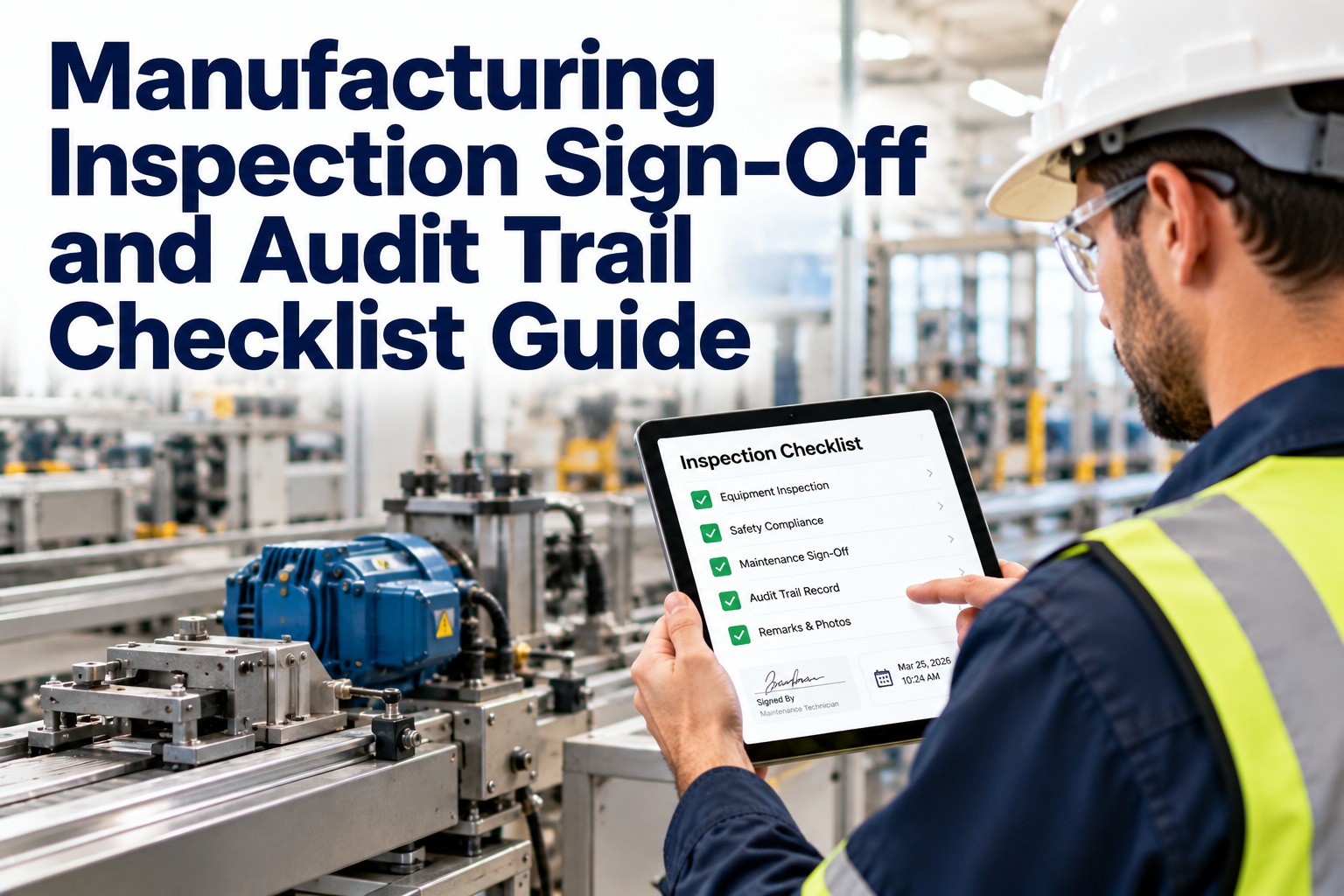
![monthly-manufacturing-plant-safety-audit-checklist-[osha---iso-45001]](./manage-post-2k26/uploads/monthly-manufacturing-plant-safety-audit-checklist-[osha---iso-45001].png)