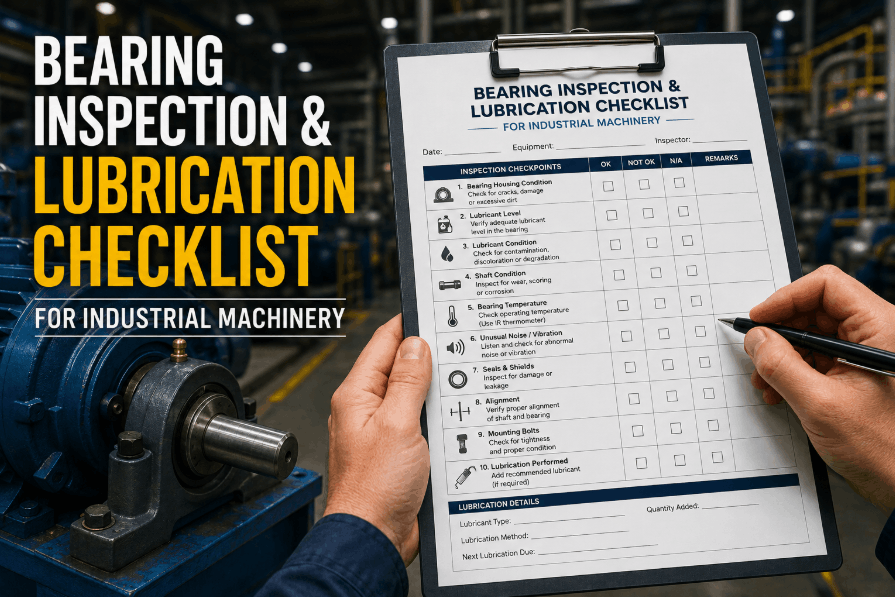
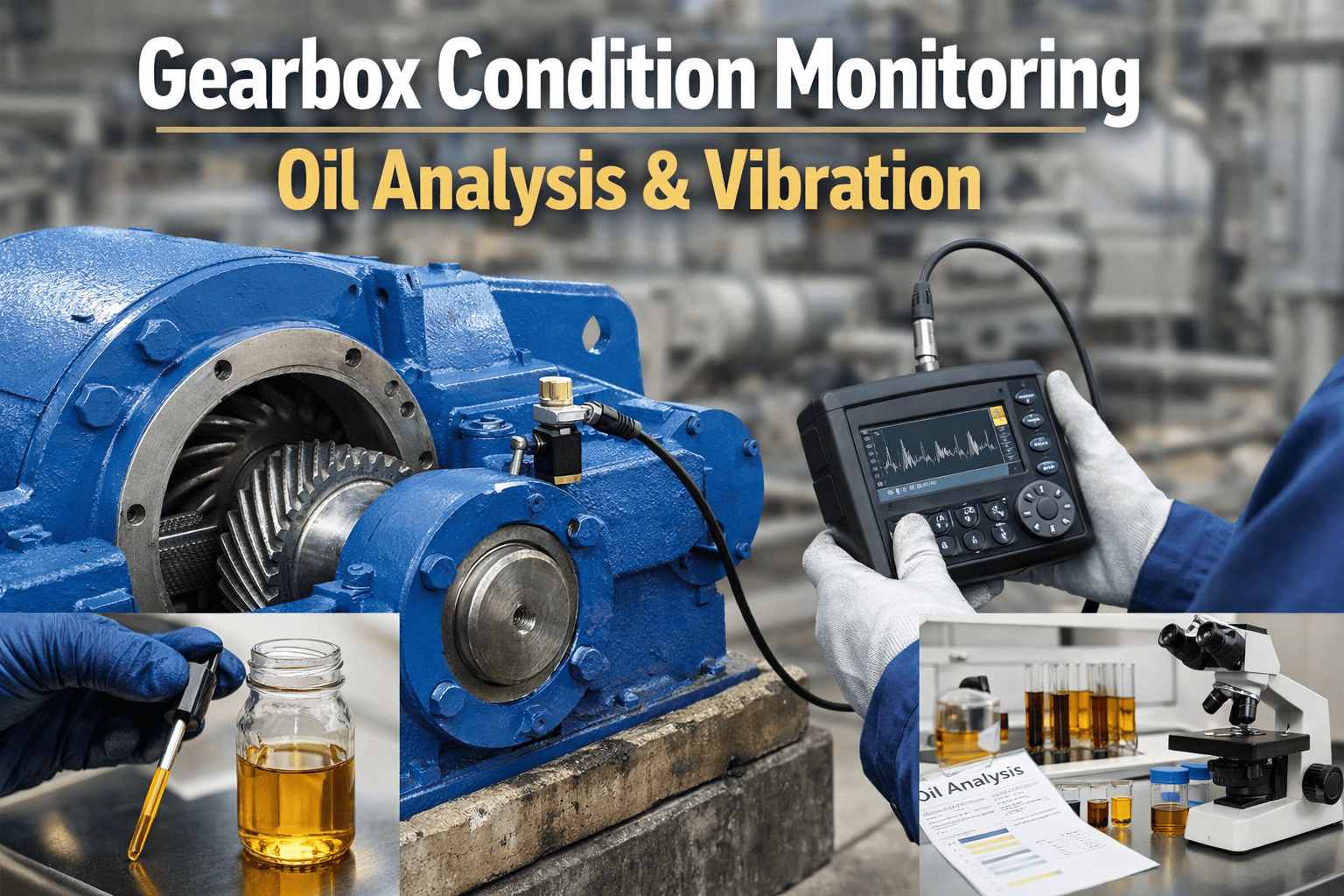
A gearbox that fails mid-shift doesn't just stop one machine — it can halt an entire production line, trigger emergency repair costs 8–12x higher than preventive maintenance, and expose your facility to unplanned downtime that compounds every hour. Industrial gearboxes — helical, bevel, worm, and planetary — are the silent workhorses of manufacturing floors, and OxMaint's maintenance management platform gives your team a structured, digital-first approach to keep them running. This checklist covers every critical inspection point your maintenance team must verify — from oil analysis and vibration monitoring to seal condition and alignment verification.
Equipment Maintenance · Industrial Gearbox · PM Checklist
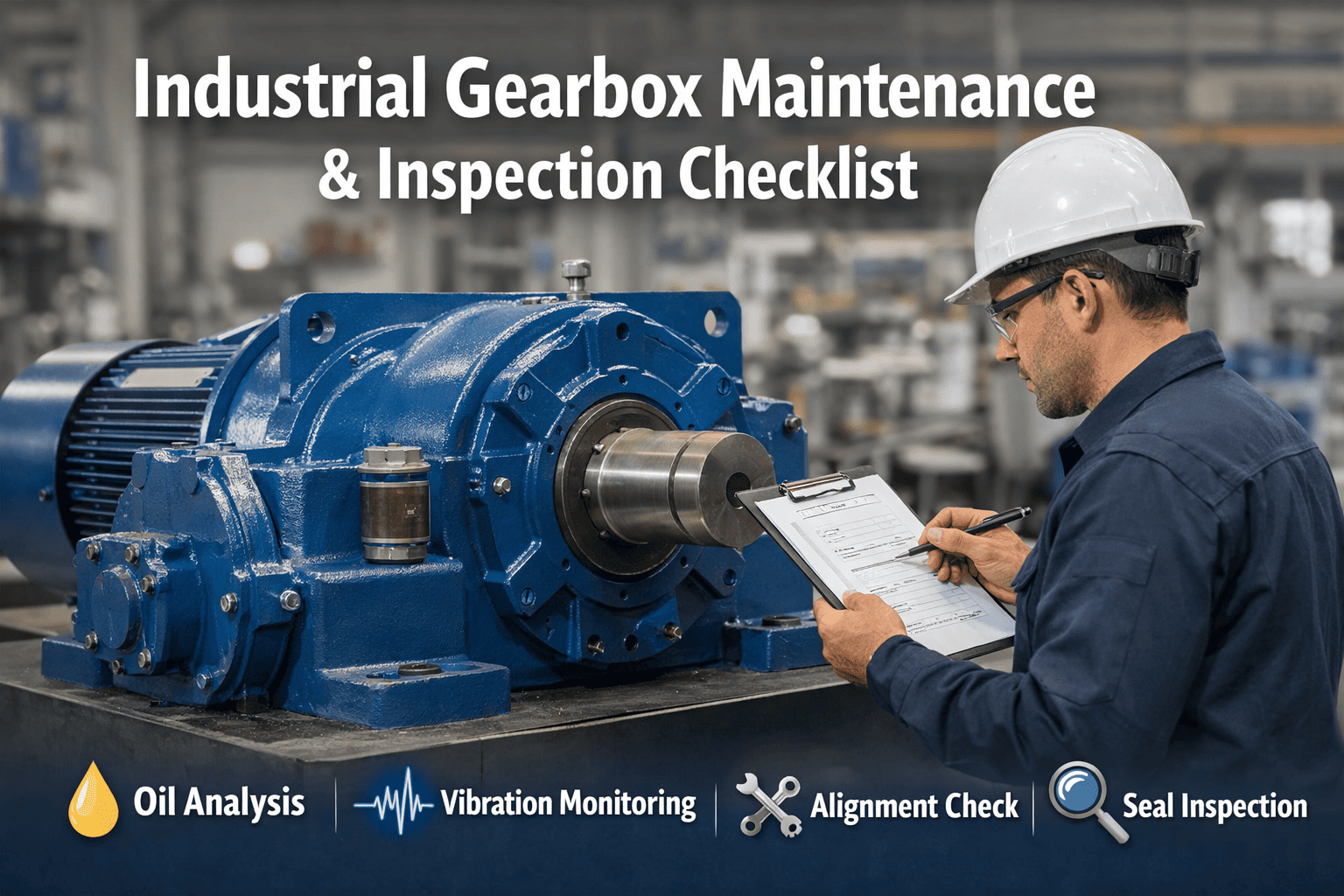
Industrial Gearbox Maintenance & Inspection Checklist
Five inspection zones covering oil analysis, vibration, alignment, seals, and housekeeping — structured for maintenance engineers, reliability technicians, and plant managers.
70%
Of gearbox failures are preventable with routine PM checks
8–12×
Higher cost of emergency repair vs scheduled maintenance
ISO 281
Bearing life standard referenced in gearbox inspection
Monthly
Minimum frequency for full gearbox walkthrough inspection
Gearbox Types Covered
Helical
Bevel
Worm
Planetary
Parallel Shaft
Right Angle
Zone 1 — Oil & Lubrication
Zone 2 — Vibration & Noise
Zone 3 — Alignment & Mounting
Zone 4 — Seals & Housings
Zone 5 — Operational Check
Gearbox Failure Cause Breakdown
Zone 01
Oil Analysis & Lubrication
Lubrication failure is the single largest driver of industrial gearbox breakdowns. The right lubricant, at the right level, in the right condition, is the most cost-effective maintenance investment you can make. This zone must be completed first on every inspection round.
Oil Level & Condition
Verify oil level at sight glass or dipstick — level must fall within manufacturer's MIN–MAX range; low level indicates leak or overconsumption
Record: Oil level log · Role: Lubrication Technician · Frequency: Weekly
Inspect oil colour and clarity through sight glass — milky appearance signals water contamination; black/dark oil indicates oxidation or overheating
Record: Visual oil log · Role: Lubrication Technician · Frequency: Weekly
Check oil temperature at operating load — sustained temps above 80°C (176°F) degrade ISO VG 220/320 gear oil viscosity and accelerate wear
Record: Temperature log · Role: Mechanical Engineer · Frequency: Weekly
Oil Analysis & Sampling
Collect oil sample for spectrometric analysis — measure viscosity, TAN (Total Acid Number), wear metals (Fe, Cu, Cr, Al) and particle count per ISO 4406
Record: Oil analysis report · Role: Reliability Engineer · Frequency: Monthly
Inspect magnetic drain plug for metallic debris — fine ferrous particles are normal; chunky debris or shiny flakes indicate gear tooth or bearing damage
Record: Drain plug inspection form · Role: Lubrication Technician · Frequency: Monthly
Verify oil change interval compliance per OEM schedule — most industrial gear reducers require full oil change every 2,000–4,000 operating hours or 12 months
Record: Oil change history card · Role: Maintenance Planner · Frequency: Per schedule
Breather & Filtration
Inspect breather/vent plug — blocked breathers cause internal pressure buildup leading to seal blowout and oil leakage; replace if clogged
Record: Breather check log · Role: Lubrication Technician · Frequency: Monthly
Check inline oil filter differential pressure — replace filter element when differential pressure exceeds 0.5–1.0 bar above baseline or per OEM spec
Record: Filter inspection card · Role: Lubrication Technician · Frequency: Monthly
Zone 02
Vibration Monitoring & Noise Analysis
Abnormal vibration is the earliest detectable symptom of developing gear tooth wear, bearing failure, and shaft imbalance. A baseline vibration reading taken at commissioning is the reference every subsequent measurement must be compared against.
Vibration Measurement
Measure overall vibration velocity (mm/s RMS) at input, intermediate, and output bearing housings — compare to ISO 10816-3 severity zones (Zone A: new, B: acceptable, C: alarm, D: danger)
Record: Vibration data sheet · Role: Vibration Analyst · Frequency: Monthly
Record vibration readings in three axes (axial, radial, tangential) — axial vibration increase typically indicates misalignment; radial increase points to imbalance or bearing wear
Record: Tri-axial vibration log · Role: Vibration Analyst · Frequency: Monthly
Perform FFT spectrum analysis if overall vibration exceeds baseline by 25% — identify gear mesh frequency (GMF) sidebands that indicate gear tooth damage
Record: FFT analysis report · Role: Reliability Engineer · Frequency: On alarm
Noise & Temperature Checks
Listen for abnormal noise patterns — rhythmic clicking or thumping indicates broken gear tooth; whining indicates inadequate lubrication; grinding points to bearing damage
Record: Acoustic inspection log · Role: Maintenance Technician · Frequency: Weekly
Take infrared (IR) thermal image of gearbox housing and bearing housings — hot spots more than 15°C above baseline require immediate investigation
Record: Thermal image archive · Role: Reliability Engineer · Frequency: Monthly
Perform ultrasonic bearing inspection using ultrasonic detector — detects early-stage bearing defects up to 8 weeks before vibration analysis confirms failure
Record: Ultrasonic inspection form · Role: Vibration Analyst · Frequency: Quarterly
Schedule gearbox PM rounds automatically — assign findings as work orders before your technician leaves the machine.
Zone 03
Alignment & Mounting Verification
Misalignment is the third-largest cause of gearbox failure and directly accelerates bearing and seal wear. Even a 0.1 mm angular misalignment at operating temperature is enough to reduce bearing L10 life by 30–50%.
Shaft Alignment
Verify shaft coupling alignment using laser alignment tool — angular misalignment must be within ±0.05 mm/100 mm and parallel offset within ±0.05 mm per OEM tolerance
Record: Alignment report · Role: Mechanical Engineer · Frequency: Quarterly / post-maintenance
Check for soft foot on gearbox mounting base — place dial indicator on each foot and loosen one bolt at a time; movement of more than 0.05 mm indicates soft foot requiring shimming
Record: Soft foot measurement form · Role: Mechanical Engineer · Frequency: Annually / post-reinstall
Inspect flexible coupling element (rubber spider, disc pack, or jaw insert) for wear, cracking, or deformation — replace on any visible damage before next run
Record: Coupling inspection log · Role: Maintenance Technician · Frequency: Monthly
Foundation & Fasteners
Torque-check all mounting bolts to OEM specification using calibrated torque wrench — vibration causes fastener loosening that compounds misalignment over time
Record: Torque check log · Role: Maintenance Technician · Frequency: Monthly
Inspect baseplate grout and foundation for cracking or deterioration — compromised foundation transmits vibration directly to the gearbox frame and accelerates structural fatigue
Record: Foundation inspection form · Role: Civil / Mechanical Engineer · Frequency: Annually
Zone 04
Seal Condition & Housing Inspection
Shaft Seals
Inspect input and output shaft seals for leakage — wet oil film around shaft seal lip is acceptable; active dripping requires immediate seal replacement
Record: Seal inspection log · Role: Maintenance Technician · Frequency: Weekly
Check labyrinth seals or V-ring seals for wear and correct seating — misseated seals allow ingress of dust, water, and process contamination into the oil sump
Record: Seal condition form · Role: Mechanical Engineer · Frequency: Monthly
Inspect gearbox cover and housing joint face gaskets for oil weeping — re-torque cover bolts to OEM spec before deciding on gasket replacement
Record: Housing inspection log · Role: Maintenance Technician · Frequency: Monthly
Housing & External Condition
Inspect housing exterior for cracks, impact damage, or corrosion — cracks in cast iron housings require immediate engineering assessment before continued operation
Record: Housing condition report · Role: Reliability Engineer · Frequency: Monthly
Check cooling fins (if air-cooled) for blockage from dust, grease, or debris — blocked fins increase housing temperature by 10–20°C and accelerate oil oxidation
Record: Cooling inspection form · Role: Maintenance Technician · Frequency: Monthly
Verify nameplate legibility — record gearbox model, ratio, oil type, and oil volume on the asset card in your CMMS for reference during future maintenance
Record: Asset register · Role: Maintenance Planner · Frequency: Annually
Zone 05
Operational Performance Check
Running Checks Under Load
Record input and output shaft speeds using tachometer — verify actual gear ratio matches nameplate ratio; deviation indicates gear tooth wear or slippage
Record: Speed check log · Role: Mechanical Engineer · Frequency: Monthly
Verify output torque or current draw on driving motor is within design limits — sustained overloading above 110% rated torque accelerates fatigue on gear tooth flanks
Record: Load monitoring log · Role: Electrical / Mechanical Engineer · Frequency: Monthly
Check for backlash increase by manually rocking the output shaft with input locked — excessive play indicates gear tooth wear requiring measurement against OEM backlash tolerance
Record: Backlash measurement form · Role: Reliability Engineer · Frequency: Quarterly
Documentation & Records
Update gearbox asset history in CMMS — log all readings, findings, and corrective actions taken; a complete service history is essential for failure trend analysis and insurance claims
Record: CMMS asset record · Role: Maintenance Planner · Frequency: Every inspection
Confirm next scheduled inspection date and assign responsible technician in the work order system — unassigned tasks are the leading cause of missed PM rounds across multi-site operations
Record: Work order system · Role: Maintenance Supervisor · Frequency: Every inspection
KPI Reference
Gearbox Maintenance Metrics That Matter
| Metric |
How to Measure |
Target |
Review Cadence |
| PM Completion Rate |
Completed inspections / Scheduled inspections |
100% |
Monthly |
| Gearbox MTBF |
Total operating hours / Number of failures |
Trending upward |
Quarterly |
| Oil Analysis Out-of-Spec Rate |
Failed samples / Total samples |
< 5% |
Monthly |
| Corrective Actions Closed |
Closed findings / Total open findings within 14 days |
> 90% |
Weekly |
| Vibration Alarm Events |
Readings exceeding ISO 10816 Zone B per quarter |
0 unresolved |
Monthly |
| Repeat Failures |
Same failure mode recurring within 90 days |
0 repeats |
Quarterly |
Industry Insight
What Reliability Engineers Know
01
Oil analysis is the most underused and highest-ROI diagnostic tool in gearbox maintenance. A $30 oil sample sent to a lab monthly can predict a bearing failure 6–8 weeks before it happens and save you a $30,000 unplanned replacement.
Principal Reliability Engineer, Chemical Processing Plant
02
We digitised all gearbox PM rounds into OxMaint and saw our mean time between failures increase by 34% in the first year. The biggest change wasn't the checklist — it was having timestamped trend data that let us act before the alarm, not after it.
Maintenance Manager, Cement Manufacturing Facility
03
Soft foot is responsible for more repeat gearbox failures than any other single installation error. If you can't explain where your shim pack is documented, you haven't actually completed the alignment — you've guessed at it.
Certified Maintenance Reliability Professional (CMRP), OEM Service Division
FAQs
Frequently Asked Questions
Turn Every Gearbox Inspection Into a Timestamped Digital Record
OxMaint connects inspection findings directly to work orders — oil analysis results, vibration alarms, and seal leaks become corrective actions with assigned technicians and due dates, not forgotten paper notes.
-inspection-checklist-for-industrial-facilities.png)