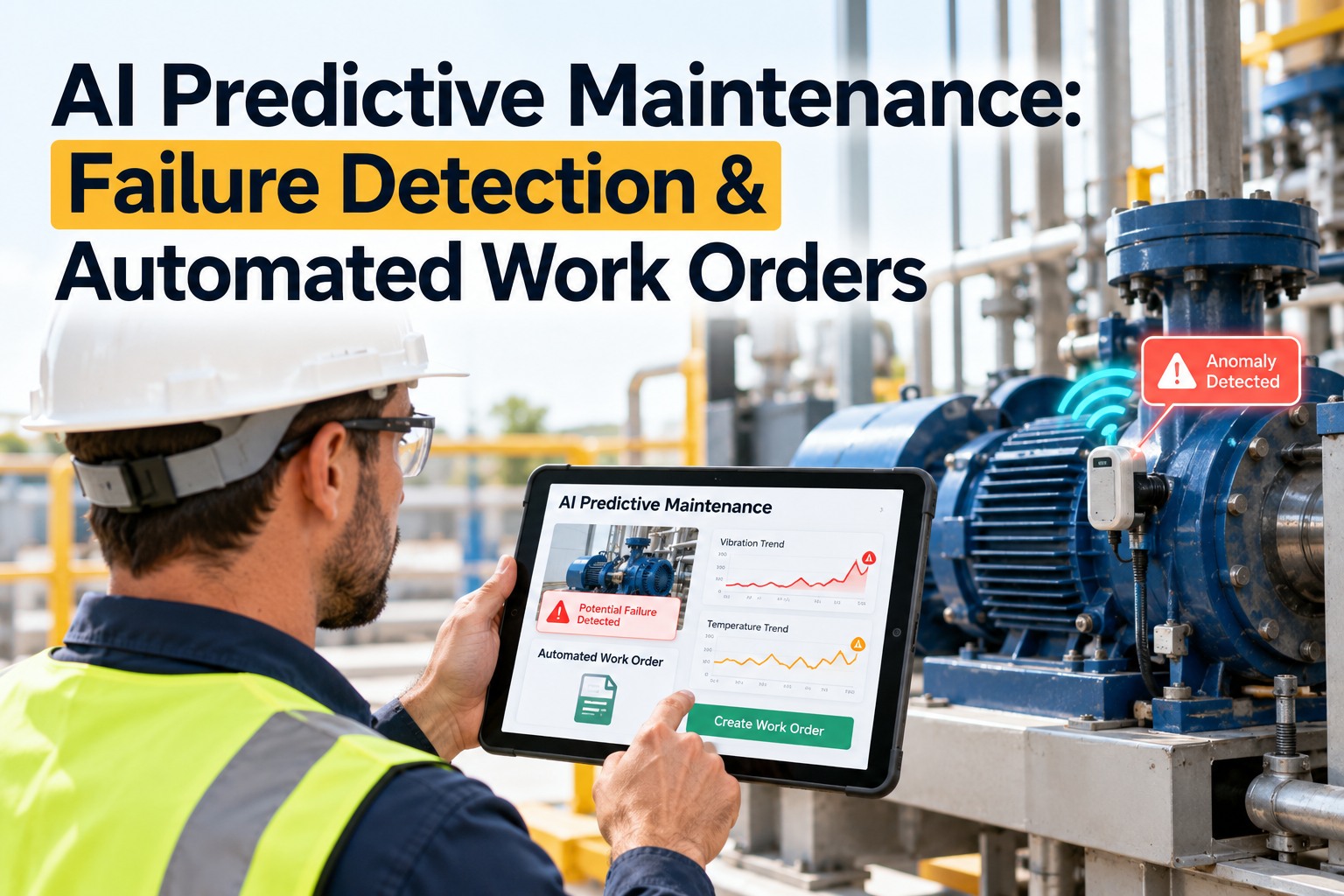
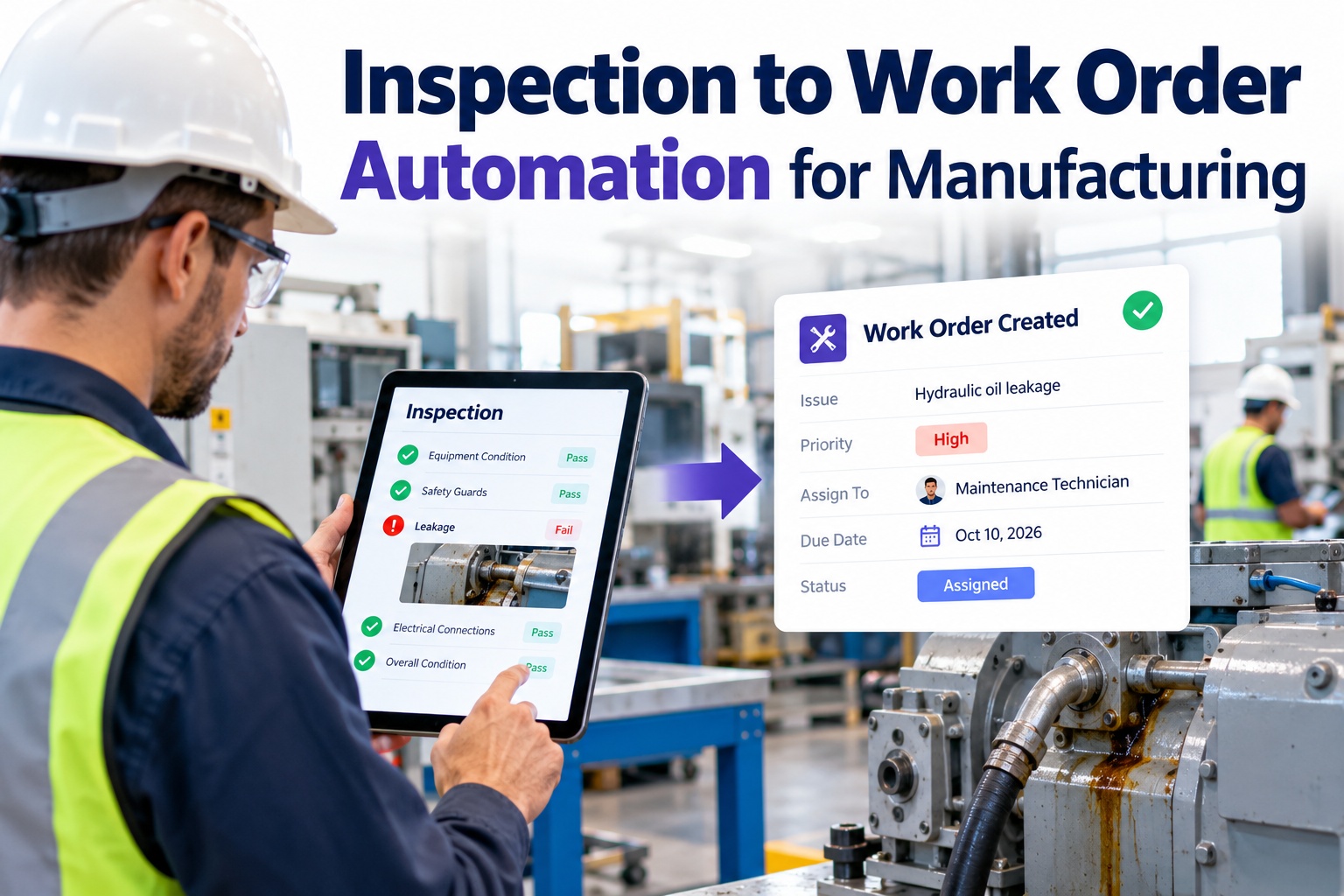
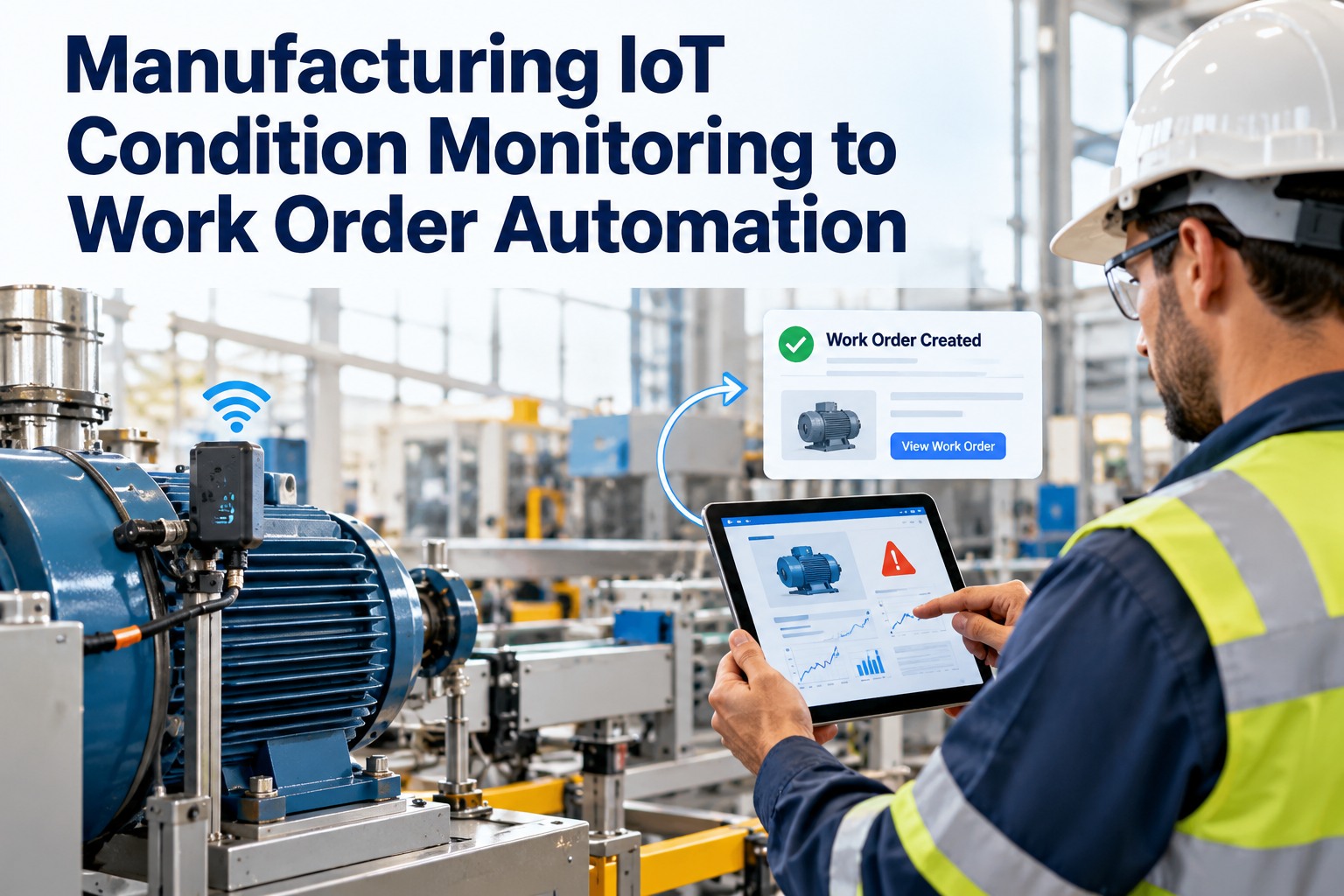
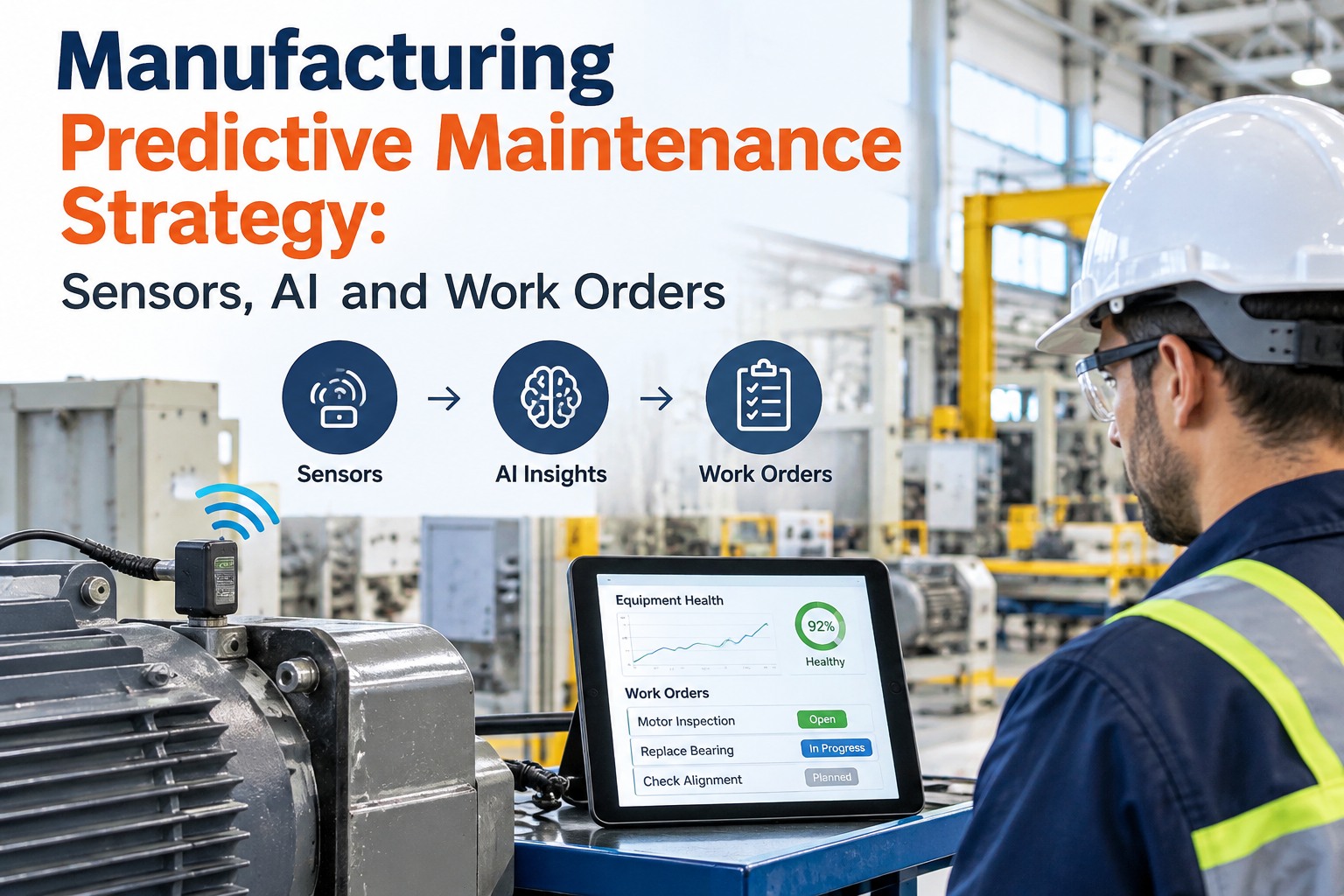
Maintenance teams in manufacturing are sitting on a data goldmine — work order histories, failure logs, sensor readings, equipment manuals — yet most plants still rely on gut feel and reactive firefighting to make maintenance decisions. Generative AI changes that completely: it reads your data, learns from your failure patterns, writes your work orders, diagnoses your equipment faults, and tells your technicians exactly what to do next — in plain language, in seconds. Oxmaint's AI-powered CMMS puts these capabilities in the hands of every maintenance manager and technician, not just companies with dedicated data science teams. Here are 10 real use cases already driving measurable ROI on factory floors in 2026.
Generative AI in Manufacturing Maintenance
10 use cases turning raw machine data into faster repairs, fewer breakdowns, and lower costs — in 2026 and beyond.
The Shift From Reactive to Generative
Traditional maintenance software records what happened. Generative AI predicts what will happen, explains why, and tells your team exactly how to respond. The difference is not incremental — it is the gap between a filing cabinet and a trained engineer available 24/7 for every technician on every shift.
In 2026, Deloitte research shows 92% of manufacturers believe smart manufacturing will be the primary driver of competitiveness over the next three years. Yet only 20% say they are fully prepared to deploy AI at scale. The plants closing that gap right now are winning on uptime, cost, and talent retention — because AI makes good technicians significantly more effective without requiring them to become data scientists.
Where Generative AI Delivers Real ROI in Maintenance
These are not theoretical applications. Each use case below is actively deployed in manufacturing plants in 2026, with documented outcomes and clear pathways to implementation inside a modern CMMS.
AI-Generated Work Orders From Natural Language
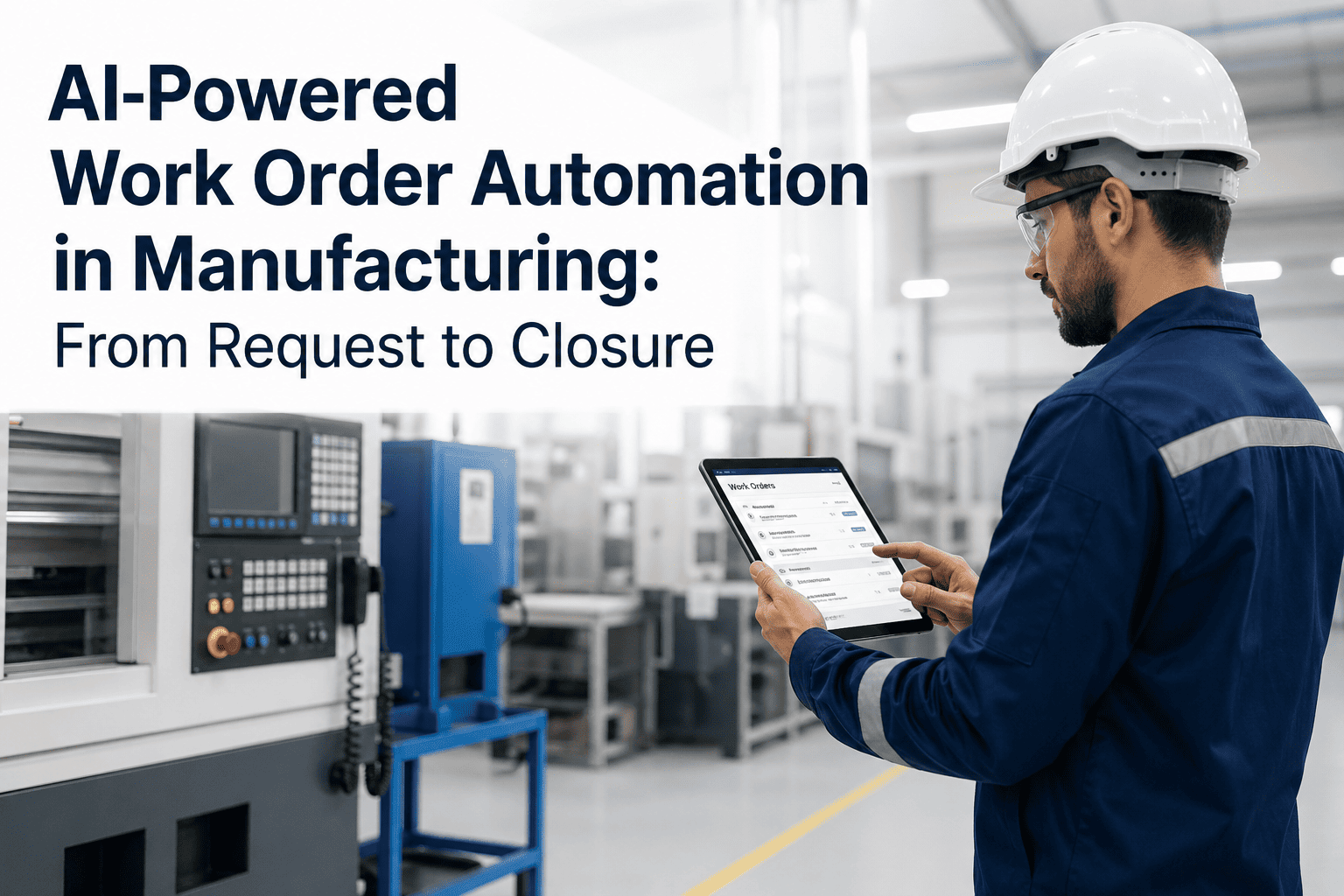
A technician says: "The conveyor motor on Line 3 is making a grinding noise and running hot." GenAI converts that into a structured work order — asset identified, fault category tagged, priority set, relevant historical failures surfaced, spare parts flagged — in under 10 seconds. No forms, no manual lookups, no guesswork about who should own it. Oxmaint's AI work order engine does exactly this, cutting work order creation time by over 60% in early deployments.
Failure Diagnosis From Sensor Data + Maintenance History
Instead of a technician spending 2 hours reviewing logs and manuals to diagnose why a pump has lost pressure, GenAI cross-references sensor data, maintenance history, and equipment documentation simultaneously. It surfaces the three most probable causes ranked by likelihood — with the supporting evidence — in seconds. Plants using AI diagnosis report 40–50% faster mean time to repair (MTTR).
Automated SOP and Maintenance Procedure Generation
GenAI drafts step-by-step maintenance procedures by analyzing equipment manuals, past work orders, and industry standards. A procedure that previously took a reliability engineer 4 hours to write takes 10 minutes with AI — and it's personalized to your specific asset configuration. Bosch's GenAI deployment cut inspection system development time from years to months using this capability applied at scale.
Predictive Failure Alerts With Plain-Language Explanations
Traditional predictive maintenance alerts say: "Vibration threshold exceeded — Asset ID 4421." GenAI-enhanced alerts say: "Bearing on Pump B12 showing early-stage wear pattern consistent with lubrication failure. Recommend inspection within 72 hours. Similar fault on this asset in March 2024 led to full bearing replacement — estimated cost $3,200 if unaddressed." That context is what turns alerts into action.
Intelligent Spare Parts Recommendation
GenAI cross-references bills of materials, vendor catalogs, inventory data, and lead times to recommend the right spare for each job — ranked by compatibility, availability, and cost. Technicians scanning a QR code at the machine get the parts list before they walk to the storeroom. Early adopter data shows approximately 28% fewer picking errors and measurable reductions in parts spend over time.
AI Maintenance Assistant for Technicians on the Floor
Think of it as a knowledgeable colleague available to any technician, any shift, for any question. Ask: "What torque spec does this gearbox need?" or "What went wrong with this machine last time?" and get an instant, sourced answer drawn from your own maintenance data and equipment documentation. ACG Capsules deployed this model and reduced repair times by 30–40%, simply by making the right information available at the right moment.
Root Cause Analysis From Maintenance Logs
After a failure event, GenAI processes thousands of log entries, sensor readings, and work order notes to identify the root cause — in minutes rather than days. One manufacturer used this approach to discover that a recurring hydraulic failure traced back to contaminated oil sourced from a single supplier lot, a connection that required analysis of 18 months of data. GenAI surfaced it in a single query.
Maintenance Schedule Optimization Using Operating Context
GenAI analyzes actual machine usage patterns, production schedules, and failure history to recommend PM frequencies that are right-sized for your operation — not copy-pasted from an OEM manual written for generic conditions. Machines running two shifts need different intervals than those running one. AI adjusts dynamically, eliminating unnecessary PMs that waste labor and identifying overdue tasks before failures occur.
AI-Powered Maintenance Reporting and KPI Narratives
Instead of maintenance managers spending Friday afternoons extracting data and writing reports, GenAI generates executive-ready summaries: "OEE on Line 2 dropped 4.3% this week due to three unplanned stops on the packaging machine. Root cause is bearing wear. Corrective PM is scheduled for Tuesday. Projected resolution before Monday production run." Reports that used to take 3 hours take 3 minutes.
Agentic AI: Autonomous Maintenance Workflow Execution
The most advanced GenAI deployments in 2026 go beyond assistance — they act. Agentic AI detects an anomaly, queries ERP for parts availability, identifies the next available qualified technician, schedules the repair, and generates the work order automatically — without a human in the loop for any of those steps. Prescriptive maintenance systems using this model consistently deliver ROI within 3–6 months according to IIoT World Days 2025 data.
Oxmaint brings GenAI to your maintenance team — without complexity.
AI work orders, failure diagnosis, predictive alerts, and automated scheduling — all inside one CMMS your technicians can use on day one. No data science team required.
What Plants Are Actually Measuring
ROI from GenAI in maintenance is not speculative. These are outcomes documented by manufacturers and research firms across 2024–2026 deployments.
| Use Case | Primary Metric | Reported Outcome | Payback Period |
|---|---|---|---|
| AI Work Order Generation | Work order creation time | 60% faster | Immediate |
| Failure Diagnosis Assistance | Mean Time To Repair (MTTR) | 40–50% reduction | 1–3 months |
| Predictive Maintenance + GenAI | Unplanned downtime | Up to 50% reduction | 3–6 months |
| Technician AI Assistant | Repair time per job | 30–40% faster | 2–4 months |
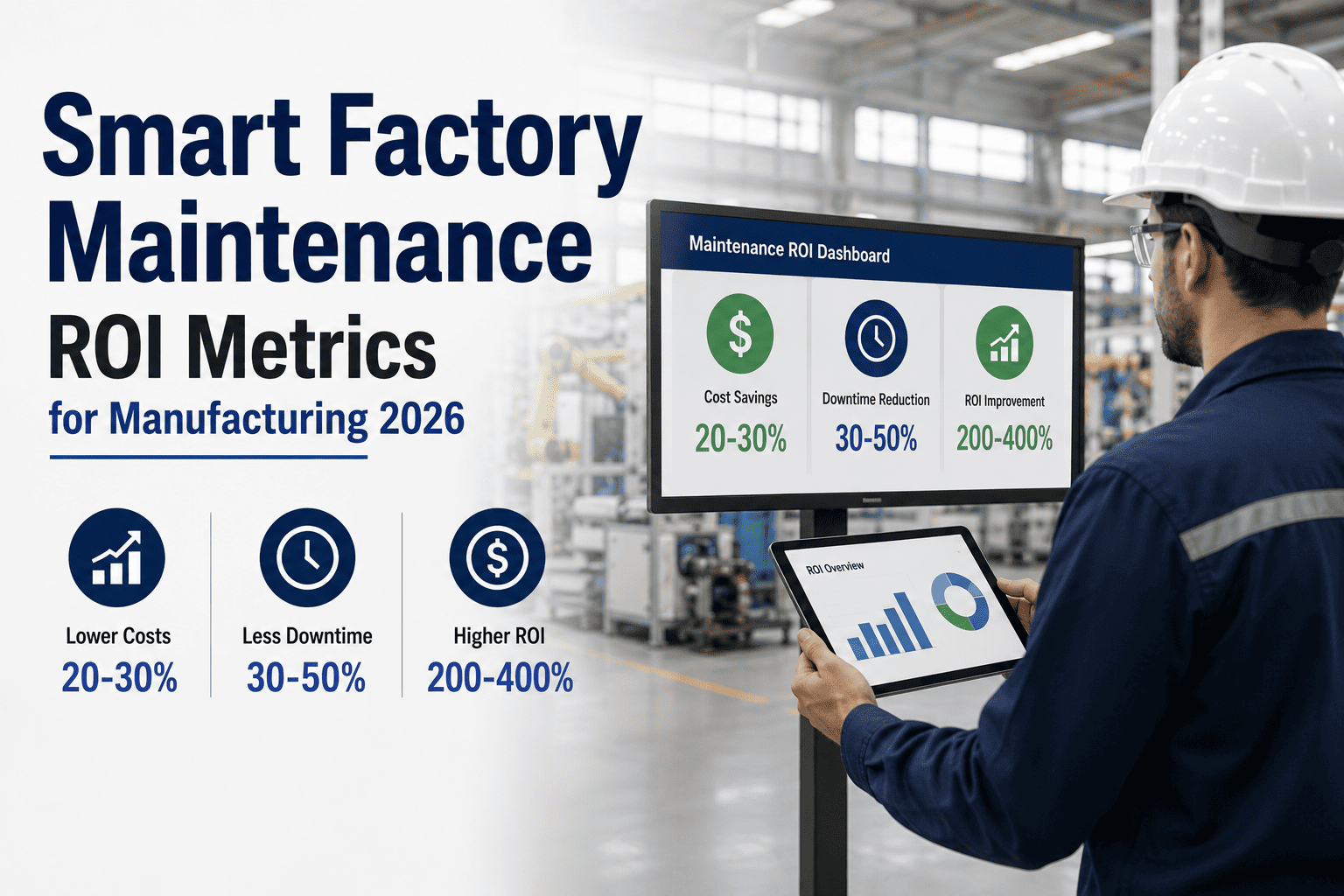
| Overall Maintenance Costs | Total maintenance spend | 20–25% reduction | 6–12 months |
| Equipment Breakdown Frequency | Unplanned failure rate | 70% fewer breakdowns | 6–12 months |
| Agentic AI Full Deployment | Overall productivity + uptime | 25% productivity gain | 3–6 months |
Sources: Deloitte, PwC, IIoT World Days 2025, IBM/Maximo, ACG Capsules, Master of Code Global
How to Start: A Practical 4-Stage Approach
The most common mistake plants make is trying to implement all 10 use cases simultaneously. The highest-ROI path is staged: start with the use cases that require the least data setup and deliver the fastest visible results, then expand as your team builds confidence.
AI Work Orders + Technician Assistant
Start with natural language work order creation and the AI maintenance assistant. These require no sensor infrastructure — only your existing CMMS data. Technicians see immediate time savings, building trust in AI tools before more complex use cases are introduced.
Failure Diagnosis + Reporting Automation
Layer in AI-assisted failure diagnosis using historical work order data and AI-generated maintenance reports. These use cases compound the ROI from Stage 1 by making every repair decision faster and better informed without adding technician workload.
Predictive Alerts + Schedule Optimization
Connect sensor data and operational context to activate predictive failure alerts and AI-optimized PM scheduling. This is where the largest cost savings materialize — catching failures before they happen and eliminating PMs that weren't preventing failures anyway.
Agentic AI + Full Integration
With a mature data foundation, deploy agentic workflows where AI autonomously manages detection-to-resolution sequences. At this stage, your maintenance operation is running materially faster and leaner than the industry average — with measurable OEE and cost data to prove it.
What GenAI in Maintenance Cannot Do (Yet)
Understanding the real boundaries of GenAI in maintenance is as important as understanding its capabilities. Plants that go in with accurate expectations implement more successfully and see better outcomes than those chasing hype.
GenAI is only as good as the data it learns from. Plants with poor work order quality, missing failure records, or inconsistent asset naming will get weaker results. Investing 60 days in data cleanup before AI deployment consistently delivers better outcomes than rushing deployment with poor inputs.
AI diagnoses and recommends. A trained technician still makes the final call on whether to run, inspect, or shut down. GenAI augments human judgment — it does not replace the skilled technician who can feel a vibration, smell a burnt bearing, or notice the one anomaly no sensor was designed to catch.
Connecting GenAI to ERP, SCADA, MES, and CMMS systems takes planning. Plants that treat integration as an afterthought consistently experience delays. The right CMMS — one built with API-first architecture — reduces integration effort significantly. This is a core design principle behind how Oxmaint connects to existing plant systems.
Only 32% of maintenance teams have implemented AI solutions of any kind. Resistance from experienced technicians who distrust AI recommendations is a real implementation barrier. Plants that involve technicians in AI design and demonstrate wins on problems they care about — not problems management cares about — achieve much faster adoption.
Your plant's maintenance data is already the raw material for AI.
Oxmaint turns your work order history, asset records, and failure data into an AI that works for your team — suggesting repairs, writing procedures, predicting failures, and tracking everything in one place. Book a demo to see it with your actual use cases.