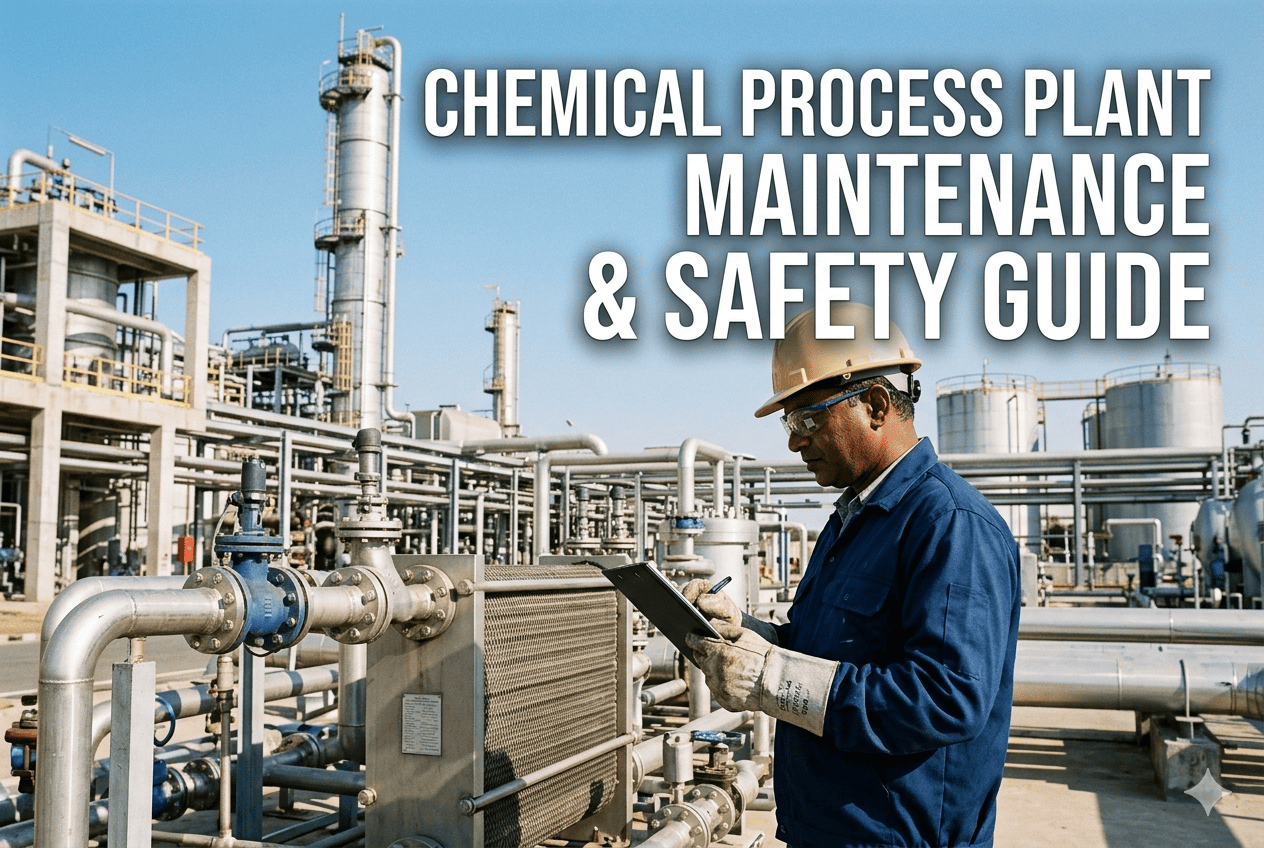
A manufacturing plant that handles solvents, acids, cleaning agents, paints, lubricants, and process chemicals is one container failure away from a serious incident — and the plants that avoid those incidents are not the ones with the fewest chemicals, they are the ones with the most disciplined chemical safety programs. Hazardous materials management is the intersection of three disciplines that must work as one: SDS documentation that workers can actually find, storage practices that prevent incompatible materials from ever touching, and spill response that activates before damage spreads. Start your free OxMaint trial to bring your SDS library, chemical inventory, and HAZCOM compliance into a single maintenance workflow, or book a demo to see how digital chemical safety programs close the gaps that paper-based systems leave open.
Safety & Compliance / Chemical Management
Hazardous Materials & Chemical Safety in Manufacturing
A practical framework for SDS management, chemical storage, spill response, and HAZCOM compliance — built for plant managers, EHS leaders, and maintenance teams who need chemical safety that works under pressure, not just on paper.
94%
of SDSs affected by HazCom 2024 updates
May 2026
manufacturer compliance deadline (extended)
16
required SDS sections under GHS
The Four Pillars of Plant Chemical Safety
A chemical safety program that reduces incidents is built on four interconnected pillars. When any one of them weakens, the others cannot compensate. The strongest plants treat these not as separate compliance checkboxes but as a single operational discipline.
01
Hazard Communication
Every worker exposed to a hazardous chemical must know what it is, what it does, and how to handle it safely — through labels, SDSs, and training. The OSHA HCS is the legal floor, not the aspiration.
02
SDS Management
Safety Data Sheets must be current, accessible within seconds, and aligned with the physical inventory. A paper SDS binder that is three years out of date is not compliance — it is a documented failure.
03
Storage & Segregation
Incompatible chemicals must be physically separated by cabinet, secondary containment, or distance. Alphabetical storage — a widespread practice — is prohibited for good reason.
04
Spill Response
A spill kit, a trained responder, and a decision tree must be available at every chemical use point. Response speed is measured in minutes; cleanup quality is measured by whether the root cause gets addressed.
HAZCOM 2024: What Changed and What You Must Do
OSHA's updated Hazard Communication Standard aligns U.S. regulations with Revision 7 of the UN Globally Harmonized System. Compliance deadlines were extended by four months in January 2026, but the substance of what manufacturers and employers must do has not changed — only the clock has.
May 19, 2026
Chemical manufacturers — substances
Manufacturers, importers, and distributors evaluating substances must comply with all modified provisions. Updated classifications, labels, and SDSs must be in the supply chain.
Nov 20, 2026
Employers — substances
Employers using affected substances must update workplace labels, revise the written HAZCOM program, and provide additional training for newly identified hazards.
Nov 19, 2027
Chemical manufacturers — mixtures
Manufacturers, importers, and distributors evaluating mixtures must comply with all modified provisions. This is the larger universe — most plant-used chemicals are mixtures.
May 19, 2028
Employers — mixtures
Employers using affected mixtures must update workplace labels, written HAZCOM programs, and training. The last compliance window closes.
The 16-Section Safety Data Sheet: What Each Section Tells You
Every SDS follows a standardized 16-section format under GHS. Knowing which section answers which question is the difference between emergency-ready staff and staff who flip through pages while a spill spreads. The sections below are the ones plant workers reference most often.
2
Hazard Identification
GHS classification, signal word, pictograms, hazard statements, and precautionary statements. First place to check before handling an unfamiliar chemical.
4
First Aid Measures
Steps for exposure by inhalation, skin contact, eye contact, and ingestion. Must be known before the chemical is used, not read during an exposure event.
5
Firefighting Measures
Suitable and unsuitable extinguishing media, specific hazards arising from the chemical, special protective equipment for firefighters.
6
Accidental Release
Personal precautions, protective equipment, emergency procedures, environmental precautions, methods for containment and cleanup. The spill response foundation.
7
Handling & Storage
Precautions for safe handling, conditions for safe storage, incompatibilities. Critical for segregation decisions and storage layout.
8
Exposure Controls & PPE
Occupational exposure limits, engineering controls, required personal protective equipment. Tells you what the worker must wear and what the ventilation must do.
10
Stability & Reactivity
Chemical stability, conditions to avoid, incompatible materials, hazardous decomposition products. The authoritative source for what this chemical must not touch.
13
Disposal Considerations
Waste treatment methods, container disposal, relevant waste codes. Your hazardous waste program depends on this section being read and followed.
Ready to modernize your SDS library?
One Searchable SDS System. Every Chemical. Every Plant.
OxMaint lets you upload, search, and update your entire SDS library — then link every chemical to the assets, work orders, and locations where it is used. Workers find the right SDS in seconds, not by flipping through binders.
Chemical Storage & Segregation Matrix
Alphabetical chemical storage is prohibited because incompatible chemicals frequently share the same first letter — acetic acid and ammonium hydroxide are the textbook example. Segregation by hazard class is the standard approach, reinforced by secondary containment. The matrix below shows common storage decisions plant teams face.
When a chemical presents multiple hazards — flammable and corrosive, for example — segregate by the most severe hazard first. Acetic acid is flammable and corrosive; it is stored in a flammable cabinet with secondary containment on a dedicated shelf to address both.
The Spill Response Decision Tree
Not every spill is a major incident, and not every spill is a minor one. The distinction — and the response it triggers — must be decided in seconds, not through committee discussion. A simple decision tree posted at every chemical use area gives workers the framework to act correctly under pressure.
Is anyone injured or exposed?
=>
Call 911. Begin first aid. Evacuate if needed.
Is the spill flammable, toxic, or highly reactive?
=>
Major spill — activate emergency response team. Remove ignition sources. Evacuate area.
Is the spill larger than the available spill kit can handle?
=>
Major spill — do not attempt cleanup. Contain at perimeter and call trained responders.
Is the spill small, identified, non-reactive, and non-toxic?
=>
Minor spill — trained personnel may clean up using PPE and compatible absorbent.
Is the chemical unknown or the SDS unavailable?
=>
Treat as major. Evacuate. Call emergency responders.
The Chemical Safety Program Health Check
How do you know if your program is working before an auditor — or an incident — tells you it isn't? These are the questions plant managers use to stress-test their chemical safety operations. A program that cannot answer yes to all of them has known gaps.
Inventory
Can you produce a complete chemical inventory — including cleaning agents, maintenance chemicals, and office supplies — within 15 minutes?
SDS Access
Can every worker locate the SDS for any chemical they handle in under 60 seconds, from their work station?
Training
Can you produce training records showing every exposed worker has current HAZCOM training, with refreshers logged?
Labels
Is every secondary container in the plant labeled with product identifier and hazard information — not just "solvent" or "acid"?
Segregation
Does your storage layout match your SDS-derived compatibility matrix, with documented segregation logic — not alphabetical shelving?
Spill Kits
Is every spill kit stocked, within its service life, located appropriately, and matched to the chemicals in its zone?
Drills
Has your team conducted a documented spill response drill in the last 12 months, with after-action findings closed out?
Waste
Is your hazardous waste segregated, labeled with accumulation start dates, and within the allowed on-site storage window?
“
The chemical safety programs that fail are not the ones without procedures — they are the ones where the procedures live in a binder nobody reads and the physical plant tells a different story. I have walked into facilities where the written HAZCOM program was textbook-perfect and the actual storage room had acids and bases on adjacent shelves with no secondary containment. The gap between the document and the shelf is where incidents happen. A digital chemical management system closes that gap because the inventory, the SDS, the storage location, and the training records are the same record — not four separate binders maintained by four separate people who never compare notes.
Common HAZCOM Program Gaps — and How Plants Close Them
Audit findings across manufacturing sites show the same recurring chemical safety failures. Recognizing them in your own operation is the first step toward closing them before they surface as OSHA citations or incident investigations.
Gap: Secondary containers unlabeled
Workers decant from a labeled bulk drum into a spray bottle, bucket, or smaller container and leave it unlabeled. Any chemical transferred from its original container must bear the product identifier and hazard information — no exceptions for "it's just for this shift."
Gap: SDS library out of date
New chemicals arrive; SDSs are received but never filed. Old SDSs remain on file for chemicals no longer on site. The library drifts from the physical inventory. Digital SDS systems with linked chemical inventories solve this at the source.
Gap: Training records missing
New hires receive HAZCOM training but the signed record never makes it into the file. Temporary and contract workers are overlooked entirely. The written program must include every exposed worker, including contractors — and the documentation must prove it.
Gap: Written program outdated
The written HAZCOM program references chemicals no longer used, processes no longer run, and personnel no longer employed. If your program has not been reviewed and updated in the past 12 months, it is almost certainly out of sync with operations.
Gap: Contractor chemicals uncontrolled
Contractors bring chemicals onto site for maintenance, painting, or cleaning work — often without SDSs being reviewed or added to the plant inventory. A receiving protocol that requires SDS submission before chemicals enter the gate prevents this.
Gap: Waste accumulation uncontrolled
Hazardous waste drums sit in satellite accumulation areas past allowed time limits, are inadequately labeled, or are commingled with incompatible waste streams. A logged waste program with start-date tracking prevents regulatory exposure.
From Chemical Receipt to Safe Disposal: The Full Lifecycle
A chemical does not enter the plant, sit on a shelf, and then leave unchanged. It flows through a lifecycle — and every stage is a control point where your program either works or fails. The plants with the fewest incidents treat each stage as a documented, auditable step.
Stage 1
Procurement & Receipt
SDS received and reviewed before purchase approval. Chemical added to inventory. Storage location assigned based on hazard class and compatibility.
Stage 2
Storage & Inventory
Physical segregation by hazard class. Secondary containment in place. Quantity tracked. Shelf-life monitored for time-sensitive materials.
Stage 3
Dispensing & Use
Secondary containers labeled. PPE verified. Engineering controls functional. Workers trained on this specific chemical and process.
Stage 4
Response Readiness
Spill kit within reach. Eyewash and shower tested monthly. Emergency contacts posted. Incident reporting process known to all shifts.
Stage 5
Waste & Disposal
Waste segregated by compatibility. Containers labeled with accumulation start date. Disposal vendor manifests retained. Inventory reconciled.
Turn your chemical safety program into a maintenance workflow
OxMaint Connects Chemicals, Assets, and Work Orders
When a pump fails and a technician opens the work order, OxMaint shows them the chemicals on that asset, the SDSs they need, the PPE required, and the spill response plan — all before they pick up a wrench. Safety becomes the default, not a separate process.
Frequently Asked Questions
What are the new HAZCOM 2024 compliance deadlines after OSHA's extension?
OSHA extended the key deadlines by four months in January 2026. Chemical manufacturers of substances must comply by May 19, 2026, employers by November 20, 2026. For mixtures, manufacturer deadline is November 19, 2027, and employers must comply by May 19, 2028.
Start your OxMaint trial to track your SDS updates against these deadlines automatically.
Why can't we store chemicals alphabetically?
Alphabetical storage frequently places incompatible chemicals next to each other — acetic acid and ammonium hydroxide both start with A but react vigorously. Storage must be based on hazard class segregation, with acids separated from bases, oxidizers separated from flammables, and water-reactives isolated from moisture sources.
How quickly must workers be able to access a Safety Data Sheet?
OSHA requires SDSs to be readily accessible to employees during their work shift. In practice, this means within seconds to a few minutes — not a walk to a locked office or a call to a supervisor.
Book a demo to see how digital SDS access works across mobile devices and workstations.
What qualifies as a "simple" spill that workers can clean up themselves?
A simple spill is small in quantity, involves a known non-flammable and non-highly-toxic chemical, can be contained with available spill kit materials, and is handled by trained personnel in appropriate PPE. Any spill involving injury, flammables, toxics, unknown substances, or quantities beyond the spill kit capacity is a major spill requiring emergency responders.
Do secondary containers — like spray bottles filled from a bulk drum — need labels?
Yes. Any container a worker decants chemical into must be labeled with the product identifier and appropriate hazard information, unless it is used by the same person who filled it and emptied within that shift. Unlabeled secondary containers are one of the most common HAZCOM citations issued by OSHA.
How does OxMaint help with chemical safety specifically?
OxMaint links your chemical inventory, SDS library, storage locations, work orders, and training records into one system. When a work order is opened, the associated chemicals, required PPE, and spill response procedures appear together.
Sign up for a free trial to see how chemical safety becomes part of every maintenance workflow.
Chemical safety that works when it matters most
Stop Managing Chemical Safety in Spreadsheets and Binders
OxMaint gives your EHS, operations, and maintenance teams a single system for SDS management, chemical inventory, HAZCOM training, and spill response preparedness — connected to the assets and work orders where chemicals actually get used.