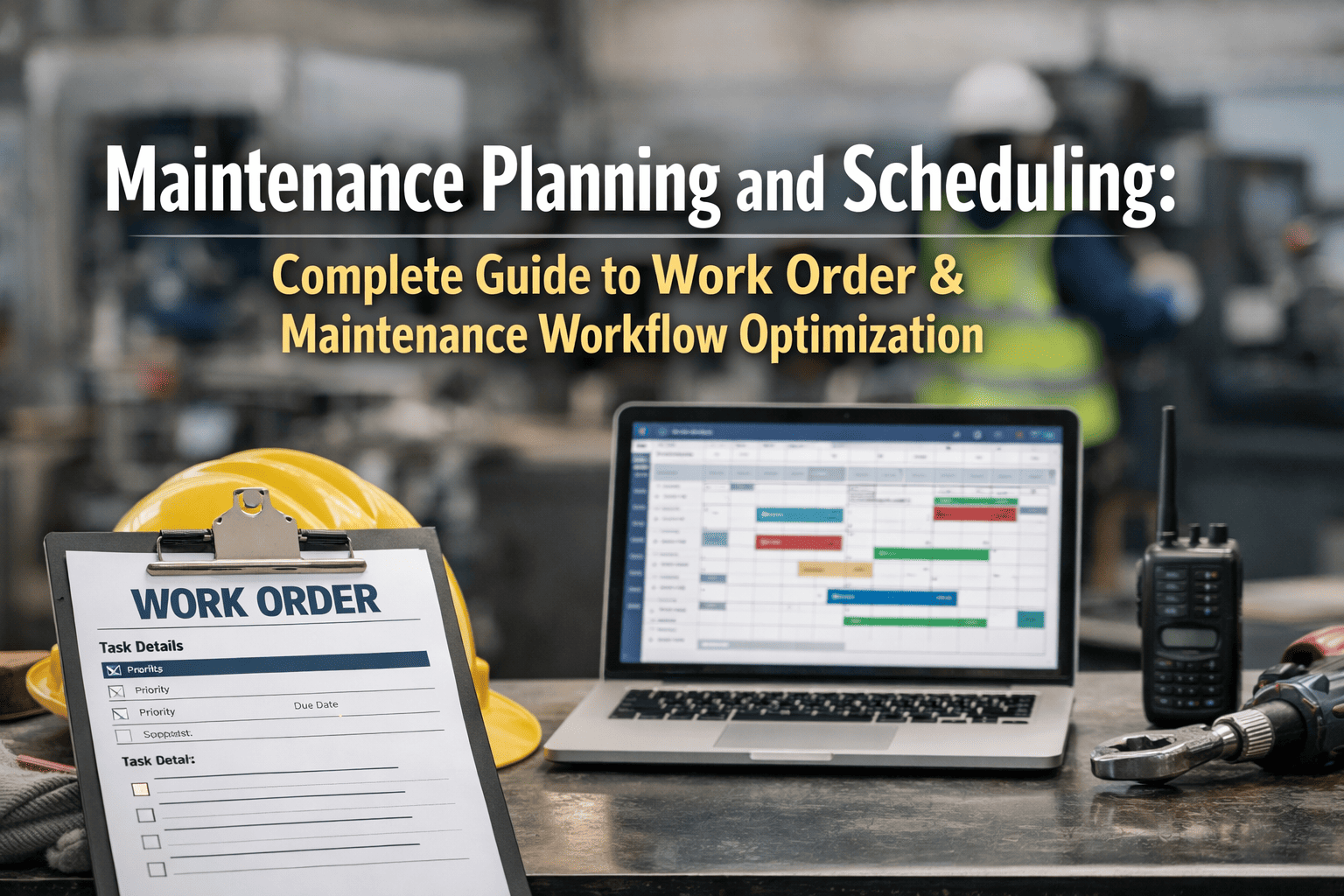
Emergency work orders are the most expensive way to run a maintenance operation — not just in parts and labor, but in planning collapse, schedule disruption, and technician burnout. A mid-size process plant managing 14 maintenance technicians across two shifts found itself in a cycle it couldn't break: reactive work was eating 60–70% of weekly capacity, planned work kept getting bumped, and the intake process for urgent repairs had no structure — every request arrived as a crisis. The root problem wasn't workforce size or equipment age. It was the absence of standardized intake, triage speed, and any demand signal connecting field calls to planning. If your site is absorbing the same reactive pressure, Sign Up Free to see how Oxmaint structures work order control from first request to close — or Book a Demo with a maintenance operations specialist.
Emergency Work Orders · Reactive Maintenance · Work Order Control
Reduce Reactive Work With Structured Intake and Triage
Standardized request intake, priority-based triage, and work order automation — OxMaint helps maintenance teams shift capacity from firefighting to planned execution.
Site Profile
The Operation: One Plant, Two Shifts, and a Reactive Work Spiral
Site Overview
IndustryProcess manufacturing — continuous production, high asset dependency
Team14 maintenance technicians, 2 shifts, 1 maintenance planner
Work Volume180–220 work orders per month, 60–70% reactive at baseline
Prior SystemEmail and verbal intake, whiteboard triage, spreadsheet tracking
Oxmaint FeaturesWork Order Management · Intake Standardization · Priority Triage · PM Scheduling · Execution Tracking · Reporting
Baseline Pressure Points
67%
Of monthly work orders classified as urgent or emergency at intake — regardless of actual criticality
3.1×
More labor hours consumed by reactive work than by planned preventive maintenance
41%
Of scheduled PMs deferred at least once due to emergency work displacing planned capacity
Root Cause Analysis
Why Emergency Work Orders Kept Multiplying — And Why Planning Never Caught Up
A structured review of 90 days of work order logs and shift handover records identified four compounding gaps. The plant was not understaffed and its equipment failure rate was not abnormal. The problem was process: no standardized intake meant every request was treated as an emergency, triage was informal and inconsistent, and there was no system connection between reactive demand and planning capacity. Sign Up Free to map your own reactive work drivers — or Book a Demo to see how Oxmaint's work order engine applies to your site.
38%
No Standardized Intake — Every Request Arrived as a Crisis
Without a structured request form, requestors defaulted to verbal escalation or direct planner calls. Every job entered the system already marked urgent, making actual priority invisible.
29%
Triage Was Informal and Inconsistent Across Shifts
Priority decisions depended on who was on shift and who made the loudest case. The same fault class received different priority ratings depending on shift — creating workload imbalance and repeat dispatches.
21%
No Visibility Into Open Work Order Load Before Dispatching
Planners had no real-time view of technician workload. New emergency work was assigned without knowing current backlog — creating over-assignment, missed jobs, and delayed closures.
12%
Reactive Work Not Feeding Back Into PM Improvement
Emergency repairs generated no structured data about failure location, mode, or frequency. Repeat failures on the same assets were not visible — so PM schedules never adjusted.
The Solution
How Oxmaint Rebuilt Intake, Triage, and Execution Discipline Across Both Shifts
The plant deployed Oxmaint without restructuring its maintenance team or changing procurement relationships. The platform replaced informal verbal intake with a structured digital request system, applied consistent priority classification rules at intake, and gave the maintenance planner a live view of open work order load before any dispatch decision. Reactive jobs now entered the system with asset location, fault description, and requestor details captured at source — giving planners the data to triage accurately and assign work without duplicate calls. Emergency work order history began feeding back into PM trigger logic, so repeat failures on the same assets generated automatic PM review flags. Book a Demo to see how the platform handles intake standardization and triage automation for your work order volume.
01
Structured Digital Intake With Required Fields
All maintenance requests were routed through a standardized digital intake form capturing asset ID, fault description, location, and operational impact. The intake form replaced verbal escalation — ensuring every job entered the system with the minimum data needed for accurate triage.
02
Priority Classification Rules Applied at Intake
Oxmaint applied consistent priority rules based on asset criticality, operational impact, and failure type. Urgency was determined by system logic — not by requestor persistence or shift preference — eliminating the inconsistency that had made triage unreliable across shifts.
03
Live Work Order Load Visibility Before Dispatch
The maintenance planner gained a real-time dashboard showing open work orders, technician assignment status, and current backlog by priority tier. Dispatch decisions were made with full visibility into available capacity — eliminating over-assignment and reducing jobs that slipped through without closure.
04
Reactive Work History Linked to PM Schedule Review
Emergency repair records were linked to asset PM histories in Oxmaint. Assets with repeat failure events triggered automatic review flags — converting reactive data into preventive schedule improvements and reducing the repeat failure rate on the highest-incident assets.
Results at 90 Days
What the Numbers Looked Like Three Months After Deployment
52%
Drop in work orders classified as emergency at intake — from 67% to 32% of monthly volume
44%
Reduction in PM deferrals caused by reactive work displacing planned capacity
38%
Faster average triage-to-dispatch time after intake standardization
+29%
Increase in planned work completion rate within scheduled window
100%
Work order documentation compliance — up from ~35% under verbal intake system
4.1×
ROI on platform cost within 90 days from recovered planned maintenance capacity
| Metric |
Before Oxmaint |
90 Days After |
Change |
| Work orders classified as emergency |
67% |
32% |
-52% |
| PM deferrals from reactive displacement |
41% of PMs |
23% of PMs |
-44% |
| Avg triage-to-dispatch time |
2.8 hrs |
1.6 hrs |
-43% |
| Planned work completed on schedule |
48% |
62% |
+29% |
| Work order documentation rate |
~35% (verbal) |
100% (digital) |
Full compliance |
| Repeat failures on high-incident assets |
18 / quarter |
9 / quarter |
-50% |
Key Business Impact
What Reducing Emergency Work Orders Actually Means for Maintenance-Dependent Plants
"Every plant I've worked with that's drowning in reactive work has the same structural problem: there's no friction at intake. If every request can be called an emergency by whoever submits it, your planner has no signal — they're just responding to whoever calls loudest. The fix isn't hiring more technicians or buying faster parts. It's giving the intake system enough structure to tell the difference between a production-critical failure and a noise complaint. Once triage is consistent and the planner can see load before dispatching, the reactive spiral breaks on its own. Planning quality improves, repeat failures start surfacing, and the team finally has capacity to run preventive work before the next breakdown."
Marcus Holloway, Plant Maintenance Reliability Advisor
21 years process and discrete manufacturing maintenance · Former maintenance manager, multi-shift continuous production sites · Specialist in reactive-to-planned transition and work order system design
Reactive Reduction · Planning Discipline · Execution Stability
Replace Reactive Firefighting With Structured Work Order Control
Standardized intake, triage automation, dispatch visibility, and PM feedback loops — OxMaint gives maintenance teams the structure to reduce emergency work orders without adding headcount.
FAQs
Frequently Asked Questions
How does Oxmaint reduce the volume of emergency work orders?
Oxmaint applies consistent priority classification at intake based on asset criticality and operational impact — so urgency is determined by system logic, not requestor escalation. This separates genuine emergencies from misclassified routine work.
Can Oxmaint handle work order intake across multiple shifts?
Yes. Oxmaint's digital intake process runs consistently across all shifts with the same required fields and priority rules — eliminating the inconsistency that typically occurs when triage is handled differently by shift supervisors.
Does Oxmaint give planners visibility into technician workload before dispatch?
Yes. The planner dashboard shows open work orders, technician assignment status, and backlog by priority tier in real time — so dispatch decisions are made against actual available capacity, not assumptions.
Can reactive work history improve PM schedules in Oxmaint?
Yes. Emergency repair records are linked to asset histories. Assets with repeat failure patterns trigger PM review flags automatically — converting reactive data into preventive schedule improvements over time.
How quickly does a site see improvement in planned work completion after deployment?
Most sites see measurable reduction in emergency classifications within the first 30 days after intake standardization. Planning capacity recovery and PM completion rate improvement typically stabilize within 60–90 days.
Every Planned Job Completed Is a Breakdown You Prevented
Give Your Maintenance Team the Work Order Structure It Needs
Oxmaint brings standardized intake, triage automation, live dispatch visibility, and PM feedback loops to maintenance teams — with no additional planning headcount required.