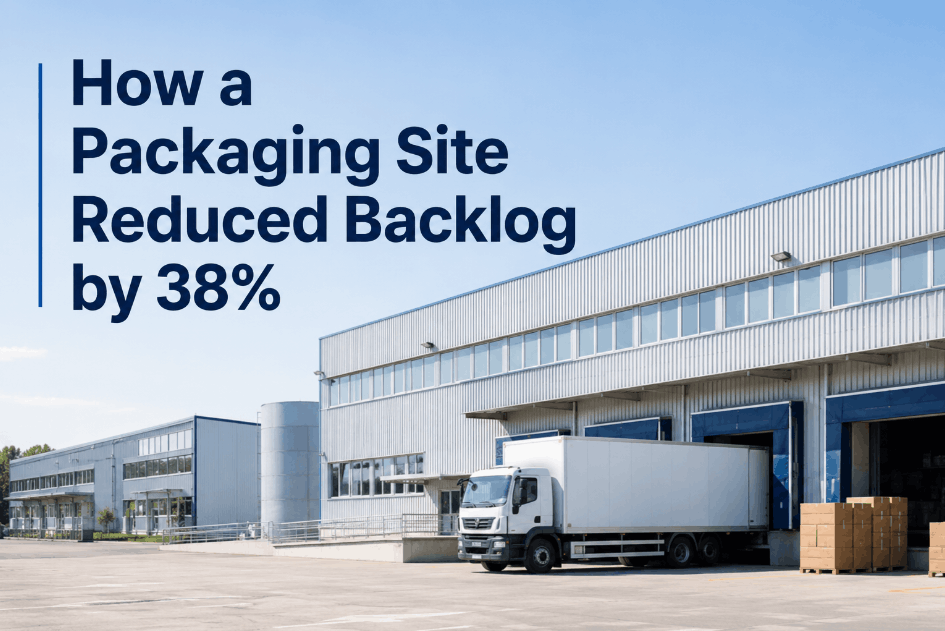
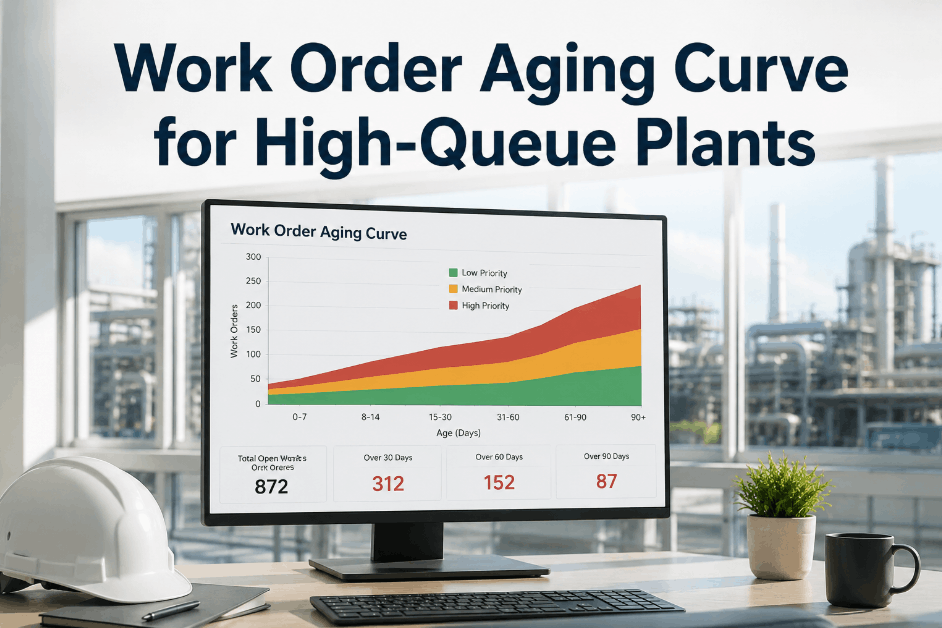
Unplanned work accumulation in packaging operations rarely starts with a single failure. It builds through misaligned dispatch, invisible task aging, and no defined sequence for clearing open work. One mid-size packaging site running three production lines and a 14-person maintenance team watched its open work order count climb past 40 at any given moment — with no system to distinguish what needed to be done first, what was aging without action, and what was quietly becoming a line-down risk. The site had the workforce. What it lacked was execution structure. If your site is absorbing the same backlog pressure, Sign Up Free to see how Oxmaint structures your work queue from day one — or Book a Demo with a packaging operations specialist.
Motor Load · Energy Efficiency · Heavy Equipment Maintenance
Connect Backlog Data to Maintenance Action
Asset-level work tracking, triage automation, and queue-based PM scheduling — OxMaint helps maintenance teams act on backlog gaps, not just report them.
Plant Profile
The Operation: Three Lines, One Team, No Sequencing Logic
Site Profile
IndustryConsumer goods packaging — flexible and rigid formats
Lines3 production lines, 60+ assets under maintenance scope
Team14 maintenance technicians, 2 supervisors
Shifts5-day production, 2 maintenance shifts
Prior systemPaper work orders, verbal dispatch, shared whiteboard queue
Oxmaint featuresWork Order Management · PM Scheduling · Priority Triage · Dispatch · Asset History
Baseline Pressure Points
40+
Open work orders at any time with no priority or age visibility
3.1×
Backlog growth rate versus clearance rate month-over-month
22%
Stop events exceeding target recovery window with no escalation trigger
Root Cause Analysis
Why the Backlog Was Growing — And Why the Team Couldn't Clear It
A structured review of 60 days of work order data revealed four execution gaps that were compounding the backlog faster than any workforce constraint. The site did not need more technicians. It needed better sequencing logic, clearer triage rules, and real-time visibility into task age and production impact. Sign Up Free to map your own backlog drivers — or Book a Demo to see how Oxmaint's triage engine applies to your work queue.
38%
No Triage Logic at Work Order Creation
Every work order entered the same flat queue regardless of production impact. Line-down faults and scheduled lubrication tasks competed for the same technician attention with no weighting applied.
27%
Task Aging Without Escalation
Work orders aged in the queue with no flag, no notification, and no escalation path. Supervisors had no visibility into how long individual tasks had been open without action.
21%
Reactive Pressure Deferring Planned Work
PM tasks were consistently bumped under reactive load pressure. Deferred PMs re-entered the queue as failures, adding to the reactive burden rather than reducing it.
14%
Shift Handover Gaps
Work started on one shift had no structured handover to the next. Repeat diagnostics, incomplete closures, and rework consumed capacity that should have been applied to new backlog clearance.
The Solution
How Oxmaint Restructured the Queue and Restored Dispatch Rhythm
The site deployed Oxmaint without changing its technician roster or shift structure. The platform replaced the paper-and-whiteboard queue with a structured digital system that applied triage rules at work order creation, surfaced aging tasks in real time, and gave supervisors a complete backlog picture across all three lines during every shift. PM tasks were locked to intervals and visible alongside reactive work — allowing informed decisions rather than automatic deferral under pressure.
01
Priority Triage Applied at Work Order Creation
Every work order receives a priority classification — line-down, safety, production-impact, or scheduled — at the moment it is raised. The queue sorts automatically. Technicians always move to the highest-impact available task regardless of which job was written first.
02
Task Age Visibility and Escalation Triggers
Open work orders display age in real time on the supervisor dashboard. Tasks exceeding their target response window trigger automatic escalation alerts — giving supervisors the ability to intervene before recovery windows are missed.
03
PM Scheduling Enforced Against Reactive Pressure
Preventive maintenance tasks are scheduled at defined intervals and flagged as approaching-due before the window closes. Supervisors see the full PM picture alongside the reactive queue — making structured deferral decisions instead of defaulting to reactive priority under pressure.
04
Digital Shift Handover and Work Continuity
Every open, in-progress, and recently closed work order is visible to the incoming shift from the moment they log in. Incomplete repairs carry full notes and asset history — eliminating repeat diagnostics and ensuring backlog clearance continues without capacity loss at handover.
Results at 90 Days
What the Numbers Looked Like Three Months After Deployment
38%
Reduction in open backlog — from 40+ average to 18 open work orders
51%
Faster average time-to-restore — dispatch lag eliminated by digital assignment
67%
Drop in work orders exceeding recovery window after priority rules applied
+29%
PM completion rate — structured scheduling broke the reactive deferral cycle
100%
Work order documentation rate — up from ~35% paper compliance at baseline
4.2×
ROI on platform cost within 90 days from recovered production throughput
| Metric |
Before Oxmaint |
90 Days After |
Change |
| Open backlog (avg) | 40+ WOs | 18 WOs | -55% |
| Monthly stop events | 34 | 21 | -38% |
| Avg time-to-restore | 87 min | 43 min | -51% |
| Recovery window overruns | 22% | 7% | -67% |
| PM completion rate | 61% | 79% | +29% |
| Work order documentation | ~35% (paper) | 100% (digital) | Full compliance |
Key Business Impact
What Backlog Control Actually Means for a Packaging Operation
"The packaging sites I see with the worst backlog problems almost never have a workforce problem. They have a sequencing problem. When every work order looks the same in the queue — no age, no impact flag, no triage logic — technicians make rational local choices that are globally inefficient. A line-down fault waits while an aging lubrication task gets closed because it was written three days ago and feels overdue. Priority triage costs nothing to implement and returns immediate, disproportionate value. The same team, same shifts, same skills — sequenced correctly — can clear two to three times more critical work per week without a single additional hire."
Marcus Tillman, Manufacturing Maintenance Advisor
21 years packaging and FMCG maintenance operations · Former plant maintenance manager, regional consumer goods manufacturer · Specialist in backlog reduction and reactive-to-planned transition
Backlog Control · Queue Visibility · Priority Dispatch
Replace Your Whiteboard Queue with Priority-Driven Execution
Work order triage, task age visibility, PM compliance, and real-time dispatch — OxMaint gives packaging maintenance teams the structure to clear backlog and protect output every shift.
FAQs
Frequently Asked Questions
How quickly can a packaging site reduce its open backlog with Oxmaint?
Most sites see measurable backlog reduction within 30 days of deployment. Queue clarity and dispatch improvements appear in the first two weeks. Full backlog normalisation typically occurs within 60–90 days of consistent structured use.
Does Oxmaint require new headcount to manage the digital work queue?
No. Oxmaint is designed to extract more output from existing teams. Priority rules and digital dispatch replace manual sequencing decisions — not the people making them. The same team clears more critical work per shift with better information.
Can Oxmaint handle multi-line packaging sites with separate maintenance scopes?
Yes. Oxmaint supports asset-level organisation across multiple production lines, with line-specific work queues, priority rules, and PM schedules visible to supervisors in a single dashboard.
What happens to PM tasks when reactive pressure is high?
Oxmaint surfaces approaching-due PMs in the supervisor dashboard alongside the reactive queue. Supervisors make informed deferral decisions rather than automatic deferrals — breaking the cycle where skipped PMs return as failures.
How does Oxmaint improve shift handover in packaging maintenance?
Every open, in-progress, and recently completed work order carries full repair notes, asset history, and status — visible to the incoming shift from the moment they log in. No verbal handover required, no repeat diagnostics, no lost context.
Every Work Order Cleared Faster Is Output You Keep
Give Your Packaging Maintenance Team the Queue Structure It Needs
Oxmaint brings priority triage, task age visibility, PM compliance tracking, and real-time dispatch to packaging maintenance teams — with no additional headcount required.