A preventive maintenance program is the single biggest lever a manufacturing plant has to cut unplanned downtime, extend asset life, and reduce reactive repair costs. Yet many plants struggle to move from a paper-based or ad-hoc PM approach to a structured program that actually gets executed week after week. This guide walks through how to build a preventive maintenance program step by step — from asset inventory and criticality ranking to task creation, CMMS scheduling, and a realistic 90-day rollout. Sign Up Free and start building your PM program directly inside Oxmaint AI.
Launch Your PM Program in Days, Not Months
Oxmaint AI helps manufacturing teams build asset lists, PM schedules, and technician workflows in one connected platform.
What Is a Preventive Maintenance Program?
A preventive maintenance program is a structured set of scheduled tasks — inspections, lubrication, part replacement, calibration — performed on assets at defined intervals to prevent failure before it happens. Unlike reactive maintenance, which responds after breakdown, a PM program is proactive: tasks are scheduled by time, usage, or condition, assigned to technicians, and tracked to completion through a CMMS. Book a Demo to see how Oxmaint AI structures PM tasks by asset type automatically.
Why Manufacturing Plants Need a Structured PM Program
Fewer Unplanned Failures
Scheduled inspections catch wear before it becomes a breakdown that halts a production line.
Lower Repair Costs
Planned part replacement is consistently cheaper than emergency repair plus lost production.
Longer Asset Lifespan
Consistent lubrication, calibration, and adjustment extend equipment life well beyond design estimates.
Predictable Technician Workload
A scheduled PM calendar lets supervisors plan labor and parts instead of scrambling reactively.
Stronger Compliance Position
Documented PM history provides the audit trail regulators and ISO auditors expect to see.
Better Production Planning
Production teams can trust maintenance windows when PM scheduling is disciplined and predictable.
PM Program Metrics to Track From Day One
Set up the right metrics before you launch so you can prove the program is working. Sign Up Free to auto-track these metrics as soon as your first PM task is scheduled.
| Metric | How to Calculate | Why It Matters | Target Benchmark |
|---|---|---|---|
| PM Compliance Rate | PMs completed on time ÷ PMs scheduled × 100 | Core measure of program execution discipline | > 90% |
| Reactive vs Planned Ratio | Reactive WOs ÷ total WOs × 100 | Should decline steadily as the PM program matures | < 20% reactive |
| PM Task Duration Accuracy | Actual time ÷ estimated time per PM task | Flags tasks that are under- or over-scoped for scheduling | Within 15% of estimate |
| Asset Criticality Coverage | Critical assets with active PMs ÷ total critical assets × 100 | Confirms highest-risk equipment is covered first | 100% |
| MTBF Trend | Uptime hours ÷ number of failures | Should trend upward as PM tasks take effect | Consistent upward trend |
How to Build a Preventive Maintenance Program: Step-by-Step
These steps reflect how manufacturing plants successfully move from zero PM structure to a running program. Book a Demo to see this workflow set up live inside Oxmaint AI.
Build a Complete Asset Inventory
List every asset with make, model, serial number, and location. An incomplete inventory guarantees an incomplete PM program, so this step must come first.
Rank Assets by Criticality
Score each asset on safety impact, production impact, and redundancy. Start PM coverage with your highest-criticality assets first.
Create PM Tasks and Intervals
Pull manufacturer-recommended tasks and intervals as a baseline, then adjust based on failure history and operating conditions.
Load Tasks Into a CMMS Schedule
Move PM tasks out of spreadsheets and into a CMMS that auto-generates work orders on schedule and assigns them to technicians.
Assign Ownership and Train Technicians
Every PM task needs a clear owner. Train technicians on the CMMS workflow so completion, notes, and parts usage are logged consistently.
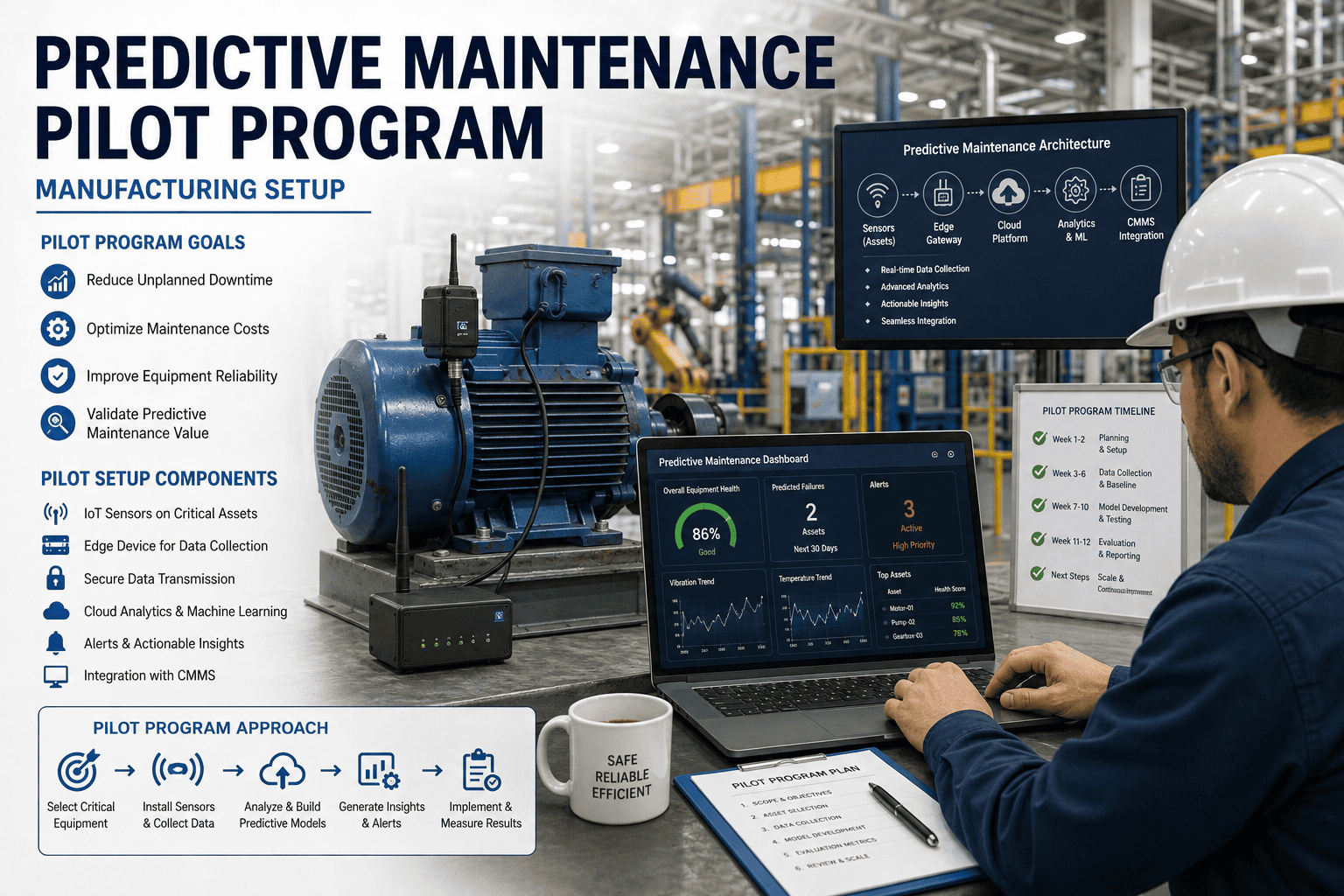
Run a 90-Day Pilot on Critical Assets
Launch the program on your top-criticality assets first, track PM compliance weekly, and refine task lists before scaling plant-wide.
Scale and Continuously Optimize
Expand to remaining assets, then use failure history and sensor data to refine intervals and eliminate low-value tasks over time.
How AI Strengthens a Preventive Maintenance Program
AI suggests inspection templates and PM tasks based on asset type and historical failure patterns.
Predictive models adjust PM intervals based on real operating conditions instead of fixed calendar dates.
PM work orders are created and assigned automatically the moment they come due, with parts pre-reserved.
Technicians scan an asset QR code to pull up the exact PM checklist, history, and required parts on their phone.
Real-time PM compliance tracking replaces manual spreadsheet rollups with a live, auditable record.
Sensor and IoT integration flags early failure signs so PM intervals can be tightened on at-risk assets before breakdown.
Common Mistakes When Building a PM Program
Launching PM tasks for hundreds of assets simultaneously overwhelms technicians and guarantees incomplete execution.
Default intervals are a starting point, not a final answer — actual operating conditions should drive adjustments.
Paper-based PM tracking makes compliance invisible and impossible to audit or improve systematically.
PM tasks that never prevent a failure are wasting technician time — review and retire low-value tasks regularly.
PM Program Best Practices for Manufacturing Teams
Start With Criticality, Not Convenience
Cover your highest-risk assets first, even if they're harder to schedule, rather than starting with easy wins.
Keep Task Instructions Specific
Vague instructions like "inspect motor" produce inconsistent results — specify exact checks and tolerances.
Protect PM Time From Reactive Work
Reserve a defined share of weekly technician capacity for PM execution and defend it from reactive interruption.
Track Compliance Weekly
Weekly PM compliance reviews catch slippage early, before it compounds into a larger backlog problem.
Stage Parts Ahead of Schedule
Confirm parts availability before a PM is due so technicians can complete the task in a single visit.
Use Failure Data to Refine Intervals
Let actual failure history — not just manufacturer defaults — guide how often each PM task really needs to run.
Build Your PM Program on a Platform Built for Manufacturing
Asset inventory, criticality ranking, PM scheduling, mobile execution, and compliance dashboards — all in Oxmaint AI.
Frequently Asked Questions
Most manufacturing plants can launch a working PM program on critical assets within 90 days, then scale plant-wide over the following quarter.
A CMMS isn't strictly required, but without one, PM compliance tracking and scheduling become manual and error-prone at scale. Sign Up Free to run your program on Oxmaint AI instead.
Start with your highest-criticality assets — those with the greatest safety, production, or compliance impact if they fail.
Track MTBF and failure history after each PM cycle — if failures still occur between PMs, tighten the interval; if PMs find nothing, consider extending it.
High-performing manufacturing plants target above 90% PM compliance, meaning nearly all scheduled PMs are completed on time. Book a Demo to see how this is tracked automatically.
Ready to Build Your Preventive Maintenance Program?
Start free with Oxmaint AI and turn your asset list into a fully scheduled, trackable PM program.