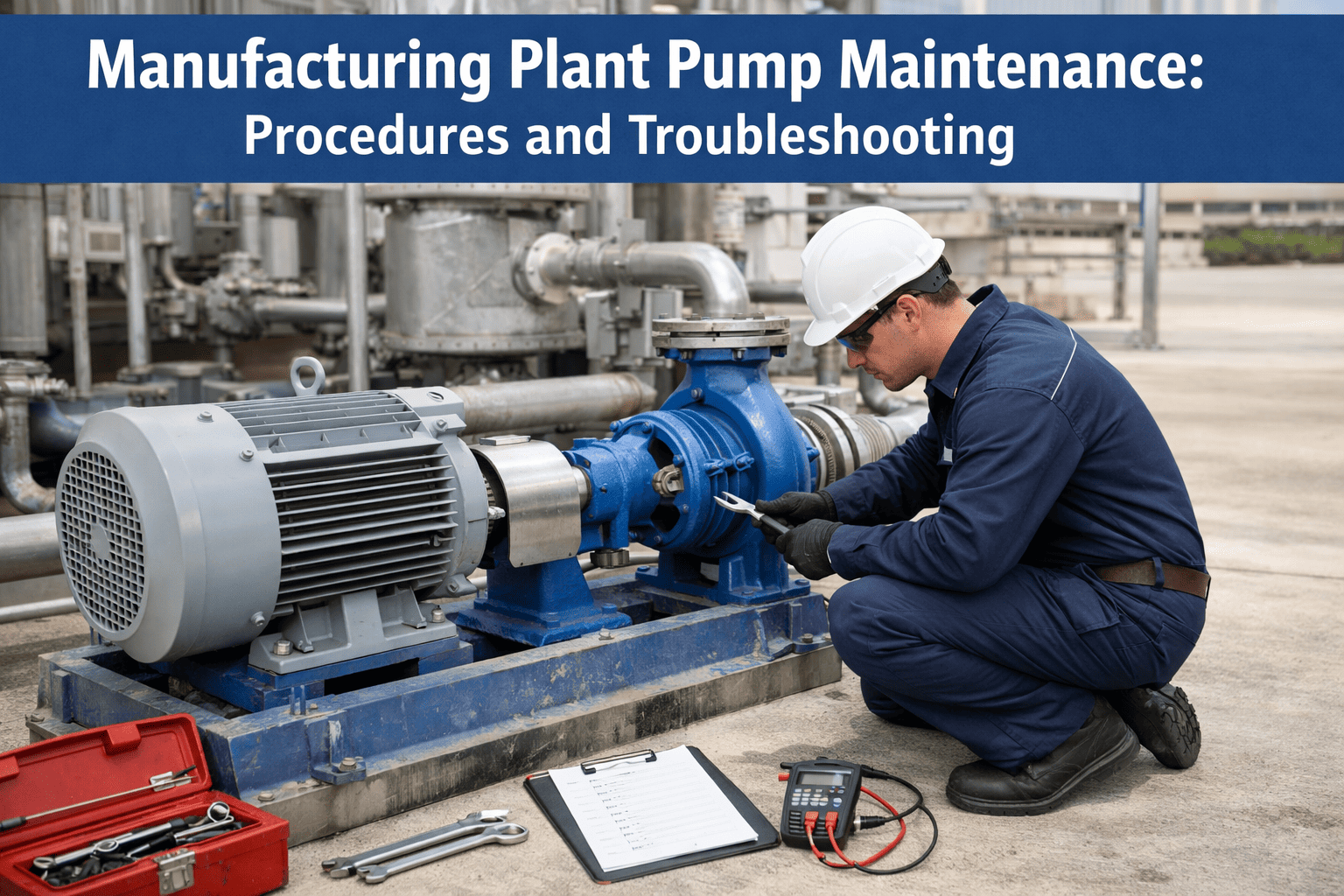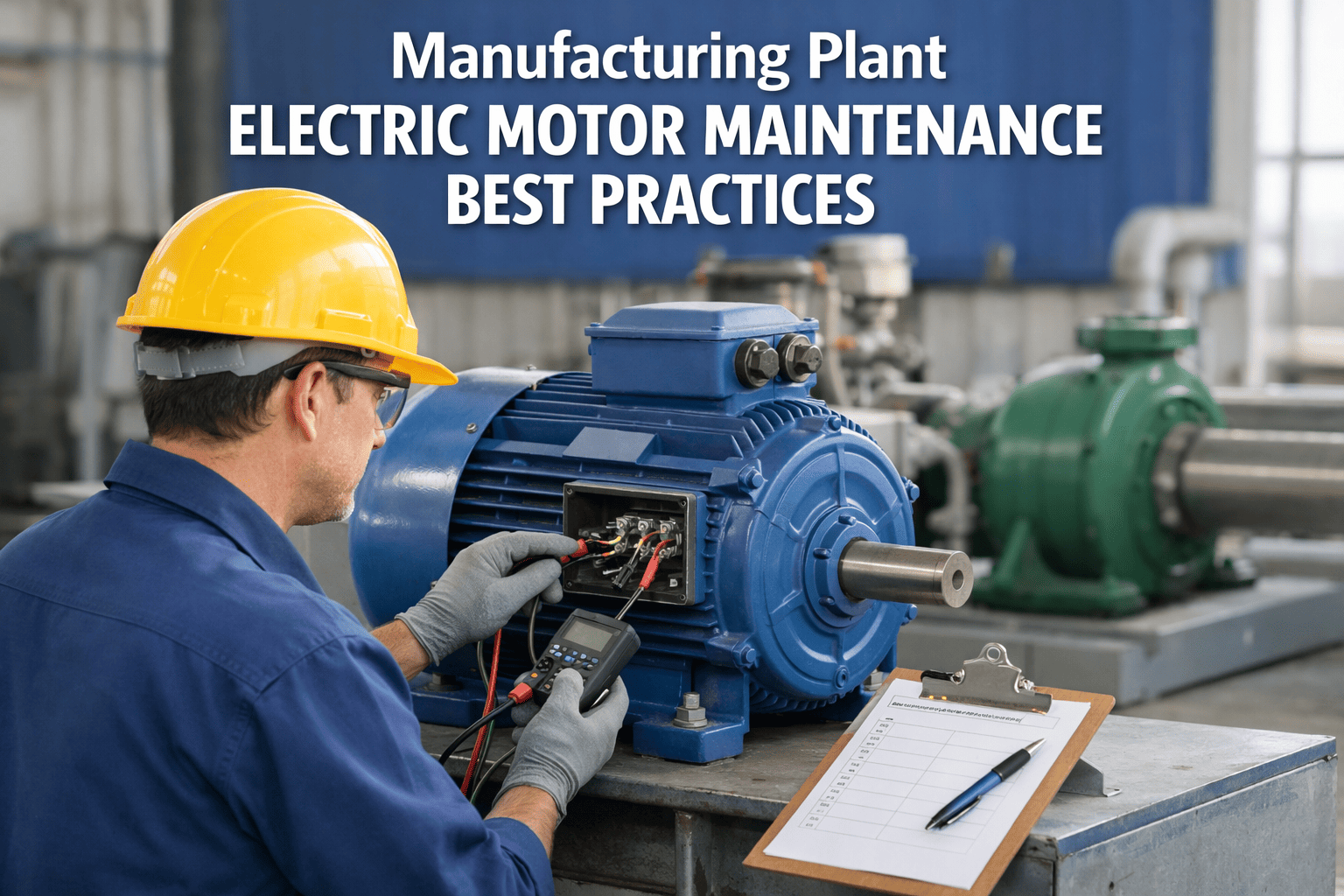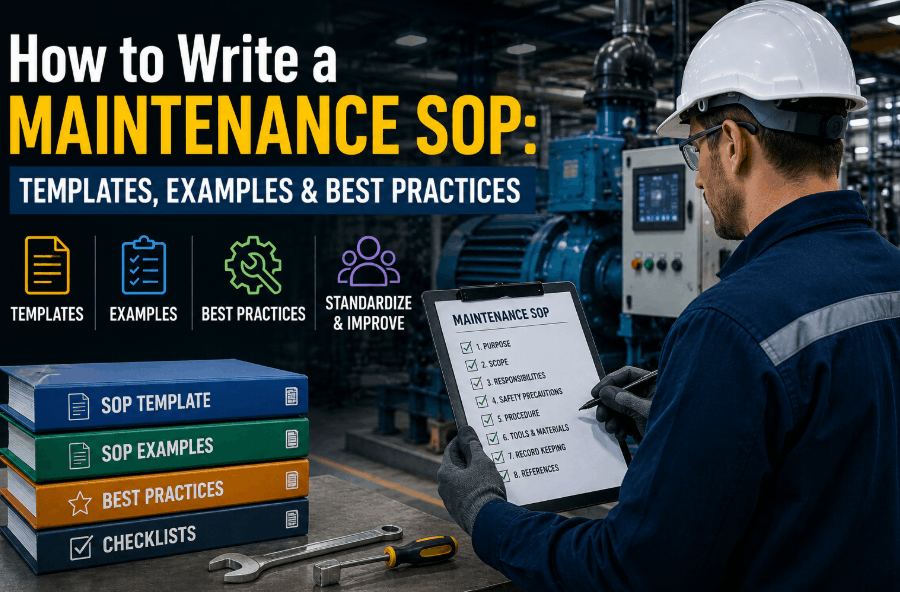
A maintenance SOP (Standard Operating Procedure) is the backbone of every high-performing manufacturing plant. When technicians follow clear, documented maintenance procedures, equipment uptime improves, compliance audits pass without findings, and institutional knowledge stops walking out the door with retiring staff. This guide walks you through exactly how to write a maintenance SOP — including templates, real-world examples, and the best practices that plant maintenance leaders use to drive technician compliance. Sign Up Free and start building your maintenance SOP library inside a CMMS built for plant-floor realities.
Centralize Every Maintenance SOP in One Platform
OxMaint gives manufacturing teams a single location to store, assign, and track maintenance procedures — linked directly to work orders, assets, and technician workflows.
What Is a Maintenance SOP and Why Does It Matter?
A maintenance standard operating procedure is a documented, step-by-step instruction set that defines how a specific maintenance task should be performed — by whom, with what tools, under what safety conditions, and to what completion standard. SOPs eliminate variation in execution. Two technicians following the same maintenance SOP on the same piece of equipment should produce the same outcome every time, regardless of experience level. That consistency is what protects equipment reliability, reduces safety incidents, and makes your maintenance operation auditable. Without SOPs, your maintenance quality depends entirely on who shows up that day — a liability no manufacturing plant can afford. Book a Demo to see how OxMaint attaches SOPs directly to work orders for in-field technician access.
What to Include in a Maintenance SOP: Core Components
SOP Title and Unique Identifier
Every maintenance SOP needs a clear, searchable title and a document ID for version control. Example: "SOP-MAINT-0047 — Centrifugal Pump Bearing Replacement."
Purpose and Scope
State what the procedure accomplishes and which assets, equipment types, or plant areas it applies to. Prevents misapplication of procedures across incompatible asset classes.
Safety Precautions and PPE Requirements
List lockout/tagout requirements, required PPE, hazardous energy sources, and any permit-to-work prerequisites before the first task step begins.
Tools, Parts, and Materials Checklist
Enumerate every tool, spare part, lubricant, and consumable required to complete the task. Technicians who arrive prepared complete jobs in one visit, reducing backlog and rework.
Step-by-Step Task Instructions
Number each action sequentially. Use plain language. Include torque values, clearance tolerances, and inspection criteria where applicable. Each step should be one discrete action.
Completion Criteria and Sign-Off
Define what "done" looks like — functional test results, vibration readings, visual inspections — and specify who reviews and signs off before the work order is closed.
How to Write a Maintenance SOP: Step-by-Step Process
Identify the Task and Assign an SOP Owner
Start by listing all maintenance tasks that currently lack documented procedures — prioritizing by failure frequency, safety risk, and regulatory relevance. Assign one subject matter expert (typically a senior technician or reliability engineer) as the SOP owner responsible for drafting and keeping the document current. Sign Up Free and use OxMaint's asset hierarchy to identify which equipment tasks need SOP coverage first.
Observe and Document the Task in the Field
Have your SOP owner perform or shadow the task and capture each step as it happens, in order. Field observation eliminates the "assumed knowledge" gaps that plague SOPs written from memory. Document every decision point, measurement, and quality check — even the ones experienced technicians do automatically without thinking.
Structure the Draft Using a Standard SOP Template
Apply a consistent maintenance SOP template across all procedures so technicians know exactly where to find safety requirements, tools lists, and task steps regardless of which SOP they're reading. Consistency accelerates adoption and reduces the cognitive load on technicians working under time pressure. Book a Demo to see OxMaint's built-in maintenance procedure templates.
Conduct a Technical Review with Frontline Technicians
Before publishing, have two or three technicians who regularly perform the task review the draft for accuracy, completeness, and usability. Frontline review catches missing steps, incorrect specifications, and language that makes sense to engineers but confuses technicians. This step is the single biggest predictor of whether technicians will actually follow the SOP in practice.
Publish, Version-Control, and Attach to Work Orders
Assign a version number and effective date. Archive the previous version. Publish the SOP in a location technicians can access from the plant floor — ideally attached directly to the relevant work order in your CMMS so technicians see the procedure exactly when they need it, without hunting through shared drives or binders.
Set a Review Cycle and Track Compliance
Maintenance SOPs should be reviewed at minimum annually — and immediately after any equipment modification, failure incident, or regulatory change that affects the procedure. Track which work orders have associated SOPs, and monitor completion data for deviations that may signal the SOP needs updating. Book a Demo to see how OxMaint flags outdated procedures before they reach the shop floor.
Maintenance SOP Template: Structure at a Glance
| SOP Section | What to Include | Common Mistakes | Compliance Impact |
|---|---|---|---|
| Header / Identification | Document ID, version, effective date, owner, applicable assets | No version control — outdated SOPs remain in circulation | High — auditors check version currency first |
| Purpose and Scope | What the SOP covers, what it explicitly excludes, asset classes it applies to | Too broad — technicians unsure which assets the SOP governs | Medium — drives correct SOP selection |
| Safety and LOTO | Hazard identification, energy isolation steps, PPE list, permits required | Generic safety language not asset-specific | Critical — OSHA/regulatory audit priority |
| Tools and Materials | Specific part numbers, lubricant grades, tool specs, consumable quantities | Vague descriptions — technicians substitute incorrect parts | High — parts errors cause repeat failures |
| Procedure Steps | Numbered sequential actions with specifications, tolerances, and decision points | Steps too broad — steps skipped or performed out of order | Critical — execution quality depends entirely on this section |
| Quality Checks | Acceptance criteria, test procedures, measurement targets | No completion criteria — technicians self-certify without verification | High — drives first-time quality rates |
| Sign-Off and Records | Who approves, how completion is documented, where records are stored | Paper sign-off disconnected from CMMS work order records | High — audit evidence requirement |
SOP for Manufacturing Maintenance: Real-World Examples
Conveyor Belt Tension Inspection SOP
Covers lockout sequence, tension measurement using a calibrated gauge, acceptable tension range by belt type, adjustment procedure, and post-adjustment test run. Estimated completion: 45 minutes.
Air Compressor PM SOP
Details oil level check, filter replacement schedule, belt inspection, drain valve operation, pressure relief valve test, and vibration baseline check. Includes acceptance criteria for each check point.
Motor Coupling Alignment SOP
Specifies laser alignment tool setup, acceptable angular and parallel misalignment tolerances by motor size, shim selection procedure, and post-alignment vibration verification step.
Heat Exchanger Cleaning SOP
Covers isolation and draining procedure, chemical flush concentration and dwell time, mechanical cleaning method selection, tube integrity inspection, and re-commissioning pressure test.
Gearbox Lubrication Change SOP
Documents oil grade specification by asset tag, drain and flush procedure, fill quantity, sample collection for oil analysis, and post-fill operational temperature monitoring window.
Hydraulic System Filter Replacement SOP
Details system pressure relief before opening, filter housing removal sequence, new filter part number verification, torque specifications, system re-pressurization, and leak inspection steps.
Why Technicians Don't Follow Maintenance SOPs — and How to Fix It
If technicians must return to an office, open a shared drive, or find a binder to read an SOP, most won't. SOPs must be available on a mobile device at the asset, attached to the work order in progress.
Outdated SOPs written for legacy equipment that has since been modified destroy technician trust in the documentation. A single bad SOP undermines compliance across your entire library.
Procedures drafted by engineers without technician input often use terminology, measurement units, or reference documents that frontline workers find confusing. Plain-language review is non-negotiable.
When work orders can be closed without confirming SOP steps were followed, documentation becomes optional in practice. CMMS checkpoints that require step-by-step confirmation before closure enforce compliance passively.
Maintenance SOP Best Practices for Manufacturing Teams
Write SOPs at the Task Level, Not Equipment Level
One pump may require five different SOPs — for bearing replacement, seal replacement, alignment, lubrication, and PM inspection. Granular SOPs are easier to follow and easier to update than omnibus equipment manuals.
Use Photos and Diagrams Where Language Fails
A photograph of the correct coupling alignment target, or a diagram showing lubrication point locations, eliminates ambiguity faster than any amount of written description. Visual SOPs improve first-time completion quality significantly.
Prioritize High-Frequency and High-Risk Tasks First
Don't try to document every task at once. Start with the maintenance procedures performed most often and those where execution errors carry the highest safety or production consequence. Build momentum with quick wins before tackling complex or rare procedures.
Link SOPs Directly to CMMS Work Orders
Embedding SOP access inside the work order — rather than in a separate document system — eliminates the friction that keeps technicians from reading procedures. When the SOP is one tap away from the task list, compliance improves dramatically.
Review SOPs After Every Related Failure Event
If an asset fails after a recently completed PM, examine the associated SOP as part of root cause analysis. Missed steps, unclear instructions, or outdated specifications in the SOP may be contributing causes that require immediate correction.
Track SOP Coverage as a Maintenance KPI
Measure the percentage of recurring work order types that have an active, current SOP attached. Publish this figure on the maintenance performance dashboard. Gaps in SOP coverage are reliability risks waiting to surface.
OxMaint: SOP Management Built Into Your CMMS
Store, version-control, and attach maintenance SOPs directly to work orders — so technicians access procedures at the point of work, every time, from any device.
Frequently Asked Questions
A maintenance SOP defines the overall procedure including safety, scope, and quality standards. A work instruction is a more granular subset — a step-by-step guide for one specific action within a larger SOP. Both are needed in a complete documentation system.
Most equipment maintenance SOPs run 1–4 pages. Longer is not better — if a technician can't scan the key steps in under two minutes, the SOP will be ignored under time pressure. Use tables, numbered steps, and visuals to keep procedures concise.
At minimum annually. Immediately after any equipment modification, failure event, or change in regulatory requirements affecting the procedure. Assign a named SOP owner who is accountable for keeping the document current.
Yes. Both standards require documented procedures for maintenance-critical activities. Auditors typically request evidence of current, version-controlled SOPs and records showing technicians followed them. Gaps in SOP coverage are a common audit finding. Sign Up Free to build an audit-ready SOP library in OxMaint.
The most effective maintenance SOP templates use a standardized header, a safety section, a tools/parts checklist, numbered sequential steps with acceptance criteria, and a sign-off block. Consistency across all SOPs in your library is more important than any particular formatting choice. Book a Demo to see OxMaint's ready-to-use SOP templates.
Ready to Build a World-Class Maintenance SOP Library?
Start your free OxMaint trial and give your plant maintenance team the tools to document, manage, and enforce maintenance procedures — attached to every work order, accessible from any device.
.png)