How to Implement 5S Methodology in Manufacturing Plants
By oxmaint on February 11, 2026
Cluttered workstations, misplaced tools, inconsistent shift-to-shift practices, and reactive maintenance — these are the silent profit killers plaguing manufacturing plants everywhere. The 5S methodology, rooted in Toyota's Production System, gives plant managers a proven, step-by-step framework to eliminate workplace disorder and build an environment where efficiency, safety, and quality improvements become self-sustaining. Whether you operate a single production line or manage multiple facilities, 5S is the foundation that makes every other lean initiative possible. Schedule a consultation to explore how Oxmaint helps manufacturing teams digitize and sustain their 5S programs with real-time audit tracking and automated work orders.
What Makes 5S the Starting Point for Lean Manufacturing
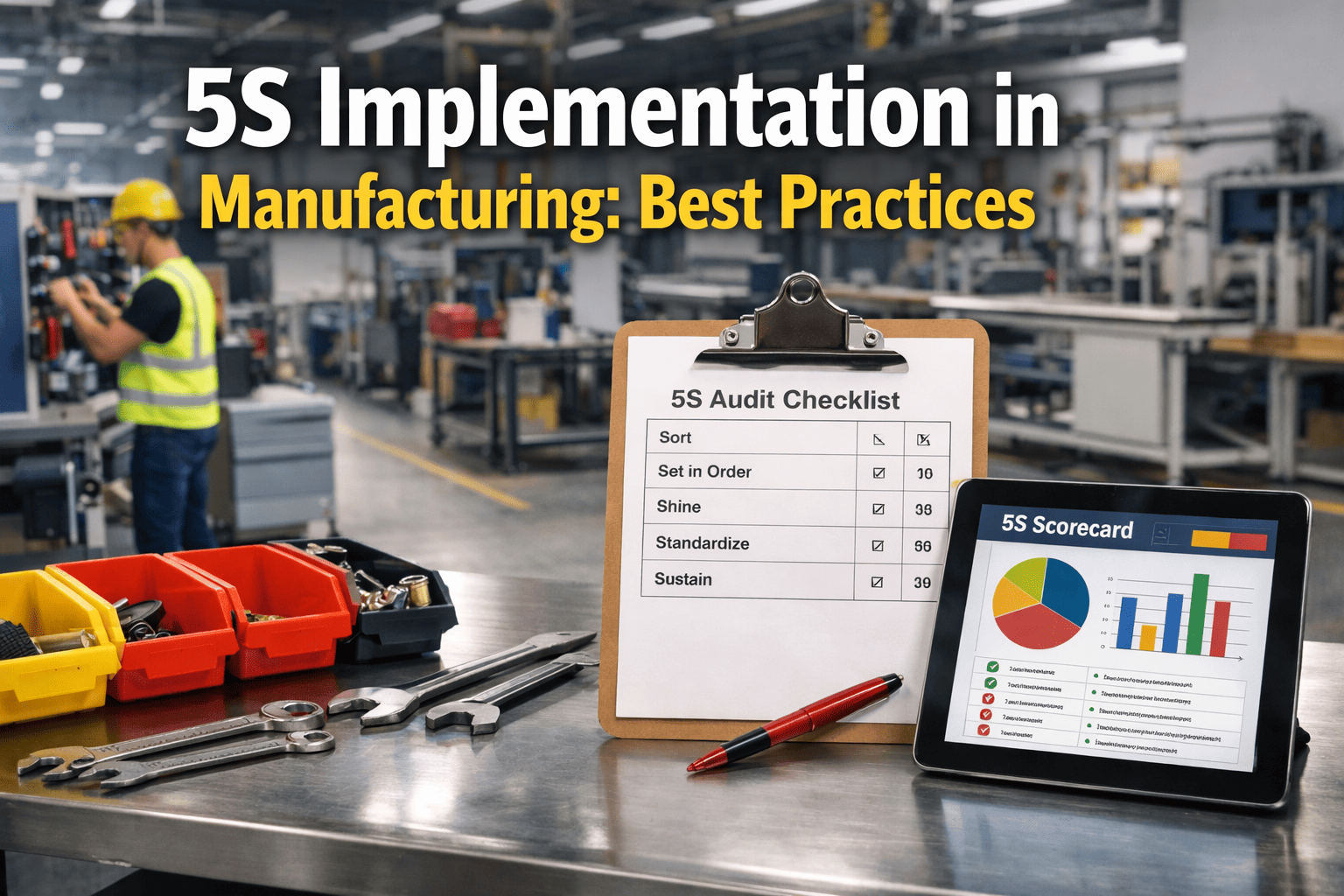
5S is not a cleaning program — it is a structured discipline system where each pillar builds upon the previous one to create permanent workplace transformation. Developed within the Toyota Production System in the 1950s, 5S has since been adopted across industries worldwide because it delivers rapid, visible results while laying the groundwork for kaizen, TPM, and Six Sigma initiatives. Plants that skip 5S and jump to advanced lean tools almost always struggle to sustain improvements because they lack the organizational foundation that 5S provides.
The Five Pillars — In Sequence
Pillar 1Seiri
Sort — Eliminate the Unnecessary
Walk every workstation, aisle, and storage area. Identify every item and ask one question: Is this needed for current operations? Use a red-tag campaign to flag anything questionable — broken tools, obsolete jigs, expired chemicals, duplicate parts, outdated SOPs. Move tagged items to a holding zone with a 30-day review deadline. Everything that does not earn its place on the floor gets relocated, recycled, or discarded.
Pillar 2Seiton
Set in Order — A Place for Everything
Organize every remaining item by frequency of use and workflow proximity. High-frequency tools go within arm's reach; low-frequency items move to centralized storage. Install shadow boards, labeled bins, color-coded shelving, and floor-taped zones. The test: any operator should be able to locate any item within 30 seconds and return it to the exact same spot without asking anyone.
Pillar 3Seiso
Shine — Clean to Inspect
Daily cleaning is not janitorial work — it is an operator-led inspection routine. When technicians wipe down machines, they spot oil leaks, loose connections, cracked guards, and worn belts that would otherwise go unnoticed until a breakdown occurs. Shine transforms cleaning from a chore into a predictive maintenance tool, building equipment ownership among frontline workers.
Pillar 4Seiketsu
Standardize — Lock In Best Practices
Capture what works into repeatable, visual standards. Post photographs of the ideal workstation state at every area. Create zone maps with color-coded boundaries. Build shift checklists that turn the first three S's into daily habits. When the correct condition is visually obvious, deviations become impossible to ignore — and self-correction becomes instinctive.
Pillar 5Shitsuke
Sustain — Build the Discipline to Last
This is where most programs fail. Sustain requires scheduled audits, management gemba walks, team accountability, recognition programs, and a cultural shift that makes 5S non-negotiable. Sign up for Oxmaint to automate audit schedules, track corrective actions, and monitor 5S compliance scores across every zone in your plant.
Want to digitize your 5S program? Oxmaint helps manufacturing teams manage audits, assign corrective actions, and sustain workplace standards — all from one platform.
Disorganized plant floors do not just look unprofessional — they hemorrhage money through wasted motion, extended changeovers, safety incidents, and preventable quality failures. The numbers paint a clear picture of what workplace disorder actually costs.
Operational Impact of Workplace Disorder
25-30%
of a typical operator's shift consumed by non-value-added activities — searching, walking, waiting, and rework
64%
of manufacturing workplace injuries linked to poor housekeeping and cluttered aisles
26%
average increase in on-time delivery after structured 5S adoption
40%
reduction in quality defects within 6 months of sustained 5S with regular audits
Your 5S Rollout Plan — Phase by Phase
Successful 5S implementation follows a deliberate sequence. Rushing the rollout or skipping preparation is the number one reason programs collapse within the first quarter. A phased approach with a pilot zone, measured results, and systematic expansion delivers lasting results.
Manufacturing 5S Deployment Roadmap
Phase 1 — Week 1 to 3
Leadership Alignment and Baseline Assessment
Secure executive sponsorship and form a cross-functional 5S steering committee. Conduct a plant-wide walkthrough, photograph current conditions, document baseline KPIs, and allocate budget for supplies — floor tape, labels, shadow board materials, red tags, and cleaning equipment.
Phase 2 — Week 3 to 5
Pilot Area Selection and Team Training
Select a high-visibility area with motivated team members. Train all involved operators, supervisors, and maintenance staff on 5S principles, red-tag procedures, visual management, and audit scoring. A strong pilot becomes your internal showcase that drives plant-wide buy-in.
Phase 3 — Week 5 to 8
Execute Sort, Set in Order, and Shine
Run an intensive 5S blitz — red-tag and remove unnecessary items, assign labeled home locations for every tool and material, install shadow boards and floor markings, and deep-clean all surfaces while inspecting equipment for abnormalities.
Phase 4 — Week 8 to 10
Standardize and Build Audit Routines
Create visual standard boards showing the ideal state for each workstation. Develop 5S audit checklists with clear scoring criteria. Establish daily self-checks, weekly supervisor audits, and monthly cross-zone reviews. Sign up for Oxmaint to digitize your audit workflows and auto-assign corrective actions.
Phase 5 — Week 10 Onward
Plant-Wide Expansion and Continuous Improvement
Use trained champions from the pilot team to lead expansion into remaining production areas. Integrate 5S into your CMMS for automated scheduling. Establish inter-zone competitions, recognition programs, and quarterly reviews.
Need a customized rollout plan for your facility? Our team will assess your plant and design a 5S implementation roadmap tailored to your operations.
Visual management makes 5S self-enforcing. When the correct state of every workstation is visually obvious, deviations stand out immediately, operators self-correct without supervision, and new employees learn the standard layout within hours instead of weeks.
Visual Tools That Sustain 5S on the Plant Floor
01
Shadow Boards
Outline every tool's silhouette on a dedicated board. Missing tools are instantly visible. Shadow boards reduce tool search time by up to 80% and prevent tools from being left inside machines after maintenance.
02
Color-Coded Floor Markings
Yellow for aisles, red for defect staging, green for finished goods, white for equipment zones. Standardized floor tape creates a universal factory language that every operator understands.
03
Red-Tag Holding Zones
Bright red tags on unneeded items trigger a formal review — keep, relocate, or discard. A designated holding area gives teams a 30-day window to evaluate flagged items before permanent disposition.
04
5S Activity Boards
Display before-and-after photographs, weekly audit scores, improvement trends, and open action items at each zone. Activity boards create transparency and healthy competition between shifts.
05
Standardized Labeling
Label every shelf, bin, drawer, and cabinet with item names, part numbers, and min/max quantities. Consistent labeling eliminates guesswork and enables anyone to restock correctly — even during off-shifts.
06
Digital Audit Checklists
Replace paper forms with mobile checklists that capture photos, auto-calculate scores, and route corrective actions in real time. Sign up for Oxmaint to run paperless 5S audits across all zones.
Plant Floor Transformation — Before vs. After 5S
The gap between a plant without 5S discipline and one with a sustained program is enormous — not just in appearance, but in measurable productivity, safety, and quality metrics.
The 5S Transformation in Manufacturing
Before 5S Implementation
Tools scattered across benches and floors with no designated storage
Each shift rearranges the workstation differently
Operators spend 15-20 minutes per shift searching for items
Blocked aisles, tripping hazards, and missed emergency exits
Equipment issues discovered only after costly breakdowns
60-70%typical OEE in disorganized environments
After Sustained 5S Program
Every item has a labeled, shadow-boarded home position
Visual standards ensure consistency across all shifts
Any tool or material retrieved in under 30 seconds
Clean, marked aisles with zero-obstruction policy enforced
Daily shine routines catch leaks and wear before failures
80-85%+OEE in mature 5S environments
Transform Your Plant Floor with Oxmaint
Oxmaint connects your 5S audits directly to maintenance workflows — findings from a walkthrough automatically become trackable work orders assigned to the right team. Manage workplace standards, asset conditions, and corrective actions from a single platform.
What gets measured gets sustained. A structured audit system converts subjective impressions of workplace organization into objective, trackable scores that drive accountability and celebrate progress.
5S Audit Scoring Framework
Pillar
What Auditors Evaluate
Scoring Method
Target
Sort
No unnecessary items present; red-tag process actively followed
1-5 scale per workstation
4.0+ avg
Set in Order
All items in labeled positions; shadow boards complete; floor markings intact
1-5 scale per workstation
4.0+ avg
Shine
Equipment clean, no leaks or debris; cleaning/inspection schedule followed
1-5 scale per workstation
3.5+ avg
Standardize
Visual standards posted and current; checklists and SOPs documented
1-5 scale per zone
4.0+ avg
Sustain
Audits on schedule; corrective actions closed out; improvement trends positive
Compliance %
90%+
Best practice: daily self-checks by operators, weekly team audits by supervisors, monthly cross-area audits by plant leadership.
Why Most 5S Programs Fail — And How to Prevent It
The methodology itself is straightforward. The failures come from predictable implementation mistakes that are entirely preventable with the right awareness upfront.
Common 5S Pitfalls and Solutions
Pitfall
Root Cause
Prevention Strategy
Treated as a one-time cleanup
No Sustain planning from the start
Build audit schedules and accountability structures before the first Sort event
Leadership delegates but does not participate
Management sees 5S as shop floor work
Require monthly gemba walks with documented observations and visible follow-up
Plant-wide rollout too fast
Pressure for immediate broad results
Start with one pilot zone, prove value, expand with trained champions
Paper audit fatigue
Manual forms are tedious to complete and analyze
Digitize with Oxmaint's CMMS for automated tracking, photo capture, and reporting
Operators excluded from design
Top-down approach without frontline input
Involve operators in designing their workstation standards — ownership drives compliance
Stop losing 5S momentum to paperwork. Oxmaint digitizes your entire audit workflow — create a free account and run your first digital 5S audit today.
Plants that commit to disciplined 5S see compounding returns across productivity, safety, quality, and employee morale — measurable within 90 days and growing as the program matures.
Proven Manufacturing OutcomesData from plants with 12+ months of sustained 5S practice
65%
Less time searching for tools and materials
70%
Fewer safety incidents and near-misses
50%
Faster changeover times through organized layouts
40%
Improvement in first-pass yield and quality
Build a 5S Culture That Sustains Itself
Spreadsheets and paper audits cannot keep a 5S program alive past the first quarter. Oxmaint gives your teams the digital tools to schedule audits, capture findings with photos, assign corrective work orders, and track 5S scores across every zone — turning one-time cleanups into permanent operational discipline.
How long does a full 5S implementation take in a manufacturing plant?
A focused pilot area typically completes Sort, Set in Order, and Shine within 2-4 weeks. Building Standardize and Sustain routines takes another 4-6 weeks. Full plant-wide rollout ranges from 3-6 months depending on facility size. The key is sustaining gains before expanding. Book a demo to discuss a realistic timeline for your plant.
What does 5S implementation cost for a manufacturing plant?
Physical supplies for a pilot area — floor tape, labels, shadow board materials, red tags, and cleaning supplies — typically run between $2,000 and $5,000. The larger investment is in training hours and sustained management commitment. Digital tools like Oxmaint reduce ongoing costs by replacing paper processes and automating audit workflows.
How do we get operators to actually follow 5S standards?
Operator buy-in comes from involvement, not mandates. Include frontline workers in workstation layout decisions, ask for their ideas on tool placement and material flow, and show them the measurable before-and-after results. Recognition programs and inter-zone competitions build engagement. Sign up for Oxmaint to give operators easy mobile access to audit checklists.
Can 5S integrate with our existing CMMS or maintenance system?
Absolutely. 5S and CMMS are natural partners — the Shine step generates maintenance requests, and the Sustain step relies on scheduled audits that a CMMS automates. Oxmaint integrates 5S audit workflows directly with work order management, so walkthrough findings automatically become corrective actions assigned to responsible teams.
What is the difference between 5S and 6S in manufacturing?
The sixth S stands for Safety. Some organizations add it as a dedicated pillar to emphasize hazard identification, PPE compliance, and ergonomic assessments. In practice, safety is embedded throughout every 5S step — Sort removes hazards, Set in Order clears aisles, Shine catches equipment problems, and Standardize documents safe procedures.