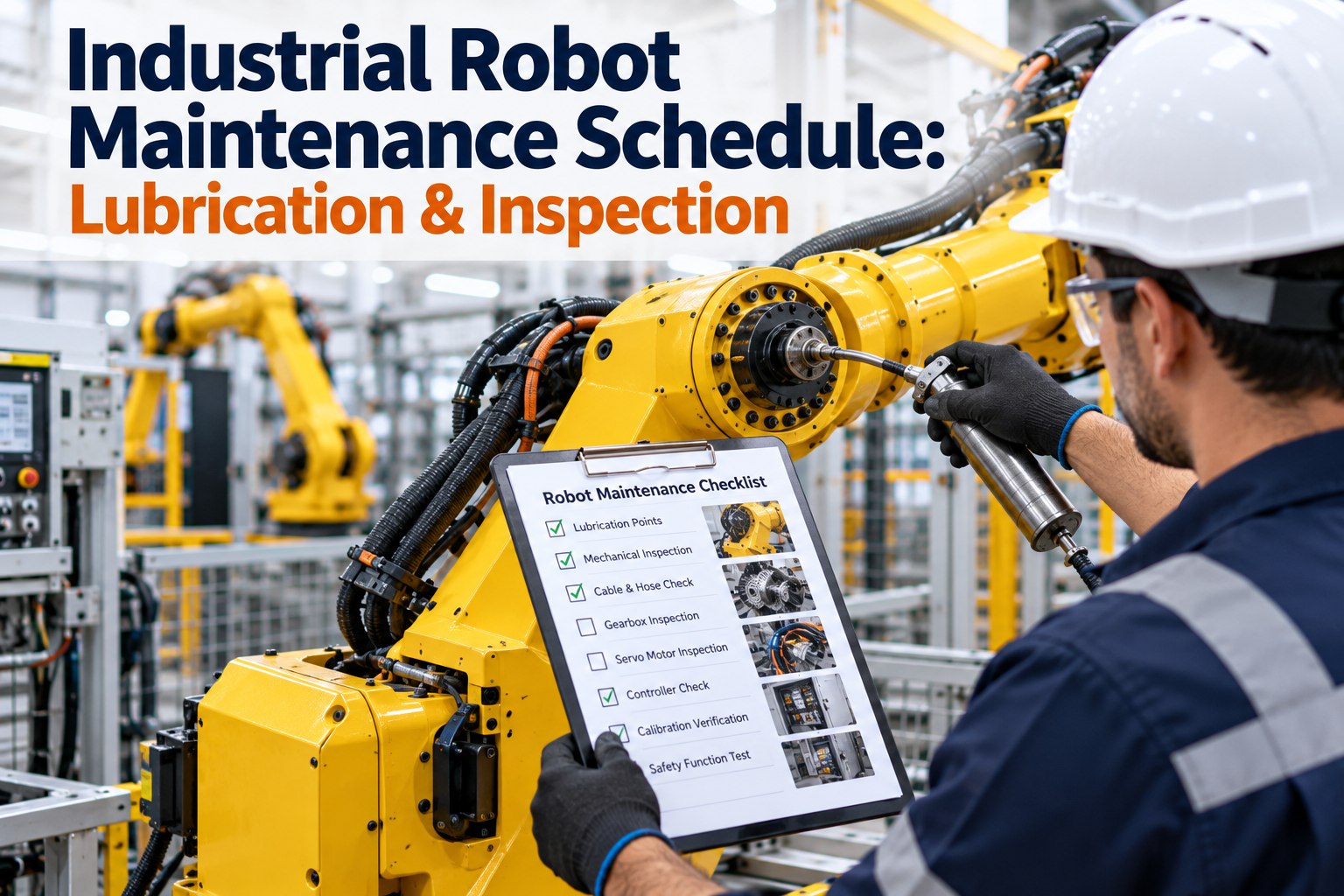
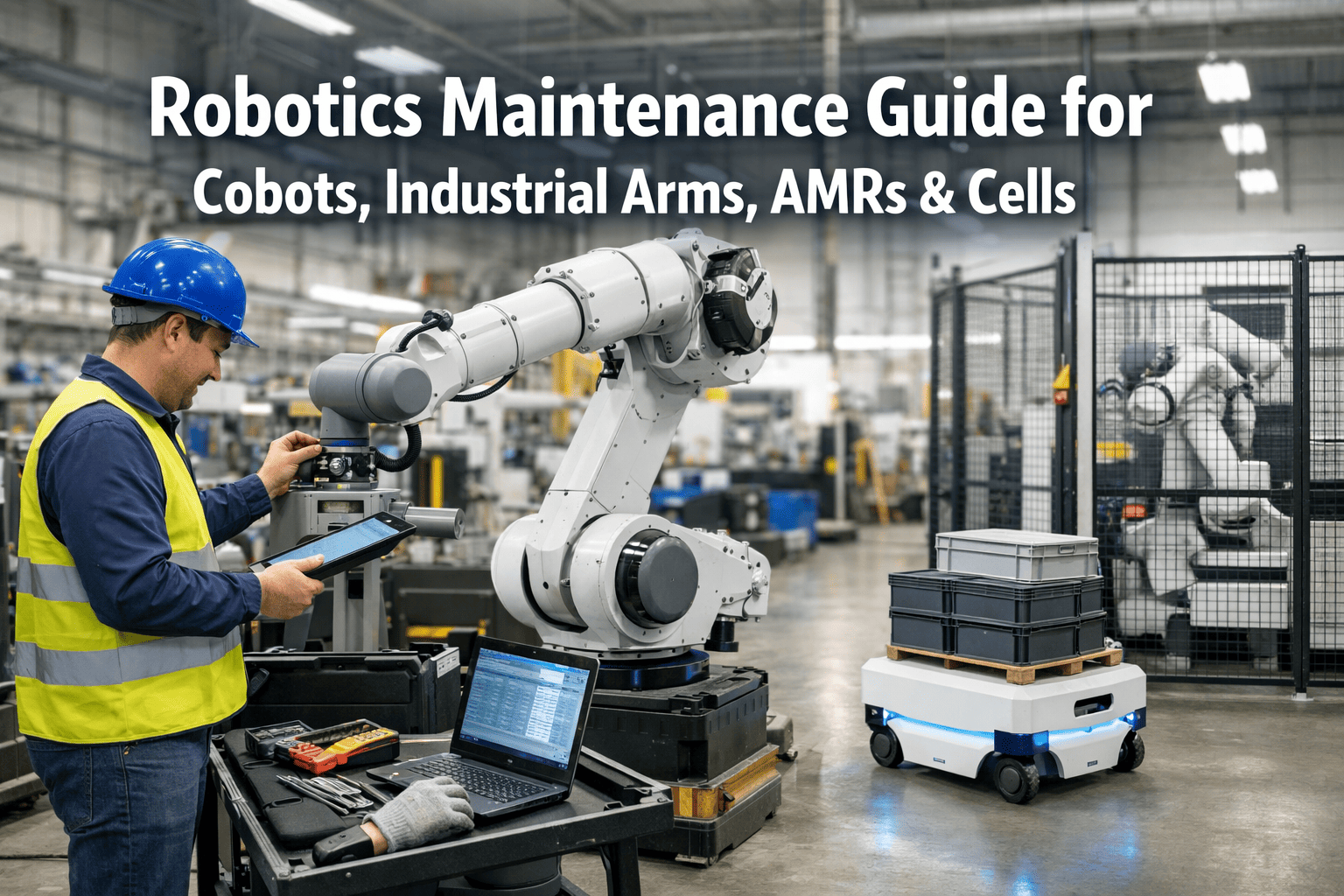
A single skipped lubrication cycle on a 6-axis robot wrist joint is not a minor oversight—it triggers positional error, accelerates gear wear, and eventually causes encoder failure that throws every downstream quality measurement out of tolerance. Unplanned robot downtime costs automated facilities between $1,000 and $10,000 per minute, and reactive repairs run three to five times more expensive than planned ones. OxMaint's CMMS turns this checklist into automated, trackable digital work orders your technicians can execute from any mobile device—so your robots never miss a PM interval again. If your team is still tracking robot maintenance in spreadsheets, see how structured robot PM scheduling works in a live demo.
WHAT HAPPENS WITHOUT ROBOT PM
$10K–$50K
Cost per unplanned robot breakdown in lost output and emergency repair
3–5×
More expensive to repair a robot failure reactively vs. with planned PM
545%
Average ROI for every dollar invested in robot preventive maintenance
80%
Longer equipment lifespan when a structured PM program is followed
MANUFACTURER PM INTERVALS
OEM-Recommended Maintenance Intervals by Robot Brand
Each manufacturer specifies different PM intervals. Running on calendar time alone misses robots operating under high-utilization, three-shift schedules. Always track by operating hours.
FANUC
Daily
Shift-start visual check, grease leak scan, error log review
600 hrs
Grease axis joints, inspect cables and connectors
3,850 hrs / 1 yr
Full PM overhaul — gearbox oil, battery, brake test, mastering
KUKA
Daily
Visual inspection, cable dress check, safety interlock test
1,000 hrs
Lubrication of all axes, controller filter cleaning
10,000 hrs / 1 yr
Gearbox oil change, backlash measurement, full safety validation
ABB
Daily
Leak inspection, brake engagement check, alarm log scan
1,000 hrs
Axis greasing, controller air filter replacement
10,000 hrs / 1 yr
Gearbox oil, motor brake test, TCP verification, full backup
YASKAWA
Daily
Wiring check, abnormal noise scan, grease/oil leak inspection
6 months
Axis lubrication, ventilation filter check, battery status
12,000 hrs / 1 yr
Reducer oil change, backlash test, full electrical inspection
THE COMPLETE PM CHECKLIST
Industrial Robot Preventive Maintenance Checklist by Frequency
Use this interval-based checklist across all major robot types. Tasks marked for annual service should be performed by OEM-certified technicians.
Visual Body Inspection
Scan all links, joints, and covers for cracks, dents, or missing bolts. Any physical impact overnight must be logged before operation resumes.
Grease and Oil Leak Scan
Check all axis joints, gearbox seals, and wrist assemblies for fresh grease or oil pooling. Any leak indicates a failed seal requiring immediate attention.
Cable and Dress Pack Check
Inspect the cable harness for new fraying, pinching, or connector pullout at the wrist and base. Dress pack cables flex millions of times—daily checks catch fatigue before failure.
Power-On and Alarm Log Review
Confirm system boots without alarms. Review controller error log for any fault codes active since last shift—recurring self-clearing codes are the most reliable failure warning available.
Safety Device Functional Test
Trigger each emergency stop and verify robot halts within specified time. Confirm light curtains, area scanners, and interlocks are responding correctly before production begins.
Zero-Point Position Verification
Jog the robot to its reference position and verify joint encoders read within tolerance. Position drift detected here prevents defective parts being produced at the start of shift.
Controller Cooling Filter Inspection
Remove and inspect all controller air filters. Blocked filters cause servo amplifier overheating that triggers thermal shutdowns mid-cycle. Clean or replace per OEM spec.
Brake Engagement Hold Test
Release drives on each axis and confirm the robot holds its position under gravity load for a minimum of 30 seconds. Any axis that drops indicates a worn brake requiring replacement.
Pneumatic and Air Supply Check
Verify supply pressure at the robot base FRL unit. Check all quick-connect fittings, valve manifolds, and supply lines for leaks. Low air pressure directly affects gripper force and cycle reliability.
End-of-Arm Tool Bolt Torque Check
Verify all EOAT mounting bolts are torqued to spec using a calibrated torque wrench. Loose tooling causes TCP drift that degrades part placement accuracy and triggers quality rejections downstream.
Teach Pendant and HMI Function Test
Confirm all pendant buttons, deadman switches, and emergency stop functions respond correctly. A faulty teach pendant becomes a critical safety risk when technicians enter the robot cell.
Abnormal Noise and Vibration Scan
Run the robot through its full motion program at reduced speed and listen for grinding, clicking, or knocking sounds at each joint. New sounds since last week indicate developing mechanical wear requiring investigation.
Axis Lubrication — OEM Grease Type
Apply OEM-specified grease to all axis joints via zerk fittings. Using non-approved lubricants voids warranty and damages seals. Record grease type, quantity, and date for audit trail.
Backlash Measurement — All Axes
Measure gearbox backlash on each axis using a dial indicator and compare against OEM wear limit specification. Backlash beyond tolerance means position accuracy is compromised and reducer replacement is approaching.
TCP Verification and Recalibration
Verify tool center point accuracy using a reference calibration fixture. If TCP deviation exceeds 0.2mm, recalibrate before returning to production. Undetected TCP drift causes part defects and fixture collisions.
Battery Status Check — Controller and Encoder
Check voltage on all controller memory batteries and encoder backup batteries. Dead batteries erase all robot programs and calibration data—replacement takes minutes, reprogramming takes hours.
Motor Temperature Trend Review
Compare servo motor operating temperatures against baseline readings from commissioning. A motor running 10°C hotter than baseline signals bearing wear, increased friction, or inadequate cooling airflow.
Full Controller Program Backup
Create a verified backup of all programs, system variables, I/O configurations, and safety parameters. Store off-controller. Confirm restore procedure works. An untested backup is not a backup.
Gearbox Oil Drain and Replacement
Drain and replace axis gearbox oil on all joints exceeding the manufacturer's change interval, typically J1–J3 for high-load axes. Inspect drained oil for metal particles indicating internal wear.
Axis Re-Mastering and Calibration
Perform full zero-point mastering on all axes using OEM tooling. Document joint positions and compare against original commissioning data. Mastering drift accumulates invisibly until part quality fails.
Safety Function Verification — ISO 10218 Compliance
Functionally test all safety-rated functions: force limits, speed monitoring, emergency stop response, and protective stop circuits. ISO 10218 requires this verification at defined intervals—it is not optional.
Internal Cable Harness Full Inspection
Access all inspection ports and inspect the internal cable harness for chafing, connector pin corrosion, and partial mating. Intermittent cable faults are the leading cause of random robot alarms on the production floor.
Motor Brake Coil Resistance Measurement
Measure resistance across each motor brake coil on all axes and record values. Compare against OEM specifications and previous annual readings to identify coils approaching end of service life.
Firmware and Software Version Audit
Verify controller firmware version against OEM security and stability bulletins. Apply updates per your change management procedure. Outdated firmware carries both performance and cybersecurity risk in connected factory environments.
DIGITIZE YOUR ROBOT PM TODAY
Turn This Checklist Into Automated Work Orders — Assign, Track, and Verify Every Robot PM Task
OxMaint lets you build PM templates for each robot brand and type, trigger work orders by operating hours (not just calendar dates), and track completion from any mobile device on the shop floor. Most teams are running their first digital robot PM within 48 hours of setup.
BY ROBOT TYPE
Critical PM Checks Specific to Each Robot Configuration
A generic checklist applied across all robot types is the most common cause of PM program failure. These are the type-specific checks your program must include.
6-Axis Articulated
FANUC, ABB, KUKA, Yaskawa
Gearbox backlash on all 6 axes
Servo motor temperature per axis
Brake hold test — all joints under gravity
Teach pendant E-stop and deadman
Reach envelope accuracy vs. nominal
Counterbalance pressure (pneumatic units)
SCARA Robot
Epson, Yamaha, Omron
Z-axis ball screw inspection and lubrication
Rotary axis timing belt tension check
R-axis spline shaft condition
High-speed repeat accuracy test
Arm bearing play measurement
EOAT coupling torque verification
Delta Robot
ABB FlexPicker, Fanuc M-1, Codian
Rod-end bearing inspection on all arms
Carbon fiber arm surface crack scan
Platform pivot joint play check
Vision system calibration (if integrated)
High-cycle cable routing inspection
TCP accuracy at all corners of work envelope
Cobot (Collaborative)
Universal Robots, Doosan, Techman
Force-torque sensor calibration
Joint torque limit functional test
Collision detection sensitivity verification
ISO/TS 15066 safety function validation
Cable wear inspection at wrist joint
Power and force limiting speed check
TOP FAILURE MODES
The 5 Robot Failures That Structured PM Prevents
01
Gearbox Seizure from Grease Contamination
Contaminated or depleted reducer grease causes overheating that destroys internal gear surfaces. Repair cost runs $5,000–$15,000 per axis. Prevented entirely by interval-based lubrication with OEM-approved grease types.
$5K–$15K
02
Total Program Loss from Dead Controller Battery
When backup batteries fail, the controller loses all programs, coordinate systems, and calibration data. Recovery requires full reprogramming and mastering—typically 8–16 hours of production loss. Prevented with monthly battery voltage checks.
8–16 hrs
03
Dress Pack Cable Failure Causing Intermittent Faults
Cable harnesses flex millions of times through motion cycles. Fraying causes intermittent electrical faults that produce random alarms, misfires, and defective parts—the hardest class of robot fault to diagnose without inspection history.
Days lost
04
Position Deviation from Encoder Drift
Thermal cycling and connector vibration degrade encoder accuracy over time. The robot continues operating but produces parts outside tolerance. Quality escapes downstream before the root cause is identified without regular TCP verification.
Quality escapes
05
Brake Wear Causing Axis Drop Under Gravity
Motor brakes degrade with thermal cycling. A brake that releases unexpectedly drops a loaded robot arm onto tooling, fixtures, or personnel. Caught with weekly brake hold tests costing 5 minutes; missed, it becomes a safety incident and insurance claim.
Safety risk
FREQUENTLY ASKED
Industrial Robot Preventive Maintenance: Your Questions Answered
How often should industrial robots receive preventive maintenance?
PM frequency depends on the manufacturer and utilization rate. FANUC recommends full PM every 3,850 operating hours or 12 months, while KUKA and ABB specify around 10,000 hours. Daily visual checks should happen at every shift change regardless of brand.
OxMaint tracks runtime hours per robot asset and triggers PM work orders at the correct hour threshold—not on a fixed calendar that ignores how heavily each robot is actually running.
What are the most critical items on a robot PM checklist?
The highest-impact items are gearbox grease replacement (prevents reducer seizure costing $5,000–$15,000 per axis), battery replacement (prevents total program loss), backlash measurement (catches position accuracy degradation early), and cable inspection (prevents intermittent electrical failures). Missing any of these can result in downtime costing tens of thousands of dollars per incident.
Book a demo to see how OxMaint structures these into automated PM work orders with technician assignment and photo evidence capture.
Can one CMMS manage robots from different manufacturers like FANUC, ABB, and KUKA?
Yes. OxMaint lets you create separate PM templates for each robot brand—each with brand-specific tasks, intervals, and lubrication requirements. You can schedule by calendar time or operating hours and maintain a complete service history across all OEMs from a single dashboard.
Start your free account to see how multi-OEM robot PM management works in practice without any spreadsheet coordination.
Do daily robot maintenance checks require trained maintenance technicians?
Daily and weekly PM tasks—visual inspection, cleaning, basic function checks, and error log review—can be performed by any trained operator following a documented digital checklist. Monthly tasks including lubrication and brake testing require technicians trained on the specific robot brand. Annual tasks like gearbox oil changes and axis re-mastering should be performed by OEM-certified engineers.
Schedule a session with our team to structure your robot PM program by task tier so 80% of your inspections stay within your internal team's capability.
What happens if we skip preventive maintenance on industrial robots?
Skipping PM leads to position deviation, repeatability failures, cable damage, program loss from dead batteries, gearbox seizure, and safety hazards—any of which can shut down a production line. Reactive repairs cost three to five times more than planned interventions, and a single unplanned robot breakdown typically costs $10,000–$50,000 in lost output and emergency parts.
Use OxMaint to set up recurring PM work orders that ensure no robot in your facility ever exceeds its maintenance interval again.
STOP MANAGING ROBOT PM IN SPREADSHEETS
Every Robot in Your Facility Deserves a Maintenance Schedule It Can Count On
OxMaint gives your maintenance team digital PM checklists for every robot brand and type, hour-based PM triggers, mobile work order execution, and a complete service history that proves your robots are maintained—to your engineers, your quality team, and your auditors.