Industry 4.0 in Manufacturing Plants: Implementation Roadmap 2026
By oxmaint on February 20, 2026
Every manufacturing plant faces the same question in 2026: modernize operations with connected technology or fall behind competitors who already have. Industry 4.0 is not a buzzword anymore—it is a measurable shift in how factories run, maintain equipment, and make decisions. Plants that connect IoT sensors, AI analytics, and smart automation into a single maintenance platform are reporting up to 50% less unplanned downtime and 30% lower maintenance costs. This guide walks you through exactly how to make that transition, step by step. Schedule a free Industry 4.0 readiness assessment to find out where your plant stands and which quick wins to prioritize first.
How Smart Factories Use IoT, AI, and Automation to Cut Downtime
A smart factory is a manufacturing facility where machines, sensors, and software systems communicate with each other in real time. Instead of waiting for equipment to break down, smart factories predict failures, adjust production parameters automatically, and alert maintenance teams before problems escalate. The result is a dramatic reduction in unplanned stops and a measurable improvement in overall equipment effectiveness.
IoT Sensor Networks
Wireless sensors installed on motors, pumps, compressors, and conveyors capture vibration, temperature, pressure, and energy data every second. This continuous stream replaces manual rounds and paper-based logs with real-time machine health visibility across the entire plant floor.
AI-Driven Analytics
Machine learning models trained on your equipment data detect patterns invisible to human operators. They identify bearing wear weeks before failure, flag abnormal energy consumption, and prioritize maintenance tasks based on actual risk—not arbitrary schedules.
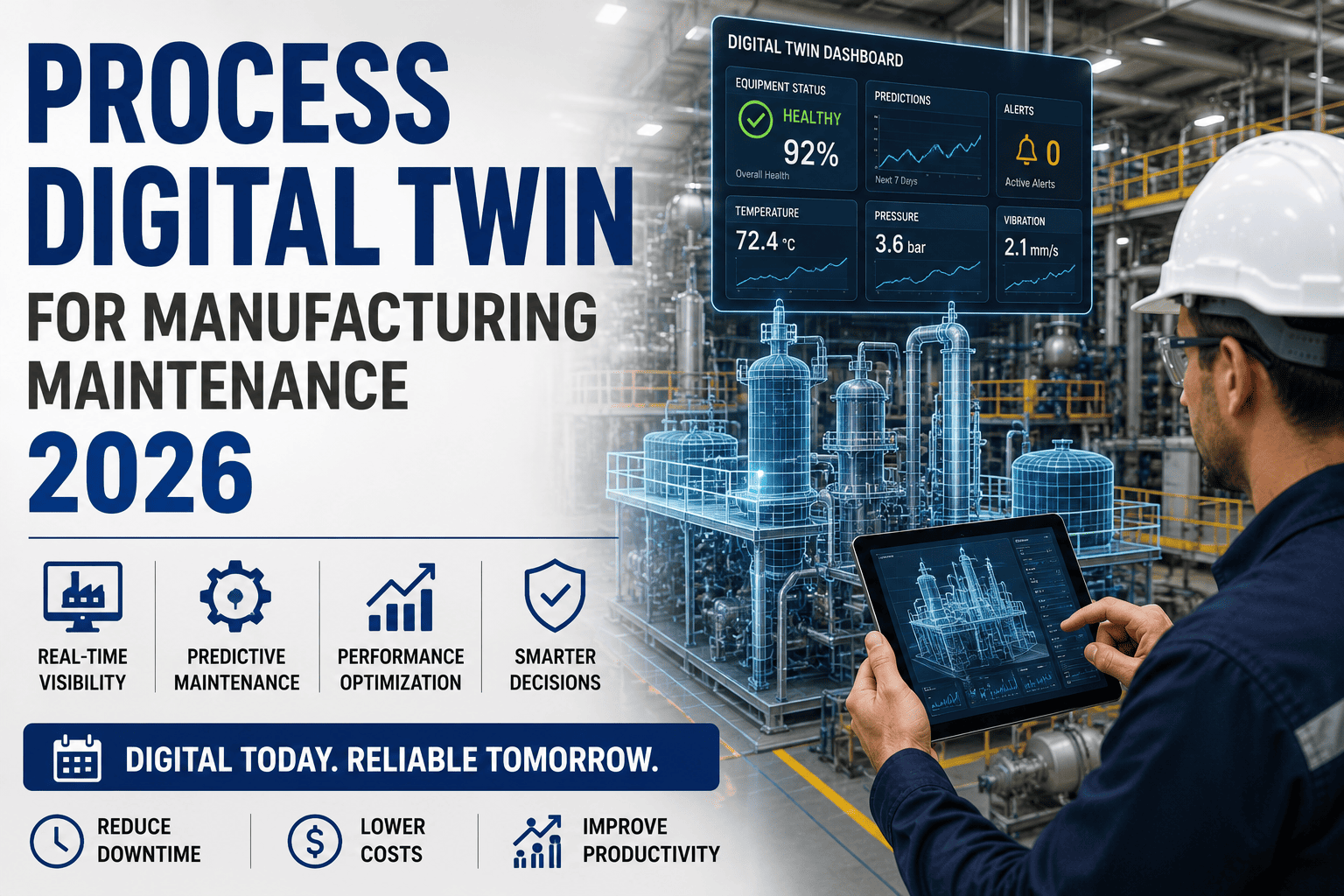
Digital Twin Simulation
Virtual replicas of physical assets let engineers test maintenance scenarios, optimize operating parameters, and validate changes before touching the real machine. Digital twins reduce trial-and-error on the production floor and accelerate root cause analysis.
Autonomous Workflows
When a sensor detects a threshold breach, the system automatically generates a work order, assigns it to the right technician, reserves spare parts from inventory, and schedules the job during the next planned downtime window—without any human intervention.
Ready to connect your plant floor?
Oxmaint brings IoT data, AI analytics, and automated maintenance workflows into one platform built for manufacturing teams.
What Is Predictive Maintenance in Industry 4.0 and Why It Matters
Predictive maintenance is the practice of using real-time equipment data and AI algorithms to forecast when a machine will fail—so you can fix it before it breaks. Unlike preventive maintenance, which follows fixed schedules regardless of actual condition, predictive maintenance targets only the assets that need attention, exactly when they need it. In 2026, this approach has become the defining capability that separates Industry 4.0 plants from traditional operations.
50%
Less unplanned downtime with predictive models vs. reactive maintenance
25%
Lower maintenance spend through targeted interventions on at-risk assets only
10x
Faster failure detection compared to manual inspection rounds
How Predictive Maintenance Works
Data Collection — IoT sensors continuously monitor vibration, thermal patterns, acoustic emissions, and energy draw on critical equipment.
Pattern Recognition — AI algorithms compare real-time data against healthy baselines and historical failure signatures to detect early-stage degradation.
Risk Scoring — Each asset receives a dynamic health score. When scores drop below thresholds, the CMMS automatically prioritizes the asset for maintenance.
Automated Work Orders — Oxmaint generates and assigns work orders with the right parts, procedures, and scheduling—before the breakdown happens.
Step-by-Step Smart Factory Implementation Guide for 2026
Implementing Industry 4.0 does not require replacing your entire plant overnight. The most successful transformations follow a phased approach that delivers quick wins early, builds team confidence, and scales based on proven results. Here is a practical roadmap designed for manufacturing plants of all sizes.
1
Month 1–2
Audit and Baseline
Assess current maintenance practices, equipment criticality, and existing data infrastructure. Identify the top 10–15 assets responsible for the most downtime and maintenance spend. Establish KPI baselines for OEE, MTBF, MTTR, and maintenance cost per asset.
2
Month 2–3
Deploy CMMS as Your Digital Foundation
Implement a cloud-based CMMS like Oxmaint to centralize work order management, spare parts tracking, and maintenance scheduling. Migrate paper-based logs and spreadsheet records into structured digital workflows. Start your free Oxmaint account in under 2 minutes and begin digitizing maintenance workflows across your plant today.
3
Month 3–5
Connect IoT Sensors to Critical Assets
Install wireless vibration, temperature, and energy monitoring sensors on your highest-priority equipment. Connect sensor outputs to your CMMS for automated condition alerts. Begin collecting the data that will train your predictive maintenance models.
4
Month 5–8
Activate AI Analytics and Predictive Models
With sufficient baseline data collected, activate AI-powered anomaly detection and failure prediction. Integrate CMMS with ERP and MES systems for cross-functional visibility. Launch real-time operator dashboards showing equipment health, work order status, and KPI trends.
5
Month 9+
Scale, Optimize, and Replicate
Expand IoT monitoring to all plant assets. Implement digital twins for high-value equipment. Deploy edge computing for sub-second quality control decisions. Document ROI and replicate the model across additional production lines and facilities.
Need a customized implementation plan?
Our team will assess your plant's readiness and build a phased Industry 4.0 roadmap tailored to your equipment, budget, and goals.
How CMMS Software Connects Your Smart Factory Systems
A Computerized Maintenance Management System is the central nervous system of any Industry 4.0 plant. Without it, sensor data stays trapped in silos, work orders rely on memory and spreadsheets, and maintenance teams cannot act on the intelligence that IoT and AI generate. Oxmaint bridges the gap between data collection and operational action—turning raw machine signals into automated, trackable maintenance workflows. Sign up free to explore how Oxmaint connects your plant systems and turns sensor data into automated maintenance action.
CMMS Integration Architecture
IoT Sensors
Real-time vibration, thermal, and energy data streams directly into CMMS dashboards for continuous condition monitoring
SCADA / DCS
Bidirectional data exchange syncs process variables, setpoints, and equipment status with maintenance workflows
ERP Systems
Scheduled sync for cost tracking, procurement triggers, budget-vs-actual reporting, and spare parts inventory management
MES Platforms
Production schedules and batch data correlate with maintenance events for OEE calculation and downtime attribution
Digital Twins
Asset health models receive maintenance history from CMMS while simulation outputs drive preventive schedule optimization
OT Security
Zero-trust architecture and encrypted data channels protect operational technology networks from cyber threats
Industry 4.0 vs Traditional Manufacturing: Key Differences
Plant managers often ask what changes when you move from conventional operations to a connected, intelligent manufacturing environment. The differences affect every layer of the operation—from how you schedule maintenance to how you measure success.
Traditional Plant Operations vs. Industry 4.0 Smart Factory
Capability
Before Industry 4.0
With Industry 4.0
Maintenance Strategy
Fixed schedules or run-to-failure
AI-driven predictive and condition-based
Data Collection
Manual clipboards and spreadsheets
Real-time IoT sensor streams, 24/7
Work Orders
Paper-based, verbal handoffs
Auto-generated by CMMS from sensor alerts
Quality Control
End-of-line inspection only
In-line AI vision and real-time SPC
Spare Parts
Overstocking or emergency orders
Demand-forecasted, auto-reorder via CMMS
Visibility
Siloed departmental reports, days-old data
Unified live dashboards, cross-plant visibility
Typical Downtime
3–5% unplanned
<1% with predictive systems
Move from Reactive to Predictive Maintenance
Oxmaint is the CMMS platform that manufacturing plants use to centralize IoT data, automate work orders, and power predictive maintenance—all from a single dashboard your entire team can access.
Real-World ROI: What Manufacturing Plants Gain from Industry 4.0
Industry 4.0 investments deliver compounding returns across maintenance, production, quality, and energy management. The numbers below reflect documented outcomes from manufacturing deployments worldwide in 2025 and 2026.
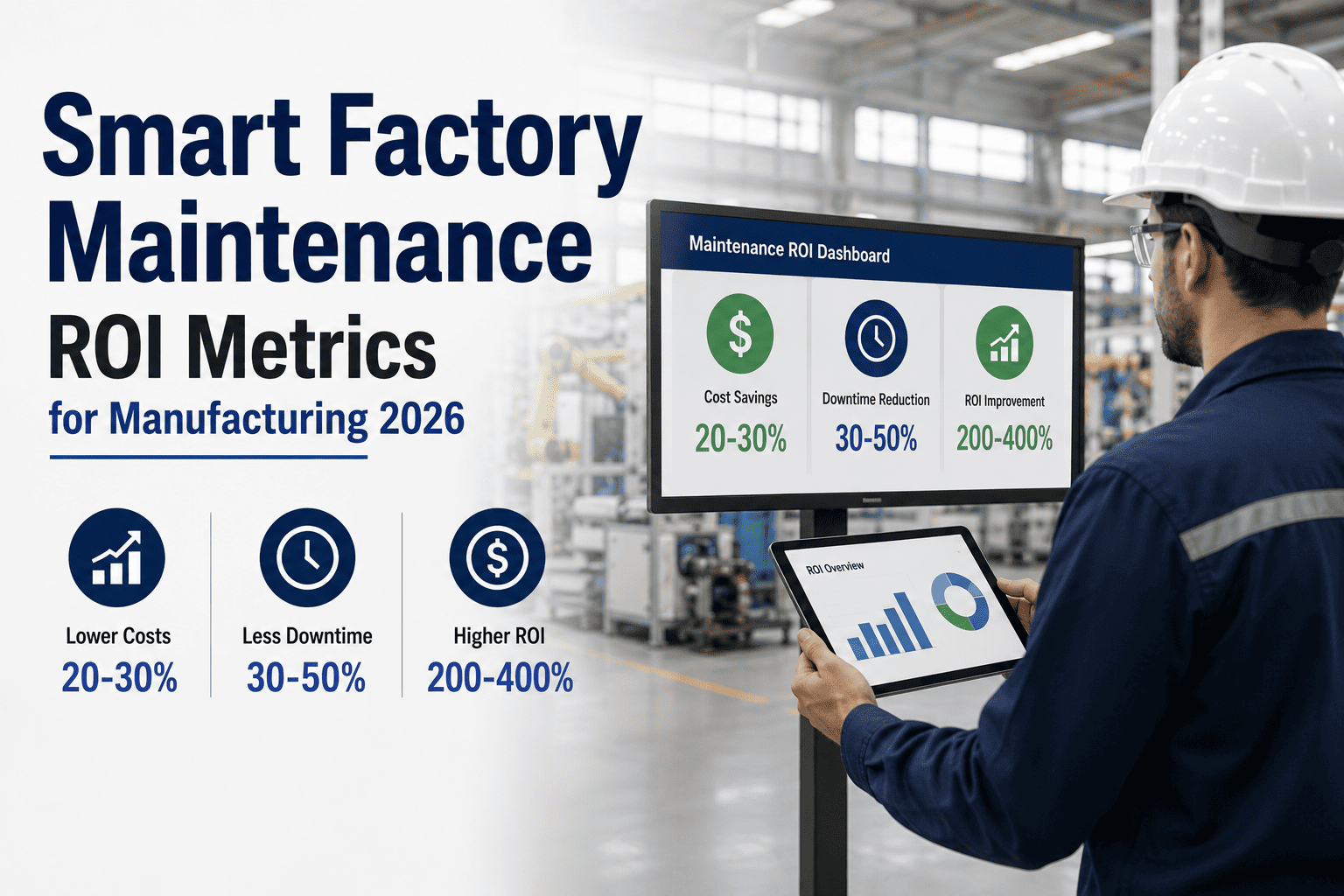
50%
Reduction in unplanned downtime through predictive analytics
30%
Improvement in OEE with real-time monitoring and optimization
25%
Lower maintenance costs from condition-based scheduling
40%
Faster constraint resolution with smart command centers
What could these numbers look like for your plant?
Sign up today and our team will model the ROI of predictive maintenance for your specific plant operations—no commitment required.
Which Industries Benefit Most from Smart Manufacturing in 2026
Industry 4.0 adoption varies by sector, driven by asset criticality, production complexity, and regulatory requirements. Here is how smart manufacturing technologies apply across different manufacturing environments.
PCB defect detection, yield optimization, test automation
35% defect rate reduction
Heavy Industry
Vibration analysis, CMMS, condition monitoring
Crusher and kiln maintenance, energy optimization
20% lower maintenance cost
Results vary by plant maturity, asset age, and workforce readiness. A phased pilot approach consistently delivers the fastest, most measurable returns.
Top Industry 4.0 Challenges and How to Overcome Them
Every smart factory transformation encounters friction. The difference between stalled pilots and successful rollouts comes down to anticipating obstacles and having proven solutions ready. Here are the most common challenges plant teams face—and what works.
Legacy Equipment Without Built-In Sensors
Older machines lack connectivity, limiting data for predictive models.
Retrofit with external wireless IoT sensors. Start with the highest-value assets that cause the most downtime. Even 10-year-old equipment can stream real-time data with bolt-on vibration and temperature sensors.
Data Silos Between Maintenance, Production, and Finance
No single source of truth makes cross-functional decisions slow.
Implement a CMMS that integrates with ERP, MES, and SCADA. Oxmaint connects all plant systems into one platform, giving every team access to the same real-time data.
Workforce Resistance to Digital Tools
Low adoption undermines ROI even when technology is deployed.
Choose operator-friendly interfaces, run structured training programs, and appoint change champions on each shift. Mobile-first CMMS platforms like Oxmaint dramatically lower the learning curve.
Cybersecurity Risks in Connected OT Networks
Increased connectivity expands the attack surface for disruptions.
Deploy zero-trust architecture, segment IT and OT networks, and use AI-driven threat detection. Ensure your CMMS provider meets SOC 2 Type II compliance for data security.
Unclear ROI Making Executives Hesitant
Without proven results, budgets stall and pilots never scale.
Start with a single production line, measure downtime reduction over 90 days, then use documented results to justify expansion. Book a free demo to see the ROI dashboard that plant managers use to get executive buy-in for smart factory investments.
The most durable innovation in manufacturing is the kind that works with reality, not against it. On-premise AI agents that integrate with existing systems—rather than replacing them—are how smart factories actually get built in 2026.
— Manufacturing Technology Strategist
Your Industry 4.0 Transformation Starts Here
Stop managing maintenance with disconnected spreadsheets and outdated schedules. Oxmaint is the intelligent CMMS platform that connects your IoT sensors, automates work orders, powers predictive maintenance, and gives you real-time visibility across every asset in your plant—all from one dashboard.
Frequently Asked Questions About Industry 4.0 in Manufacturing
How long does Industry 4.0 implementation take in a manufacturing plant?
A phased rollout typically spans 9–12 months. The first phase—deploying a CMMS and initial IoT sensors on critical assets—delivers measurable results within 60–90 days. Subsequent phases layer in AI analytics, digital twins, and edge computing as your data baselines mature and teams build confidence with digital workflows.
What does a CMMS do in an Industry 4.0 environment?
A CMMS acts as the operational hub connecting IoT sensor data to maintenance execution. It receives real-time equipment health data, triggers predictive work orders, manages spare parts inventory, tracks technician assignments, and provides live dashboards for plant-wide visibility. Without a CMMS, sensor data remains disconnected from actionable workflows. Sign up free and experience how Oxmaint automates predictive work orders from IoT sensor alerts—no credit card needed.
Can we implement Industry 4.0 without replacing legacy equipment?
Yes. Retrofit IoT sensors can be installed on older machines to capture vibration, temperature, and performance data without replacing the asset. Edge computing devices process data locally, and CMMS platforms integrate legacy and new equipment alike—so your entire plant benefits regardless of machinery age.
What budget should manufacturers plan for a smart factory pilot?
Industry surveys show that most manufacturers invest 20% or more of their improvement budgets in smart manufacturing initiatives. A focused pilot on a single production line or asset group can start with modest investment. Documented ROI from downtime reduction and maintenance savings typically justifies broader rollout within 6–9 months. Book a demo to get a customized cost estimate for your plant size, equipment count, and Industry 4.0 goals.
How does Industry 4.0 improve manufacturing sustainability?
Smart manufacturing reduces energy waste through optimized equipment operation, cuts material waste with AI-driven quality control, and lowers emissions via efficient production scheduling. Real-time monitoring also enables accurate ESG reporting and helps plants meet tightening environmental regulations expected in 2026 and beyond.