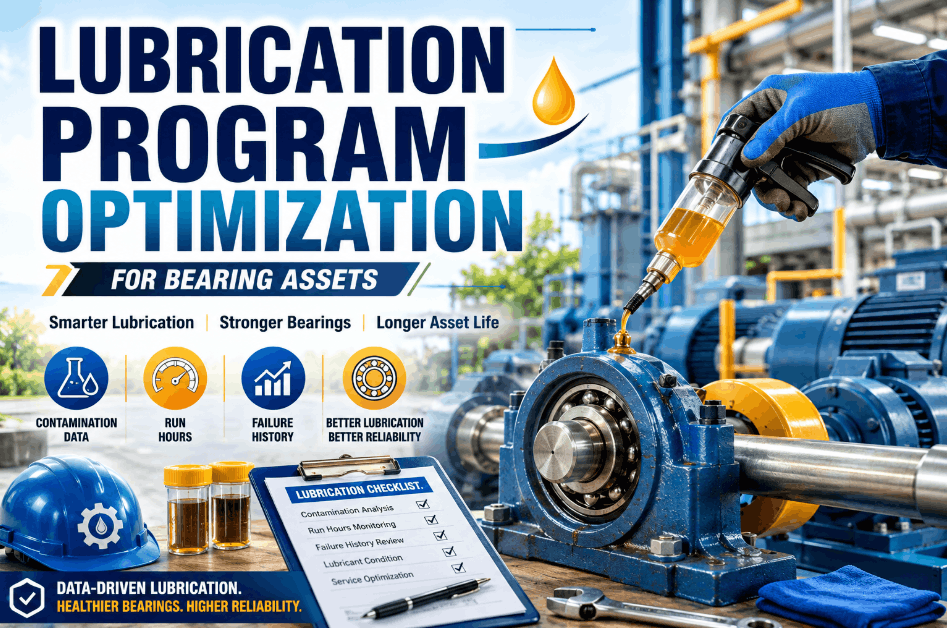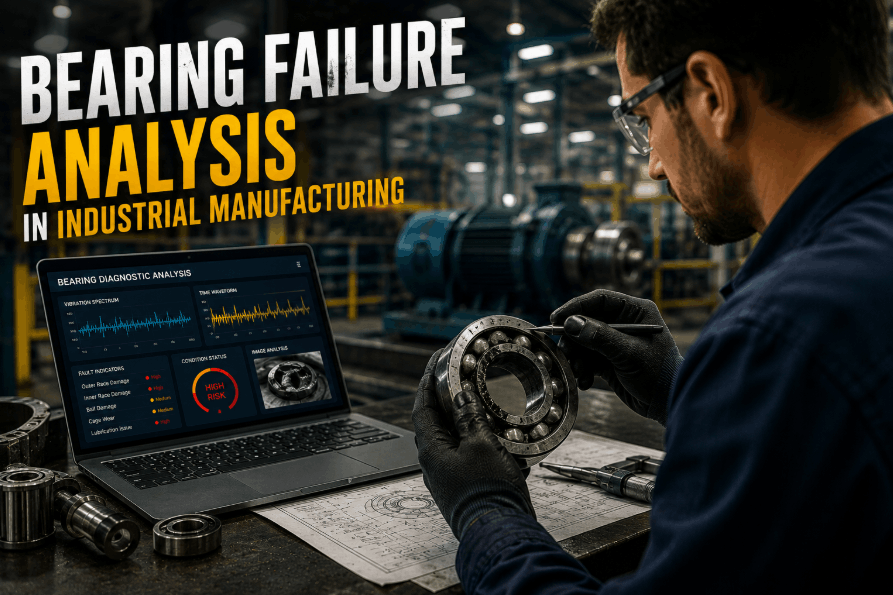
Bearing failures on production lines almost always announce themselves in advance — through heat signatures, contamination indicators, and rising friction patterns that precede seizure by days or weeks. Lubrication interval analytics is the discipline of combining run hours, operating temperature data, and contamination evidence to determine the actual re-lubrication timing each bearing requires, rather than applying manufacturer-default intervals that were calculated for generic operating conditions that rarely match live production environments. When lubrication intervals are set by assumption rather than analytics, over-lubricated bearings attract contamination and run hot, while under-lubricated bearings develop wear that shortens service life and builds toward unplanned failure. Sign Up Free to start managing lubrication work orders with run-hour tracking and condition data capture. Oxmaint AI helps maintenance teams schedule lubrication tasks against actual operating data, capture contamination and temperature findings at point of service, and build the bearing health records that make interval optimisation possible. Book a Demo to see how Oxmaint supports lubrication interval analytics across bearing-heavy production lines.
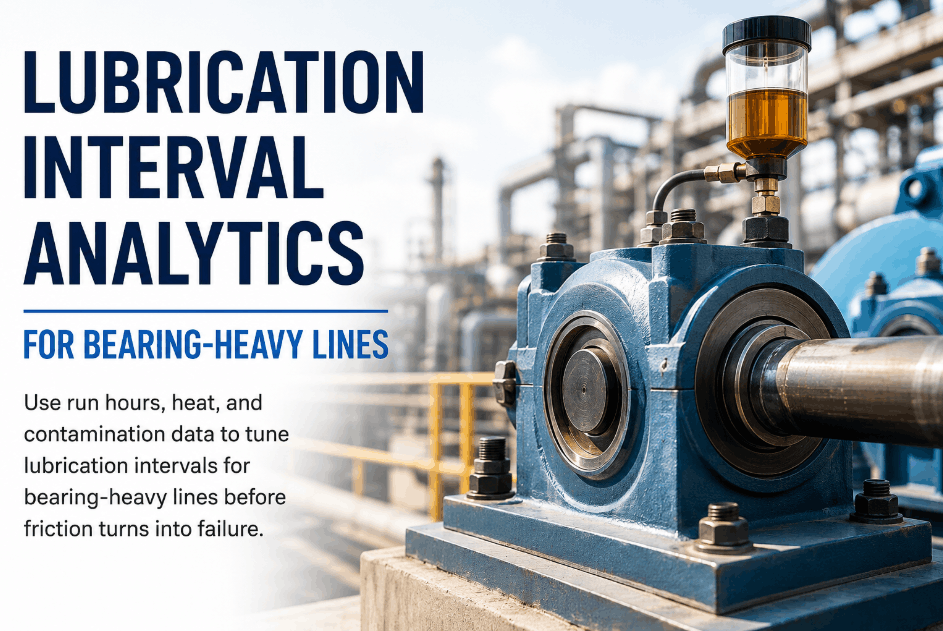
Stop Lubricating by Assumption. Start Lubricating by Data.
Oxmaint AI tracks lubrication work orders against actual run hours, temperature readings, and contamination findings — giving bearing-heavy lines the interval data they need to prevent friction failures before they happen.
Why Default Lubrication Intervals Fail on Bearing-Heavy Lines
Gap #1
Generic Interval Settings
Manufacturer-default lubrication intervals assume standard load, speed, and temperature conditions — leaving bearings on heavy-load or high-temperature lines chronically under-lubricated while identical bearings in lighter service receive excessive grease.
Gap #2
No Run-Hour Tracking
Lubrication schedules run on calendar time regardless of actual machine utilisation — lubricating stopped or lightly used equipment on the same cycle as continuously running assets, generating waste and missing actual service demand.
Gap #3
Contamination Goes Unrecorded
Lubrication technicians observe contamination indicators during service but have no structured field to record findings — meaning contamination patterns that predict accelerated bearing wear are never captured for analysis or interval adjustment.
Gap #4
Temperature Readings Lost
Bearing temperature checks performed during lubrication rounds are noted verbally or on paper and discarded — eliminating the heat trend data that would identify bearings operating outside design parameters and requiring shortened intervals.
Gap #5
Interval Never Adjusted
Lubrication intervals set at commissioning are never revised based on observed bearing behaviour, production pattern changes, or bearing failure history — leaving interval optimisation opportunity permanently uncaptured.
Gap #6
Failure Cause Unlinked
When bearing failures occur, lubrication history records are too sparse to determine whether inadequate lubrication frequency, wrong lubricant specification, or contamination ingress was the primary failure driver.
How Oxmaint AI Supports Lubrication Interval Analytics
01
Bearing Asset Register
Build a bearing asset register in Oxmaint with lubricant specifications, initial interval settings, operating load classifications, and temperature threshold parameters for each bearing point on the line.
→
02
Run-Hour Triggered Dispatch
Oxmaint generates lubrication work orders triggered by actual run hours or calendar intervals and delivers them to technicians via mobile — with lubricant specification, application quantity, and condition assessment fields pre-loaded.
→
03
Field Condition Capture
Technicians record bearing temperature, contamination observations, grease condition findings, and noise or vibration notes directly in the Oxmaint mobile app — building a condition record at every lubrication service event.
→
04
Interval Analytics and Optimisation
Oxmaint aggregates lubrication condition records to identify bearings with deteriorating heat profiles, contamination trends, or accelerating wear — generating interval adjustment recommendations based on actual observed behaviour.
What Oxmaint Captures Per Lubrication Service Record
Service Condition Data
Bearing temperature recorded at point of lubrication service
Contamination type and severity captured per bearing point
Grease condition and quantity applied recorded per service
Traceability Records
Technician digital signoff on every lubrication work order
Run hours at service recorded against bearing asset record
Lubricant specification and batch linked to service record
Interval Monitoring
Temperature trends tracked across consecutive service cycles
Contamination acceleration flagged for interval shortening
High-risk bearing points prioritised for enhanced monitoring
Reliability Outcome
Lubrication records exportable for reliability or audit review
Bearing failures linked to lubrication history for root cause
Interval optimisation driven by actual bearing condition data
42%
Of premature bearing failures on production lines are attributable to inadequate or incorrectly timed lubrication service
2.9×
Longer average bearing service life when lubrication intervals are optimised using run-hour and condition data
48hrs
Typical Oxmaint deployment time from setup to first run-hour-triggered lubrication work orders active in field
90days
Average time to first interval optimisation recommendations after Oxmaint lubrication condition tracking is deployed
Oxmaint AI vs Standard CMMS for Lubrication Interval Management
Standard CMMS — Limited Lubrication Data Capture
Lubrication tasks tracked by calendar date only — no run-hour triggering or actual utilisation consideration
No condition assessment fields — temperature, contamination, and grease condition findings are not captured
Bearing failure history not linked to lubrication records — root cause analysis relies on incomplete data
Lubricant specification compliance unverified — work orders close without confirming correct product was applied
No interval analytics — all bearings remain on commissioning-default schedules regardless of observed behaviour
Contamination trends invisible — accelerating bearing degradation not detectable between failure events
Oxmaint AI — Lubrication Compliance Tracked in Real Time
Run-hour and calendar triggered lubrication work orders with condition fields pre-loaded — Sign Up Free
Temperature, contamination, and grease condition captured at every lubrication service event
Lubricant specification verified and batch recorded before work order closure
Bearing failure events linked to lubrication history for structured root cause analysis
Contamination acceleration and heat trend anomalies flagged for interval shortening review
Interval optimisation reports generated from actual condition data — Book a Demo
6 KPIs to Measure Lubrication Interval Analytics Effectiveness
These KPIs help reliability and maintenance teams confirm that data-driven lubrication interval management is reducing bearing failures and extending service life on bearing-heavy production lines. Book a Demo to see how Oxmaint calculates all six automatically across your bearing asset register.
KPI 01
Lubrication Compliance Rate
Percentage of lubrication work orders completed within the scheduled interval window. Overdue lubrication on high-load bearing points represents measurable friction risk and accelerated wear accumulation.
Schedule Compliance
KPI 02
Bearing Temperature Exceedance Rate
Percentage of bearing points recording temperatures above the defined threshold at lubrication service. Rising exceedance rates indicate inadequate lubrication frequency, incorrect lubricant specification, or bearing failure developing.
Heat Monitoring
KPI 03
Contamination Discovery Rate
Percentage of lubrication service events where contamination is recorded in grease samples or at bearing seals. Trend increases identify seal failures, environmental ingress, or incorrect lubricant application generating contamination-driven wear.
Contamination Control
KPI 04
Interval Adjustment Rate
Percentage of bearing points whose lubrication intervals have been updated based on condition data within the review period. Low rates indicate analytics data is not being converted into schedule improvements.
Optimisation Activity
KPI 05
Bearing Failure Rate per Line
Number of unplanned bearing failures per production line per period. Declining failure rates after interval optimisation confirm that data-driven scheduling is reducing friction-driven bearing damage on heavy-duty assets.
Reliability Outcome
KPI 06
Lubrication Record Completeness Rate
Percentage of lubrication work orders with all required fields — temperature, contamination, grease quantity, lubricant specification, and technician signoff — completed before closure. Incomplete records prevent interval analytics.
Record Integrity
Industries Using Oxmaint for Bearing Lubrication Interval Management
Automotive Manufacturing
Bearing Lubrication Analytics for High-Duty Assembly Lines
Automotive assembly facilities use Oxmaint to manage lubrication intervals on conveyor drives, press bearings, and robot joint assemblies — capturing temperature and contamination data that enables interval optimisation across bearing-heavy production environments. Sign Up Free for your reliability team.
Paper and Packaging
Lubrication Interval Control for High-Speed Rotating Assets
Paper and packaging producers use Oxmaint to schedule run-hour-triggered lubrication on high-speed roller bearings and drive assemblies — preventing the contamination and heat buildup that cause unplanned stoppage on continuous production lines. Book a Demo for your maintenance program.
Mining and Minerals
Heavy-Duty Bearing Lubrication for Abrasive Environments
Mining operations use Oxmaint to manage lubrication intervals on crusher bearings, conveyor head pulleys, and screen vibrator assemblies — capturing contamination findings in abrasive environments where default intervals dramatically underestimate actual service demand.
Food and Beverage
Food-Safe Lubrication Compliance for Processing Lines
Food processing facilities use Oxmaint to track food-safe lubricant specification compliance on bearing points in processing and packaging areas — capturing contamination findings and temperature readings that support HACCP and food safety audit requirements.
Your Bearings Don't Fail by Surprise. The Warning Was Always There.
Oxmaint AI helps maintenance teams track lubrication intervals against actual run hours, capture heat and contamination findings at service, and build the bearing condition data that makes interval optimisation actionable before friction turns into failure. Book a Demo to see lubrication analytics applied to your bearing-heavy production line assets.
Frequently Asked Questions
What is lubrication interval analytics and why does it matter for bearing-heavy lines?
Lubrication interval analytics uses run hours, temperature readings, and contamination data to determine the actual re-lubrication frequency each bearing requires. On bearing-heavy lines, default intervals consistently mismatch actual service conditions, causing premature wear or contamination-driven failure.
How does Oxmaint support run-hour-triggered lubrication work orders?
Oxmaint generates lubrication work orders triggered by accumulated run hours or calendar intervals, delivers them to technicians via mobile with lubricant specification and condition assessment fields, and captures all service data in a linked bearing asset record.
Can Oxmaint identify bearings with accelerating contamination or heat trends?
Yes. Oxmaint tracks temperature and contamination findings across consecutive lubrication service events and flags bearings showing deteriorating condition trends — enabling interval shortening or maintenance investigation before failure occurs.
Does Oxmaint support lubricant specification compliance tracking?
Yes. Oxmaint captures lubricant type and batch at each service event and enforces specification fields before work order closure — providing a verifiable record that the correct lubricant was applied to each bearing point.
How quickly can Oxmaint be deployed for a bearing lubrication interval program?
Most facilities have Oxmaint live and tracking lubrication work orders within 48 hours. The bearing asset register can be populated from existing PM schedules or maintenance records, and technicians can begin capturing condition data immediately via the mobile app.
Know Your Bearings Are Properly Lubricated. Prove It When Failures Are Investigated.
Oxmaint AI tracks lubrication interval compliance, captures condition data at every service event, and builds the digital bearing health records your reliability and maintenance programs require — across every bearing-heavy asset in your facility.