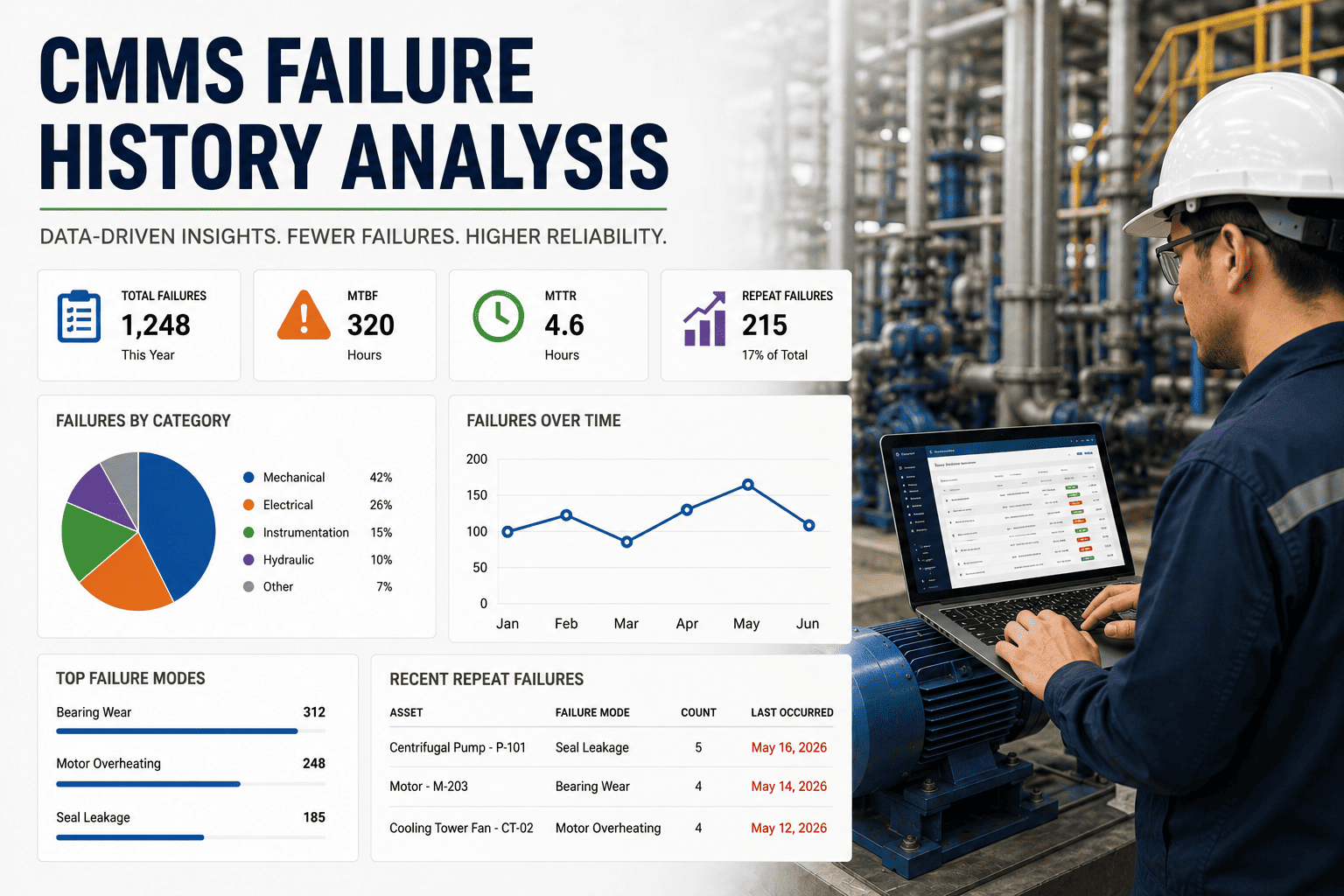
Bearing failures rarely begin with the bearing itself — most start with a lubrication program that runs on a fixed calendar instead of actual asset condition. Contamination ingress, inconsistent run hours, and unlogged failure history quietly erode bearing life long before a technician notices unusual heat or noise. Lubrication program optimization closes that gap by tying grease and oil intervals to the same condition data that predicts bearing wear, rather than a generic schedule applied across an entire fleet. Maintenance teams using Sign Up Free on OxMaint can log contamination readings, run-hour counts, and failure history against each bearing asset, turning a one-size-fits-all PM calendar into a data-driven lubrication program built around how each machine actually operates.
Why Bearing Lubrication Programs Still Run on Guesswork
Most plants still grease and oil bearings on a fixed calendar set years ago, regardless of contamination exposure, duty cycle, or prior failure pattern. Without contamination data, run hours, and failure history connected to the same asset record, over-lubrication and under-lubrication remain a leading preventable cause of bearing wear. Book a Demo to see how OxMaint correlates these inputs by asset to support lubrication intervals based on condition rather than a generic schedule.
Core Data Inputs for Lubrication Program Optimization
An optimized lubrication program does not rely on calendar intervals alone — it draws on multiple condition inputs from the same asset history to set and adjust frequency over time. Sign Up Free to begin logging these inputs against your bearing assets in OxMaint.
Contamination Ingress Tracking
Particle count, moisture readings, and seal condition logged at each inspection reveal when a bearing's operating environment is accelerating wear.
Run-Hour and Duty Cycle Logging
Actual operating hours rather than calendar time set realistic lubrication intervals for high-duty versus low-duty bearings on the same line.
Failure and Repair History Correlation
Past bearing failures linked to lubrication records reveal whether wear is interval-driven, lubricant-driven, or operating-condition-driven.
Lubricant Consumption and Reorder Tracking
Grease and oil usage patterns logged against asset history flag intervals that are running too frequent or too sparse for the application.
Operating Temperature and Load Correlation
Elevated temperature recorded alongside lubrication data helps distinguish a lubrication issue from a load, alignment, or bearing fit problem.
Oil and Grease Analysis Result Logging
Lab analysis results stored against the asset record validate whether current intervals and lubricant selection remain appropriate over time.
Lubrication Strategy Reference by Bearing Application
Different bearing applications carry distinct contamination exposure and load profiles, so a single lubrication interval rarely fits an entire fleet. Book a Demo or Sign Up Free to see how OxMaint structures lubrication tracking by bearing type and operating environment.
| Bearing Application | Primary Risk Factor | Monitoring Frequency | Failure Risk if Unmanaged | OxMaint Lever |
|---|---|---|---|---|
| High-Speed Spindle Bearings | Heat buildup, lubricant breakdown | Weekly temperature check | High — rapid degradation under heat | Temperature logging + dynamic PM adjustment |
| Heavy-Load Gearbox Bearings | Particle contamination, load fatigue | Bi-weekly oil sampling | High — surface fatigue and pitting | Oil analysis logging + failure history correlation |
| Wet / Washdown Environment Bearings | Moisture ingress, seal failure | Daily seal and contamination check | Very High — accelerated corrosion | Contamination tracking with alert thresholds |
| Variable-Speed Motor Bearings | Inconsistent run hours, electrical fluting | Monthly run-hour review | Medium — uneven wear pattern | Run-hour logging + PM interval tuning |
| Outdoor / Dusty Environment Bearings | Particle ingress, temperature swings | Weekly visual and particle check | High — abrasive wear acceleration | Inspection checklist + reorder alerts |
How Static Lubrication Schedules Increase Bearing Failure Risk
A fixed calendar interval is built for an average bearing under average conditions — it has no way to account for contamination spikes, load changes, or prior repair history. Book a Demo to see how OxMaint replaces fixed intervals with condition-driven lubrication scheduling.
Building a Data-Driven Lubrication Program with OxMaint
Moving from a fixed calendar to a condition-driven lubrication program is a structured rollout, not a one-time setup. Book a Demo to walk through how the steps below map onto your bearing fleet inside OxMaint.
Register Bearing Assets with Application and Duty Profile
Create asset records in OxMaint including bearing type, load profile, and operating environment so condition data has the right context from the start.
Configure Lubrication Inspection Checklists
Build checklists in OxMaint that capture contamination signs, run hours, temperature, and lubricant consumption at each scheduled check.
Establish Baseline Intervals from Run-Hour and Condition Data
Use initial logged readings to set realistic per-asset lubrication intervals in OxMaint rather than applying fleet-wide defaults.
Link Contamination and Temperature Alerts to PM Adjustment
Configure OxMaint to flag readings that deviate from baseline so lubrication intervals can shift before wear accelerates.
Review Failure History Against Lubrication Records Fleet-Wide
Use OxMaint reporting to compare lubrication patterns across bearing failures and refine intervals by application over time.
Frequently Asked Questions: Lubrication Program Optimization
What is lubrication program optimization?
It is the practice of setting and adjusting lubrication intervals using contamination data, run hours, and failure history instead of a fixed calendar, so each bearing is serviced based on its actual condition.
How does contamination data improve bearing lubrication scheduling?
Logged particle counts and moisture readings reveal when a bearing's environment is accelerating wear, allowing intervals to tighten before contamination causes damage.
How does OxMaint support lubrication program optimization?
OxMaint provides inspection checklists, per-asset condition history, dynamic PM scheduling, and inventory reorder alerts so lubrication intervals can be tuned from real bearing condition data.
How often should bearing lubrication be reviewed?
High-duty or contamination-prone bearings benefit from weekly to bi-weekly checks, while lower-duty bearings can be reviewed monthly, with frequency tied to criticality and condition.
What is the difference between a lubrication schedule and a lubrication program?
A schedule is a fixed calendar interval. A program uses ongoing condition data — contamination, run hours, failure history — to continuously refine when and how each bearing is lubricated.